
Last updated September 24, 2026
Insulation Cost Breakdown: The Mountain View Homeowner’s Reference for 2026
A $2,400 attic insulation bid and a $5,100 bid for the same 1,200-square-foot Mountain View attic can both be honest prices. The $2,400 job installs blown fiberglass over existing material with no air sealing and no post-work documentation. The $5,100 job removes the existing material, seals 40+ penetrations, installs cellulose to verified depth, and closes with a blower-door test. Most homeowners who pick the low bid never know what was excluded, because contractors rarely itemize what’s left out. This guide breaks down every cost component in a complete insulation job, gives 2026 Mountain View price ranges for each, and shows how to rebuild any bid line by line so you’re comparing identical scope. For more guides & resources on home performance, visit our blog.
Quick Answer
Complete attic insulation in Mountain View in 2026 typically runs $3,200-$7,200 for a full job that includes existing material removal, air sealing, new insulation to code depth, and post-work blower-door verification. A stripped-down install over existing material with no sealing starts around $1,800. The single biggest variable is whether air sealing is included, which adds $800-$1,200 but usually pays back in under three years through reduced PG&E bills.
Table of Contents
- Why Two “Same” Bids Can Be $2,400 and $5,100
- The Nine Cost Components of a Complete Job
- The Three Pricing Models Contractors Use
- The Cost Math of Air Sealing ROI
- PG&E and BayREN Rebates: How to Apply Them Correctly
- Bid-Comparison Worksheet: Line Items to Request in Writing
- Mountain View Climate, Code, and Market Factors
- Common Mistakes to Avoid
- When to Call a Professional
- Frequently Asked Questions
Why Two “Same” Bids Can Be $2,400 and $5,100
We’ve been in Mountain View attics since 2016, and the most common call we get starts with: “I have three bids and they’re nowhere close.” The homeowner isn’t wrong to be confused. Three contractors can walk the same 1,200-square-foot attic in Old Mountain View and produce bids of $2,400, $3,800, and $5,100, each describing the work as “attic insulation.”
The gap comes from what’s bundled, what’s omitted, and what’s described in vague terms that hide the difference. Here are the typical scopes behind those three price points:
- $2,400 bid: Blow new fiberglass over existing material. No removal. No air sealing. No diagnostic testing. No documentation. Warranty: verbal or generic.
- $3,800 bid: Remove existing material in targeted areas. Spot-seal obvious gaps. Install new blown cellulose to approximate depth. May include basic photos. Limited written scope.
- $5,100 bid: Full removal and disposal. Blower-door diagnostic before work. Systematic air sealing of top plates, can lights, penetrations, and chimney chases. Install cellulose to verified, marked depth. Post-work blower-door verification. Written scope, written warranty, photo record, and before-and-after pressurization numbers delivered.
The $2,400 contractor isn’t necessarily dishonest. They’re selling a different product. The problem is the homeowner doesn’t know that until the work is done and the house still drafts, the PG&E bill barely moves, and there’s no paper trail if something fails. If you’re seeing these issues now, check our Insulation Warning Signs: A Mountain View Homeowner’s Reference Guide.
Under Haven Standard Clause 1, we deliver a written price before any work starts. That price itemizes every component below so you know what you’re paying for and what you’re not. In our experience, the homeowners who take the time to line-item compare bids rarely choose the lowest one, because they can finally see what it leaves out.
The Nine Cost Components of a Complete Job
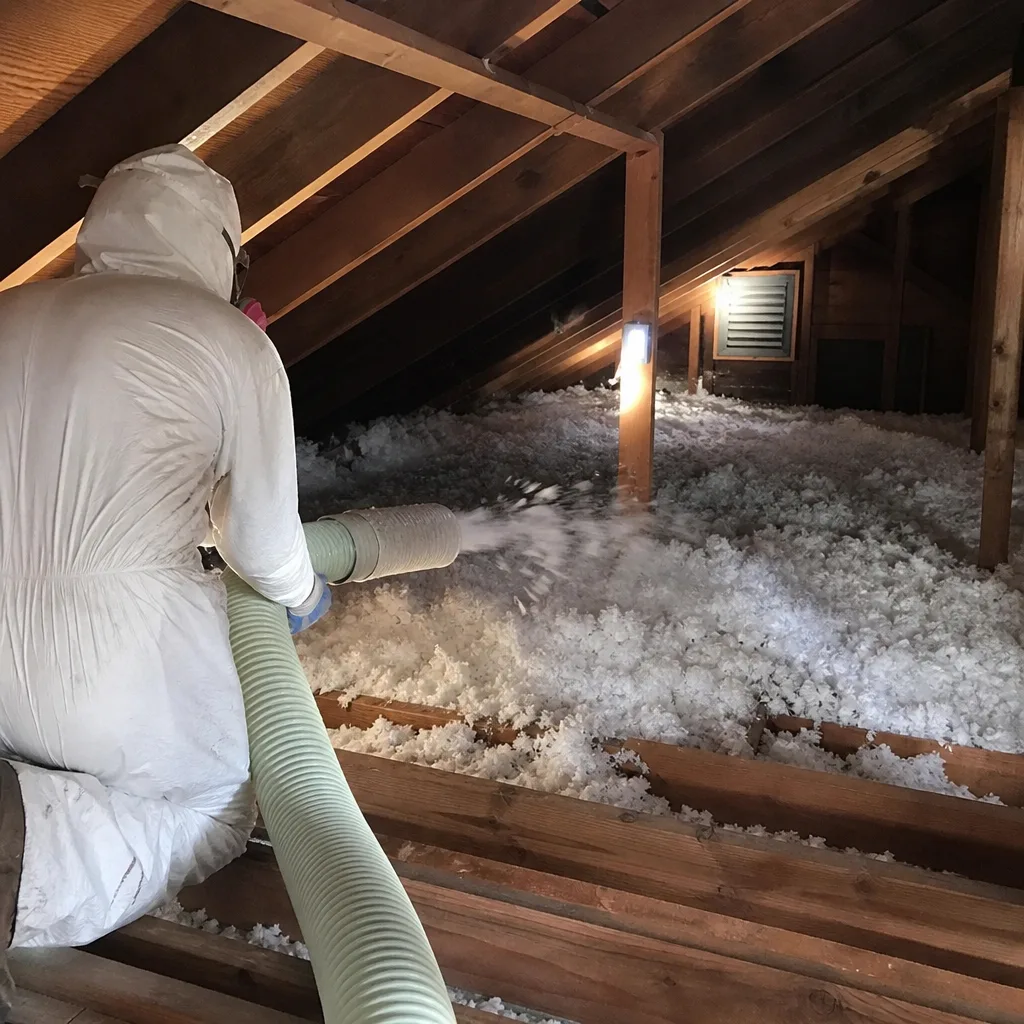
Every complete attic insulation job in Mountain View carries nine cost components. Most bids show two or three. Here’s the full list with 2026 market ranges based on what we’ve seen across Santa Clara County jobs this year.
1. Existing Material Removal and Disposal
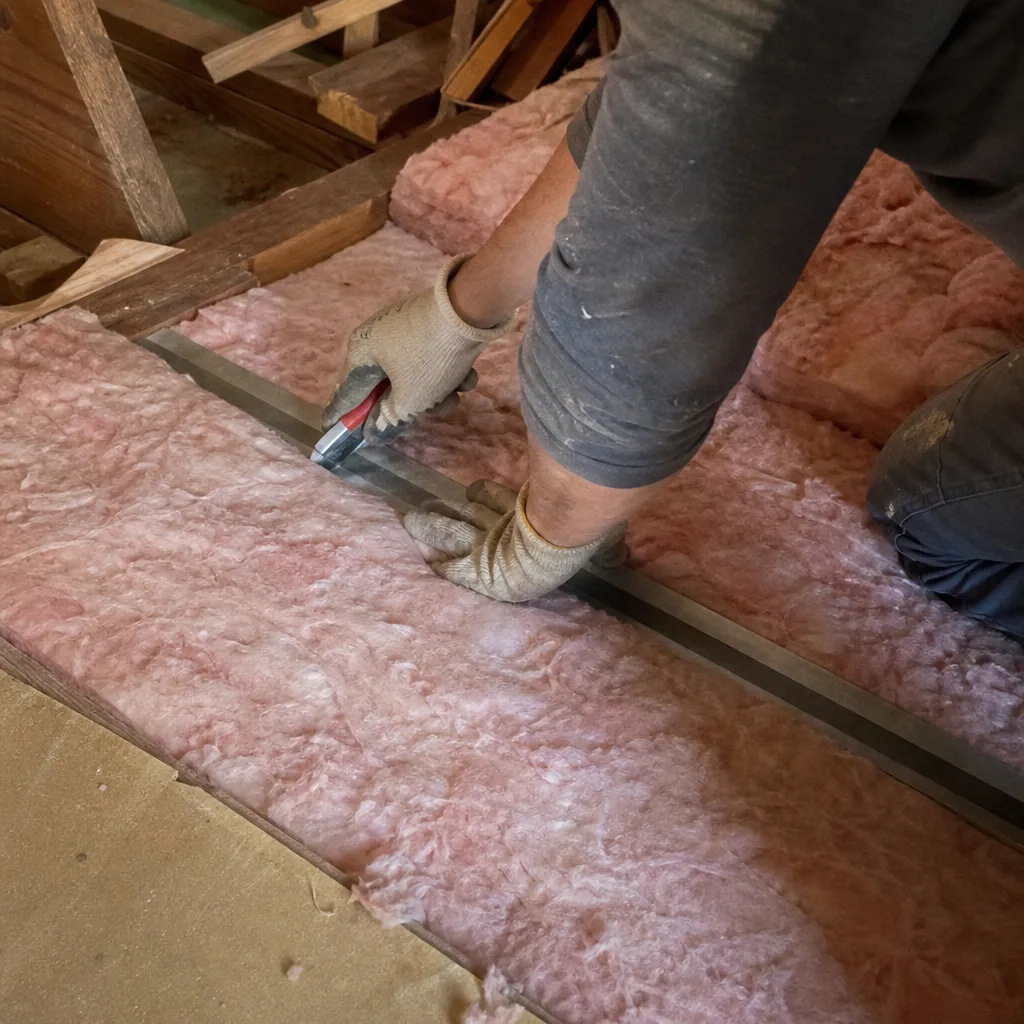
Old insulation comes out before new insulation goes in, or it doesn’t. Leaving it in place hides problems (rodent damage, moisture staining, compressed material that’s lost its R-value) and prevents proper air sealing. In Mountain View, where many homes in the Monta Loma and Blossom Valley neighborhoods were built in the 1950s-1970s with original batt insulation, removal is almost always necessary. For tips on maintaining performance year-round, see our Seasonal Insulation Care for Mountain View: Year-Round Homeowner’s Guide.
2026 Mountain View range: $0.80-$1.40 per square foot, or $960-$1,680 for a 1,200 sq ft attic. Heavily soiled material, rodent-affected areas, or asbestos-containing vermiculite (still found in pre-1990 homes) push to the high end or beyond.
2. Blower-Door Diagnostic
A blower-door test - a pressurization reading that shows, in one number, how much air your building envelope is losing - is the starting point for any job we take. Without it, air sealing is guesswork. The test takes 45-60 minutes and establishes the baseline ACH50 (air changes per hour at 50 pascals of pressure).
2026 Mountain View range: $250-$400 as a standalone service; often bundled into complete job pricing at $150-$250 when part of a larger scope.
3. Air Sealing Labor
This is where most low bids cut. A typical Mountain View attic has 40-80 penetrations: top plates where walls meet the ceiling, recessed can lights, plumbing and electrical penetrations, chimney chases, duct boots, and attic access hatches. Each must be sealed with appropriate material (foam, caulk, blocking, or fire-rated covers) before insulation covers them forever.
2026 Mountain View range: $600-$1,000 for a 1,200 sq ft attic with standard penetrations. Complex rooflines, multiple HVAC zones, or homes in the Castro Street corridor with renovated additions typically run higher.
4. Air Sealing Materials
Fire-rated covers for can lights ($8-$15 each), expanding foam for gaps ($40-$80 in material per attic), acrylic caulk for fine cracks, rigid foam blocking for larger openings, and weatherstripping for the attic hatch. These are not expensive individually but add up, and they’re non-negotiable for code compliance in California.
2026 Mountain View range: $150-$350 depending on penetration count and fire-rating requirements.
5. New Insulation Material
The product itself. We source from Owens Corning, Johns Manville, Knauf, and GreenFiber depending on the application and homeowner preference. Blown cellulose runs $0.60-$0.90 per square foot per inch of depth in Mountain View. Fiberglass batts run $0.40-$0.70 per square foot for the material. Spray foam is priced by board foot and covered in our Spray Foam Insulation in Mountain View guide.
For attic floors, California Title 24 requires minimum R-38 in most climate zones, which translates to 10-12 inches of blown cellulose or 12-14 inches of fiberglass. Many Mountain View homeowners opt for R-49 (13-15 inches cellulose) for the marginal material cost increase.
2026 Mountain View range: $720-$1,440 for blown cellulose to R-38 in a 1,200 sq ft attic. R-49 adds $180-$300.
6. Installation Labor
The crew’s time to place, blow, or spray material to uniform depth with proper damming at eaves and clearances around combustion vents. This includes setting up containment, protecting finished spaces, and verifying depth with marked rulers.
2026 Mountain View range: $800-$1,400 for standard attic blow-in. Steep pitches, limited access hatches, or homes in the Waverly Park hills with tight crawl-attic transitions run higher.
7. Post-Work Blower-Door Verification
The second blower-door test proves the air sealing worked. We publish these numbers on every applicable job so homeowners can verify the result themselves. A meaningful drop (say, from 9 ACH50 to 4 ACH50) confirms the money spent on sealing delivered performance. No drop means something was missed.
2026 Mountain View range: $150-$250 when bundled; $250-$400 standalone. We include this at no separate charge on complete jobs because without it, we can’t stand behind the work.
8. Permit Fee Where Applicable
Mountain View Building Division requires permits for insulation work that involves removal and replacement, or any work in homes undergoing concurrent renovation. For full details on requirements, see Insulation Permits, Codes & Inspections in CA: What You Need to Know. The permit is typically pulled by the contractor. Santa Clara County’s base fee structure plus Mountain View’s local add-on applies.
2026 Mountain View range: $180-$350 depending on project valuation. Some simple over-blow jobs with no removal may not require permitting; we verify this during the initial assessment and note it in the written scope.
9. Written Documentation Package
The paper trail: written scope of work, written warranty, photo record of conditions before, during, and after, and blower-door readings. Under Haven Standard, this is not optional. The homeowner receives it before work starts and in final form when the crew leaves.
2026 Mountain View range: $0-$150 when bundled; some contractors charge separately for “admin” or “warranty processing.” We include documentation as part of every job because a written price before any work starts is Clause 1, and a documented record when the crew leaves is how we close.
Complete Job Total
Adding the midpoints: $1,320 + $200 + $800 + $250 + $1,080 + $1,100 + $200 + $265 + $75 = $5,290 for a complete 1,200 sq ft attic job in Mountain View in 2026. Strip out removal, air sealing, diagnostics, verification, and documentation and the same attic drops to $1,800-$2,400. That’s not a bargain. It’s a different product entirely.
The Three Pricing Models Contractors Use
How a contractor structures their quote determines whether you can compare apples to apples or whether you’re comparing a bicycle to a bus. Here are the three models we see in Mountain View, ranked from most transparent to least.
Model 1: Lump-Sum Job Pricing
One number for everything. “Complete attic insulation: $4,800.” This is the easiest to understand and the hardest to compare. What’s included? What’s not? Two lump-sum bids can differ by $2,000 with no visible explanation.
Best for: Homeowners who trust the contractor and have verified scope in writing. Worst for: Comparison shopping without detailed line-item breakdowns.
Model 2: Per-Square-Foot Pricing
“$2.80 per square foot for attic insulation.” Seems straightforward. But square footage of what? Floor area? Roof deck? And does the price include removal? Sealing? Testing? Per-square-foot pricing often bundles variable-cost items (air sealing labor, which depends on penetration count) into a flat rate that overcharges simple attics and undercharges complex ones.
Best for: New construction or unconditioned attics with no existing material and minimal penetrations. Worst for: Retrofit jobs in older Mountain View homes with decades of accumulated issues.
Model 3: Per-R-Value-Increment Pricing
“R-38 installed: $2,200. Upgrade to R-49: add $400.” This model makes the insulation material the star and buries everything else. Air sealing becomes an “add-on” rather than a prerequisite. The homeowner sees a low base price and doesn’t realize the performance upgrade they’re paying for won’t materialize without the sealing.
Best for: Contractors who want to lead with a low number. Worst for: Homeowners trying to understand true cost-to-performance ratio.
Which Model Makes Comparison Shopping Easiest?
None of them, without the nine line items above broken out. The honest contractor will provide a lump-sum total with an itemized backup. The per-square-foot quote should specify exactly what that square foot covers. The R-value quote should show air sealing as a separate, non-optional line.
At Topside Attic Insulation Mountain View home, we use lump-sum pricing with full itemization. The total is one number for clarity, but the backup shows every component so you can reconstruct our bid against any competitor’s. We also offer a Free Second Opinion on any written estimate - bring us a competing quote and we’ll read it with you line by line.
The Cost Math of Air Sealing ROI
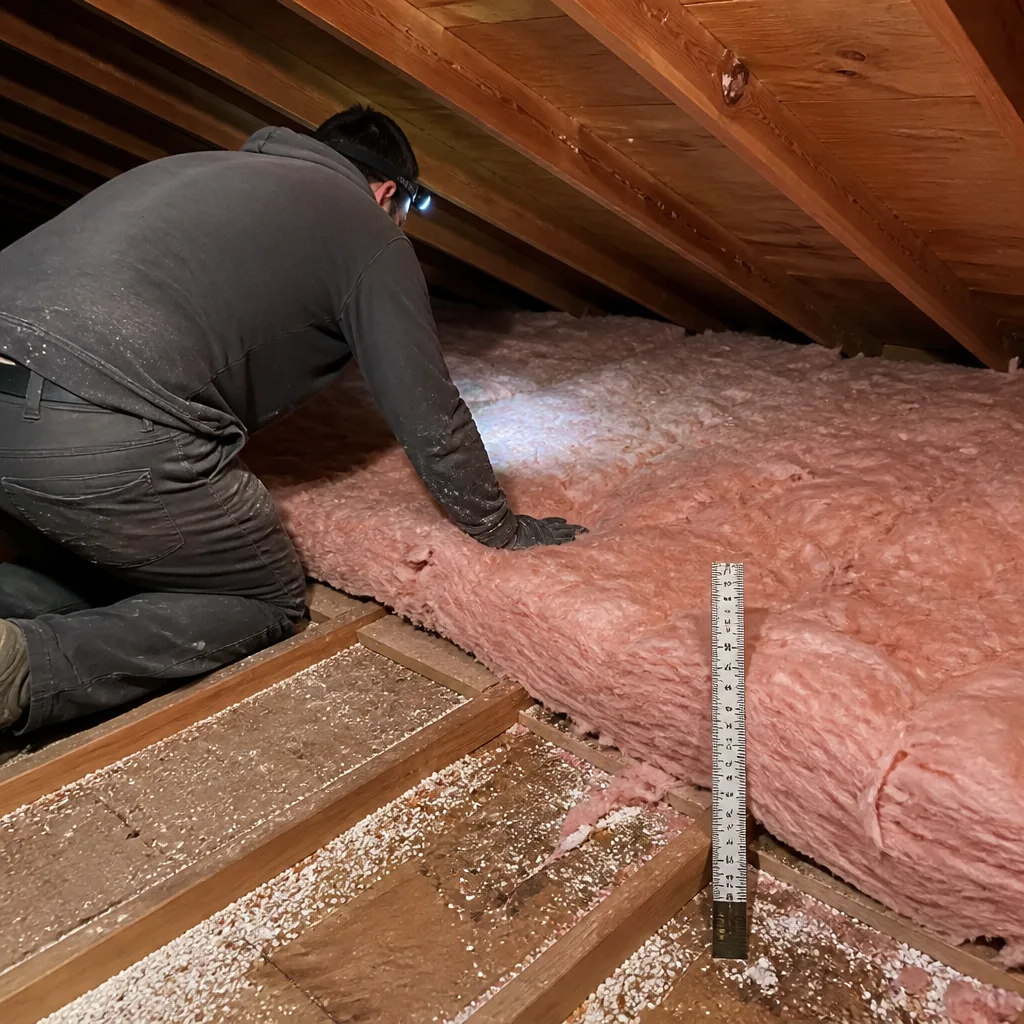
This is where we part ways with contractors who treat air sealing as an upsell. In our experience across 9,000+ homes sealed and insulated since 2016, the homes that skip sealing pay for it every month on their utility bill.
Here’s the math for a typical Mountain View home:
- Pre-work blower-door reading: 9 ACH50 (leaky, common in 1960s-1980s construction)
- Post-sealing reading: 4 ACH50 (tightened to modern performance standard)
- Conditioned floor area: 1,800 sq ft
- Annual heating/cooling load reduction: approximately 25-35%
- Mountain View PG&E baseline usage: roughly $1,200-$1,800/year for heating and cooling in a home this size
- Annual savings from sealing: $300-$500
Air sealing labor and materials for this home: $800-$1,200. Simple payback: 2-3 years. After that, the savings are pure return. And that’s before accounting for improved comfort (fewer drafts, more even temperatures between rooms), reduced wear on HVAC equipment, and better indoor air quality (less attic air pulling into living space).
The homeowner who saves $1,200 upfront by skipping sealing loses $300-$500 every year thereafter. Over ten years, that’s $3,000-$5,000 in lost savings to protect $1,200 in initial cost. The math doesn’t work.
We publish before-and-after blower-door numbers on every applicable job so you can verify this yourself. A pressurization measurement that drops from 4,200 CFM50 to 2,100 CFM50 isn’t a feeling. It’s a number you can hold in your hand, and it predicts your savings more accurately than any contractor’s promise.
PG&E and BayREN Rebates: How to Apply Them Correctly
Rebates can reduce out-of-pocket cost by $500-$2,000, but they work differently depending on how you apply them. Here’s the 2026 structure for Mountain View homeowners.
PG&E Insulation Rebates
PG&E offers rebates for attic insulation upgrades based on the R-value increase achieved and whether the work is performed by a participating contractor. The rebate is typically paid to the contractor, who may show it as a “discount” on your invoice. The risk: you don’t know if the discount is real or if the base price was inflated to absorb it.
2026 PG&E range: $0.15-$0.30 per square foot for attic insulation upgrades, with higher rates for homes that also complete air sealing and achieve verified post-work leakage reduction. A 1,200 sq ft attic might qualify for $180-$360 in PG&E rebates.
Bay Area Regional Energy Network (BayREN)
BayREN serves Santa Clara County homeowners with incentives for comprehensive energy upgrades, including insulation and air sealing bundled with HVAC improvements. BayREN rebates are typically larger than PG&E’s but require pre-approval and post-work verification by a third-party rater.
2026 BayREN range: $750-$2,000 for comprehensive projects that include insulation, air sealing, and heating/cooling upgrades. Standalone insulation projects may qualify for $300-$750.
How to Apply Rebates Correctly
- Get the pre-upgrade assessment in writing. BayREN requires a Home Energy Score or equivalent before work starts. PG&E does not, but you should document baseline conditions anyway.
- Verify contractor participation. Not every contractor is enrolled in PG&E’s program or BayREN’s. Ask for their program ID number and verify it.
- Request two prices: with and without rebate. This reveals whether the “rebate” is genuine or baked into a padded base price. Under Haven Standard, we show both numbers on every applicable quote.
- Confirm who receives the rebate. PG&E typically pays contractors directly. BayREN may pay the homeowner or the contractor depending on the program track. Know where the money flows.
- Keep all documentation. Rebate processors lose paperwork. Your written scope, invoices, and post-work verification are your proof.
The correct application reduces your out-of-pocket cost. The incorrect application gives you a false sense of savings while the contractor captures the incentive. We’ve seen $1,500 BayREN rebates applied to jobs where the homeowner paid full market rate and never knew the rebate existed.
Bid-Comparison Worksheet: Line Items to Request in Writing
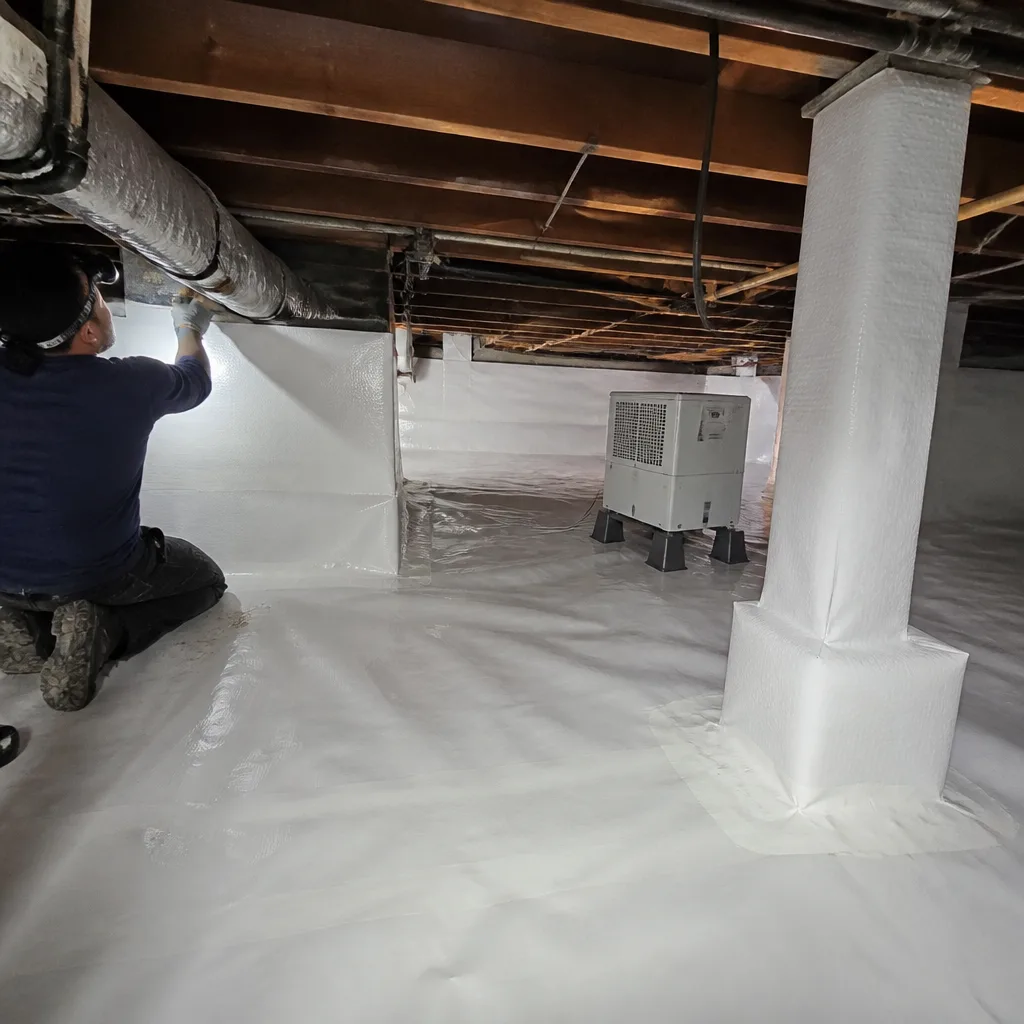
Use this worksheet to force every contractor to bid identical scope. Send it to each bidder and ask for a filled copy back. The contractor who won’t itemize is telling you something.
| Line Item | Contractor A | Contractor B | Contractor C |
|---|---|---|---|
| Existing material removal and disposal ($/sq ft or flat) | |||
| Pre-work blower-door diagnostic (ACH50 baseline) | |||
| Air sealing labor (hours or flat rate) | |||
| Air sealing materials (foam, caulk, blocking, covers) | |||
| New insulation material (type, brand, R-value, depth) | |||
| Installation labor | |||
| Post-work blower-door verification (ACH50 final) | |||
| Permit fee (if applicable) | |||
| Written documentation (scope, warranty, photos, readings) | |||
| TOTAL |
Additional questions to ask in writing:
- What specific air sealing work will be performed? (Top plates? Can lights? Penetrations? Chimney chase? Attic hatch?)
- What depth markers will be installed to verify insulation depth?
- What photos will be taken, and when will I receive them?
- What is the warranty term, and what does it cover?
- Will the crew be employees or subcontractors? (Background-checked, uniformed technicians are standard at Envelope Insulation Co.)
The contractor who returns a complete, itemized response is demonstrating transparency. The one who returns a single number with “trust us” is demonstrating the opposite. In our experience, the detailed bid is rarely the highest, and the vague bid is rarely the best value.
Mountain View Climate, Code, and Market Factors
Mountain View’s location in the Santa Clara Valley creates specific conditions that affect insulation performance and cost. Understanding these helps explain why a bid from a San Jose contractor or a Peninsula company may not translate directly to your home.
Climate Zone 4: Mild Winters, Warm Dry Summers
Mountain View sits in California Climate Zone 4, with roughly 2,800 heating degree days and minimal cooling degree days compared to inland valleys. This means heating dominates energy use, and attic insulation’s primary job is keeping conditioned air from escaping upward through the ceiling plane. Summer attic temperatures regularly exceed 140°F in uninsulated or under-insulated spaces, which radiates downward and forces air conditioning systems to work harder in homes that have it.
The climate also means moisture management is different than in fog-drenched San Francisco or humid Central Valley locations. Mountain View’s dry summers reduce condensation risk but create dust and particulate infiltration pathways that air sealing addresses directly.
Title 24 and Local Amendments
California’s Title 24 Building Energy Efficiency Standards set minimum insulation requirements. For attic floors in Climate Zone 4, the prescriptive requirement is R-38 for new construction and major renovations. Many Mountain View homes built before 1990 have R-11 to R-19, far below current standards. The city’s building department enforces Title 24 with local amendments; permits for insulation work require compliance documentation.
Neighborhood-Specific Construction Patterns
In Monta Loma and The Crossings, 1950s-1960s ranch homes with simple gable roofs and minimal attic penetrations make for straightforward, lower-cost jobs. In Waverly Park and the hills above El Camino Real, split-level and multi-plane rooflines with cathedral ceilings, dormers, and integrated attic-crawl space connections add complexity and labor hours.
Homes near downtown Mountain View and along Castro Street, many renovated or expanded in the 2000s-2010s, often have multiple roof eras with different insulation types layered together. These require careful assessment to determine what’s salvageable and what must come out.
PG&E Rate Structure Impact
Mountain View homeowners pay PG&E’s tiered and time-of-use rates, which have increased substantially since 2020. The marginal cost of heating and cooling - the last therm or kilowatt-hour you use - is the most expensive. Reducing total load through air sealing and insulation disproportionately reduces these high-cost marginal units, improving payback calculations beyond simple percentage savings.
Common Mistakes to Avoid
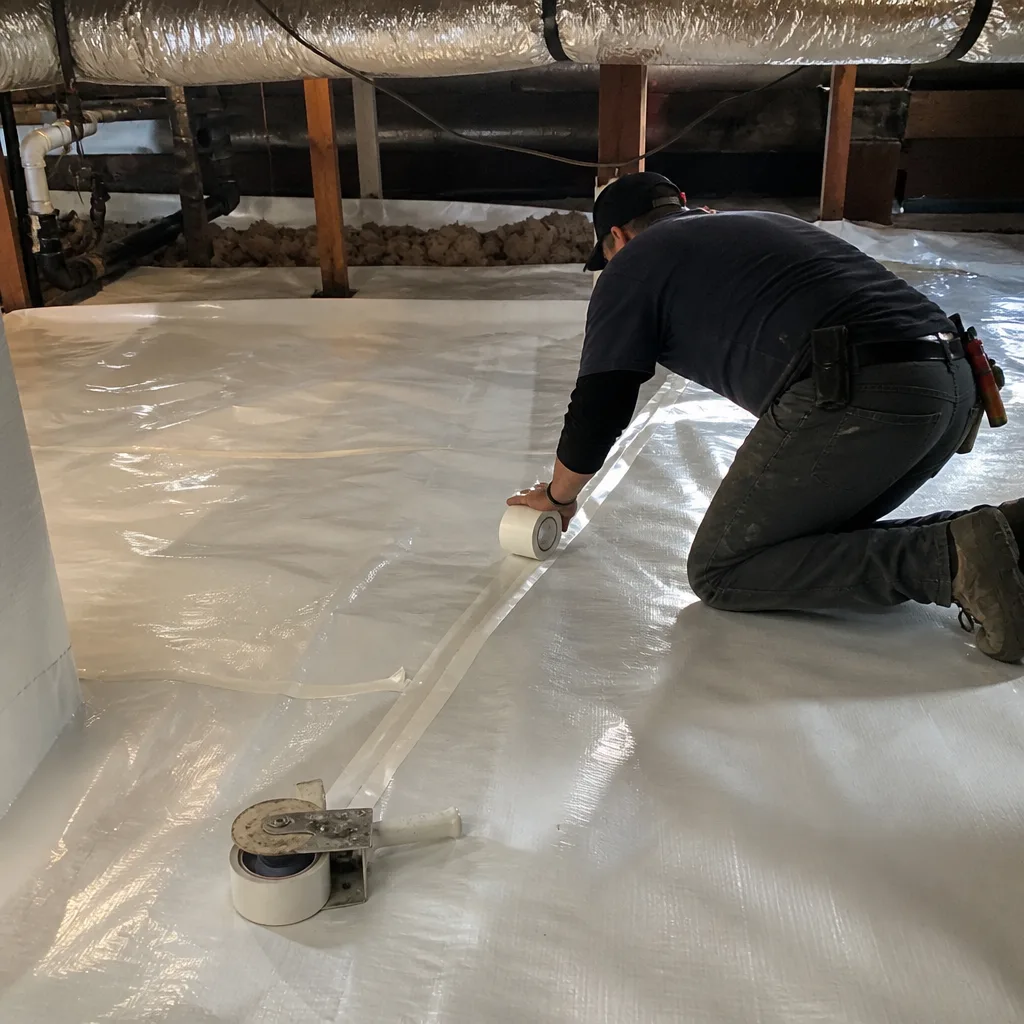
- Accepting a bid without written scope. Verbal descriptions of “we’ll seal everything” evaporate when the crew is in the attic and time is short. Haven Standard requires it in writing for exactly this reason.
- Assuming all blown-in insulation is the same. Cellulose (treated paper fiber), fiberglass (spun glass), and mineral wool (slag or rock fiber) have different densities, settling rates, and moisture tolerances. We specify the product in our written scope because it matters for long-term performance.
- Ignoring the access hatch. An unsealed, uninsulated attic hatch is a square foot of R-1 in a field of R-38. It’s also the most common omission we find in competitor jobs. We include hatch weatherstripping and rigid foam insulation in our standard scope.
- Skipping the post-work verification. Without a second blower-door test, you have no proof the sealing worked. We provide before-and-after numbers on every applicable job because documentation is the only protection against “trust us.”
- Comparing bids with different R-values. A bid for R-38 and a bid for R-49 aren’t comparable without adjusting for material cost. Know what depth you’re buying, and verify it with depth markers after installation.
- Not checking for rebates until after signing. BayREN pre-approval can take 2-3 weeks. If you sign and start work before applying, you may disqualify yourself. We walk homeowners through rebate timing during the estimate phase.
- Hiring based on lowest price without scope comparison. The $2,400 job over existing material with no sealing will always be cheaper than the $5,100 complete job. It’s also not the same service. Line-item comparison reveals the truth.
When to Call a Professional
Call for an assessment if your attic insulation is original to a pre-1990 home, if you’ve noticed uneven temperatures between rooms, if your PG&E bills trend upward without rate changes, or if you’re planning any roof work that will expose the attic plane. Also call if you’ve had rodents, roof leaks, or any event that may have compromised existing material.
Topside Attic Insulation Mountain View offers free estimates in Mountain View. Every estimate includes a written scope, itemized pricing, and explanation of applicable rebates. Call (669) 259-0406 to schedule. A live person answers 24/7, and you’ll receive a text when your technician is on the way.
Frequently Asked Questions
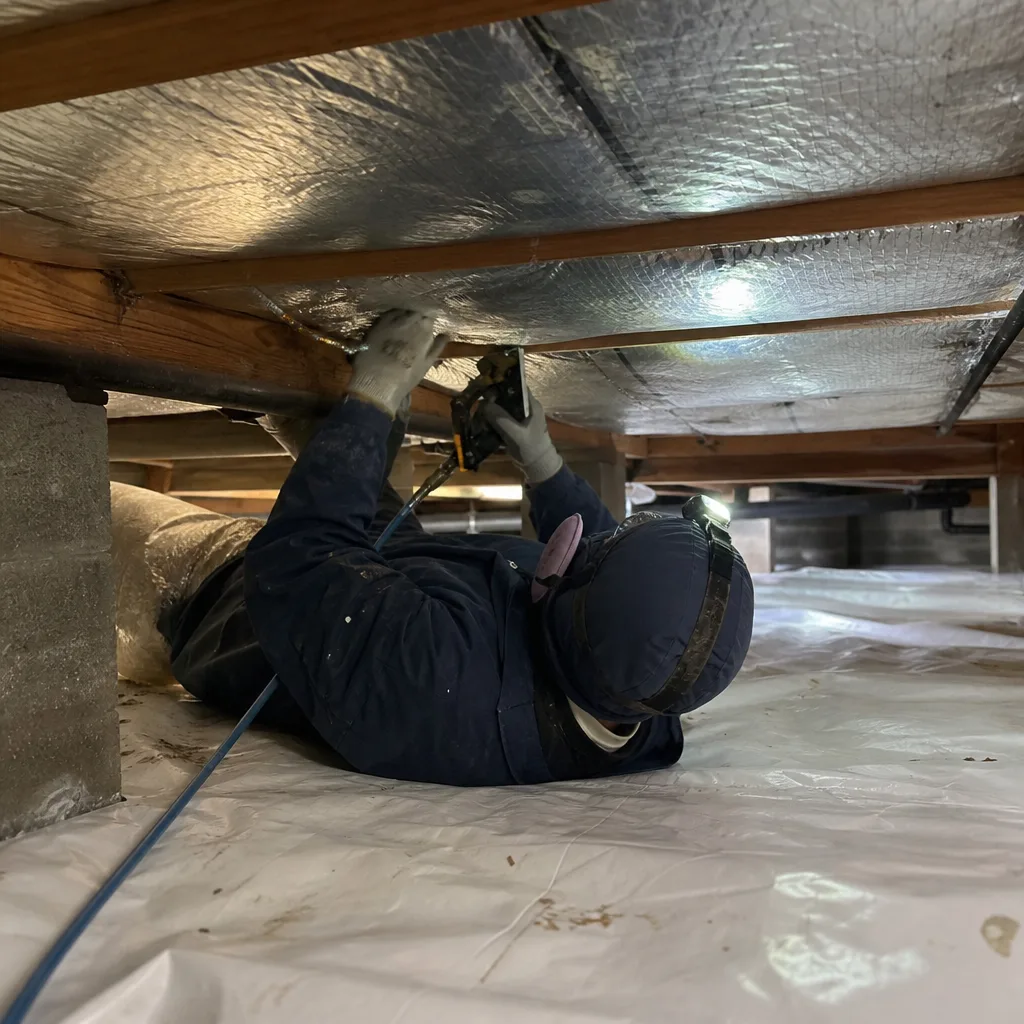
A complete job including removal, air sealing, new insulation to R-38, and post-work blower-door verification typically runs $3,200-$7,200 for a 1,200-square-foot attic. A basic over-blow with no sealing starts around $1,800. Call (669) 259-0406 for a written estimate on your specific home - estimates are free.
Repair is rarely cost-effective. Spot-adding insulation over damaged, compressed, or contaminated existing material hides problems and prevents proper air sealing. Full removal and replacement costs more upfront but delivers measurable performance that repair cannot. In our experience across Mountain View homes, the homeowner who chooses repair usually calls back within two years for the full job.
A complete job on a 1,200-square-foot attic takes one to two days: half day for removal and air sealing, half day for insulation installation, plus blower-door testing before and after. Larger homes or those with complex rooflines in the Waverly Park area may extend to three days. We provide a written schedule with the price so you know the timeline before work starts.
Sometimes, but not for the same measure. PG&E rebates apply to insulation upgrades; BayREN incentives apply to comprehensive projects that may include insulation plus HVAC. Stacking requires careful program navigation. We review rebate eligibility during every estimate and show both with-rebate and without-rebate pricing so you can decide.
California Title 24 requires R-38 minimum for attic floors in Climate Zone 4, where Mountain View sits. Many homeowners choose R-49 for the marginal cost increase, particularly if they plan to stay in the home long-term. The difference in material cost is typically $180-$300 for a 1,200 sq ft attic; the comfort improvement is noticeable in winter.
Demand before-and-after blower-door numbers. A meaningful drop in CFM50 or ACH50 proves the envelope was tightened. Photos of sealed penetrations help, but photos can be staged. A pressurization measurement cannot. We publish these numbers on every applicable job because they’re the only objective proof of performance.
The Bottom Line
Insulation bids in Mountain View vary because the scope behind the bid varies. The homeowner who understands the nine cost components, demands itemized written scope, verifies air sealing with blower-door numbers, and applies rebates correctly will almost always choose the complete job over the stripped-down one - and will save money within three years. The written price before any work starts is your protection. The documented record when the crew leaves is your proof. Both are Haven Standard, and both are how we work.
Written by Wes Okafor, Owner at Topside Attic Insulation Mountain View, serving Mountain View since 2016.