
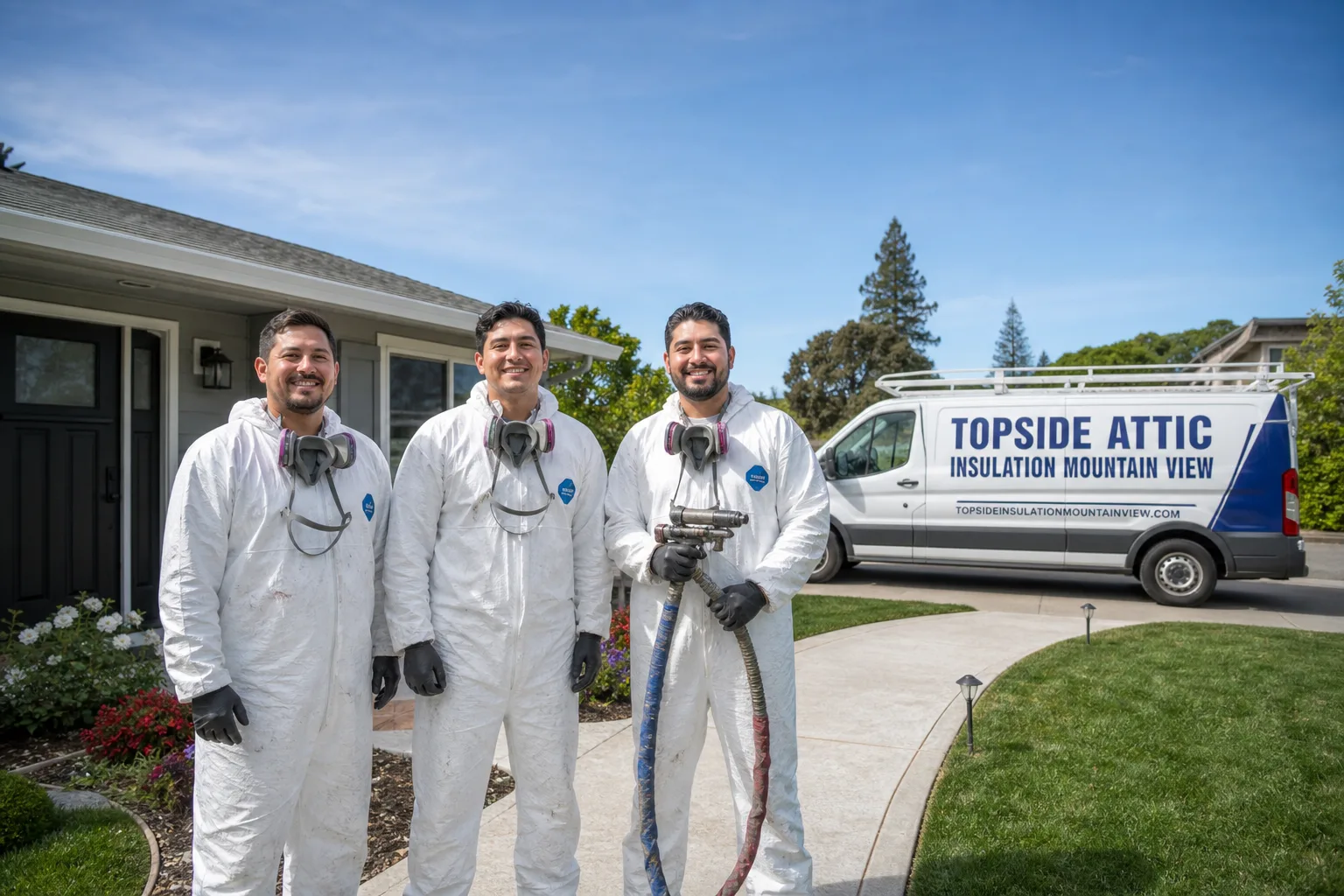
Trusted Blown-In Insulation for Mountain View Homeowners
Blown-in insulation in Mountain View typically costs $1.80 to $3.40 per square foot installed, with most attic jobs running $2,400-$5,800 depending on existing insulation depth and attic accessibility. Most installations finish in a single day, and we can often schedule within 48 hours. Call (669) 259-0406 to get a written price before any work starts.
We’ve sealed and insulated over 9,000 homes since 2016, and we’ve learned that blown-in insulation only works when the attic floor is sealed first. In Mountain View’s older neighborhoods like Old Mountain View and the Monta Loma area, we regularly find original 1950s insulation sitting on top of unsealed top plates and recessed can lights. That insulation is doing half a job. At Topside Attic Insulation Mountain View, we don’t blow Blown-In Insulation in Mountain View until we’ve sealed the air leaks that let your conditioned air escape into the attic. Every job gets a blower-door test - a pressurization reading that shows, in one number, how much air your building envelope is losing - and we publish the before-and-after numbers so you can verify the result.
Mountain View’s climate sits in that tricky zone: warm, dry summers that push attic temperatures past 140°F, and cool, damp winters where heat loss through the ceiling drives up gas bills. The homes built during the semiconductor boom of the 1960s and 70s, especially in the Whisman Station and Castro City areas, were often insulated to the bare minimum code of that era. If your home was built before 1990 and hasn’t had insulation upgraded, you’re almost certainly under-insulated by current standards.
What Our Blown-In Insulation Service Includes
Blown-In Cellulose
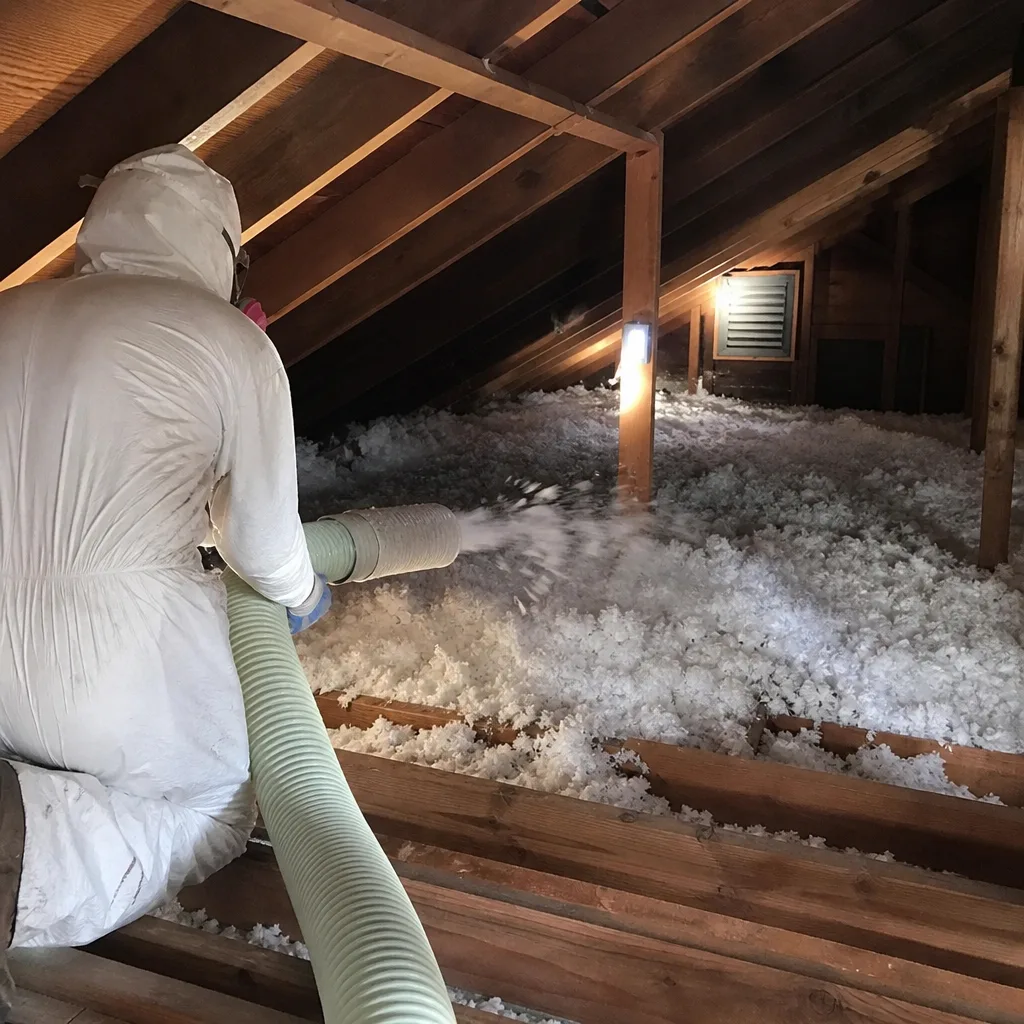
Blown-in cellulose is ground paper fiber treated with borate fire retardant, and it’s the material we specify most often for Mountain View attics. It packs tightly around irregular framing and wiring, and its density helps block air movement better than loose fiberglass. We use cellulose when we’re adding insulation over existing material or doing a full replacement in older homes with complex rooflines. Every cellulose job starts with sealing top plates, plumbing penetrations, and can light housings - we won’t blow over an unsealed attic floor. The finished depth depends on your target R-value, but most Mountain View attics need 12-15 inches for R-38 to R-49.
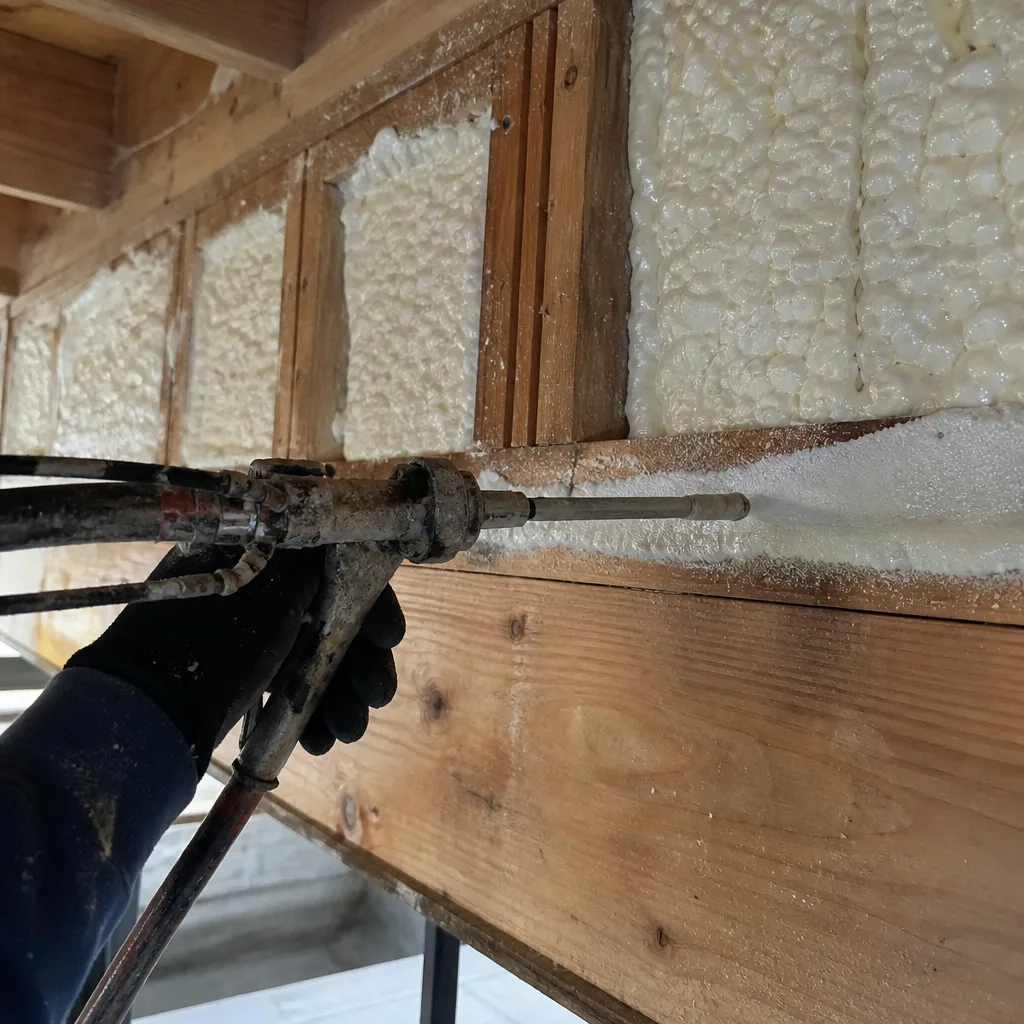
Blown-In Fiberglass
Blown-in fiberglass is spun glass fiber, lighter and less dense than cellulose, and it’s our choice when attic framing can’t handle the weight of a full cellulose fill or when we’re topping off existing fiberglass without full removal. We see this need often in the Ranch-style homes of the Blossom Valley and Sylvan Park neighborhoods, where shallow rafter bays limit how much material we can install. Fiberglass doesn’t settle as much as cellulose, but it also doesn’t resist air flow as well - which is why our blower-door test after air sealing matters. We source blown-in fiberglass from Owens Corning and Johns Manville, and we adjust the install density to the manufacturer’s spec for your climate zone.
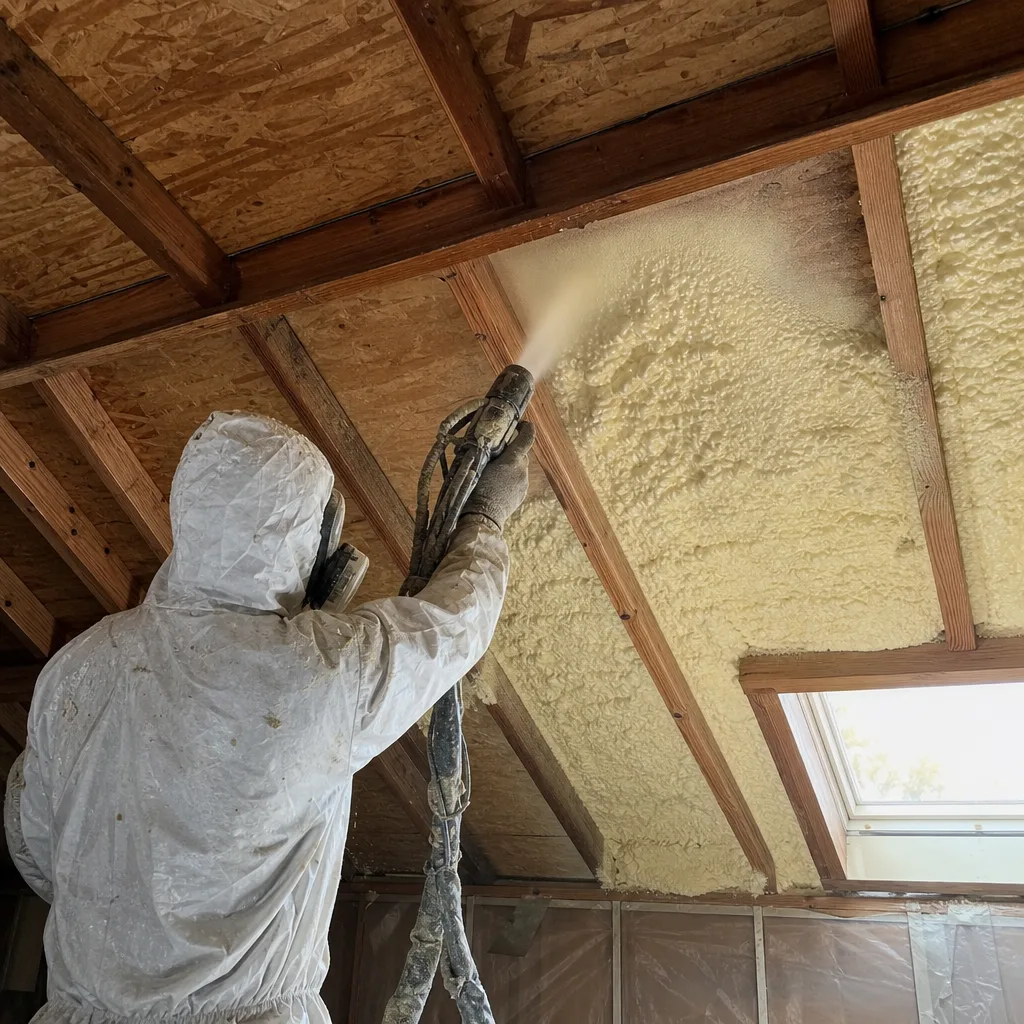
Dense-Pack Wall Insulation
Dense-pack wall insulation is blown-in cellulose or fiberglass installed at high pressure into closed wall cavities, and it’s the only practical way to insulate finished walls without tearing off drywall. In Mountain View’s Eichler and other mid-century modern homes - common in the Fairview Park and Ladera areas - uninsulated walls are the weak point after the attic is handled. Dense-pack requires drilling access holes, either from inside or outside, and blowing material at 3.5-4.0 pounds per cubic foot so it won’t settle. We verify fill completeness with thermal imaging during the install, and we patch access holes to match your wall finish. This is specialized work: done wrong, it leaves voids that show up as cold stripes on your walls in winter.
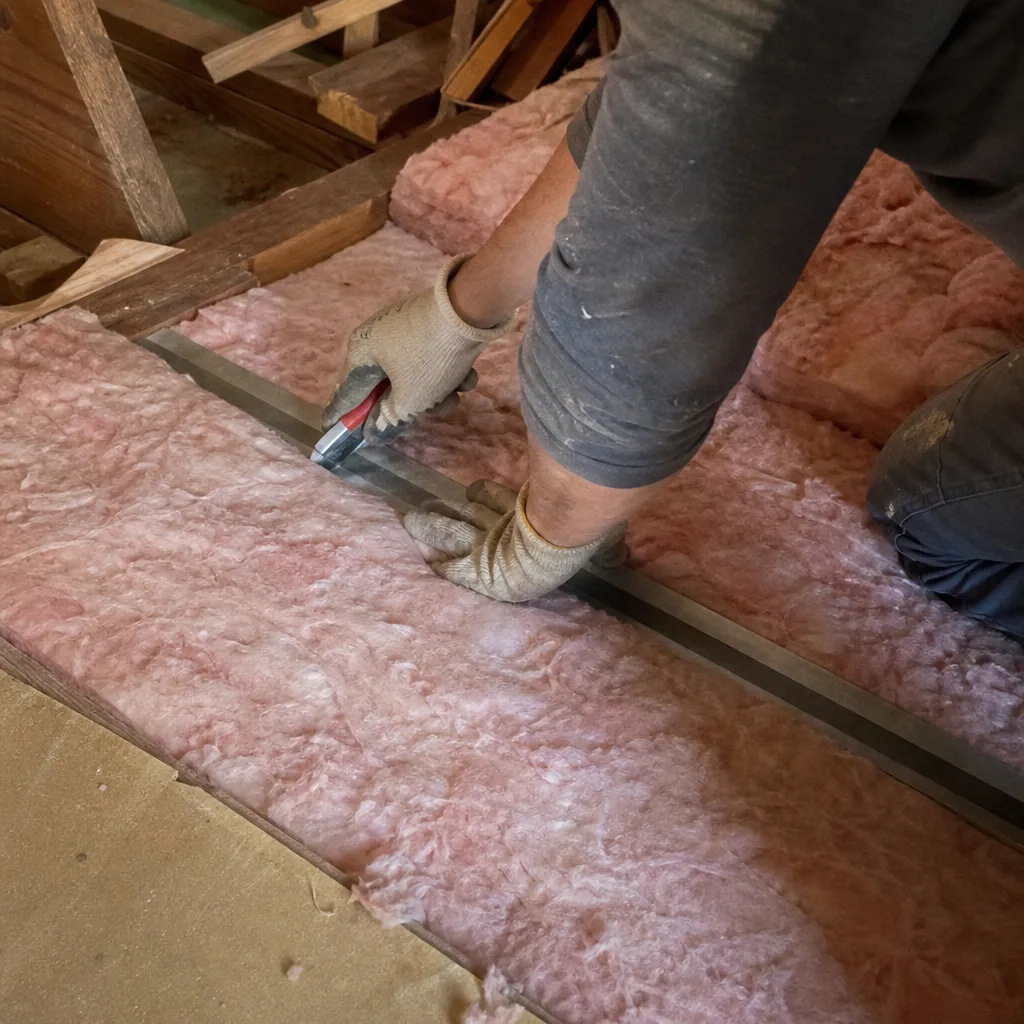
Blown-In Top-Up
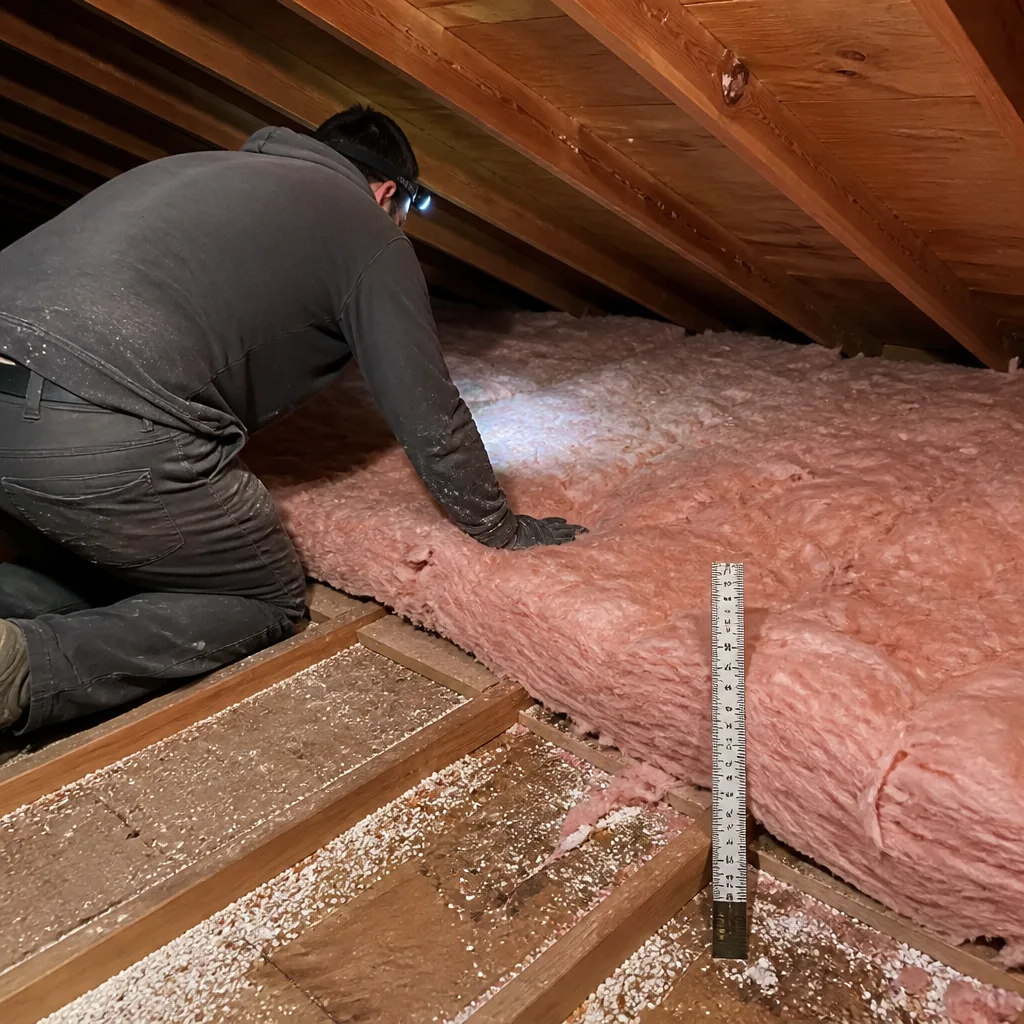
Blown-in top-up adds new insulation over existing material when the current layer has compressed or settled below effective levels. We see this in Mountain View homes where original fiberglass batts have lost loft after 20-30 years, or where prior contractors skimped on depth. Before any top-up, we test what you’ve got: measure existing depth, check for moisture damage or rodent activity, and verify that the attic floor is sealed. Adding insulation over a leaky attic floor is like putting a thicker sweater on with the zipper open. If your existing insulation is clean and the air sealing is adequate, a top-up is the most cost-effective way to improve performance. If not, we quote the sealing work separately so you know exactly what you’re paying for.
What happens when you call
- 1
A real person answersNo phone trees - you reach a local pro.
- 2
You get an upfront price rangeHonest numbers before anyone is dispatched.
- 3
A background-checked tech heads outLicensed & insured, dispatched right away.
- 4
You approve before work beginsNothing starts until you say go.
Brands We Service for Blown-In Insulation
We’ve installed blown-in insulation systems using Owens Corning, Johns Manville, Knauf, and Rockwool products across Mountain View and the Peninsula. With Owens Corning, we typically specify their ProPink L77 loose-fill fiberglass for attics with good access and stable framing - it’s the material we’ve used most often for our Blown-In Insulation in Los Altos Hills and the Cuesta Park area. Johns Manville’s Climate Pro blown-in fiberglass is our alternate when we need a slightly higher R-value per inch in constrained spaces. We’ve worked with both brands enough to know their density requirements and settling characteristics, which matters when we’re writing a scope that has to perform for decades.
Knauf’s Jet Stream Ultra blown-in fiberglass and Rockwool’s Comfortbatt and blown stone wool round out our typical specifications. Rockwool’s fire resistance and sound-dampening properties make it our choice for wall cavities shared with attached garages or near mechanical rooms. Whether you have a preference for one of these brands or you’re starting from zero knowledge, we’ll specify the material that fits your home’s construction and your performance goals. No proprietary lock-ins, no mystery products.
Signs You Need Blown-In Insulation Right Now
- Your upstairs rooms run 8-12°F warmer than downstairs in summer. In Mountain View, this is the most common complaint we hear from homeowners in the Rex Manor and Waverly Park neighborhoods. Heat builds in under-insulated attics all day, then radiates through the ceiling into living spaces below. Your AC runs longer, wears faster, and still can’t catch up.
- Energy bills spike every July and January. If your PG&E bill doubles in summer compared to spring, your attic is likely the culprit. We see this pattern in homes with original R-19 or less in the attic, which was code-adequate in 1980 and is now considered substandard.
- You can see floor joists in your attic. Insulation should cover joists completely. If you can see the tops of the boards, you don’t have enough depth. Current California Title 24 standards call for R-38 to R-49 in attics, which translates to 12-15 inches of blown material depending on type.
- Drafts and cold spots near exterior walls in winter. This often signals both low attic insulation and unsealed top plates - the gaps where interior walls meet the attic floor. Air leaks here pull conditioned air straight up, and no amount of thermostat adjustment fixes it.
- Ice dams or moisture staining on your roof sheathing. Even in Mountain View’s mild climate, poor attic insulation and ventilation can create condensation on the underside of roof decking. We’ve found this in older homes with blocked soffit vents and compressed insulation near the eaves. Left alone, it leads to mold and rot.
Our Blown-In Insulation Process - Step by Step
- 1
On-site assessment and blower-door test. We arrive with a written appointment window, text when we’re en route, and start with a full attic inspection. The blower-door test - a pressurization reading that shows, in one number, how much air your building envelope is losing - gives us a baseline. In Mountain View’s older stock, we typically see 3,500-5,500 CFM50 before any work. We photograph everything and note any safety hazards: exposed wiring, active leaks, or compromised framing.
- 2
Written scope and price before any work starts. Under Haven Standard Clause 1, you get a flat price, written scope, and written warranty before anyone lifts a tool. No verbal estimates, no “we’ll see how it goes” pricing. The scope specifies material type, target R-value, air-sealing details, and cleanup responsibilities.
- 3
Air sealing of the attic floor. This is non-negotiable. We seal top plates with fire-rated caulk or foam, box out can lights with airtight covers, seal around chimney chases and plumbing vents, and gasket the attic hatch. Every penetration gets addressed. We run the blower-door again after sealing to measure improvement - typically 20-40% reduction in air leakage.
- 4
Blown-in insulation installation to spec. We set up containment to protect your living space, install baffles at soffit vents to maintain airflow, and blow material to the depth and density specified in your scope. For cellulose, we verify with depth probes across the attic. For dense-pack walls, we use thermal imaging to check for voids as we work.
- 5
Final blower-door test, documentation, and cleanup. We run the blower-door a third time to capture your after number, photograph the completed work, and deliver your Documented Photo Record with before-and-after readings. The crew vacuums the work path, removes all debris, and leaves your home as we found it. Your 365-Day Done Right Promise warranty is active from this moment.
How Much Does Blown-In Insulation Cost in Mountain View?
Most Blown-In Insulation pricing for attic jobs in Mountain View runs $2,400-$5,800 for a typical 1,200-2,400 square foot home, depending on existing conditions and target R-value. Dense-pack wall insulation runs higher - typically $3,200-$7,500 - because of the labor involved in accessing closed cavities. A simple blown-in top-up over adequate existing insulation starts around $1,800.
| Service | Typical Range in Mountain View | What Drives the Price |
|---|---|---|
| Blown-in cellulose attic (full) | $2,800-$5,200 | Attic square footage, removal of old material, accessibility |
| Blown-in fiberglass attic (full) | $2,400-$4,800 | Depth required, framing constraints, air sealing extent |
| Dense-pack wall insulation | $3,200-$7,500 | Wall area, interior vs. exterior access, finish repair |
| Blown-in top-up | $1,800-$3,400 | Existing depth, material type, whether air sealing is needed |
What moves the number: attic accessibility (steep roofs and tight hatches add labor), whether old insulation needs removal (moisture damage or rodent contamination), and the extent of air sealing required. Homes in the Permanente and Rengstorff areas with original knob-and-tube wiring may need electrical evaluation before we can insulate, which we flag during assessment.
How to avoid overpaying: get a written scope that specifies material brand, target R-value, and air-sealing details. Vague quotes that just say “insulate attic” leave room for shortcuts. Under Haven Standard, our price includes everything: materials, labor, air sealing, cleanup, documentation, and warranty. No line-item surprises. And if you have a competing written estimate, bring it - we offer a Free Second Opinion and we’ll read it with you.
Blown-In Insulation Near Mountain View - Our Service Area
We work throughout the Peninsula and South Bay with typical response times under 48 hours for Mountain View proper. Our regular service area includes Blown-In Insulation in Los Altos, Blown-In Insulation in Sunnyvale, Palo Alto, Los Altos Hills, East Palo Alto, Cupertino, Santa Clara, Menlo Park, Newark, Atherton, and Portola Valley. Homes in the hills above 280 - Portola Valley and Los Altos Hills - sometimes need scheduling flexibility for weather, but we don’t charge travel fees within our stated area. If you’re unsure whether we cover your address, call (669) 259-0406 and a live person will confirm.
Serving Mountain View, CA - Our Local Coverage Area
We’re based in the Mountain View area and know this community well. Use the map below to see our service coverage - if you’re nearby, we can almost certainly help.
Frequently Asked Questions - Blown-In Insulation in Mountain View
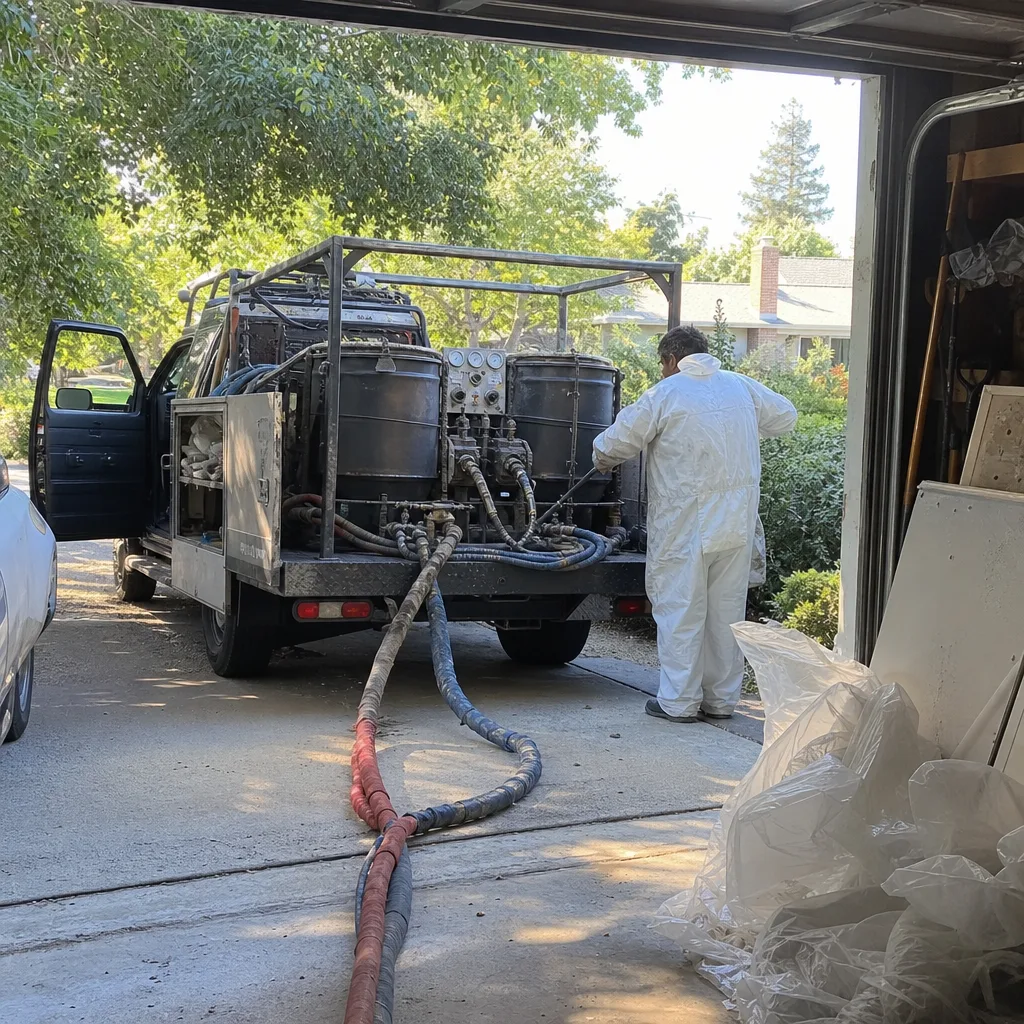
Blown-in insulation is loose fiber material - cellulose, fiberglass, or mineral wool - installed with a blower machine that propels it into attic floors or wall cavities. It conforms to irregular spaces better than batts and fills gaps around wiring, framing, and ductwork that would otherwise leak heat. In Mountain View, we use blown-in as our default for attics and as the only practical solution for insulating finished walls without demolition. We also offer Blown-In Insulation - Sunnyvale and surrounding areas.
Most attic jobs finish in one day; dense-pack wall work typically takes two days including access hole patching. The actual blowing is fast - a 1,500 square foot attic takes 2-3 hours - but we don’t rush the air sealing that comes first. We schedule arrival at 8 AM for attic work and complete blower-door testing, sealing, insulation, and cleanup by late afternoon.
Attic jobs typically run $2,400-$5,800, dense-pack walls $3,200-$7,500, and simple top-ups start around $1,800. The exact price depends on your home’s size, existing insulation condition, and how much air sealing is needed. We provide a flat, written price before any work starts - call (669) 259-0406 for an exact quote; estimates are free.
Yes. We’ve installed hundreds of Owens Corning and Johns Manville blown-in systems across Mountain View and the Peninsula, and we stock both brands’ materials. We also work with Knauf, Rockwool, and other major manufacturers - no proprietary lock-in, no brand restrictions.
We answer calls 24/7 and can often schedule within 48 hours, though same-day availability depends on crew routing. True insulation emergencies are rare - most issues have been developing for years - but we prioritize homes with active roof leaks into insulation or no heat in winter. Call (669) 259-0406 and we’ll assess urgency honestly.
Every job carries our 365-Day Done Right Promise - if it’s not done right, we make it right. This covers material performance, installation quality, and any air-sealing defects. The warranty is written and delivered before work starts, not promised verbally after the fact. Haven Standard: Have it in writing.
Clear a path from your entry to the attic hatch, remove stored items from the attic if accessible, and ensure we can reach electrical panels. We’ll cover floors and furniture in the work path, but fragile items should be moved. Pets should be secured away from the work area. We handle everything else: containment, cleanup, and debris removal.
Schedule Your Blown-In Insulation Service in Mountain View Today
Call (669) 259-0406 to schedule your free estimate. A live person answers 24/7, and you’ll get a written price before any work starts - no exceptions. We’ll assess your attic, run a blower-door test, and show you exactly what improvement looks like in documented numbers. Serving Mountain View and the Peninsula since 2016.
Written by Wes Okafor, Owner at Topside Attic Insulation Mountain View, serving Mountain View since 2016.