
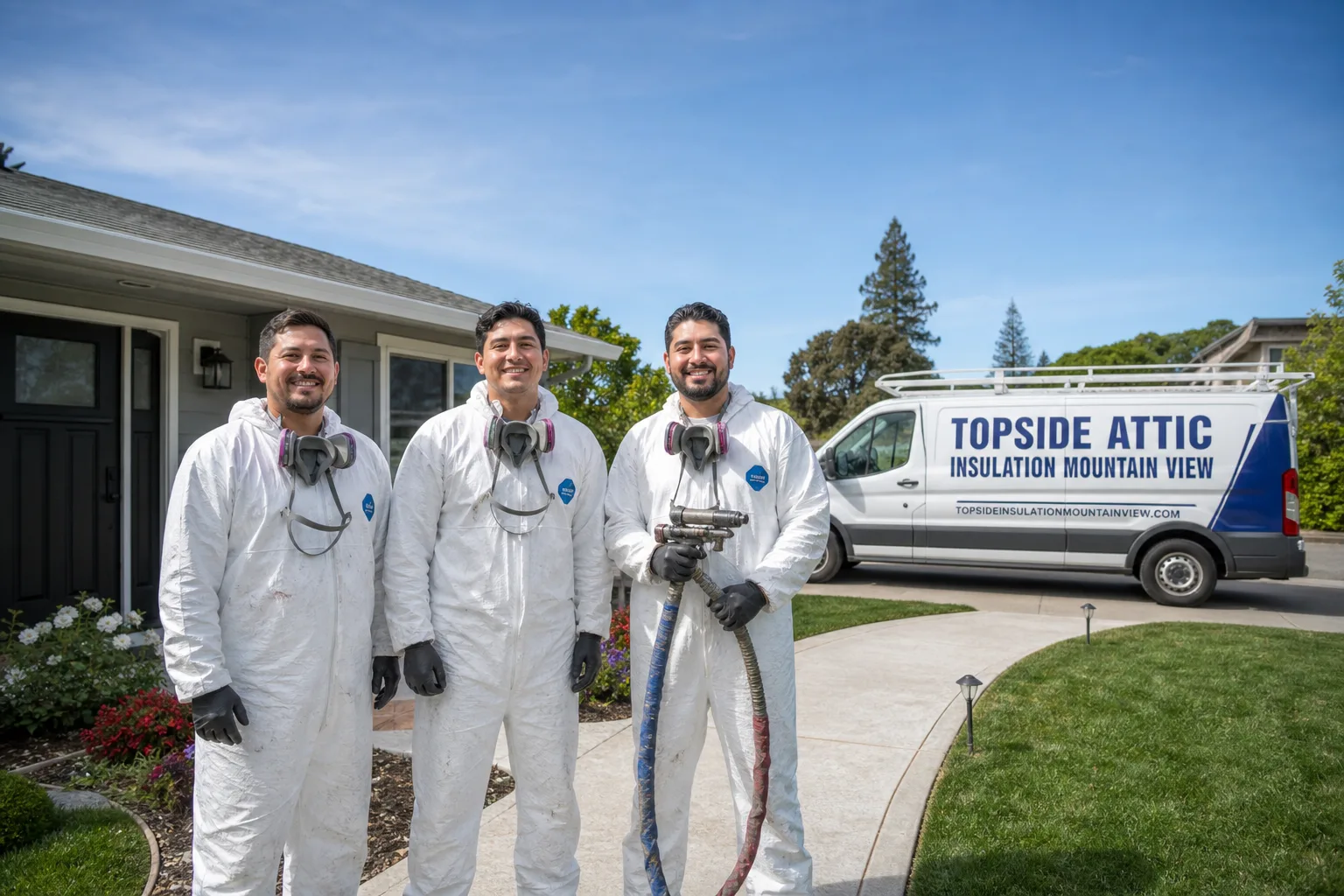
How Much Does Attic Insulation Cost in Mountain View?
Attic Insulation Near Me in Mountain View, CA typically costs between $1,800 and $4,200 for a standard single-story home, with most jobs landing around $2,400 to $3,100 depending on square footage, current insulation condition, and whether air sealing is done first. Blown-in fiberglass or cellulose is the most common approach here, and same-day completion is standard for homes under 2,000 square feet. If your attic has no insulation at all – which we see more often than you’d think in older Crestview and Old Mountain View homes built before 1980 – budget toward the higher end.
Attic Insulation Cost Breakdown (2026)
Below are the price ranges Envelope Insulation Co. sees across Mountain View jobs in 2026. These are real figures, not estimates padded for negotiating room. Every number here reflects actual written scopes we’ve delivered to homeowners from Shoreline West to the Wagon Wheel neighborhood.
| Service | Typical Cost Range | Notes |
|---|---|---|
| Blown-in fiberglass (per square foot) | $1.20 - $2.10/sq ft | Most common choice for Mountain View attics; installs fast, performs well in Bay Area climate swings |
| Blown-in cellulose (per square foot) | $1.10 - $1.90/sq ft | Good recycled-content option; performs similarly to fiberglass at this climate zone (CEC Climate Zone 4) |
| Spray foam (open-cell, per square foot) | $1.80 - $3.20/sq ft | Used at attic rim joists and specific penetrations – rarely the right call for an entire attic floor |
| Spray foam (closed-cell, per square foot) | $3.50 - $6.00/sq ft | Typically reserved for specific air-barrier applications, not full attic coverage |
| Attic air sealing (standalone) | $400 - $900 | Top plates, can lights, plumbing and electrical penetrations; this is a prerequisite at Envelope, not an upsell |
| Insulation removal (old batt or blown-in) | $1.00 - $2.00/sq ft | Required when existing material is compressed, contaminated, or rodent-damaged – common in homes near Rengstorff Park |
| Full attic job (removal + seal + re-insulate) | $3,200 - $5,800 | 1,500-2,200 sq ft attic; includes blower-door readings before and after |
| New construction / add-on only (no removal) | $1,800 - $3,400 | 1,000-1,800 sq ft attic floor; air sealing included before any insulation is placed |
| Radiant barrier installation | $600 - $1,400 | Often added in tandem with insulation; reduces summer attic temperatures measurably in Mountain View’s inland-adjacent heat events |
What Those Numbers Include
A written price from us covers labor, materials, attic air sealing (completed before insulation goes in – always), and a Documented Photo Record of the work. On applicable jobs, you also get a blower-door test – a pressurization reading that shows, in one number, how much conditioned air the building envelope was losing before and after the work. That number goes in writing. You’ll see it whether the result is dramatic or modest.
What they don’t include: permits. Mountain View Building Division typically does not require a permit for insulation added to an existing attic, but if your project involves attic structural repairs or HVAC modifications, that changes. We’ll flag it in the written scope before anything starts.
Why Mountain View Jobs Sometimes Cost More Than Peninsula Averages
A few things push prices up in this market specifically. Labor costs in Santa Clara County are higher than the Bay Area median. Access in older neighborhoods – tight, low-pitch attics in 1950s and 1960s ranch-style homes in Rex Manor and Sylvan Park – adds time. And because PG&E’s territory covers Mountain View, you’re eligible for their on-bill financing programs for energy upgrades, which can affect how homeowners structure the job financially (more on that below). None of these factors are unusual, but they’re worth naming so the number you see in your written estimate doesn’t come as a surprise.
What Affects Attic Insulation Pricing in Mountain View
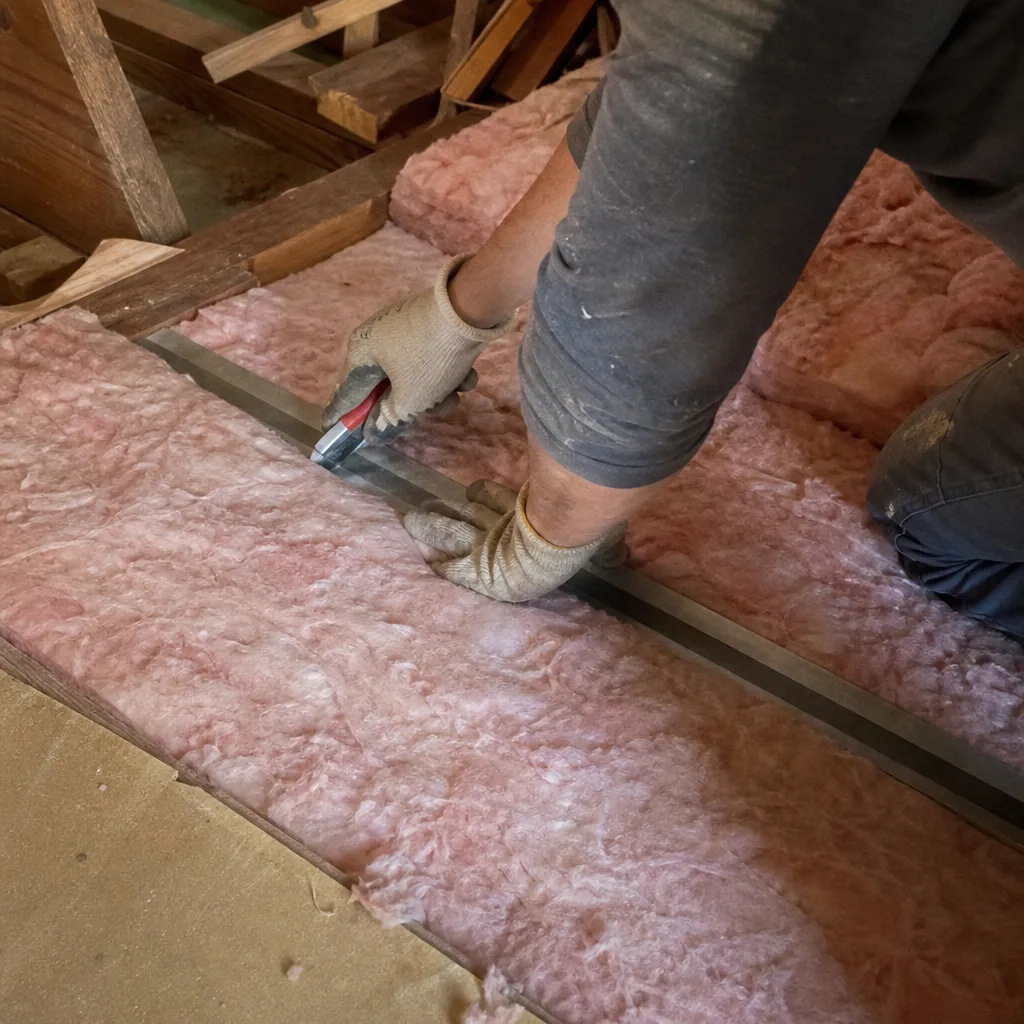
- Attic square footage and accessibility. Price scales with floor area, but the bigger variable is access. A pull-down stair with a 22-inch opening in a 1,600 sq ft Gemello-neighborhood ranch adds equipment and labor time versus a standard scuttle with clear headroom. Attics with 24 inches or less of clearance at the ridge cost more to work in – and we’d rather tell you that upfront than explain a change order afterward.
- Existing insulation condition. Attics in Mountain View homes built before 1985 often have original fiberglass batts sitting at R-11 or lower – well below California Title 24’s current R-38 requirement for Climate Zone 4. If that old insulation is intact, we can blow additional material over it. If it’s compressed, rodent-contaminated, or water-damaged (we see both near the Permanente Creek drainage corridor), removal is the right call and adds to the cost.
- Air sealing scope. At Envelope, we seal before we insulate – that is the sequence, not optional. But the amount of sealing varies. A 1970s Mountain View home with recessed can lights that penetrate the ceiling drywall, an unsealed attic hatch, and open top plates around HVAC chases will need more sealing labor than a 2005 build with a tight ceiling. We measure the difference with a blower-door test and document the starting point before any work begins.
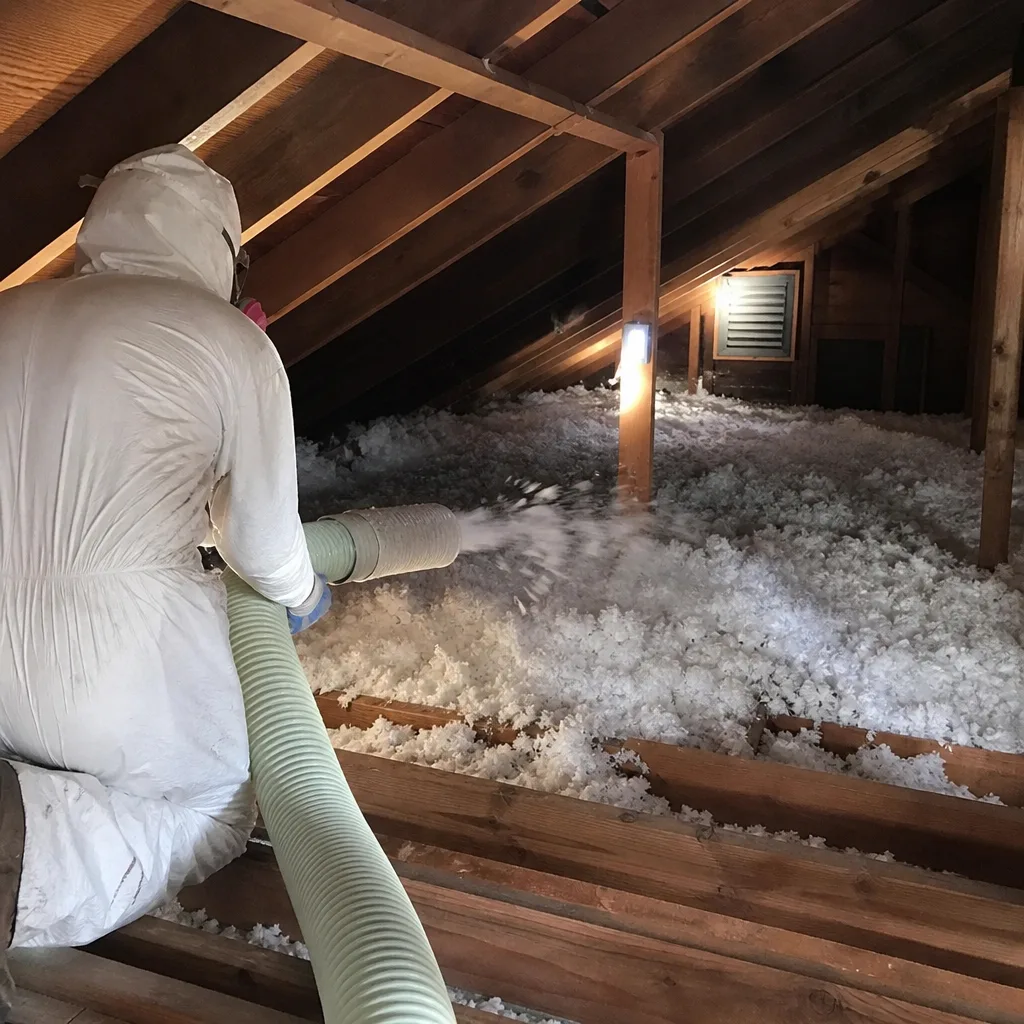
- Material choice. Blown-in fiberglass from Owens Corning or Johns Manville sits at one price point; blown-in cellulose from GreenFiber sits slightly lower; spray foam from Icynene or Demilec is meaningfully higher per square foot. For a standard attic floor in Mountain View’s climate, blown-in fiberglass or cellulose delivers the performance-to-cost ratio that makes sense for most homes. We’ll tell you the same thing whether or not it’s the most expensive option.
- R-value target. California’s Energy Code (Title 24) sets R-38 as the minimum for attic floors in Climate Zone 4, which covers Mountain View. But some homeowners working toward rebate eligibility or preparing a home for sale request R-49. The jump from R-38 to R-49 adds roughly $0.35-$0.55 per square foot in material cost. It’s not always worth it; we’ll show you the math.
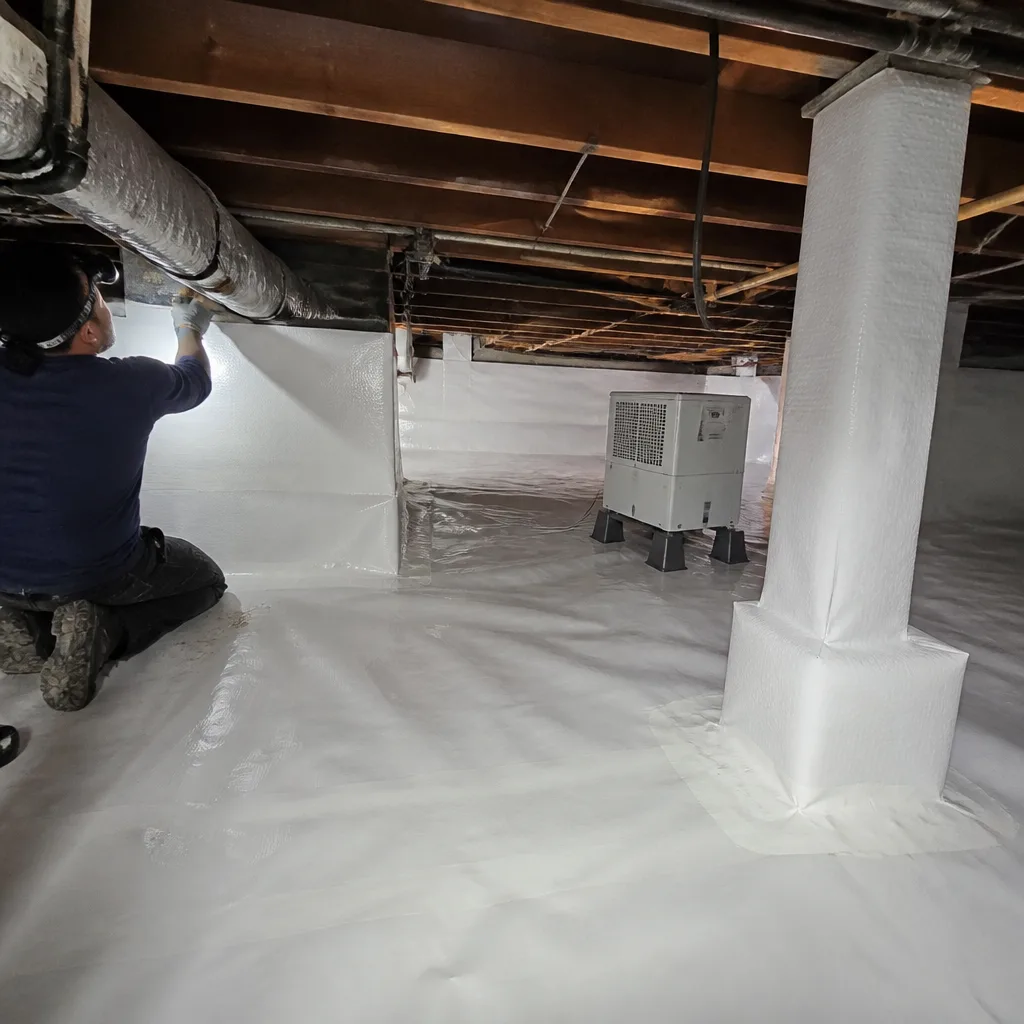
- Combined services. Adding a radiant barrier, attic cleaning, or crawl space work to the same visit reduces mobilization costs. We’ve done full envelope days in Old Mountain View – attic air seal, blown-in insulation, crawl space vapor barrier – where bundling saved the homeowner $400 to $700 compared to separate visits. If the work needs doing, the timing question is worth asking.
Mountain View’s Climate and Why It Changes the Insulation Math
Mountain View sits in CEC Climate Zone 4, which means it doesn’t get the punishing summers of Gilroy or the wet cold of San Francisco. What it does get is a wide diurnal temperature swing – 30 to 40 degrees between a July night and a July afternoon is common in neighborhoods east of Highway 85, closer to the bay. That range means an attic that’s poorly insulated leaks heat in both directions: it lets summer heat into living space and lets conditioned air escape during cooler nights.
The other local factor is radiant gain. Mountain View’s long, clear summer days drive attic temperatures above 140°F regularly, especially in south-facing attics in the Crestview and Monta Loma neighborhoods. Insulation alone slows conductive heat transfer; it doesn’t address radiant gain from a hot roof deck. A radiant barrier – foil-faced material that reflects rather than absorbs – handles that separate mechanism. We almost always recommend pairing the two when a roof faces south or west and the attic has no existing radiant barrier.
None of this is unique to Mountain View, but it’s specific enough to matter when you’re deciding how much to invest and in which combination of materials.
PG&E Rebates and California Incentives That Apply in Mountain View
Mountain View falls inside PG&E’s service territory, which gives homeowners access to a few real programs worth knowing about before signing a scope.
- PG&E Energy Upgrade California rebates: As of 2026, PG&E offers rebates for attic insulation upgrades that meet Title 24 minimums and are installed by a participating contractor. Rebate amounts shift periodically; the current range for attic insulation has been $100 to $300 per home, but verify the current figure directly with PG&E before factoring it into your budget decision.
- Federal 25C Tax Credit: The Inflation Reduction Act’s Section 25C credit covers 30% of insulation material costs, capped at $1,200 per year. This applies to qualifying insulation that meets IECC standards. We provide the documentation you need to claim it; we don’t file it for you, but you’ll have what your tax preparer requires.
- TECH Clean California: This program funds electrification and building-envelope work through a network of participating contractors. Eligibility is income-qualified for the largest incentives, though some measures are available to all customers. Worth checking if your household income is at or below 80% of Santa Clara County’s Area Median Income.
- On-bill financing through PG&E: For homeowners who want to spread the cost of energy upgrades, PG&E offers on-bill repayment where the monthly energy savings partially offset the payment. This works best on full-envelope projects where the blower-door result shows a meaningful reduction – which is exactly the kind of documented outcome we provide.
We’ll tell you which programs your project qualifies for when we deliver the written price. We don’t chase rebates on your behalf, but we prepare the project documentation so you’re not starting from scratch when you apply.
How to Save on Attic Insulation in Mountain View
A few concrete ways to reduce the total cost of an Attic Insulation Top-Up project without compromising the result:
- Get the air sealing done at the same time. Skipping air sealing to save money is a common decision that usually costs more in the long run. An attic insulated over unsealed penetrations will underperform its rated R-value because air movement through gaps bypasses the insulation layer entirely. Doing both in one visit costs less than returning for the sealing job later – and the blower-door numbers will show the difference.
- Use a free second opinion on any written estimate. If you’ve already received a written quote from another contractor, we’ll read it with you. We’re looking for scoping gaps – work that’s missing, materials that are unspecified, or line items that are vague enough to create disputes. A second opinion on a written estimate is free. Call (669) 259-0406 and bring the paperwork.
- Bundle services on a single visit. Attic insulation and crawl space vapor barrier work involve the same mobilization costs. If your crawl space needs attention – and in many Mountain View homes south of El Camino Real, it does – scheduling both on the same day typically saves $300 to $500 on the combined project.
- Apply for rebates before you start. Some PG&E programs require pre-approval before work begins. We’ll flag any timing requirements in the written scope, but confirm directly with PG&E’s energy efficiency program line to avoid losing money on an eligible project due to application sequencing.
- Target R-38, not R-60. More insulation is not always better in Climate Zone 4. California’s energy code sets R-38 for a reason, and the performance gains above R-49 are small enough in Mountain View’s climate that we’d rarely recommend chasing a higher number. Don’t pay for R-value you won’t recover in energy savings.
- Time the job outside peak demand. January through March tends to be slower for attic insulation work in Mountain View. Scheduling during this window occasionally allows for tighter crew availability and faster scheduling, though we don’t discount prices based on season. What you gain is flexibility on start dates.
What Our Attic Insulation Process Looks Like in Mountain View
We’ve run our Attic Insulation services across more than 9,000 homes since 2016, and the sequence doesn’t change based on neighborhood or job size. Here’s what a typical Mountain View job looks like from first call to final documentation.
Step 1: Written price before anything starts
Under Haven Standard Clause 1, no work begins without a written price, a written scope, and a written warranty in your hands. That’s not a policy we follow when it’s convenient – it’s the foundation of how we operate. You’ll know what you’re paying, what we’re doing, and what happens if something isn’t right before our crew arrives.
Step 2: Blower-door test at the start
A blower-door test – a pressurization reading that shows, in one number, how much conditioned air the building envelope is losing – is run before any work begins on applicable jobs. This gives us a baseline CFM50 reading (cubic feet per minute at 50 Pascals of pressure difference) and tells us exactly where air sealing effort will have the most impact. In older Mountain View homes, we regularly see readings above 3,000 CFM50 before sealing. We document the number and share it with you.
Step 3: Air sealing – completed first, not offered as an add-on
Top plates, recessed can light boxes, attic hatch perimeters, plumbing penetrations, electrical chase openings – these are sealed before any insulation is placed. This is the order of operations. Blowing insulation over unsealed gaps is a practice we won’t do, because the blower-door result afterward would show what that choice costs in performance.
Step 4: Insulation installation
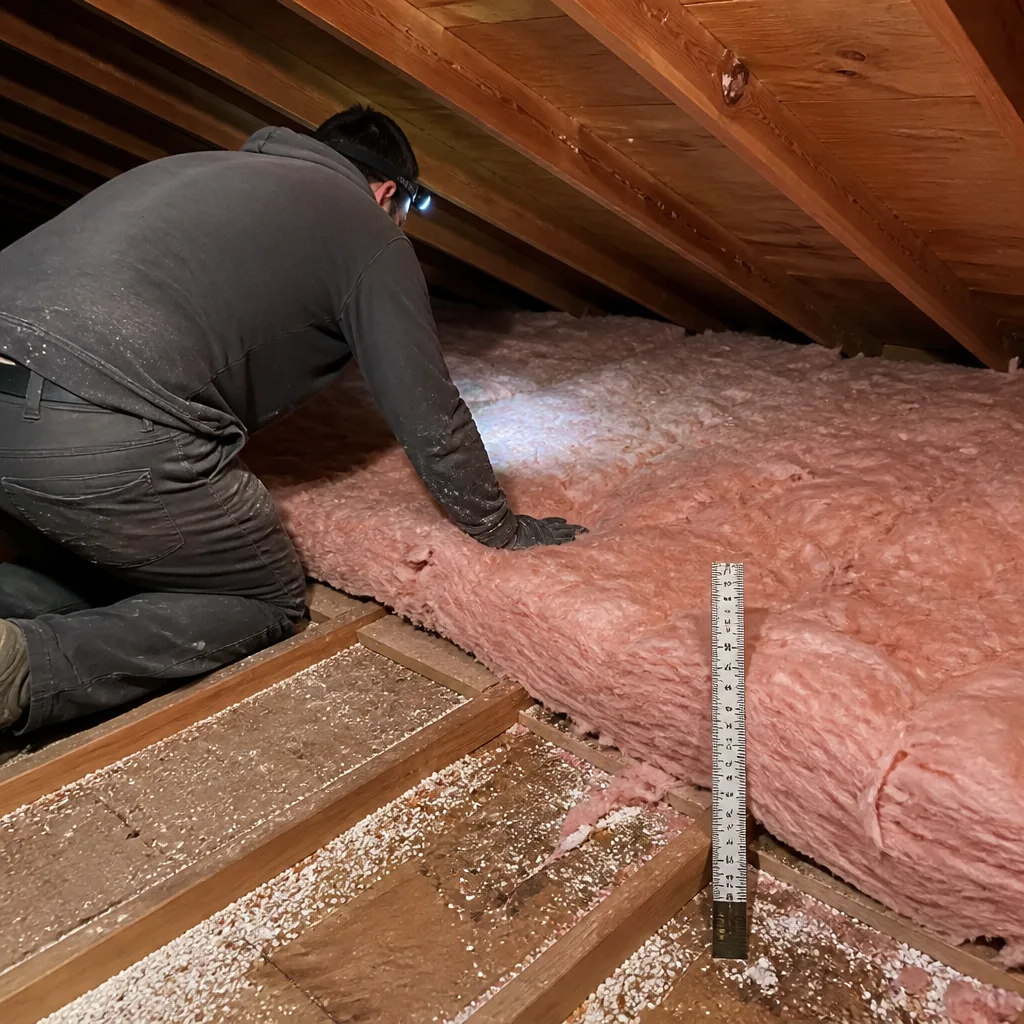
Material is installed to the target R-value – typically R-38 or R-49 depending on the scope – using Owens Corning, Johns Manville, Knauf, or GreenFiber depending on the material specified. Baffles at eaves are checked and cleared to preserve attic ventilation before insulation covers the floor. Coverage depth is documented in photos.
Step 5: Post-seal blower-door test
After sealing and before we leave, we run the blower-door again. The before-and-after readings go in your file. On a well-sealed Mountain View attic, we typically see a 30% to 55% reduction in CFM50. If the number doesn’t move, we find out why – on the same visit.
Step 6: Documented Photo Record
Every visit ends with a Documented Photo Record – before and after photos of the attic floor, penetration sealing points, insulation depth, and any conditions we found that weren’t part of the original scope (rodent evidence, moisture, damaged decking). You receive this documentation before we close out the job. It’s included on every visit, not available on request.
FAQs: Attic Insulation Cost in Mountain View, CA
How much does attic insulation cost in Mountain View in 2026?
Most attic insulation jobs in Mountain View run between $1,800 and $4,200, with the midpoint for a 1,400-1,800 square foot attic floor sitting around $2,400 to $3,100. Attic Insulation Replacement projects that include removal of old insulation, air sealing, and re-insulation to R-38 typically come in between $3,200 and $5,800. Every job at Envelope starts with a written price – you’ll have the exact number before we schedule a crew. Call (669) 259-0406 for a free written estimate.
Is attic insulation worth it in Mountain View’s climate?
Yes, in most cases. Mountain View’s Climate Zone 4 conditions – wide daily temperature swings and long, sunny summers – create real thermal transfer through a poorly insulated attic. Homes we’ve tested in Crestview and Monta Loma with pre-1985 insulation typically show blower-door readings above 3,000 CFM50, meaning conditioned air is moving through the building envelope faster than HVAC equipment can compensate. The blower-door result after sealing and insulating shows whether the work was worth it in a single measurable number – not an estimate of savings, but a documented change in air leakage rate. For a more detailed look at what the full service includes, see our Attic Insulation in Mountain View page.
How long does attic insulation installation take in Mountain View?
Most standard jobs – air sealing plus blown-in insulation on an attic floor up to 1,800 square feet – are completed in four to seven hours. Projects that include insulation removal add half a day or more depending on volume. Jobs in attics with limited clearance, like some of the 1950s-era single-story homes near Castro Street, take longer due to access constraints. We give you a time estimate in the written scope and text the technician’s name and arrival window the morning of the job, under the Haven Standard.
Does attic insulation require a permit in Mountain View?
Adding blown-in insulation to an existing attic typically does not require a permit from the Mountain View Building Division. However, if the project includes HVAC duct work, attic structural repairs, or changes to attic ventilation, a permit may be required. We review permit requirements for your specific scope before writing the price, and we flag any requirements in writing before the job starts. We don’t pull permits without disclosing the cost and timeline involved.
Should I air seal before adding attic insulation?
Yes – and at Envelope, that’s not a choice we leave to the homeowner. Air sealing is completed before any insulation is placed on every job we run. Adding insulation over an unsealed attic floor doesn’t eliminate air leakage; it masks it while conditioned air continues moving through gaps in the ceiling plane. The blower-door reading before and after the project shows the difference that proper sequencing makes. Homes in Mountain View where a previous contractor blew insulation without sealing first almost always show CFM50 readings well above what the installed R-value would predict. We see this regularly in homes near Envelope’s service area where prior work skipped this step.
What is the right R-value for attic insulation in Mountain View?
California Title 24, for Climate Zone 4 (which covers Mountain View), sets R-38 as the minimum for attic floors in most existing homes. New construction typically requires R-38 as well, though specific project conditions can affect this. We recommend R-38 as the practical target for most Mountain View homes and R-49 when the homeowner is optimizing for an energy audit score or preparing for a sale requiring energy disclosure. Going above R-49 in this climate zone delivers diminishing returns that rarely justify the added material cost – and we’ll tell you that regardless of which number generates more revenue for us.
Key Takeaways
- Attic insulation in Mountain View costs $1,800 to $4,200 for most single-story homes in 2026, with full removal-and-replacement projects running $3,200 to $5,800.
- California Title 24 requires a minimum of R-38 for attic floors in Climate Zone 4 – the zone that covers Mountain View.
- Air sealing before insulation is not optional. It’s the sequence that determines whether your insulation performs at its rated R-value or significantly below it.
- Before-and-after blower-door readings are documented on every applicable job – you see the CFM50 change, not a description of it.
- PG&E rebates and the federal 25C tax credit (30% of material costs, up to $1,200) can reduce the net cost for qualifying Mountain View homeowners.
- Every Envelope job starts with a written price and ends with a Documented Photo Record. No exceptions under the Haven Standard.
- Free second opinion on any written estimate: bring us a competing quote and we’ll read it with you. Call (669) 259-0406.
Get a Written Attic Insulation Price for Your Mountain View Home
If you’re ready to know what attic insulation actually costs for your specific home in Mountain View – not a range from a website, but a flat price for your square footage, your existing insulation condition, and your attic’s air-sealing needs – call us at (669) 259-0406. A live person answers, any hour. We’ll schedule a visit, run a blower-door test to establish your starting point, and deliver a written price before any work is discussed further.
Wes Okafor and the team at Envelope Insulation Co. have been doing this the same way since 2016: written price first, air seal before insulation, blower-door numbers in writing when we leave. That’s the Haven Standard, and it doesn’t have an exception for smaller jobs or simpler attics.
If you have a written estimate from another contractor, bring it. The second opinion is free, and we’ll tell you exactly what we see in it – whether that helps us win the job or not.
Written by Wes Okafor, Owner at Envelope Insulation Co., serving Mountain View, CA since 2016.
Pricing reflects the Mountain View market as of 2026. Topside Attic Insulation Mountain View offers free estimates – call (669) 259-0406.
What Our Customers Say
"The winter gas bill dropped by about a third. They had estimated a quarter, so they under-promised."
- Genevieve R."Crawl space encapsulation done properly. Photographs of the vapour barrier at every seam, and the damp smell in the hallway is gone."
- Ainsley P."Fixed price, clean work, and they hauled the old material away as agreed."
- Todd M.