
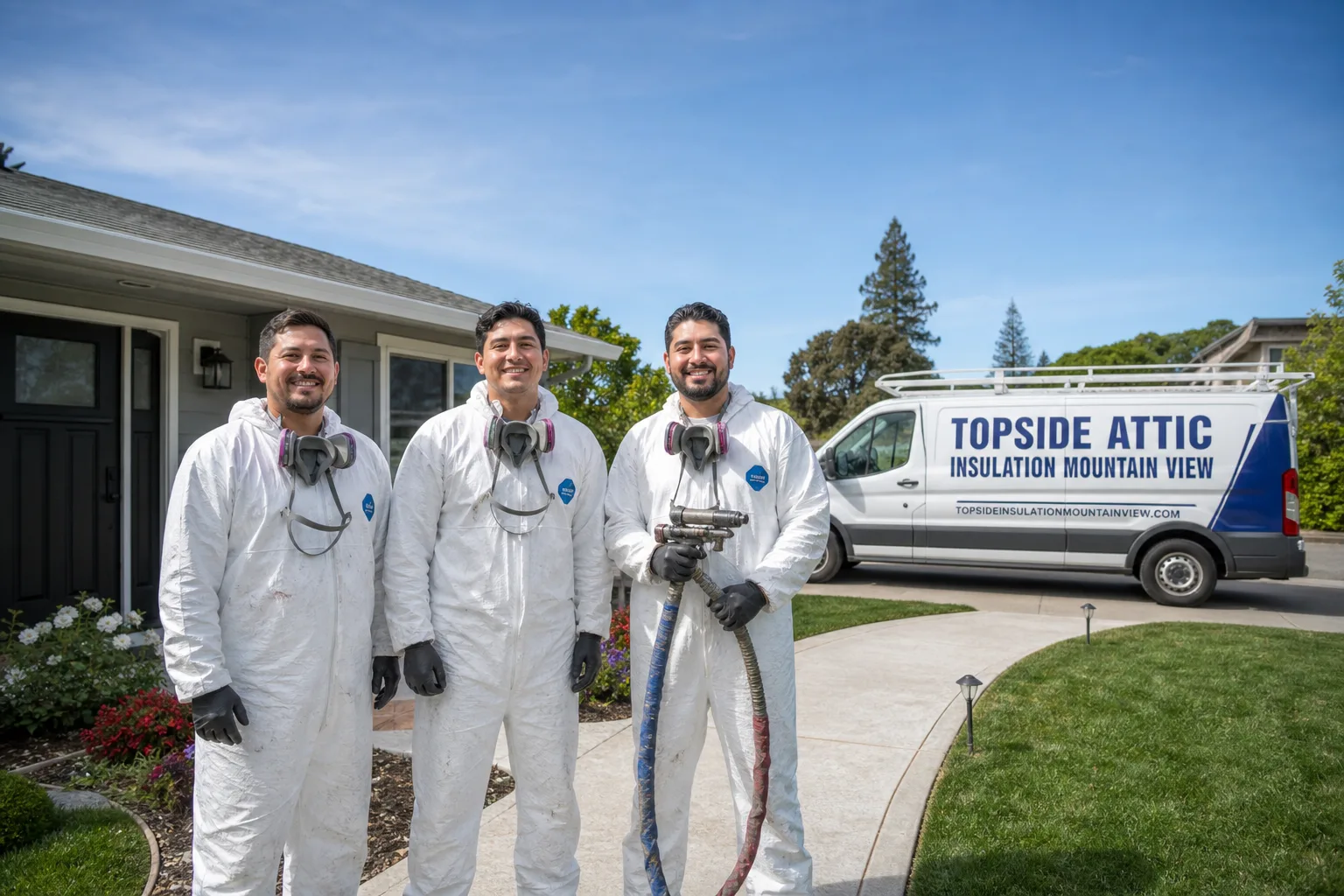
How Much Does Radiant Barrier Installation Cost in Mountain View?
Radiant barrier installation in Mountain View, CA typically runs between $1,400 and $3,200 for a standard single-story home, depending on attic square footage, access conditions, and whether air sealing work is needed first. Most homeowners in Mountain View with attics in the 1,200-to-2,000-square-foot range pay $1,800 to $2,600 when the job is scoped and priced correctly before any work begins. That range holds across most of the homes we see in Cuesta Park, Waverly Park, and the older ranch-style neighborhoods near Castro Street.
Radiant Barrier Installation Cost Breakdown (2026)
Radiant barrier pricing has two real components: material and labor. The table below reflects what Envelope Insulation Co. sees in the Mountain View market as of 2026 – not a national average padded with regional multipliers, but actual job data from homes we’ve worked in this ZIP code.
| Line Item | Typical Range (Mountain View, 2026) |
|---|---|
| Radiant barrier foil (materials only, per sq ft of attic floor) | $0.40 - $0.75 |
| Labor – single-story attic, standard access | $700 - $1,400 |
| Labor – two-story or restricted access attic | $1,100 - $1,900 |
| Attic air sealing (top plates, can lights, penetrations) – if needed first | $350 - $900 |
| Insulation removal or repositioning to access framing bays | $200 - $600 |
| Full job, 1,000-1,500 sq ft attic, single story | $1,400 - $2,200 |
| Full job, 1,500-2,500 sq ft attic, single story | $2,000 - $3,200 |
| Full job, two-story, complex roofline | $2,600 - $4,100 |
A few things to understand about those numbers. First, Mountain View’s housing stock skews toward 1950s-through-1980s single-story ranch homes west of Highway 85, and those attics are generally accessible and straightforward – which keeps labor on the lower end. Homes in the Shoreline West and Monta Loma neighborhoods with low-pitch rooflines or blown-in insulation sitting on the attic floor often need some repositioning before foil can be stapled to the rafters, which adds to the total. Second, the cost of foil material itself is not the variable that moves the needle much. A roll of quality perforated radiant barrier foil costs roughly the same from any reputable supplier. What varies is labor time, access difficulty, and whether the attic floor needs to be sealed before any reflective material goes in.
On that last point: at Envelope Insulation Co., air sealing is treated as a hard prerequisite, not an optional add-on. We do not staple radiant barrier over an attic floor that has open top plates, unsealed recessed lights, or bypasses around plumbing chases. The reason is straightforward – a radiant barrier reflects radiant heat from the roof deck, but if conditioned air is escaping through gaps in the ceiling plane at the same time, you’re solving one problem while ignoring a larger one. We’ll tell you up front, in writing, if air sealing is needed before the foil goes in, and we’ll quote both in the same scope.
What Affects Radiant Barrier Installation Pricing in Mountain View
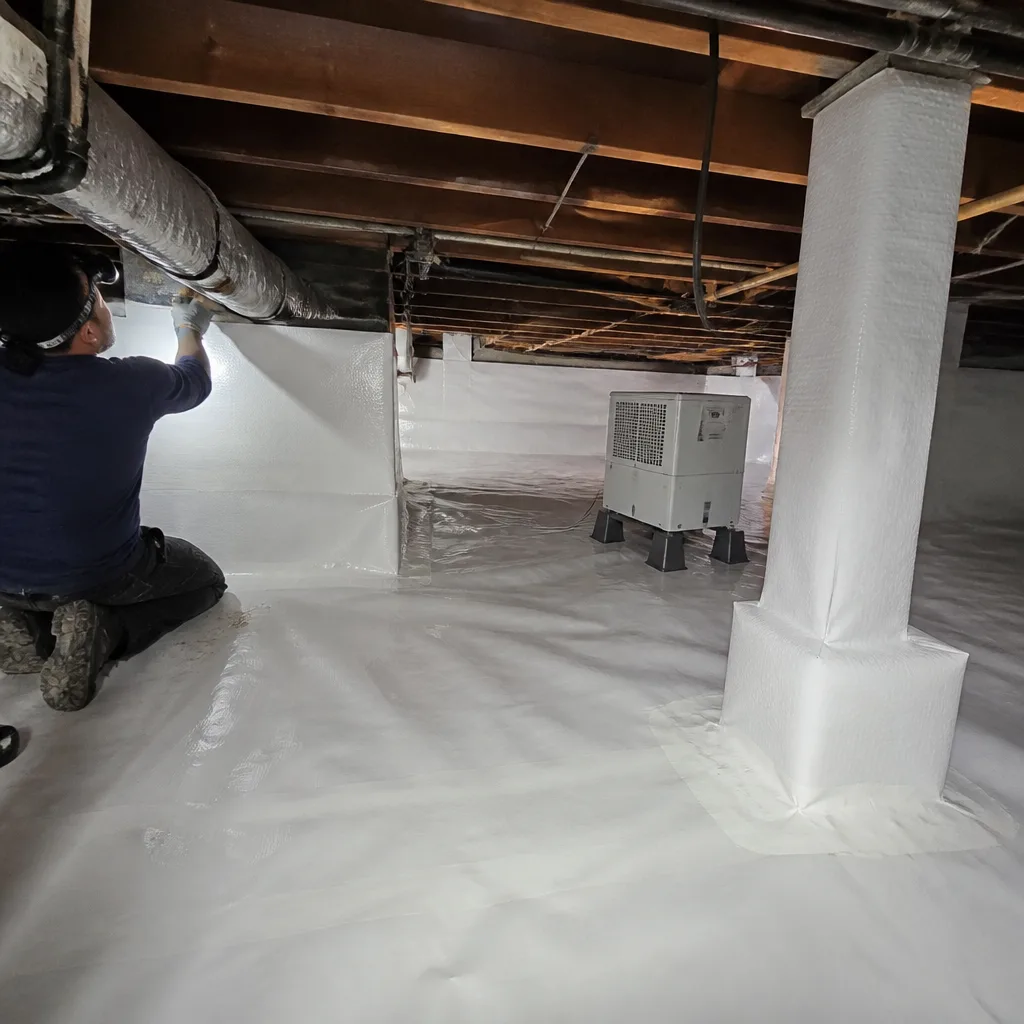
- Attic square footage and roofline complexity: Simpler rectangular attics cost less to work in than attics with multiple hip sections, valleys, or knee walls. Many homes in the Rex Manor and Gemello neighborhoods have added rooms or garage conversions over the decades, which can create attic configurations that take longer to cover completely.
- Attic access and clearance height: Mountain View building code requires a minimum 30-inch clearance at the attic access point, but that doesn’t mean the working height across the attic meets that standard. Low-slope roofs – common on 1960s ranch homes near Caltrain – can mean technicians are working in tight conditions throughout, which adds labor time.
- Existing insulation depth: If blown-in fiberglass or cellulose sits 12 to 16 inches deep on the attic floor (which is appropriate for R-49 to R-60 levels), installers need to navigate around it or temporarily move sections to reach framing penetrations. Homes that already have adequate insulation depth still benefit from a radiant barrier at the rafter level, but the access picture changes.
- Air sealing needs: Homes built before 1990 in Mountain View almost universally have open top plates, unfaced can lights, and unsealed plumbing penetrations. Our blower-door test – a pressurization reading that measures, in one number, how much air the building envelope is losing – frequently shows 30 to 50 percent improvement after air sealing alone. If the attic floor needs sealing first, that work is scoped and priced separately and completed before any foil goes up.
- Foil product type: Perforated foil allows moisture vapor to pass through, which is the correct choice for Mountain View’s climate. Bay Area attics see meaningful humidity swings between winter fog months and dry summer heat, and a non-perforated barrier can trap moisture against the roof deck over time. We use perforated material on all local jobs. Perforated versus non-perforated carries a small price difference, but it’s the right call here regardless.
- Permit requirements: Santa Clara County and Mountain View’s building department generally do not require a permit for radiant barrier installation when it’s being added to an existing attic without structural changes. If the job is part of a larger scope that includes new framing, HVAC modifications, or insulation replacement, permit requirements may apply. We confirm the permit picture before writing any scope.
Why Mountain View’s Climate Makes Radiant Barrier Worth Looking At
Mountain View sits in a spot that surprises a lot of homeowners who moved from the Central Valley or Southern California: the summers feel mild because afternoon breezes off the Bay moderate the air temperature, but the radiant load on rooftops is significant. On a clear July afternoon in Mountain View, a dark composition shingle roof can reach 150 to 165 degrees Fahrenheit. Without a radiant barrier, that heat radiates downward into the attic space and then conducts through the ceiling insulation into the living area – even if the air temperature outside stays in the low 80s.
That heat load is why HVAC systems in older Mountain View homes work harder than the outdoor temperature suggests they should. In the Sylvan Park and Stierlin Estates neighborhoods, we regularly find homes with R-30 or less in the attic – installed when building codes were more permissive – and no radiant barrier. Adding a quality perforated foil barrier to the rafter underside, combined with bringing insulation levels up to current Santa Clara County recommendations, typically reduces cooling-season attic temperatures by 20 to 30 degrees. That translates to a measurable reduction in HVAC runtime, documented in the before-and-after records we leave behind on every job.
Winter matters too. Mountain View’s wet season brings sustained periods of cloud cover, rain, and temperatures that drop to the 40s overnight. A radiant barrier does work in both directions – reflecting some radiant heat back toward the living space during cooler months. The effect is more pronounced in the cooling season here, but it’s not zero in winter.
Radiant Barrier vs. Adding More Attic Insulation: Which Comes First?
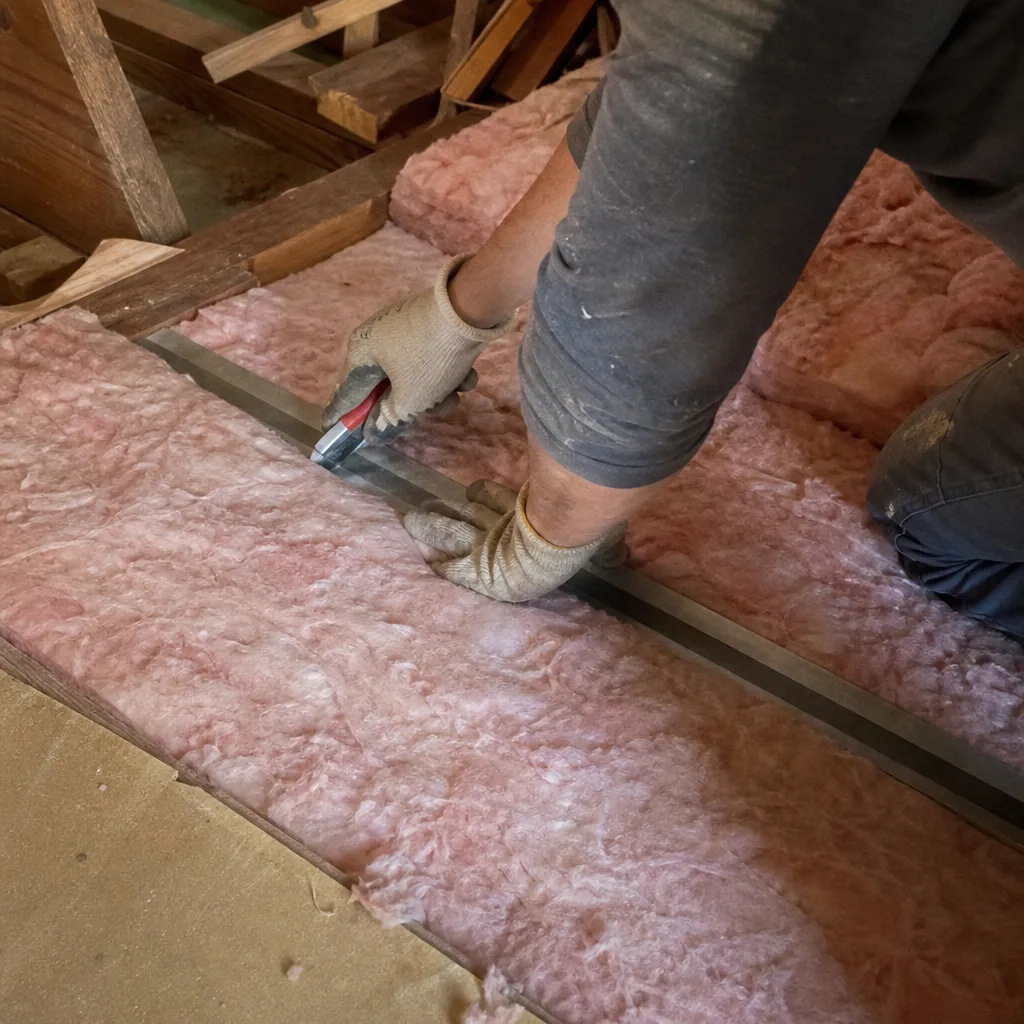
This is the question we get most often on estimates in Mountain View, and the answer depends on what’s actually in the attic. If existing insulation is below R-38, adding more insulation almost always has a faster payback than installing a radiant barrier alone. If insulation levels are already at R-49 or better, a radiant barrier addresses a different problem – it reduces the temperature differential that the insulation has to work against, rather than adding more resistance to heat flow.
The most effective sequence, which is what we scope on most Mountain View jobs, is: seal air leaks first, bring insulation to current code levels second, and install a radiant barrier third if the home still has meaningful radiant heat load (which most pre-2000 homes here do). A home that gets all three steps done in one project typically shows the most significant improvement in blower-door readings and in summer cooling bills. We publish those before-and-after numbers on every applicable job – not as a marketing claim, but as a documented record the homeowner keeps.
For more on the full Radiant Barrier Installation in Mountain View service – how it’s installed, what materials we use, and what the job looks like from estimate to documented close – that page has the detail.
How to Save on Radiant Barrier Installation in Mountain View
There are a few practical ways to keep costs down without cutting corners on the job itself.
- Bundle with attic insulation or air sealing work: Mobilization costs money. A truck, a crew, a technician’s travel time to and from Mountain View – those costs are real whether we’re doing one thing or three. If your attic needs insulation topped off and air sealing done anyway, scheduling the radiant barrier installation in the same visit reduces total project cost meaningfully compared to scheduling three separate jobs. We quote bundled scopes with full line-item transparency so you can see exactly what each component costs.
- Get a second opinion on any written estimate: If you’ve already received a quote from another contractor, bring it to us. We’ll read it with you, line by line, and tell you what we see – whether the scope covers everything it should, whether the material spec is appropriate for Mountain View’s climate, and where the number comes from. This is our Free Second Opinion, and it costs nothing.
- Check for utility and PG&E rebates: PG&E’s residential energy efficiency programs and Silicon Valley Clean Energy rebates occasionally include attic insulation and radiant barrier improvements, particularly when the project is paired with air sealing verified by a blower-door test. Rebate availability changes year to year, so confirm current offers directly with PG&E or your community choice aggregator before assuming a specific dollar amount. We can advise on what documentation a rebate application typically requires.
- Don’t let an attic inspection lag: Attics in Mountain View’s older housing stock can develop rodent intrusion, moisture damage, or HVAC duct leakage that compounds over time. A radiant barrier installation that happens after major damage is more expensive than one done on a clean attic. If you’ve been meaning to get the attic looked at, sooner is cheaper.
- Ask for a written scope before committing: This sounds obvious, but it matters. Under Haven Standard Clause 1, no work starts at Envelope Insulation Co. without a flat written price, a written scope, and a written warranty in your hands first. A contractor who won’t give you a written price before starting is a contractor whose final invoice may not match what you expected. Compare written scopes, not verbal estimates.
To get a written price for your Mountain View home, including our Radiant Barrier Installation services, call (669) 259-0406. Wes Okafor and the team at Envelope Insulation Co. handle Mountain View estimates directly – you’ll talk to a person, not a voicemail.
What You Get When Envelope Insulation Co. Does the Job
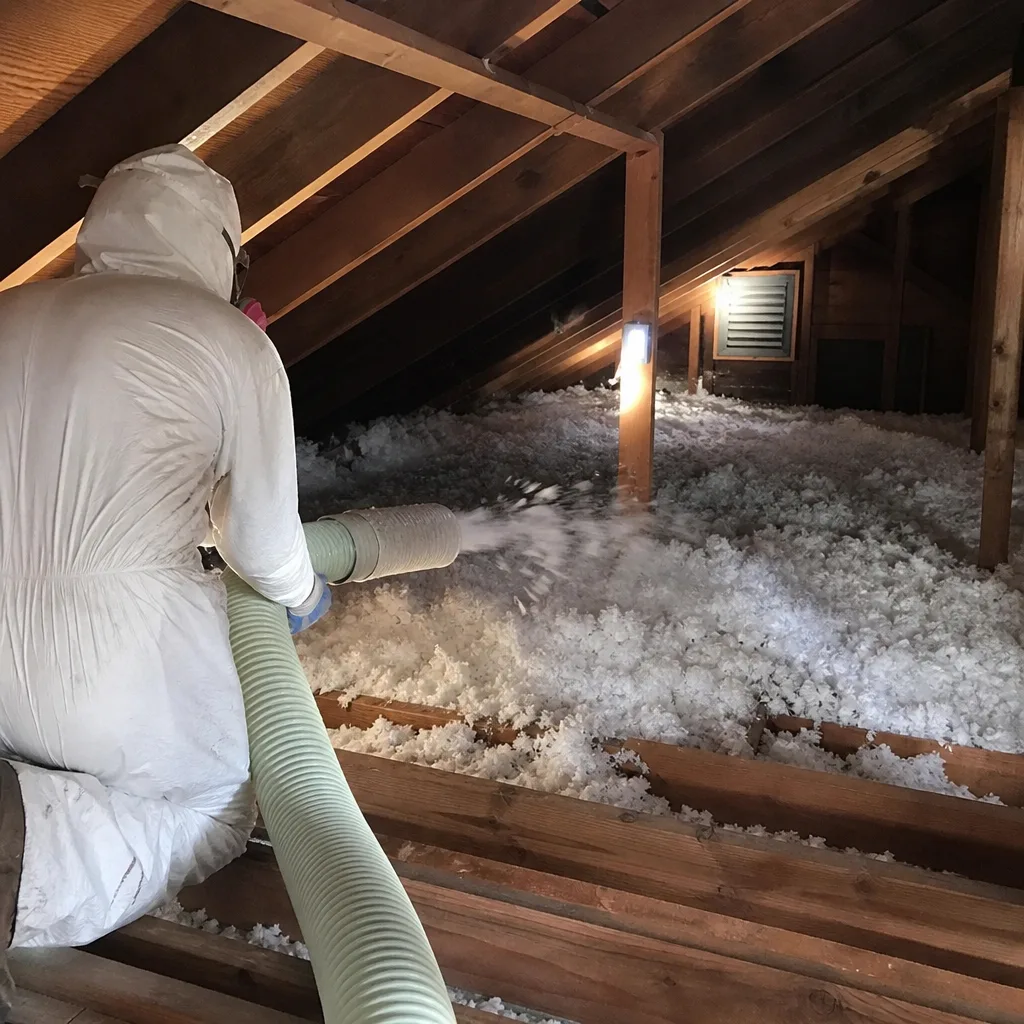
Before we get to the FAQ section, it’s worth being specific about what the job includes – not in aspirational terms, but in documented terms.
Every Envelope Insulation Co. job in Mountain View starts with a written scope that names the square footage being covered, the foil product being installed, any air sealing work being done first, and the flat price for all of it. That document exists before anyone lifts a tool. When the crew leaves, you receive a Documented Photo Record – images taken during and after the installation that show the foil coverage, any sealing work completed, and the attic condition at close. On jobs that include air sealing, a before-and-after blower-door reading is included so you can see, in one number, what the building envelope was doing before we arrived and what it’s doing now.
The 365-Day Done Right Promise applies to every completed job. If something isn’t right within a year of the installation, we make it right – not because it sounds good to say, but because it’s in the written warranty you receive before work starts.
Our technicians are background-checked and uniformed. If you’re working from home in Waverly Park or the Rex Manor neighborhood and you’d prefer a text when the crew is on the way rather than a phone call, that’s how we operate. Wes Okafor has been running these jobs since Envelope Insulation Co. opened in 2016, and the standards don’t shift based on job size.
We’re also not locked into any single material brand. Radiant barrier foil sourced for Mountain View jobs comes from suppliers we vet for perforation spec and emissivity rating, not from a proprietary product line we’re obligated to sell. The same applies across the full service line – whether the job calls for Owens Corning, Johns Manville, Rockwool, or another manufacturer’s product, we specify what’s right for the home, not what’s easiest for us.
Since 2016, Envelope Insulation Co. has completed work on more than 9,000 homes – every one with a written price before work started and a documented record when the crew left. That’s the baseline, not a selling point.
You can also read more on our home page if you want to understand the full building-envelope service line before scheduling an estimate.
FAQs – Radiant Barrier Installation Cost in Mountain View
How much does radiant barrier installation cost in Mountain View, CA?
Most Mountain View homeowners pay between $1,400 and $3,200 for radiant barrier installation, with the majority of single-story homes in the 1,200-to-2,000-square-foot attic range landing between $1,800 and $2,600. Two-story homes or attics with restricted access run higher, typically $2,600 to $4,100. Those numbers include labor and materials. If air sealing is needed before the foil goes in – which it often is in pre-1990 Mountain View homes – that’s a separate line item quoted upfront, typically $350 to $900 depending on what the attic floor shows. Call (669) 259-0406 for a written quote specific to your home’s square footage and access conditions – estimates are free and put in writing before any work is scheduled.
Is a radiant barrier worth it in Mountain View’s climate?
Yes, for most Mountain View homes built before 2000. The Bay Area’s moderate air temperatures can mask the fact that roof surface temperatures here regularly hit 150 to 165 degrees Fahrenheit on clear summer days. Without a radiant barrier, that heat radiates through the roof deck into the attic and then conducts through ceiling insulation into the living space. A perforated radiant barrier installed on the rafter underside typically reduces attic temperatures by 20 to 30 degrees during peak cooling hours, which translates to reduced HVAC runtime. The benefit is most pronounced in homes that also have adequate insulation depth; if your attic is under-insulated, topping up the insulation first will usually deliver faster payback.
How long does radiant barrier installation take in Mountain View?
A standard single-story Mountain View home takes one full day for a crew to install radiant barrier foil, assuming attic access is clear and air sealing work has either been completed previously or doesn’t need to be done. Homes where air sealing is being done in the same visit typically run one to two days depending on attic complexity. We don’t compress timelines by cutting corners on coverage at the edges and penetrations – those are where heat gain actually enters if the foil isn’t properly lapped and secured.
Do I need a permit for radiant barrier installation in Mountain View?
For a standalone radiant barrier installation in an existing attic, Mountain View and Santa Clara County generally do not require a building permit. If the project includes insulation replacement, HVAC modifications, or structural changes in the attic, permit requirements may apply. We confirm the permit picture for every job before writing the scope – if a permit is needed, that’s documented in the written price you receive before work begins. We don’t start work on a project that requires a permit and doesn’t have one.
Can I install a radiant barrier myself to save money?
Technically yes – radiant barrier foil is available at home improvement stores, and the installation is stapling material to rafter undersides. The practical risk is in what you might skip or miss: an improperly lapped foil that leaves gaps at ridge boards and eave ends can reduce effectiveness significantly, and foil installed over top of existing blown-in insulation sitting on the attic floor (rather than on the rafter underside) can actually trap heat rather than reflect it. Attic work also carries real fall and heat risks – attic temperatures in Mountain View can exceed 130 degrees on summer afternoons. If you’re considering DIY to manage costs, get a written quote first so you know the actual delta you’re weighing against the time and risk.
Does a radiant barrier work with existing attic insulation?
Yes – radiant barrier foil and attic insulation solve different problems and work together. Insulation resists conductive heat transfer (heat moving through solid material). A radiant barrier reflects radiant heat (infrared radiation from the hot roof deck) before it can conduct into the insulation and ceiling below. For Mountain View homes where existing insulation is at R-38 or better, adding a radiant barrier is the logical next step to reduce the temperature load the insulation is working against. For homes below R-38, we’ll typically recommend bringing insulation to current levels first, then adding the barrier – both because the payback math favors it and because the air sealing work that should precede insulation topping also benefits the radiant barrier’s performance.
Written by Wes Okafor, Owner at Envelope Insulation Co. (operating as Topside Attic Insulation Mountain View), serving Mountain View, CA since 2016. Pricing reflects the Mountain View market as of 2026. Topside Attic Insulation Mountain View offers free estimates – call (669) 259-0406.
What Our Customers Say
"Fixed price, clean work, and they hauled the old material away as agreed."
- Todd M."Two other companies quoted to blow more insulation on top of what was there. These were the only ones who said the existing material had to come out first, and explained why."
- Clifford E."Turned up on time, protected the hallway, and the written scope matched what was actually done."
- Bruno S.