
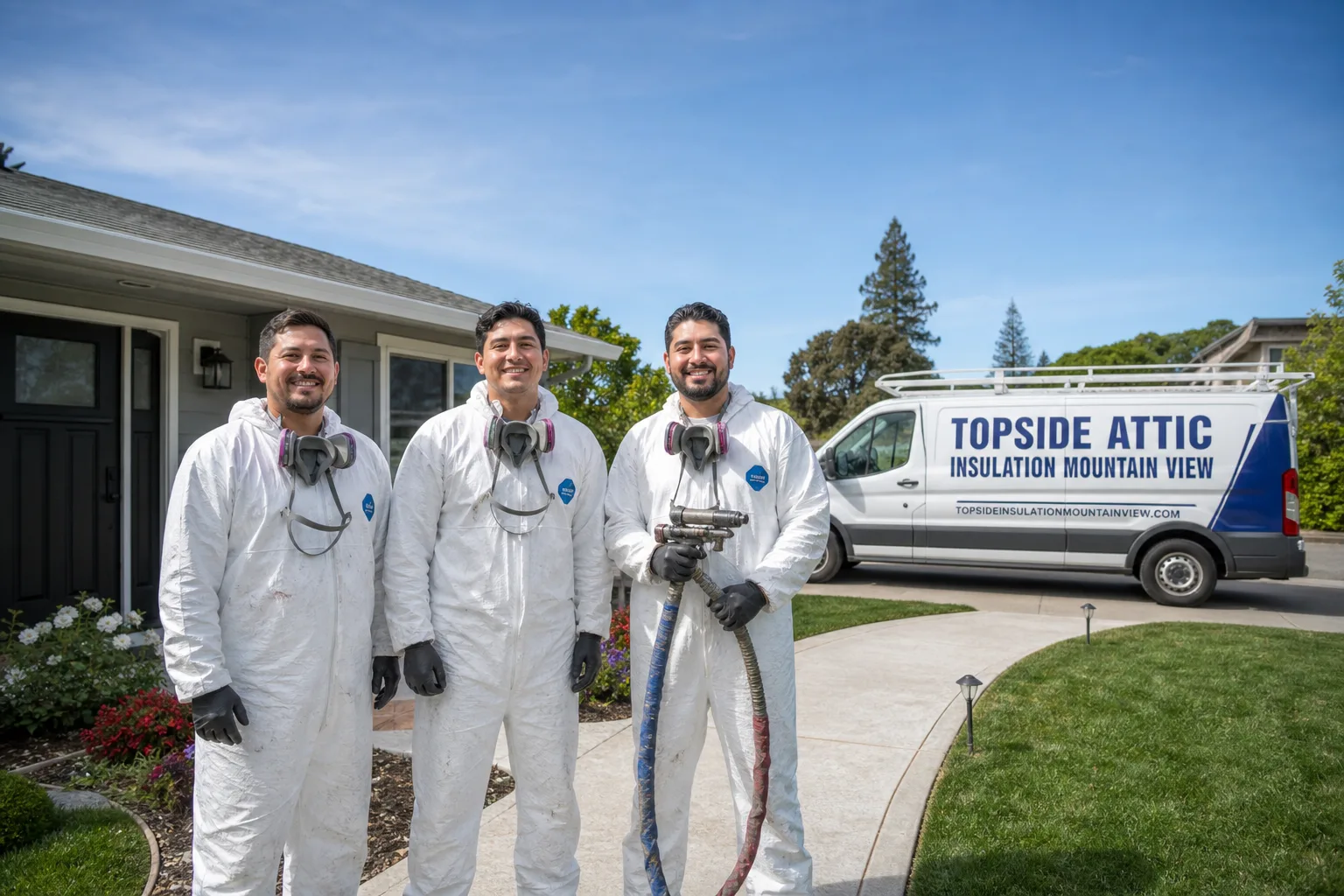
How Much Does Attic Air Sealing Cost in Mountain View?
Attic Air Sealing services in Mountain View, CA typically cost between $850 and $2,400 for a single-family home, with most jobs in the 1,400-2,200 sq ft range landing around $1,100 to $1,600. That range covers labor, materials (foam, caulk, fire-rated sealant at penetrations), and the blower-door test – a pressurization reading that shows, in one number, how much conditioned air your building envelope was losing before and after the crew finished. Jobs in older Crestview or Slater neighborhoods, where top plates have decades of unaddressed gaps and recessed can lights punch through the ceiling every few feet, tend to run toward the upper end.
Attic Air Sealing Cost Breakdown (2026)
The table below reflects what homeowners in Mountain View are actually paying in 2026, based on the jobs we complete across the 94040, 94041, 94043, and 94022 ZIP codes. These are flat-price ranges – not estimates that balloon after the crew opens the hatch.
| Scope of Work | Typical Mountain View Price Range | Notes |
|---|---|---|
| Air sealing only – small home (under 1,200 sq ft) | $750 – $1,050 | Fewer penetrations, shorter run times |
| Air sealing only – mid-size home (1,200 – 1,800 sq ft) | $1,050 – $1,500 | Most common scope in Mountain View |
| Air sealing only – larger home (1,800 – 2,800 sq ft) | $1,500 – $2,100 | Includes ranch-style footprints with high penetration counts |
| Air sealing + blown-in insulation (attic floor) | $2,200 – $3,800 | Sealed first, then insulated – always in that order |
| Air sealing + insulation removal and replacement | $3,000 – $5,500+ | Old fiberglass batts or contaminated insulation removed first |
| Blower-door test (standalone, no sealing) | $250 – $450 | Bundled at no added cost when sealing is included |
| Attic hatch / pull-down stair air sealing | $95 – $220 | Add-on item; frequently missed by other crews |
| Recessed can light sealing (IC-rated covers + foam) | $18 – $35 per can | Homes built before 2005 in Mountain View often have 15-30 cans |
| Top-plate sealing (open framing bays) | Included in base scope | Never skipped at Envelope; it is not an upsell here |
A few things worth understanding about these numbers. First, can lights are the single biggest variable in Mountain View homes built between 1975 and 2005. A 1,700 sq ft ranch in the Gemello neighborhood with 24 recessed cans adds $430 to $840 to the base scope just for those fixtures. Second, if existing insulation needs to come out before sealing can happen – which is common when we find rodent activity or wet fiberglass – the overall project cost shifts into a different bracket entirely. That is why the pre-job walkthrough matters: the price you receive is written before anyone lifts a tool, and it accounts for what the attic actually contains.
Under Haven Standard Clause 1, the written price you receive before work starts is a flat scope – not a starting point for additions. If we open the hatch and find conditions that change the scope, we stop, show you what we found, and rewrite the price. No surprises on the invoice.
What Affects Attic Air Sealing Pricing in Mountain View
- Home size and footprint: Larger attic floor areas mean more linear feet of top plates to seal and more potential penetrations. A 2,400 sq ft two-story in Shoreline West has a smaller attic footprint than a single-story home of the same square footage, which changes the labor estimate meaningfully.
- Number and type of penetrations: Every pipe, wire, flue, duct boot, and recessed light that punches through the ceiling plane is a gap that must be sealed with the right material – fire-rated caulk at flues, two-part foam at framing gaps, IC-rated covers at can lights. A Mountain View home built in the 1980s routinely has 40 to 60 individual penetrations in an attic that looks perfectly fine from below.
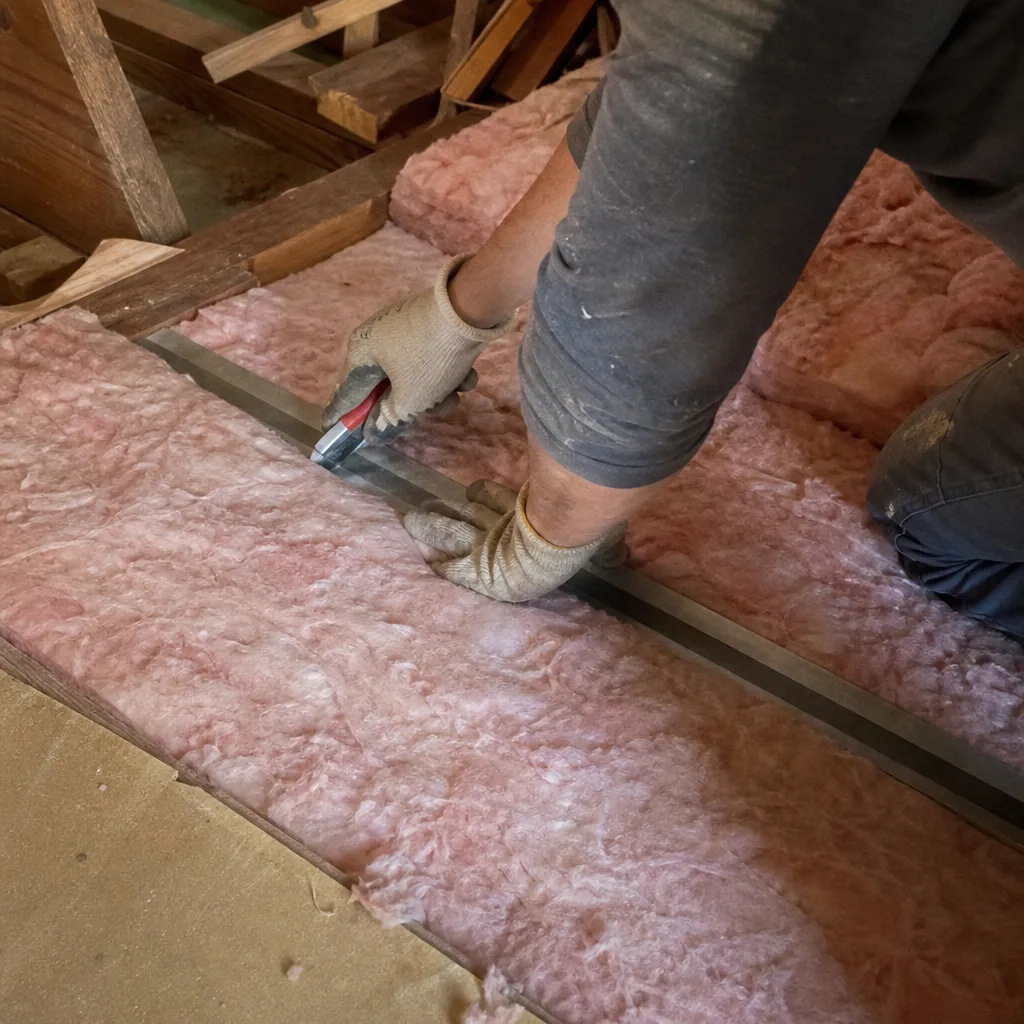
- Existing insulation depth and condition: If the attic floor already has 10 inches of blown-in cellulose in good condition, the crew works around it. If there is degraded fiberglass batt insulation from 1992 sitting between the joists, it has to come out before air sealing can be done correctly – and removal adds cost. We see this regularly in the Monta Loma neighborhood, where original insulation from mid-century builds was never updated.
- Attic access and clearance: A standard pull-down stair with 30 inches of clearance and no HVAC equipment in the way is a different job than a hatch-only entry into a 16-inch crawl space with ductwork running through the center. Low clearance slows every task down and sometimes requires a smaller crew working longer hours.
- HVAC equipment and ductwork in the attic: A significant share of Mountain View homes – particularly those built between 1960 and 1990 – have the air handler and distribution ducts sitting in the unconditioned attic space. Duct boots, equipment curbs, and return chases all require sealing, and working around live equipment adds both time and material.
- California Title 24 and local permit requirements: Santa Clara County does not require a permit for attic air sealing alone, but if the job is bundled with insulation replacement that changes the R-value of a permitted dwelling, documentation may be required. Mountain View’s building department follows CBC and Title 24 Part 6 energy standards, and any insulation work tied to an addition or permitted renovation must meet those standards. We flag this in the written scope so there are no ambiguities later.
- Bay Area labor market: Mountain View sits in one of the higher-cost labor markets in California. Crews working in the South Bay carry wages and insurance costs that are structurally higher than, say, the Central Valley. That is part of why a job that might cost $900 in Fresno runs $1,200 to $1,400 here. It is not markup – it reflects the actual cost of keeping a trained technician on staff in Santa Clara County.
How to Save on Attic Air Sealing in Mountain View
Bundle Air Sealing with Insulation
Air sealing and blown-in insulation are closely related tasks – the crew is already in the attic with equipment staged. Bundling them in a single visit typically saves $200 to $500 compared to scheduling them separately, because mobilization costs are shared. At Envelope, we always seal before we insulate – that is not optional or an upsell, it is the only order that produces a durable result. If you are planning to add insulation this year, doing both at once is almost always the better financial decision.
Use the PG&E and BayREN Rebate Programs
As of 2026, PG&E’s Energy Upgrade California program and the BayREN Home+ program both offer rebates for attic air sealing when paired with a qualifying blower-door test. Rebate amounts shift annually, but Mountain View homeowners have historically been eligible for $200 to $600 back depending on the verified reduction in air changes per hour (ACH) – a metric the before-and-after blower-door numbers document directly. We provide the test result documentation you need to file; you file the claim. We do not process rebates on your behalf, but we make sure the paperwork exists. Check current offers at the BayREN website or through PG&E’s program portal before scheduling, since eligibility windows and funding levels change.
Get a Second Opinion Before You Sign
If you already have a written estimate from another contractor, bring it in. Under our Free Second Opinion policy, Wes Okafor or a member of his team will read the scope with you line by line – not to undercut the number, but to make sure you understand what you are actually buying. A quote that omits top-plate sealing or skips the blower-door test is cheaper on paper and more expensive over time. Knowing what is and is not in a competing bid is worth a conversation before the job starts. Call (669) 259-0406 to set that up; there is no fee and no obligation.
Prioritize the Highest-Impact Penetrations First
If budget is genuinely constrained, a blower-door test run first can identify which areas of the attic are contributing most to air loss. In a lot of Mountain View homes, 60 percent of the measurable leakage comes from 20 percent of the penetrations – typically the top plates at interior partition walls and the recessed can lights over the main living area. Fixing those first delivers a meaningful reduction in energy loss and creates a documented baseline for phasing the rest of the work over 12 to 18 months.
Schedule During the Off-Peak Window
Late October through February is slower for attic work in Mountain View. Demand drops, scheduling windows open up, and crews have more flexibility. We do not run seasonal promotions or manufactured scarcity – that is not how Envelope operates. But practically speaking, you are more likely to get your preferred date and time with a shorter lead when you are not competing with the spring rush that starts around March when homeowners start thinking about summer cooling bills.
Understand What Free Estimates Actually Include
A free estimate that does not include an attic inspection is not an estimate – it is a guess. When you call (669) 259-0406 to schedule a free estimate, the technician who shows up goes into the attic, counts the penetrations, checks the existing insulation condition, and looks at clearance. The written price you receive afterward reflects what is actually up there. That specificity is what makes it a price rather than a range.
Mountain View-Specific Context: Why Air Sealing Matters Here
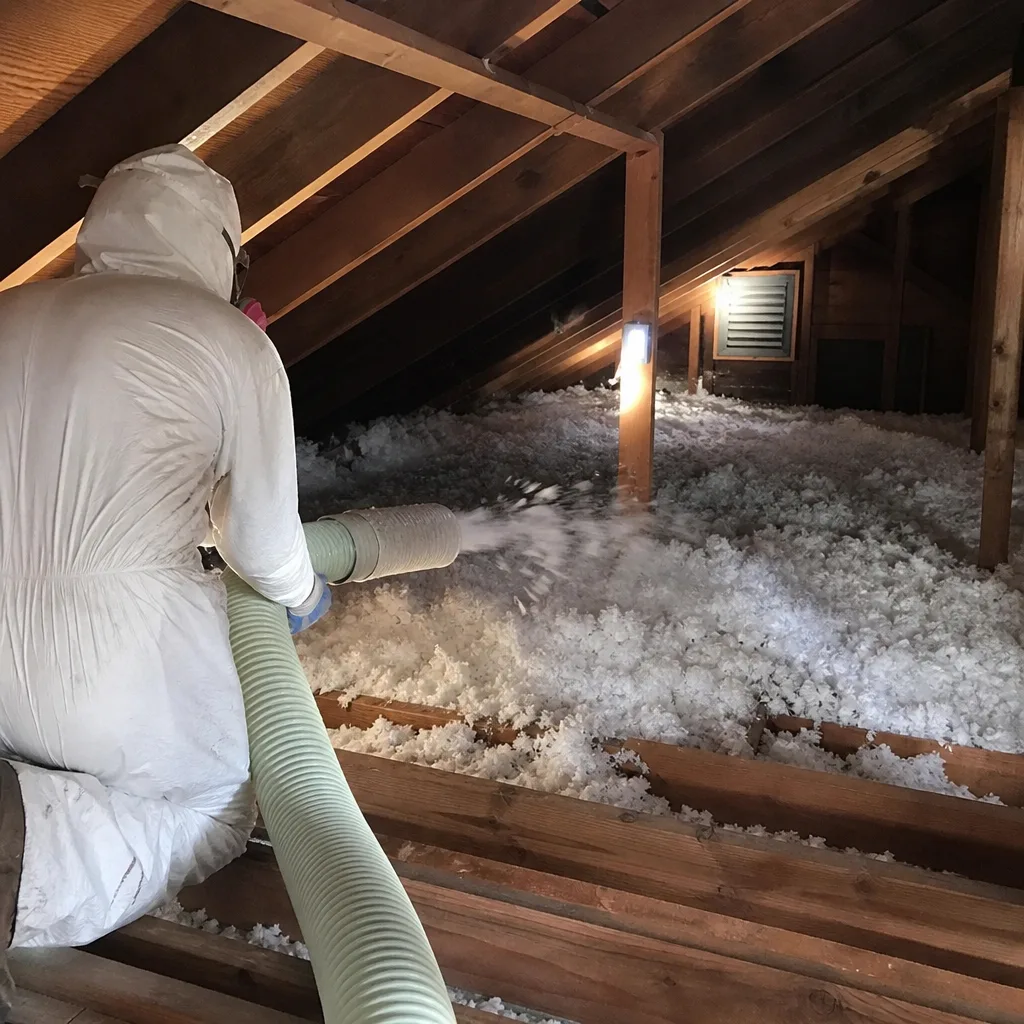
Mountain View’s climate sits in California Climate Zone 4, which means mild winters, warm-to-hot summers, and a diurnal temperature swing that can run 25 to 35 degrees from overnight lows to afternoon highs. That swing is relevant to air sealing because it means the attic is acting as a thermal buffer in both directions – leaking heat out on cool evenings in December and pulling superheated attic air into living spaces on July afternoons when the attic floor temperature can reach 140 to 160 degrees.
Homes in the Waverly Park and Rex Manor neighborhoods tend to be 1950s and 1960s ranch construction, with open-frame top plates that have never been sealed and original penetrations that have shifted over 60 years of seismic activity. The 4.1-magnitude Alum Rock events we see periodically in the South Bay open gaps at framing connections that were tight the day they were built. This is not a scare tactic – it is a structural reality that shows up consistently in blower-door readings on older Mountain View homes.
Newer construction in the Middlefield Road corridor and the North Whisman area closer to 85 tends to be better sealed from the factory, but HVAC modifications, recessed lighting retrofits, and kitchen exhaust fan upgrades added after original construction frequently introduce new penetrations that were never sealed. A home built in 2002 that had can lights added in 2014 and a mini-split line set run through the attic in 2019 can read almost as leaky as a 1960s ranch.
For a broader look at what the full service involves before pricing enters the conversation, our Attic Air Sealing in Mountain View page walks through the process, the materials, and what the blower-door documentation looks like when the job is done.
What You Receive When the Job Is Done
This section exists because most pricing guides stop at the price. The deliverables matter, and they affect whether the work you paid for is verifiable.
At Envelope, every completed attic air sealing job in Mountain View includes:
- Written scope delivered before work starts – flat price, materials listed, scope of penetrations to be sealed, no placeholder language.
- Before blower-door reading – a CFM50 number taken at the start of the job, before any sealing work begins. CFM50 stands for cubic feet per minute at 50 pascals of pressure – the industry-standard metric for measuring how much air a home’s envelope is leaking.
- After blower-door reading – taken after sealing is complete and confirmed. The two numbers together show the actual performance change. On a typical Mountain View home we have sealed, the reduction runs between 25 and 45 percent. We have seen 4,800 CFM50 before sealing drop to 2,900 after on a 1,650 sq ft Crestview home that had never been air sealed since original construction in 1967.
- Documented photo record – photos of penetrations before sealing, materials applied, and final condition. Included on every job, not available on request.
- Written warranty – the 365-Day Done Right Promise in writing. If it is not done right, Envelope makes it right. That is a written commitment, not a slogan.
Wes Okafor has led every job under this documentation standard since Envelope started operating under The Haven Standard in 2016. In 9,000+ homes sealed and insulated across the Bay Area, every single one left with a written price that preceded the work and a documented record when the crew left. That is not a differentiator we invented – it is the minimum standard a homeowner should expect from any contractor doing this work.
Attic Air Sealing vs. Just Adding Insulation: The Cost Difference That Matters
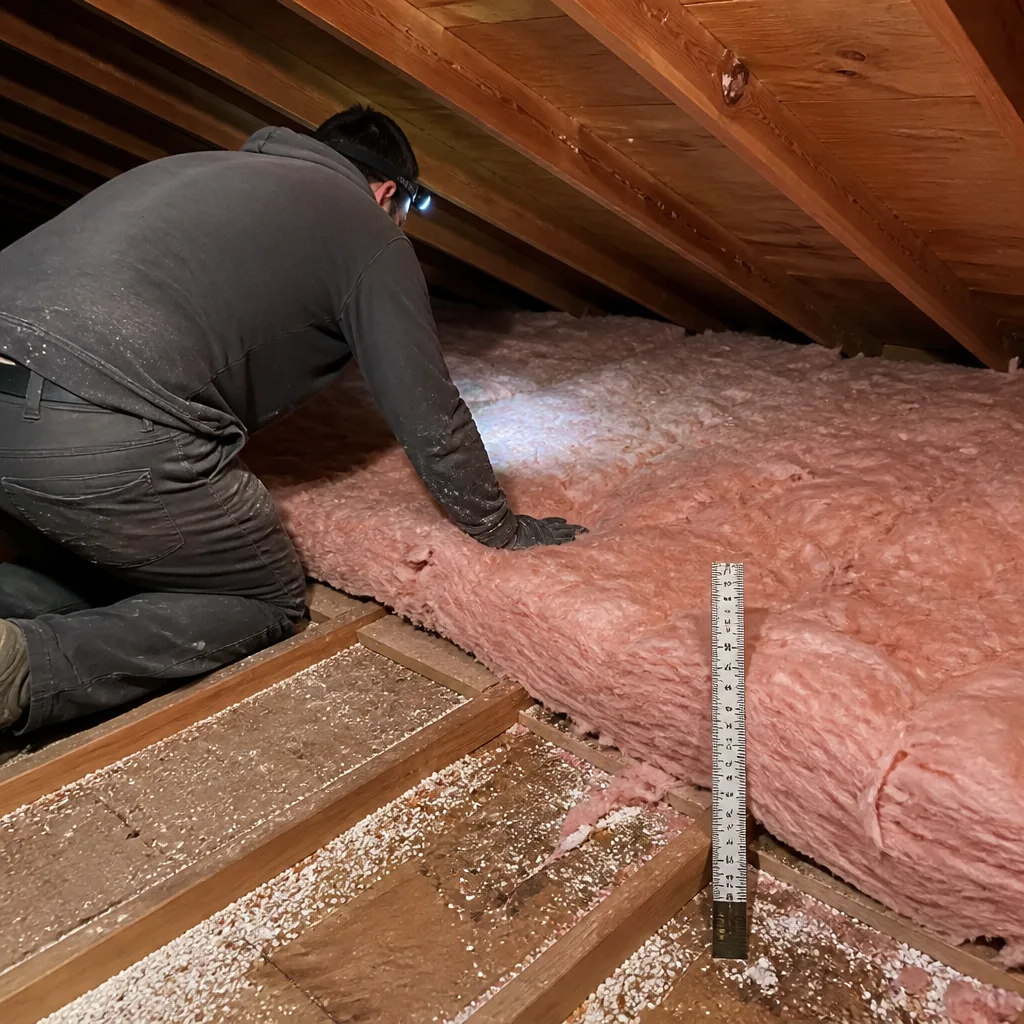
A question that comes up in Mountain View more than most markets: “Can I just add more insulation and skip the air sealing?” The short answer is no, not if you want the result to hold.
Insulation slows the transfer of heat through a material. Air sealing stops air – which carries heat – from moving through gaps entirely. These are different physical mechanisms. Adding R-38 blown-in cellulose over an unsealed attic floor reduces conductive heat transfer but does nothing to stop the 130-degree air sitting above that insulation from being pulled into your living space through every unsealed top plate and can light. You will have a better-insulated path between two environments that are still actively mixing.
This is why Envelope will not blow insulation over an unsealed attic floor. It is not a policy designed to sell more air sealing – it is the only way the insulation performs as its R-value implies. Skipping air sealing to save $1,100 and then spending $1,800 on insulation that underperforms by 30 to 40 percent is a common and expensive mistake we see regularly in Mountain View homes where a previous contractor did it in the wrong order.
If you are exploring the full picture of attic work from the ground up, the home page covers the complete building-envelope service line and how the different scopes connect.
FAQs – Attic Air Sealing Cost in Mountain View
How much does attic air sealing cost in Mountain View, CA?
Most attic air sealing jobs in Mountain View run between $850 and $2,400, with the 1,200 to 1,800 sq ft homes that make up a large share of the local housing stock typically landing between $1,050 and $1,500. Homes with a high count of recessed can lights – common in Mountain View builds from 1975 to 2005 – can run $300 to $700 higher than that base range. Call (669) 259-0406 for a free estimate based on what is actually in your attic; the price you receive will be written, flat, and specific to your home.
Is attic air sealing worth the cost in Mountain View?
For most Mountain View homeowners, yes – measurably so. A home that reads 4,500 CFM50 on a blower-door test before sealing and drops to 2,700 CFM50 after is losing roughly 40 percent less conditioned air through the building envelope. In a market where electricity costs run between $0.28 and $0.42 per kWh (PG&E E-1 and ETOU-C rate schedules as of 2025-2026), that reduction in HVAC runtime translates to real monthly savings. The payback period on a $1,300 air sealing job typically runs 4 to 8 years in this climate zone, and the improvement is documented in writing before you pay. That is not a projection – it is a measured number you can verify.
How long does attic air sealing take in a typical Mountain View home?
Most single-story Mountain View homes in the 1,200 to 2,000 sq ft range take 4 to 8 hours for a two-person crew, including blower-door setup before and after. Homes with attic HVAC equipment, high can-light counts, or restricted access can push that to a full day. The pre-job written scope will include a time estimate, and under Haven Standard: Arrive on schedule, you receive a named technician and a text when they are on the way – not a 4-hour arrival window.
Can I get a rebate for attic air sealing in Mountain View?
Yes, rebates are available through BayREN Home+ and PG&E’s Energy Upgrade California program. As of 2026, qualifying projects – those that document a measurable reduction in air changes per hour through a blower-door test – have been eligible for $200 to $600 back from these programs, depending on the verified performance improvement and the program’s current funding status. We provide the before-and-after blower-door documentation your rebate application requires. Check current program terms directly with BayREN or PG&E before scheduling, since funding availability shifts throughout the year.
Does attic air sealing require a permit in Mountain View?
Attic air sealing by itself does not require a building permit in Mountain View under current CBC and Santa Clara County guidelines. If the project includes insulation replacement that changes the documented R-value of a space subject to California Title 24 Part 6 – particularly in the context of a permitted renovation or addition – documentation requirements may apply. We note any permit considerations in the written scope before work starts so there are no questions after the fact. Call (669) 259-0406 if you have a specific situation – a live person answers, not a voicemail.
What is a blower-door test and do I need one for attic air sealing?
A blower-door test is a pressurization measurement: a calibrated fan is mounted in a doorway, the house is depressurized to 50 pascals, and the equipment measures how many cubic feet of air per minute are leaking through the building envelope (CFM50). That single number tells you, objectively, how leaky your home is. At Envelope, we run a blower-door test before and after every air sealing job at no added charge – the before reading establishes the baseline, the after reading documents the result. Without those two numbers, you have no way to verify that the work actually reduced air leakage. For a job that costs $1,100 to $1,600, having a documented result is a reasonable expectation – and one we build into every project by default.
Written by Wes Okafor, Owner at Topside Attic Insulation Mountain View, serving Mountain View since 2016.
Pricing reflects the Mountain View market as of 2026. Topside Attic Insulation Mountain View offers free estimates – call (669) 259-0406.
What Our Customers Say
"The winter gas bill dropped by about a third. They had estimated a quarter, so they under-promised."
- Genevieve R."Crawl space encapsulation done properly. Photographs of the vapour barrier at every seam, and the damp smell in the hallway is gone."
- Ainsley P."Fixed price, clean work, and they hauled the old material away as agreed."
- Todd M.