
Johns Manville Spray Foam Insulation in Mountain View: What to Know First
We provide independent Johns Manville spray foam insulation service in Mountain View, with most jobs scheduled within 48 hours and completed in a single day. Every job starts with a written price before any work starts - no exceptions - and ends with a Documented Photo Record showing what we found and what we changed. Typical turnaround from call to completion runs 2-4 days, depending on attic access and whether existing insulation removal is needed.
This page is for Mountain View homeowners who have Johns Manville insulation products in their building envelope and need spray foam added, replaced, or diagnosed. We’re not affiliated with Johns Manville - we’re an independent service provider - and we work on their materials alongside Owens Corning, Knauf, Rockwool, and others. If you’re seeing uneven temperatures, high PG&E bills, or moisture issues in a home built between 1965 and 2005 in neighborhoods like Rex Manor, Monta Loma, or Waverly Park, the problem often traces to how the original insulation was installed, not the material itself.
Call (669) 259-0406 for a free estimate. A live person answers, 24/7.
How Johns Manville Products Fail - and How We Fix Them
- AP Foil-Faced Polyiso board separation in garage ceiling applications. In Mountain View’s older Eichler and ranch-style homes, we’ve found AP Foil-Faced boards pulling away from garage ceilings where the original adhesive failed against warm sheathing. The foil facing creates a vapor barrier on the wrong side for our climate zone, trapping moisture against the drywall. We remove the failed boards, assess the sheathing for rot, then install closed-cell spray foam directly to the roof deck - which adheres mechanically and eliminates the double-vapor-barrier problem.
- Corbond III open-cell shrinkage at top plates in pre-1990 construction. Corbond III is a solid product, but when it’s sprayed over unsealed top plates in Mountain View’s original tract homes, seasonal expansion and contraction at the wood-to-foam interface creates gaps. We’ve measured 1/8-inch to 3/16-inch separation in homes near Rengstorff Park. Our fix: pull back the affected foam, seal every top plate joint with acoustic sealant and gasketed foam, then re-spray to full depth.
- JM Spider blown-in fiberglass compacted beneath spray foam in hybrid systems. Some Mountain View contractors layered Spider over existing batts, then sprayed foam on top - creating a moisture sandwich. The Spider loses its loft, and the foam can’t bond to a dusty surface. We remove the compromised assembly down to the drywall, verify the cavity is dry with a moisture meter, then install proper closed-cell foam to the full depth.
- AP Plus batts displaced by improper spray foam overspray in retrofit jobs. We’ve found this in Monta Loma additions where a previous crew sprayed foam into walls without removing the existing AP Plus batts first. The batts compress, R-value drops by 40% or more, and the cavity fills with voids. We extract the compressed material with a vacuum hose, inspect for thermal bypasses, then re-spray with proper lift thickness and cure time between passes.
- Corbond II delamination from OSB roof decks in south-facing Mountain View attics. Summer attic temperatures on south exposures in the San Antonio neighborhood regularly hit 140°F. Corbond II can release from OSB if the substrate wasn’t properly primed or if the foam was sprayed too thick in a single pass. We grind off the failed foam, apply a compatible primer, then spray in 1-inch lifts with full cure between passes - and we document the substrate temperature at time of application.
Our Johns Manville Spray Foam Insulation Process
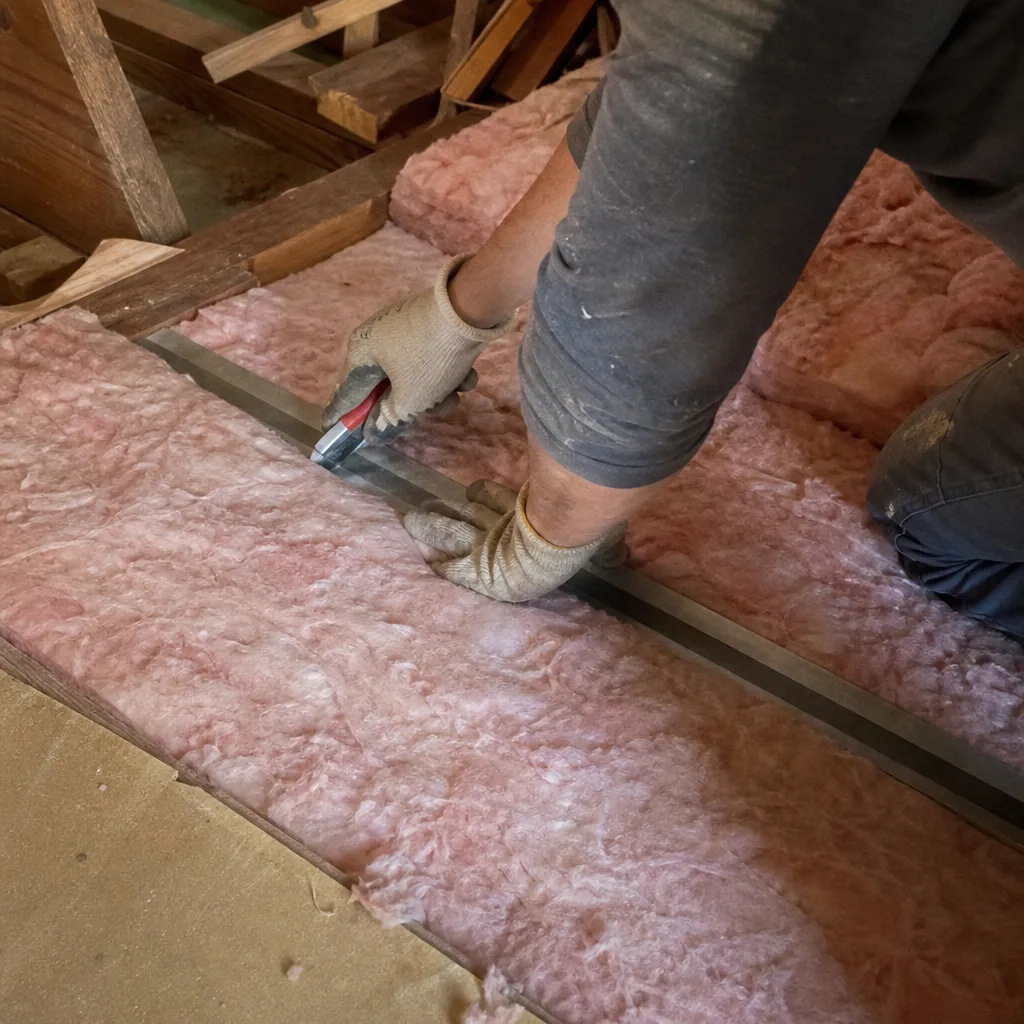
- 1
Call and scheduling. A live person answers (669) 259-0406, 24/7. We book a site visit, usually within 24-48 hours. You’ll get a text when Wes is en route.
- 2
Site assessment and blower-door test. We pressurize the house to 50 pascals - the blower-door test - and record the CFM50 reading. Then we thermal-scan the envelope and inspect any existing Johns Manville product for the failure modes above. We photograph everything.
- 3
Written price and scope. Before any work starts, you get a flat price, written scope, and written warranty. Haven Standard Clause 1: no work begins without it. Free Second Opinion available on any competing written estimate.
- 4
Air sealing first, then insulation. Seal the leaks first. The insulation has nowhere to go if the air does. We seal top plates, can lights, penetrations, and rim joists before a single pound of foam goes in.
- 5
Spray foam installation with lift control. We match the Johns Manville product spec for substrate temperature, humidity, and lift thickness. Closed-cell goes in 1-inch passes; open-cell in 3-5 inch passes. We never rush the cure.
- 6
Final blower-door test and documentation. We pressurize again, record the new CFM50, and calculate the percentage improvement. You get the before-and-after numbers, the photo record, and the warranty in writing. The 365-Day Done Right Promise applies from that moment.
What Johns Manville Spray Foam Insulation Costs in Mountain View
Most Johns Manville spray foam jobs in Mountain View fall in these ranges, based on what we’ve completed in the last 24 months:
| Job Type | Typical Range | What Moves the Price |
|---|---|---|
| Garage ceiling, closed-cell (400 sq ft) | $2,800 - $4,200 | Existing board removal, sheathing repair |
| Attic roof deck, open-cell (1,000 sq ft) | $4,500 - $6,800 | Existing insulation removal, access difficulty |
| Rim joist, closed-cell (linear ft) | $18 - $28/ft | Foundation type, pest damage repair |
| Wall cavity retrofit, closed-cell | $5,200 - $8,500 | Number of walls, window protection, finish repair |
| Hybrid removal and re-spray (Spider + foam) | $3,800 - $6,400 | Extent of compaction, moisture remediation |
These are real numbers for Mountain View’s market - not teaser rates. The price moves up if we find water damage, rodent activity, or inaccessible cavities requiring additional access holes. It moves down on straightforward jobs with clear attic access and clean substrates. Every estimate is free, written, and valid for 30 days. Call (669) 259-0406 to schedule.
Why Mountain View Homeowners Call Topside Attic Insulation Mountain View for Johns Manville Work
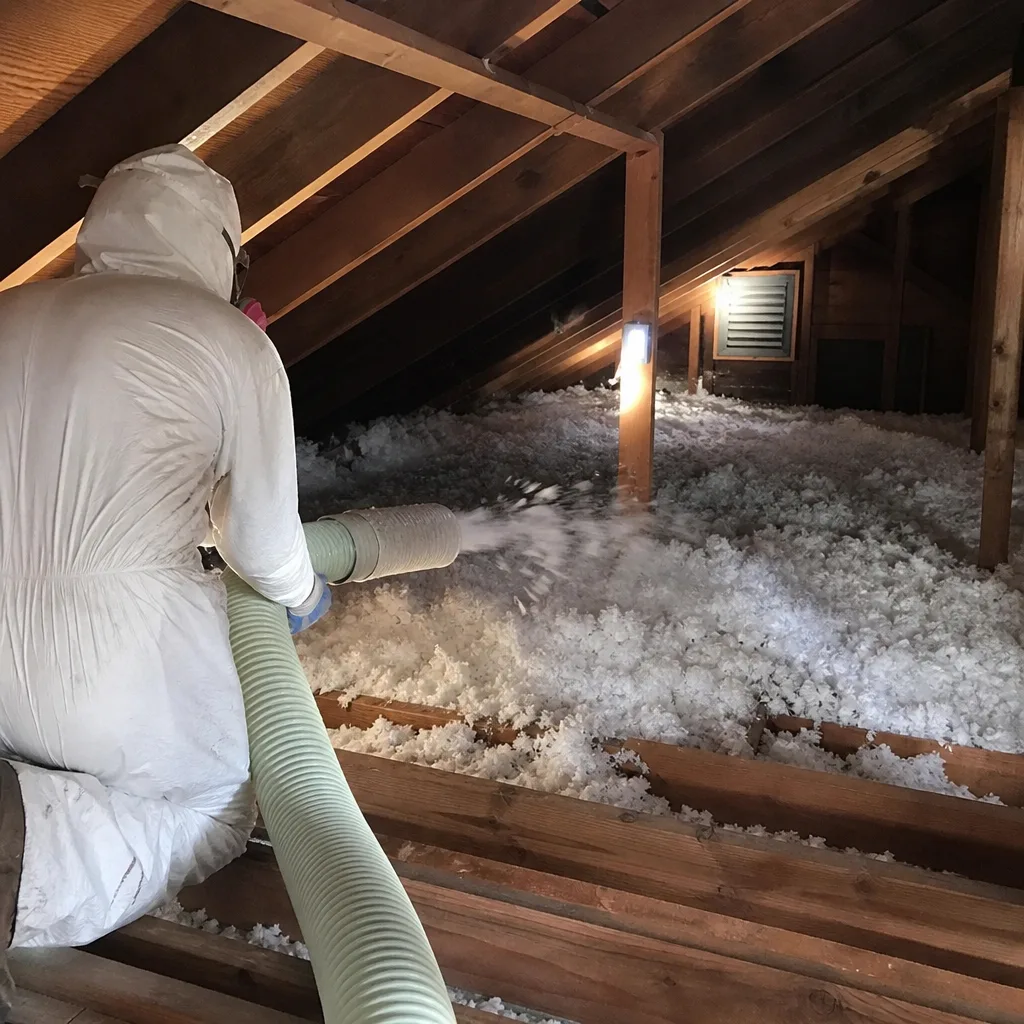
We’ve been in Mountain View’s attics since 2016 - 9,000+ homes sealed and insulated, every one with a written price before work started and a documented record when we left. Wes Okafor grew up on Chicago’s South Side, trained at Richard J. Daley College, and spent two decades working insulation jobs up and down the Peninsula before settling here. His crew knows the difference between a Johns Manville product that failed and a Johns Manville product that was failed by bad installation.
We don’t lock you into one brand. We source from Johns Manville, Owens Corning, Knauf, Rockwool, CertainTeed, Icynene, Demilec, and GreenFiber - and yes, Reflectix when radiant barrier is the right call for a south-facing roof deck in the San Antonio neighborhood. The 365-Day Done Right Promise covers all of it. Calls are answered by a live person, 24/7. Background-checked, uniformed technicians. No voicemail loops.
FAQs
No - Johns Manville’s product warranties cover manufacturing defects, not installation. If your spray foam was installed by a Johns Manville-certified contractor, the installation warranty came from that contractor, not the manufacturer. Our 365-Day Done Right Promise covers our workmanship, and we document substrate conditions and application parameters so any future product claim has the technical record it needs. Call (669) 259-0406 if you have paperwork to review together.
We don’t need “Johns Manville parts” for most spray foam repairs - spray foam is field-applied, not a panel system with proprietary connectors. For hybrid jobs involving JM board products, we use compatible materials from our multi-brand inventory or source identical spec products through regional distributors in San Jose. We never claim exclusive access to any brand. Bring us your existing material sample and we’ll match the thermal performance in writing.
Repair is cheaper when the foam is properly adhered and only specific areas show shrinkage or delamination - typically $800-$1,800 for localized touch-up with proper prep. Replacement is necessary when moisture has compromised the substrate, when multiple failure modes overlap, or when the original installation skipped air sealing and you’re seeing the result in your PG&E bill. We give you both numbers in writing and let the math decide. Free estimates: (669) 259-0406.
Most residential jobs are completed in one working day once scheduled. Scheduling runs 2-4 days out for standard jobs, 1-2 weeks during peak season (September-November). Emergency scheduling - active leaks, exposed electrical - is available same-day or next-day. A live person answers (669) 259-0406 24/7 to check current availability.
Because a homeowner deserves to see what they paid for. The blower-door test - pressurizing the house to 50 pascals and measuring air leakage in CFM50 - gives a single figure for envelope performance. We record it before we start and after we finish. In a Rex Manor ranch we completed last March, the reading dropped from 3,400 CFM50 to 1,850 CFM50 after air sealing and closed-cell roof-deck foam. That number is on the homeowner’s written report. No number, no proof.
Written by Wes Okafor, Owner & Lead Insulation Technician, Topside Attic Insulation Mountain View at Topside Attic Insulation Mountain View, serving Mountain View and nearby areas.