
Knauf Crawl Space Encapsulation: The Mountain View Owner’s Guide
We stock and install Knauf-compatible crawl space encapsulation systems for Mountain View homes, with most complete jobs running $3,800-$7,200 depending on square footage and existing moisture damage. Same-day installation is available when we have your liner size in the truck, which we do for the common 12-mil and 20-mil Knauf rolls. Most Mountain View owners discover their encapsulation has failed when they notice a sharp musty smell returning after months of absence, or when their dehumidifier starts running continuously without pulling the relative humidity below 65%.
Which Knauf Models This Applies To
Knauf’s crawl space line breaks down into three membrane grades: the 12-mil CleanSpace equivalent (Knauf part prefix KCS-12), the 20-mil reinforced liner (KCS-20-R), and the 90-mil drainage matting (KDM-90) used beneath the vapor barrier on dirt floors. The label is printed on the white taped edge every four feet; if your existing liner is failing, peel back a corner at the foundation wall to read it. The 20-mil reinforced spec uses a polyester cord grid between PVC layers, which is what separates it from the 12-mil single-ply that some Mountain View tract builders installed in the 2015-2019 construction wave to hit code minimum.
We carry both OEM Knauf rolls and a reinforced polyethylene equivalent from Reef Industries that matches the 20-mil spec at a lower per-square-foot cost. The catch with Knauf specifically: their 12-mil and 20-mil liners use different seam tape adhesives. The KCS-20-R requires Knauf’s butyl-rubber seam tape (KST-BR4) for a warranty-valid weld; using standard double-sided tape rated for 12-mil will delaminate in 18-24 months in Mountain View’s clay-heavy soil conditions, which shift seasonally and stress the seams. We stock both tapes on the truck.
Signs Your Knauf Crawl Space Encapsulation Is Failing
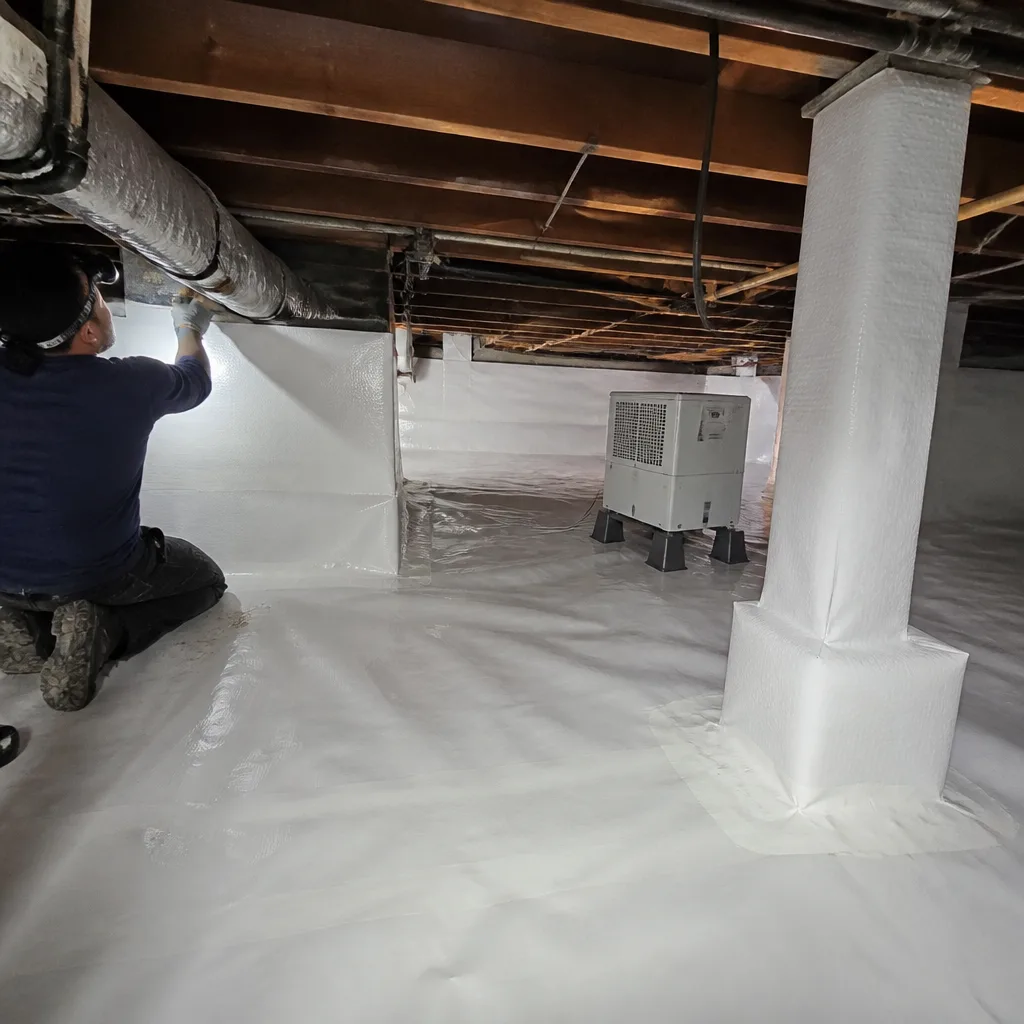
- Musty odor returning in humid months. The vapor barrier’s seam tape has separated or the membrane has punctured, letting soil gas and moisture bypass the seal. In Mountain View’s Rex Manor and Cuesta Park neighborhoods, we see this where the original installer skipped mechanical fastening at the sill plate and relied on tape alone.
- Dehumidifier running constantly, humidity stuck above 60%. The encapsulation is no longer airtight. The dehumidifier is fighting an unsealed crawl space as if it were open to outside air, which it functionally is. Your energy bill reflects this.
- White or chalky residue on the liner surface. This is efflorescence from moisture wicking through concrete or block walls, then evaporating at the liner edge. It means the wall portion of the encapsulation has detached or was never sealed with proper wall liner.
- Sagging or pooling on the liner floor. The drainage matting beneath has collapsed or clogged, or the liner was installed without matting over uncompacted soil that has since settled. Standing water above the barrier is a clear failure.
- Increased floor temperature in summer, cold floors in winter. The encapsulation’s thermal boundary has been compromised. Once air leaks in, the crawl space returns to outside temperature, and your conditioned floor above loses its buffer.
Replacement Cost & What’s Included
For a typical Mountain View crawl space of 800-1,200 square feet, complete Knauf-compatible encapsulation replacement runs $3,800-$5,400 for the 12-mil system and $5,200-$7,200 for the 20-mil reinforced with full wall liner. The spread depends on three things: how much of the old liner we have to cut out and haul (compacted soil underneath adds labor), whether the sill plate and rim joist need re-sealing with closed-cell foam before the new liner goes in, and if the existing dehumidifier is sized correctly or needs upgrading.
Every job includes removal of failed material, installation of new drainage matting where needed, mechanical fastening at all sill plates with Knauf-compatible termination bars, seam welding with the correct tape for your liner grade, and a post-installation humidity reading. Under our 365-Day Done Right Promise, if any seam lifts or any reading comes back above 55% RH, we return and fix it. You get a written scope before we start and a Documented Photo Record when we leave.
DIY or Call Us?
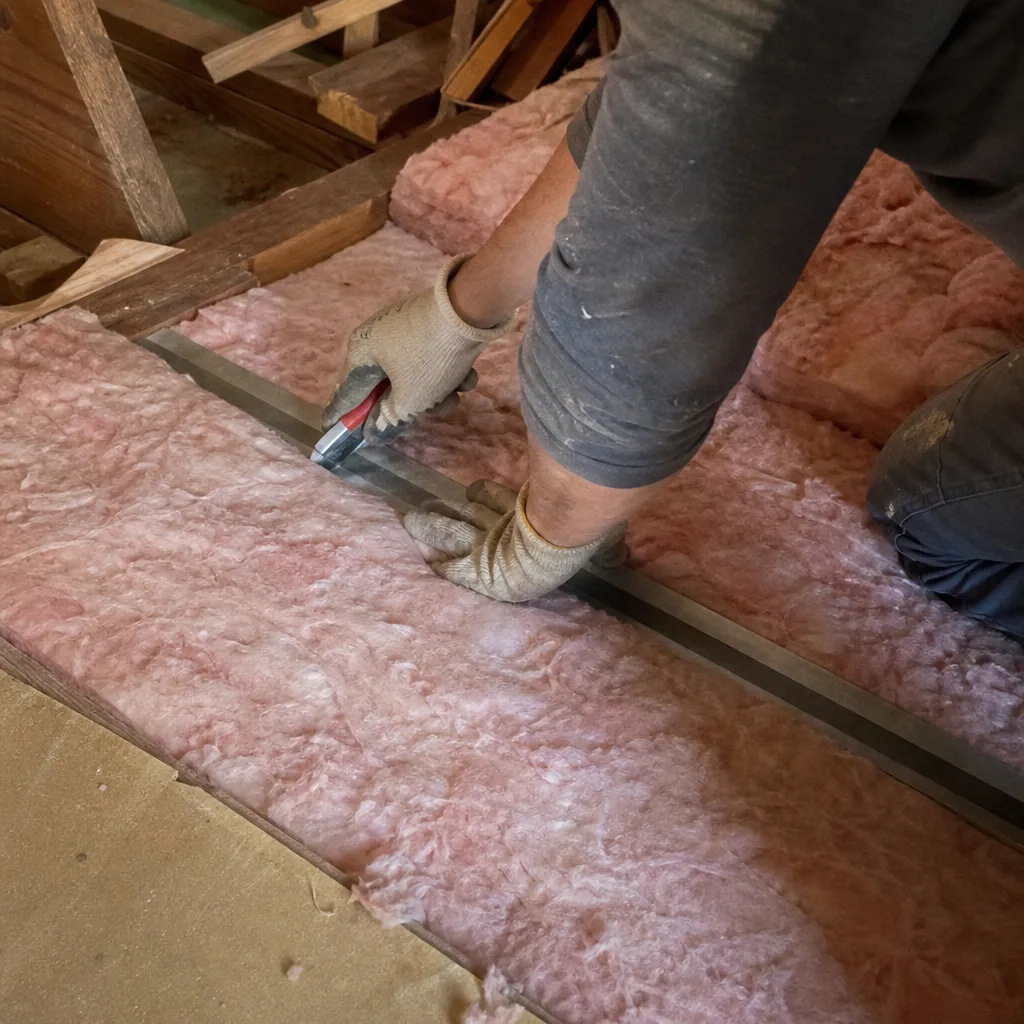
Here’s what you can safely check yourself: confirm the liner grade from the edge label, look for obvious punctures or detached tape with a flashlight, and note whether your dehumidifier’s collection bucket or drain line is actually flowing. What you cannot safely or effectively do yourself: cut out and replace a full liner while maintaining the airtight seal that makes encapsulation work, properly size and place a dehumidifier for the sealed volume, or assess whether your rim joist air sealing is intact without a blower-door test to measure crawl space-to-house pressure differentials.
We’ve found dead dehumidifiers in Mountain View crawl spaces where the homeowner replaced the liner but never sealed the bypass duct from the furnace, so the dehumidifier was trying to dry the entire house. Seal the leaks first. The insulation has nowhere to go if the air does. For an honest assessment of what’s actually failing and what it costs to fix it right, call (669) 259-0406. Estimates are free, and we bring a written price to every visit.
FAQs
Properly installed Knauf 20-mil reinforced liner should last 20-25 years in Mountain View’s climate, though the 12-mil single-ply we see in many Cuesta Park and Monta Loma builds often shows seam failures at 8-12 years due to soil movement and the original tape choice. The dehumidifier will need replacement before the liner, typically at 7-10 years. Call (669) 259-0406 if you’re unsure which grade you have - we can check during a free estimate.
Patching works for isolated punctures smaller than a quarter using Knauf’s KST-BR4 butyl tape or a heat-welded PVC patch, but seam failures, widespread chalking, or multiple tears mean the material is degrading and patches will leak within a season. We repair when it makes sense and replace when it doesn’t - we’ll tell you which during the estimate. Call (669) 259-0406 for a free second opinion on any other contractor’s repair recommendation.
Most Mountain View crawl spaces take one to two days: half a day to remove failed material and prep, half a day to install the new liner and seal, plus drying time if we apply closed-cell foam to the rim joist. We schedule so you’re not without access to utilities, and we text when the crew is on the way. Every job closes with a Documented Photo Record and, where applicable, before-and-after humidity readings.
We stock 12-mil and 20-mil Knauf-compatible rolls in standard widths, both OEM Knauf seam tapes, termination bars, and drainage matting on every Mountain View truck. For unusual crawl space dimensions or the 90-mil drainage matting, we can have material next business day from our San Jose supplier. Call (669) 259-0406 - if you can read us the label code, we’ll tell you if it’s on the truck.
Topside Attic Insulation Mountain View is an independent service provider and is not affiliated with Knauf Insulation. We also stock parts for Reflectix and other major building envelope brands.
Written by Wes Okafor, Owner & Lead Insulation Technician, Topside Attic Insulation Mountain View at Topside Attic Insulation Mountain View, serving Mountain View and nearby areas.