
Knauf Vapor Barrier Installation: The Mountain View Owner’s Guide
Knauf vapor barrier installation in Mountain View typically runs $1,800-$3,400 for a standard crawl space or attic application, and we stock Knauf-compatible rolls and seam tape on our trucks for same-day starts. Most homeowners call us after spotting condensation on ductwork, musty odors, or warped subflooring - all signs the existing vapor barrier has torn, shifted, or was never properly sealed at the seams. We air-seal first, then install, because a vapor barrier over a leaky envelope is just a sheet of plastic collecting water.
Topside Attic Insulation Mountain View is an independent service provider - not affiliated with Knauf - and we source Knauf materials alongside Owens Corning, Johns Manville, and others so you get the right product for your assembly, not a proprietary lock-in.
Which Knauf Models This Applies To
Knauf’s vapor barrier line for residential envelope work centers on their Insulation Vapor Retarder (IVR) series and the EcoSeal-compatible polyethylene sheeting used in conditioned attic and crawl space assemblies. The IVR-6 and IVR-10 ratings denote permeance - 0.6 and 1.0 perms respectively - and the wrong choice here traps moisture instead of managing it. Mountain View’s mild, marine-influenced climate with seasonal humidity spikes means we typically spec IVR-10 for crawl spaces and IVR-6 for conditioned attics where winter condensation risk is higher.
Identification is straightforward if the previous installer left the roll labels: look for the Knauf logo, the perm rating, and the mil thickness - 6-mil is standard for ground cover, 10-mil for high-traffic or rodent-prone crawl spaces. If labels are gone, measure thickness with a caliper and check seam tape residue - Knauf’s factory tape is white with blue print, not the generic silver duct tape we pull off half the jobs in Rex Manor. OEM Knauf rolls run 12 feet wide by 100 feet long; aftermarket equivalents from Poly-America or Raven save 15-20% but may not carry the same ASTM E1745 Class A rating for below-slab or high-moisture applications. We stock both and will show you the spec sheet before we cut anything.
Signs Your Knauf Vapor Barrier Installation Is Failing
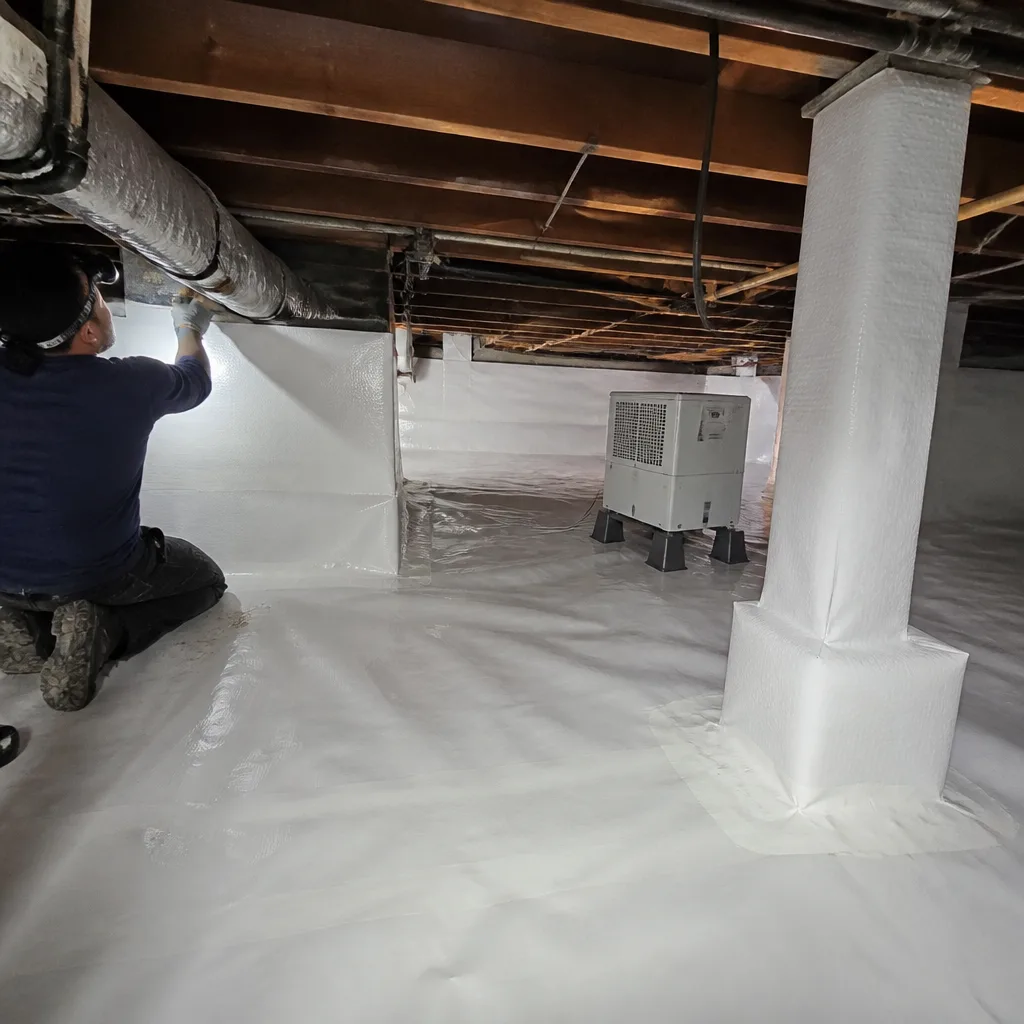
- Condensation on ductwork or framing. Warm, humid air hits cool surfaces because the vapor barrier has gaps at seams or penetrations. In Mountain View’s spring months, we see this most in homes with unconditioned crawl spaces where the barrier pulled away from pier footings.
- Musty or earthy odors rising through floor registers. Moisture is reaching the crawl space soil and supporting mold growth on joists or the subfloor underside. The vapor barrier isn’t blocking soil gas and humidity migration - it’s breached, displaced, or too thin for the application.
- Warped or cupped hardwood flooring. Moisture vapor drives upward through the assembly, swelling boards from below. We measure this with a moisture meter at the subfloor; readings above 12% in Mountain View’s climate mean the barrier has failed or was never continuous.
- Visible pooling or mud under the barrier. Water is getting in faster than it can evaporate, usually because the barrier has tears from rodent activity, installer foot traffic, or UV degradation at perimeter vents. Standing water destroys R-value in nearby insulation and accelerates framing decay.
- White or chalky efflorescence on foundation walls. Mineral deposits mean liquid water is moving through concrete and evaporating at the surface. A proper vapor barrier with sealed wall terminations stops this; a floating sheet of plastic just lets it continue behind the cover.
Replacement Cost & What’s Included
Most Knauf vapor barrier replacements in Mountain View fall between $1,800 and $3,400 installed. The low end covers a clean crawl space, 6-mil Knauf IVR-10 ground cover, seam sealing with Knauf-compatible tape, and perimeter attachment to foundation walls. The high end includes 10-mil sheeting, full air sealing of rim joists and penetrations before barrier placement, removal of degraded old material, and a documented photo record with before-and-after moisture readings.
What moves the price: square footage, access difficulty (we’ve worked in 18-inch crawl spaces in Old Mountain View where every movement costs time), condition of existing material, and whether the job follows our air-sealing protocol or skips it. We don’t skip it. Every quote is a written price before any work starts - Haven Standard Clause 1 - and includes the 365-Day Done Right Promise. No separate trip charges, no material markups hidden in the line items.
DIY or Call Us?
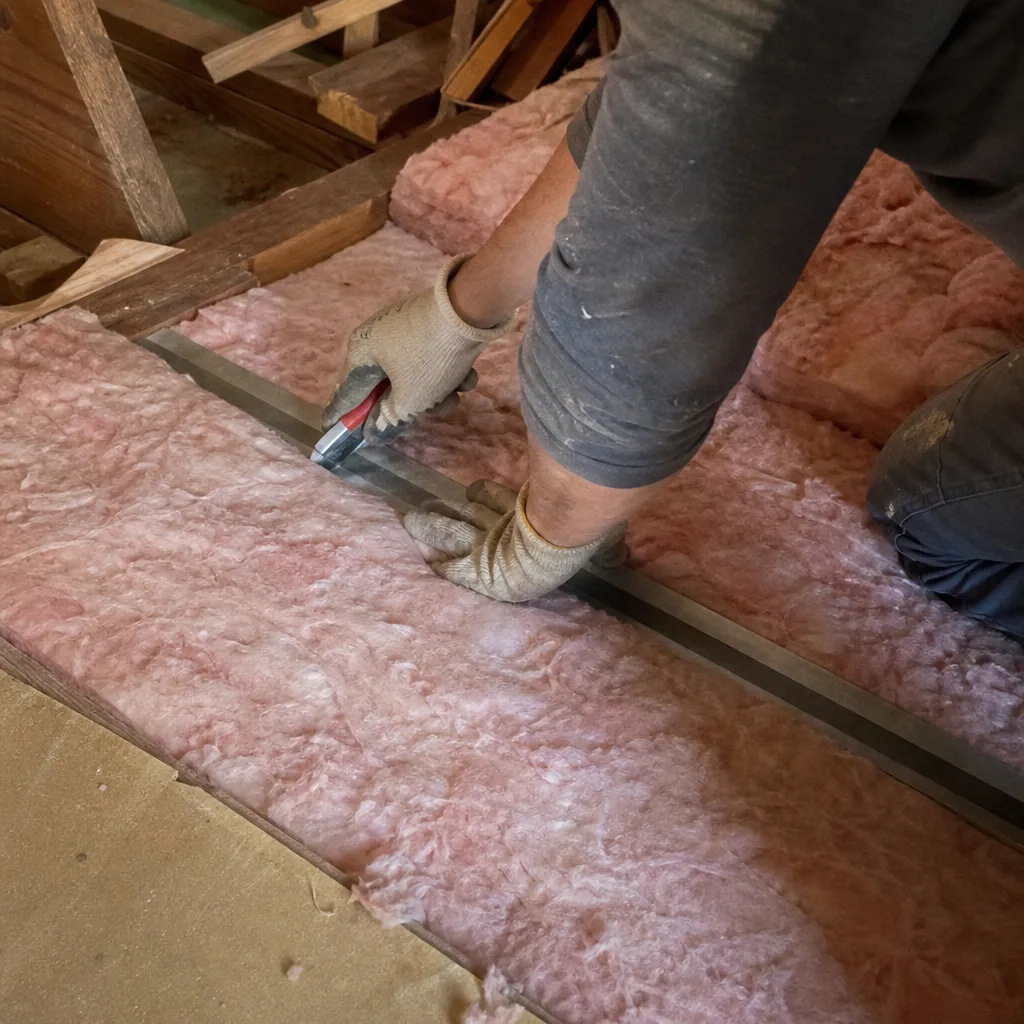
You can safely check a few things: verify the barrier is continuous wall-to-wall, look for obvious tears or pooling, and photograph anything suspicious for reference. What you cannot safely do is enter a crawl space with compromised structural supports, active rodent contamination, or electrical hazards - and you cannot judge permeance or seam integrity by eye.
DIY vapor barrier replacement fails most often at the seams. Overlapping sheets without proper tape, missing wall terminations, or installing over unsealed penetrations traps moisture instead of controlling it. We’ve pulled out homeowner jobs in Mountain View where the new barrier was holding water like a bathtub liner. Seal the leaks first. The insulation has nowhere to go if the air does. For a written price and a crew that sequences the work correctly, call (669) 259-0406.
FAQs
Properly installed Knauf vapor barrier in Mountain View’s climate lasts 15-25 years, though rodent activity, foot traffic during service work, and UV exposure at vents can cut that to 8-12. We use 10-mil sheeting and mechanical perimeter attachment in high-risk areas to push toward the longer end. Call (669) 259-0406 if you’re unsure of your install date - estimates are free.
Small punctures or seam gaps can be patched with compatible tape if the surrounding material is sound and the tear is under 6 inches. Widespead degradation, thinning, or multiple breaches mean replacement - patches over failing substrate just create new failure points. We assess this on every visit and will show you exactly what we found before quoting either approach.
A standard Mountain View crawl space - 1,000 to 1,500 square feet - takes one crew day including removal, air sealing, and new Knauf barrier installation with full seam taping. Tight access, extensive old material removal, or concurrent insulation work adds a second day. We give you a written schedule with the written price, not a window.
Yes - we carry 6-mil and 10-mil Knauf-compatible rolls, seam tape, and wall termination fasteners on every Mountain View truck, plus Reflectix and other brands for mixed assemblies. Same-day starts are standard when you approve the written price by noon. Call (669) 259-0406 to confirm current stock for your specific perm rating and mil requirement.
Written by Wes Okafor, Owner & Lead Insulation Technician, Topside Attic Insulation Mountain View at Topside Attic Insulation Mountain View, serving Mountain View and nearby areas.