
Rockwool Spray Foam Insulation in Mountain View: What to Know First
We provide independent Rockwool spray foam insulation in Mountain View, typically scheduling diagnostics within 24 to 48 hours and completing most jobs in a single day. Our written price lands before any work starts - Haven Standard Clause 1 - and every homeowner receives a Documented Photo Record plus before-and-after blower-door numbers on applicable jobs. Most Rockwool spray foam projects in Mountain View run between $2,800 and $6,400 depending on cavity depth, foam type, and whether we’re treating rim joists, roof decks, or garage ceilings alongside attic work. This page is for Rockwool owners who need spray foam insulation and want to understand what their existing mineral wool means for the job ahead. Call (669) 259-0406 for a free estimate.
How Rockwool Products Fail - and How We Fix Them
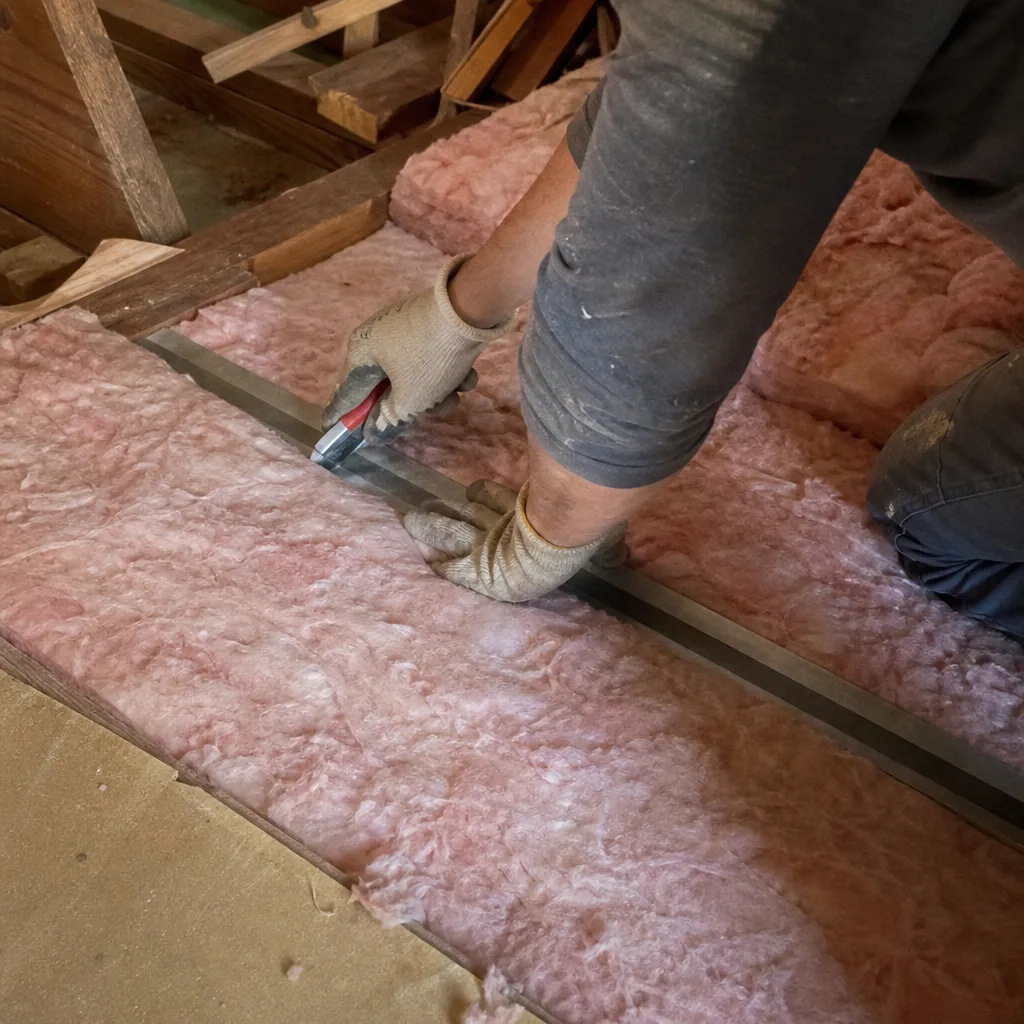
- Comfortbatt R-23 compressed in 2×6 walls loses its rated R-value. Rockwool’s rigid batts don’t spring back like fiberglass once they’ve been wedged in too tight or soaked by a leak. We find this in Mountain View’s older Eichler and ranch-style walls where original installers forced full-thickness batts into shallow cavities. Our fix: remove the compressed batts, air-seal the sheathing gaps with open-cell spray foam, then fill to the proper depth so the insulation actually performs to its label.
- Safe ‘n’ Sound in interior partition walls gets bypassed by stack effect. Homeowners install this for soundproofing between bedrooms and living spaces, but without sealing the top and bottom plates, conditioned air rides the wall cavity like a chimney. We cut access at the rim joist or attic floor, foam-seal the plates with closed-cell at 2 inches minimum, then reinstall the Safe ‘n’ Sound so it can do its job.
- Comfortboard 80 on exterior walls creates a thermal bridge at fasteners. The rigid board is solid, but the screws and washers that hold it conduct heat straight through. In Mountain View’s climate - marine layer mornings, dry afternoon sun - those bridges show up as dark stripes on thermal imaging within three to five years. We pull the board, set a continuous layer of closed-cell spray foam against the sheathing as the primary air barrier, then remount the Comfortboard as a rain-screen buffer rather than the main thermal layer.
- AFB (Acoustical Fire Batt) in commercial retrofits crumbles at freeze-thaw cycles. Mountain View’s unconditioned garages and ground-floor utility rooms see wider temperature swings than the product was specced for. Once the binder degrades, the batt sags and leaves a fire-rated cavity half-empty. We remove the failed AFB, treat the cavity with open-cell spray foam for both air sealing and fire-blocking where code allows, or spec a compatible replacement if the rating must be preserved.
- Rockwool cavity fill in vaulted ceilings settles away from the deck. Blown-in Rockwool doesn’t have the loft recovery of cellulose; over years, vibration and minor roof flex create a gap at the top. That gap is pure thermal loss. We vacuum out the settled material, spray closed-cell foam directly to the roof deck at R-38 equivalent for Mountain View’s Title 24 requirements, and eliminate the settlement problem permanently.
Our Rockwool Spray Foam Insulation Process
- 1
Call and scheduling. A live person answers, 24/7. We book a diagnostic in Mountain View within 24 to 48 hours.
- 2
On-site diagnostic and blower-door test. We pressurize the house to 50 pascals and record the CFM50 baseline - the number that tells us how much air the envelope is losing before we touch anything. We photograph every Rockwool installation we find, note the series and condition, and mark where it’s failed or been bypassed.
- 3
Written scope and price. Haven Standard Clause 1: flat price, written scope, written warranty. No work starts without it. We specify open-cell versus closed-cell, depth, and whether we’re treating rim joists, roof deck, or garage ceiling alongside the main job.
- 4
Air sealing before foam. Seal the leaks first. The insulation has nowhere to go if the air does. We seal top plates, can lights, penetrations, and rim joists before a single pound of spray foam goes in.
- 5
Spray foam installation and real-time monitoring. We monitor substrate temperature and ambient humidity - critical in Mountain View’s morning marine layer - to ensure proper adhesion and cure. Thickness is checked with a depth gauge every 16 inches.
- 6
Post-job blower-door test and documentation. We pressurize again, record the new CFM50 and ACH50, and hand you the printout with the photo record. The 365-Day Done Right Promise is already in writing.
What Rockwool Spray Foam Insulation Costs in Mountain View
Most Rockwool spray foam insulation jobs in Mountain View fall between these ranges:
| Job Type | Typical Range | What Moves the Price |
|---|---|---|
| Rim joist only (open-cell) | $2,800 - $4,200 | Linear feet, access difficulty, existing Rockwool removal |
| Garage ceiling (closed-cell, 2″) | $3,400 - $5,100 | Square footage, whether roof deck is also treated |
| Attic roof deck (open-cell, 5.5″) | $4,800 - $7,200 | Deck area, pitch complexity, need for ignition barrier |
| Full envelope (attic + rim + garage) | $8,500 - $14,000 | House size, existing Rockwool condition, blower-door target |
Closed-cell runs 30% to 50% higher per board foot than open-cell but delivers twice the R-value per inch and acts as its own vapor barrier. Rockwool removal adds $0.80 to $1.40 per square foot depending on whether it’s batt, board, or blown. We don’t guess at these numbers on site - the written price is calculated from measurements and material specs before anyone lifts a tool. Bring us any competing written estimate; we’ll read it with you. Free Second Opinion, no obligation. Call (669) 259-0406 for your written price.
Why Mountain View Homeowners Call Topside Attic Insulation Mountain View for Rockwool Work
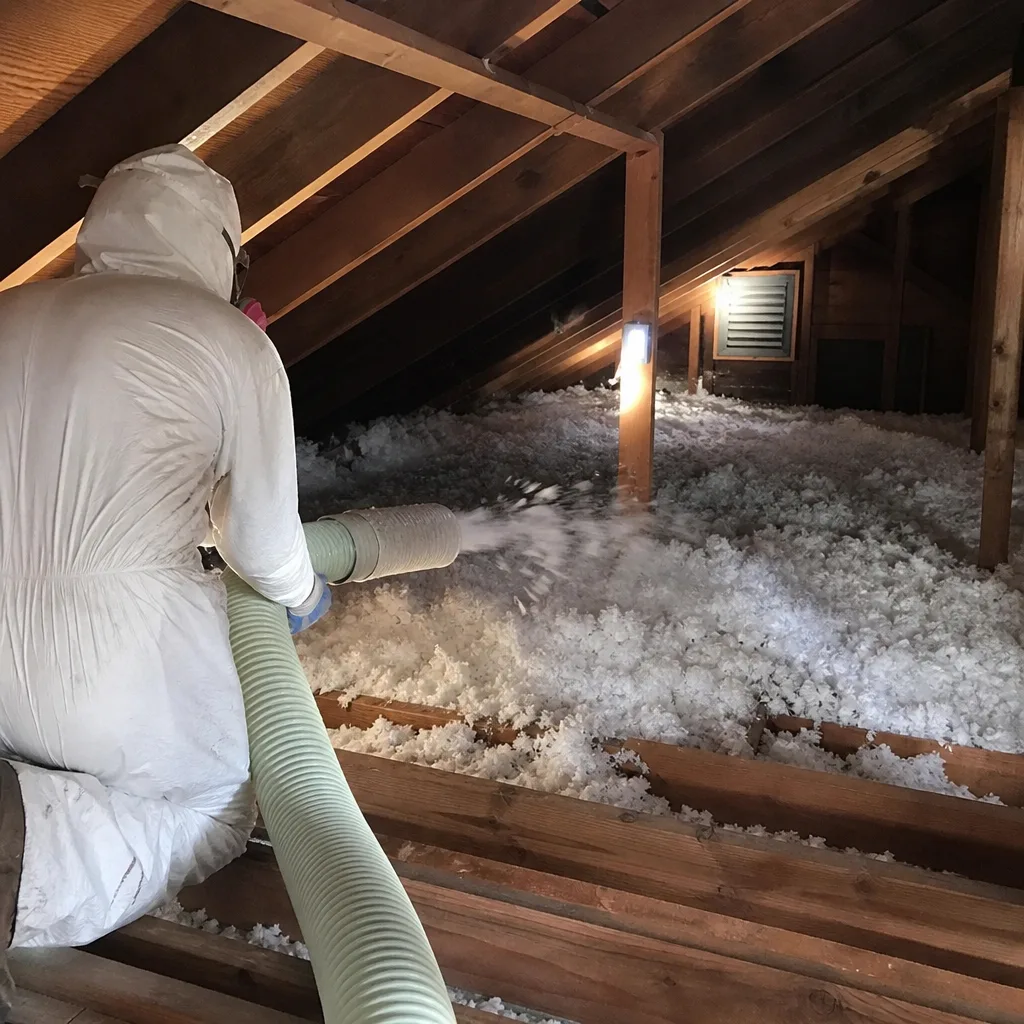
We’ve been in Mountain View’s Rex Manor neighborhood pulling out compacted fiberglass and Rockwool batts that previous crews never properly staged - the kind of job where the before-and-after blower-door numbers tell the whole story. Our crew knows the difference between Comfortbatt and Comfortboard, between Safe ‘n’ Sound and AFB, and we know which Rockwool products can stay in place as a complement to spray foam and which need to come out.
Every job gets the Haven Standard: written price first, documented record last, 365-Day Done Right Promise in between. We also work with Reflectix and other multi-layer systems when the assembly calls for it - no proprietary lock-in, ever. Wes Okafor keeps a notepad in the truck and writes down what we found in each attic, because the next person who goes up there deserves an honest picture.
FAQs
Rockwool’s product warranty covers manufacturing defects, not installation compatibility with other materials. As an independent Rockwool service provider, we document the condition of existing Rockwool before we begin and specify in writing which products remain and which are removed, so there’s no dispute about what was there. Call (669) 259-0406 if you want us to review your specific Rockwool installation.
If the Rockwool is dry, uncompressed, and properly fitted to the cavity, we often leave it in place and add spray foam at the air-leakage points - top plates, rim joists, roof deck - to make the assembly perform. If it’s water-stained, compressed below 80% of labeled thickness, or bypassed by air movement, removal and replacement with spray foam is the better investment. We make that call during the diagnostic and put the reasoning in your written scope. Call (669) 259-0406 for a free estimate.
Closed-cell spray foam requires an ignition barrier or thermal barrier in living spaces per California Building Code; open-cell does too in most applications. Rockwool is non-combustible, so when we replace it in a fire-rated assembly, we specify either an intumescent coating over the foam or a compatible fire-rated replacement - never a downgrade. We note the required barrier in your written price before work starts.
Most diagnostics happen within 24 to 48 hours of your call. Once the written scope and price are accepted, we typically schedule installation within 5 to 10 business days depending on material lead time and crew availability. We don’t manufacture urgency - we show up when we say we will, and we text you when the technician is on the way.
We don’t use “parts” in the mechanical sense - spray foam is a field-applied chemical system, not a component swap. For Rockwool removal and reinstallation where we’re hybridizing systems, we use Rockwool-compatible fasteners and fasteners from recognized suppliers; we don’t lock you into proprietary products from any single manufacturer. Your written scope lists every material by brand and spec.
Ready to see what your Rockwool installation is actually doing? Call (669) 259-0406 for a free estimate. We’ll pressurize the house, show you the numbers, and give you a written price before any work starts.
Written by Wes Okafor, Owner & Lead Insulation Technician, Topside Attic Insulation Mountain View at Topside Attic Insulation Mountain View, serving Mountain View and nearby areas.