
Rockwool Blown-In Insulation in Mountain View: What to Know First
We provide independent Rockwool blown-in insulation service in Mountain View, typically scheduling diagnostic visits within 24 to 48 hours and completing most attic jobs in a single day. Most Rockwool blown-in projects in a home this size run between $2,800 and $5,400, and we put that price in writing before any work starts - no exceptions. This page is for homeowners who’ve found Rockwool products in their attic or walls and need to know whether to repair, supplement, or replace what’s there. If you’re seeing settled batts, moisture staining, or uneven coverage in a Mountain View home built between 1965 and 1995, there’s a good chance Rockwool is part of the assembly. Call (669) 259-0406 for a free estimate with a written price delivered on the spot.
How Rockwool Products Fail - and How We Fix Them
- Rockwool Comfortbatt settled below top plates in pitched attics. The batts compress over 15 to 20 years and lose their labeled R-value - a Comfortbatt R-23 can perform like R-15 once it’s packed down. We remove the compacted material, air-seal the top plates and electrical penetrations, then blow in new insulation to the correct depth with a settled-density calculation.
- Rockwool Comfortboard 80 used as attic floor insulation without proper vent baffles. Homeowners in Mountain View’s Rex Manor neighborhood sometimes find this rigid board laid flat over joists, which blocks soffit airflow and traps Peninsula marine-layer moisture. We pull the boards, install proper vent chutes, and switch to blown-in material that fills cavities without choking ventilation.
- Rockwool AFB (Acoustical Fire Batt) installed in non-fire-rated assemblies. This black-faced batt gets mistaken for standard thermal insulation by previous contractors; it’s denser and more expensive per R-value than needed for a typical attic. We identify it during inspection, explain where it belongs (interior partition walls, rated floor-ceiling assemblies), and replace it with appropriate blown-in thermal material.
- Rockwool granulated loose fill (Roxul Plus) unevenly distributed by DIY or low-quality blowers. The material bridges over joist bays instead of filling them, leaving thermal leaks you can map with an infrared camera. We use commercial-grade hoses with proper CFM calibration and verify even coverage with depth markers every 300 square feet.
- Rockwool products wicking moisture where roof leaks or bathroom vents terminate in attic space. The stone wool itself is hydrophobic, but it holds water against framing once the binder saturates. In Mountain View’s mild, damp winters, this shows up as rusted fastener heads or stained ceiling drywall below. We find the moisture source, fix it, remove the affected insulation, and document the repair with photos.
Our Rockwool Blown-In Insulation Process
- 1
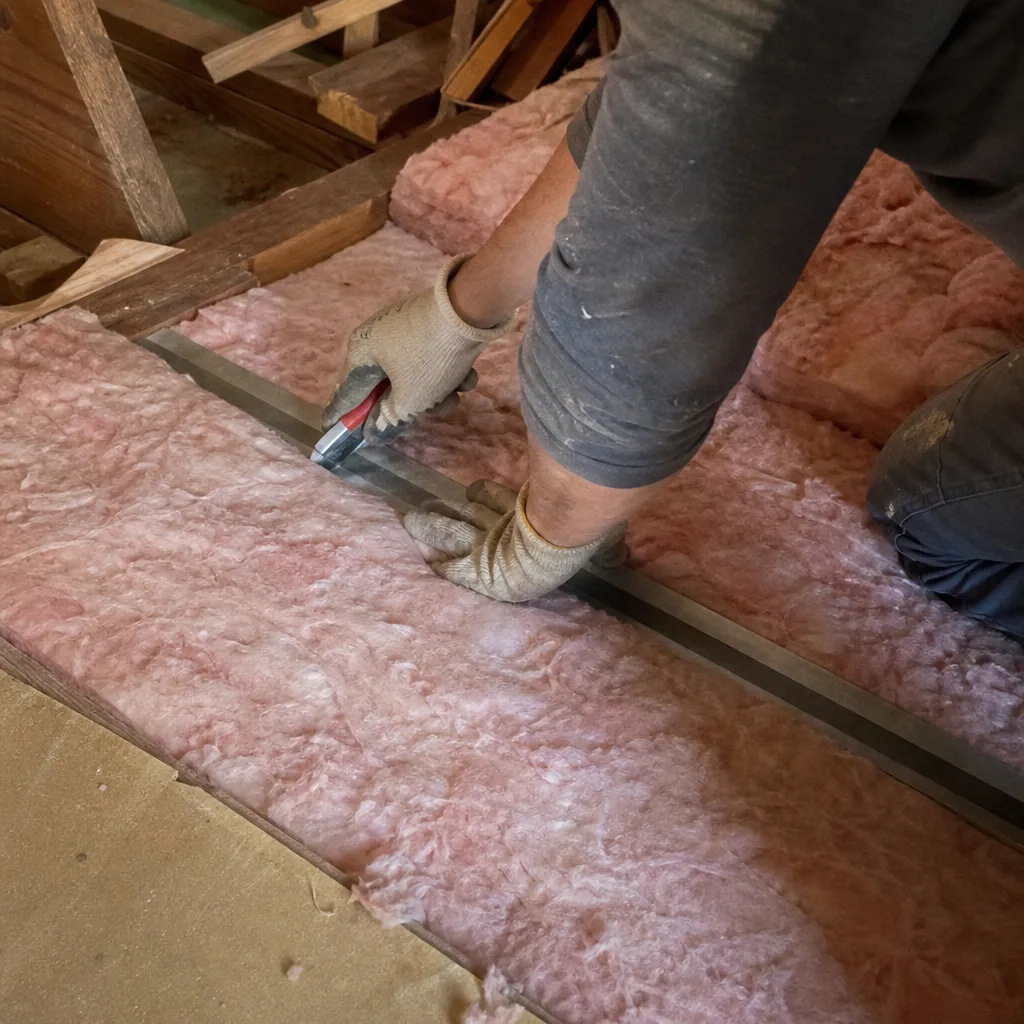
Diagnostic inspection with photo documentation. We enter the attic, identify every Rockwool product line present, and photograph condition, depth, and any moisture or compression issues. You get these photos whether or not you hire us.
- 2
Blower-door test - before any material moves. This pressurization reading shows, in one number, how much air your building envelope is losing. Most Mountain View homes we test read between 3,500 and 6,000 CFM50 before we start.
- 3
Air sealing of all attic-floor penetrations. Top plates, can lights, plumbing stacks, wire holes - sealed with fire-rated caulk, foam, or metal flashing as appropriate. Seal the leaks first. The insulation has nowhere to go if the air does.
- 4
Material selection: OEM Rockwool granulated loose fill or verified-compatible aftermarket. We source from Rockwool’s distribution network when the job calls for matching existing material; for full replacements, we may recommend Knauf or Johns Manville blown-in with comparable density and fire rating. No proprietary lock-in.
- 5
Installation with depth verification and blower-door retest. We blow to the specified settled depth, place markers, and run the blower door again. Most Mountain View homes drop 30 to 50 percent in CFM50 after proper air sealing and insulation.
- 6
Written report, photo record, and 365-Day Done Right Promise documentation. You leave with the before-and-after numbers, the photos, and a written scope - Haven Standard Clause 1, delivered.
What Rockwool Blown-In Insulation Costs in Mountain View
Most Rockwool blown-in insulation jobs in Mountain View fall in these ranges:
| Attic top-up over existing Rockwool (1,200-1,800 sq ft) | $2,800-$3,900 |
| Full removal of settled Rockwool batts + air seal + blown-in replacement | $4,200-$5,400 |
| Dense-pack wall insulation with Rockwool-compatible material | $3,500-$5,100 |
| Air sealing only (no insulation replacement) | $1,800-$2,600 |
What moves the price: attic accessibility (hatch size, joist spacing), presence of active rodent damage requiring cleaning, number of can lights needing sealed housings, and whether we need to install vent baffles where soffit intake was blocked. We also handle Reflectix radiant barrier installations where roof geometry makes bulk insulation impractical. Every estimate includes a Free Second Opinion on any written competing quote - bring it and we’ll read it with you. Call (669) 259-0406 for an exact quote; estimates are free and the price is written before any work starts.
Why Mountain View Homeowners Call Topside Attic Insulation Mountain View for Rockwool Work
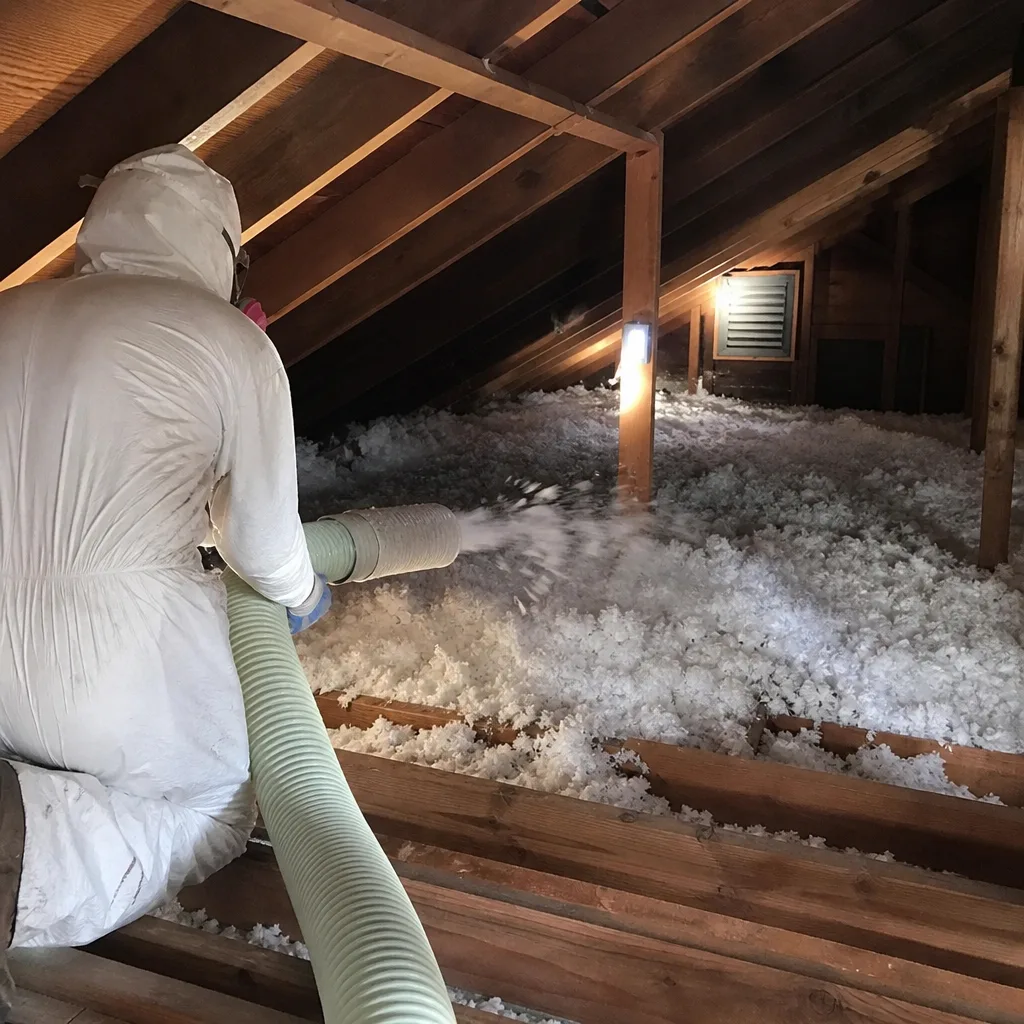
We’ve been in Mountain View attics since 2016, and we’ve learned that Rockwool products behave differently than fiberglass or cellulose in this climate - denser, less forgiving of installation shortcuts, and harder to diagnose with a quick visual check. Wes Okafor grew up on Chicago’s South Side, picked up his trade fundamentals at Richard J. Daley College, and spent the better part of two decades working insulation jobs up and down the San Francisco Peninsula. His crew has been in Mountain View’s Rex Manor neighborhood pulling out compacted fiberglass batts and replacing them with properly staged blown-in material - the kind of job where the before-and-after blower-door numbers tell the whole story.
We don’t blow insulation over unsealed attic floors. We don’t start without a written price. We don’t leave without a documented photo record. The 365-Day Done Right Promise applies to every job, and a live person answers calls 24/7 - no voicemail loops, no callback windows measured in business days. Our materials come from Owens Corning, Johns Manville, Knauf, Rockwool, CertainTeed, and others; we match the right product to the assembly, not the other way around.
FAQs
No - Rockwool’s product warranty covers manufacturing defects, not installation or subsequent service by independent contractors. As an independent Rockwool service provider, we use warranty-safe practices: matching or exceeding specified densities, maintaining proper clearances around heat-producing fixtures, and documenting everything so any future claim has a clear paper trail. If you’re concerned about a specific product registration, we’ll review it with you before we start. Call (669) 259-0406 to schedule.
Most Rockwool granulated loose fill and Comfortbatt orders arrive within 2 to 3 business days through regional distribution in San Jose. For urgent jobs - failed insulation exposed by a roof leak, for example - we stock Knauf and Johns Manville equivalents with comparable fire and thermal performance so work isn’t delayed. Call (669) 259-0406 and we’ll confirm material availability for your specific timeline.
Top-up is cheaper upfront but usually costs more over 10 years. Settled Rockwool batts have already lost their design R-value and often mask air leaks below; blowing new material over them leaves those leaks active and creates an uneven density profile. Full removal plus air sealing plus new blown-in insulation runs higher initially but delivers the blower-door numbers that actually reduce heating and cooling loads. We quote both approaches so you can see the trade. Call (669) 259-0406 for a written comparison.
We can match Rockwool’s thermal and fire performance with OEM or verified-compatible material, though exact color and texture matching isn’t always possible between production lots. For most Mountain View homes, the critical match is R-value and settled density, not visual uniformity - attic insulation isn’t visible from living space. We document what was installed where so any future contractor knows the assembly. Call (669) 259-0406 to discuss your specific situation.
The blower-door test settles this in about 45 minutes. High CFM50 with low insulation depth means the thermal barrier is the priority; high CFM50 with adequate depth points to air leakage as the main driver. We’ve found Mountain View homes with 12 inches of Rockwool in the attic but 4,800 CFM50 because the top plates were never sealed - the insulation was doing its job, but the air was walking right past it. We run the test first, show you the number, and build the scope from there. Call (669) 259-0406 to book a diagnostic.
Written by Wes Okafor, Owner & Lead Insulation Technician, Topside Attic Insulation Mountain View at Topside Attic Insulation Mountain View, serving Mountain View and nearby areas.