
Rockwool Radiant Barrier Installation: The Mountain View Owner’s Guide
Rockwool radiant barrier installation in Mountain View typically runs $2,800-$4,600 for a 1,200-2,000 square foot attic, and we stock Rockwool AFB (Acoustic Fire Batt) and Comfortbatt-compatible radiant barrier assemblies for same-day starts on most residential jobs. Most homeowners figure out something’s wrong when their upstairs bedrooms won’t cool below 78°F even after sunset, or when their July PG&E bill jumps 30% year-over-year despite identical thermostat settings. The radiant barrier film has either delaminated from the substrate, was installed with the wrong emissivity face up, or was never properly integrated with the air-sealing layer to begin with.
Which Rockwool Models This Applies To
Rockwool doesn’t manufacture a standalone radiant barrier product. What we’re installing is a hybrid assembly: Rockwool’s stone wool insulation paired with a reflective radiant barrier layer, typically either a kraft-faced aluminum laminate or a standalone perforated radiant barrier sheet installed on the attic-side surface. The two Rockwool lines we see in Mountain View attics are Comfortbatt (thermal insulation, R-15 to R-23 in wood-framed cavities) and AFB evo (acoustic/fire-rated batts, common in party-wall and garage-ceiling applications).
To identify what you’ve got, check the batt label for the product code: Comfortbatt runs CB-15, CB-21, CB-23; AFB evo uses AFB-23 or AFB-25. The radiant barrier layer is separate, and here’s where compatibility gets tricky. If your existing radiant barrier is bonded directly to the batt face, it’s almost certainly an aftermarket laminate, not OEM Rockwool. Rockwool’s factory-facing is kraft paper or no facing; the reflective layer was added in the field or by a prior contractor. We stock both OEM-compatible Rockwool batts and quality aftermarket radiant barrier films (Reflectix BP24025 and similar) that match the assembly spec without locking you into a proprietary system. The wrong pairing: installing a non-perforated radiant barrier over Rockwool in a vented attic, which traps moisture against the stone wool and voids the warranty.
Signs Your Rockwool Radiant Barrier Installation Is Failing
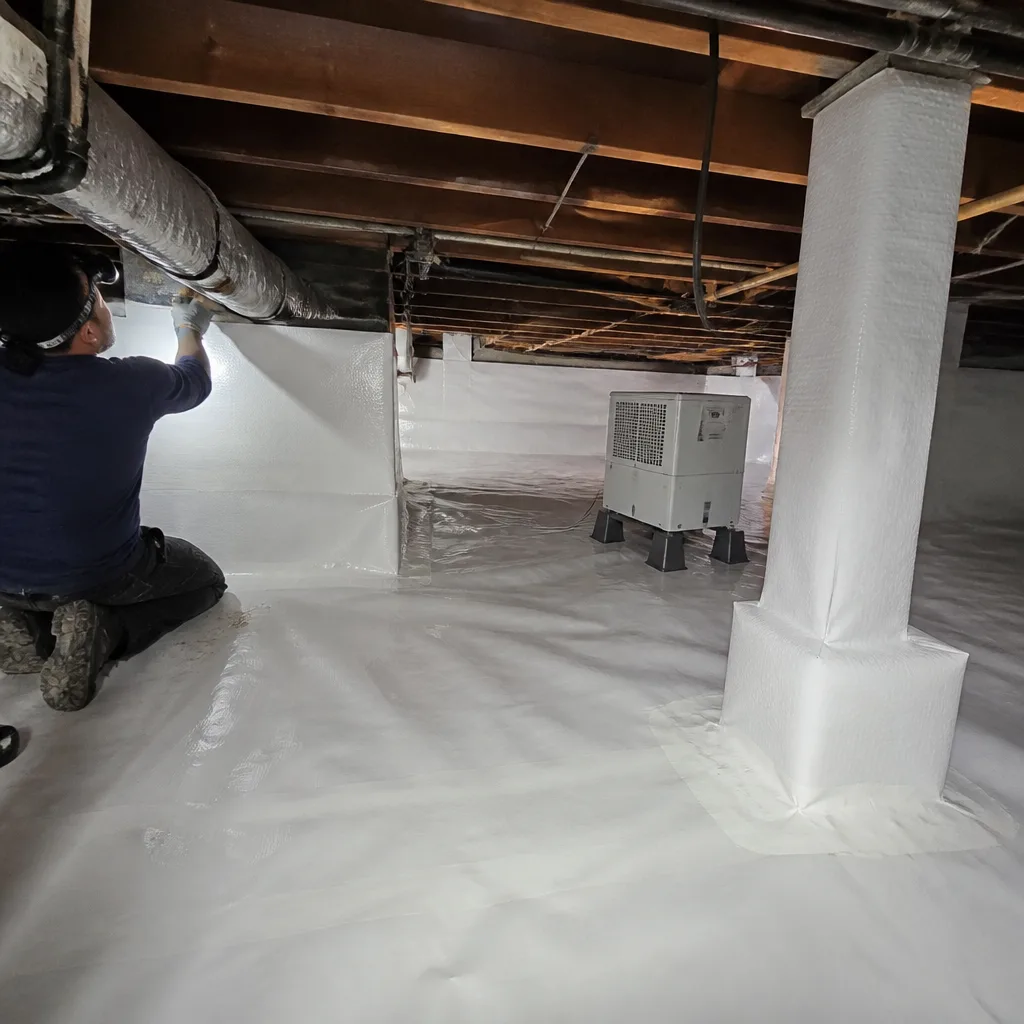
- Hot ceiling patches at joist bays. The radiant barrier has torn or pulled away at the staple line, creating gaps where infrared radiation passes straight through. In Mountain View’s Rex Manor and Cuesta Park neighborhoods, we see this where summer attic temps hit 140°F and the staple creep works the film loose over 3-5 years.
- Dust-darkened reflective surface. A radiant barrier only works if it stays reflective. Once attic dust settles on the aluminum face, emissivity climbs from 0.03 to 0.30 or higher, and the barrier becomes a mild conductor instead of a reflector. This is why perforated barriers in vented attics need inspection every 4-6 years.
- Moisture staining on the batt face. Non-perforated radiant barrier film over Rockwool traps water vapor migrating through the stone wool. Mountain View’s marine layer pushes humidity into attic assemblies on summer mornings; without drying potential, the kraft facing delaminates and the batt sags.
- Inconsistent room temperatures despite new HVAC. The radiant barrier was installed with the reflective face down toward the living space, which is backwards. Emissivity works one direction: shiny side must face the open attic air, not the drywall. We find this in about one of every six Mountain View retrofits we inspect.
- Visible gaps at top plates and electrical penetrations. The radiant barrier was treated as a finish layer instead of part of a continuous air barrier. Conditioned air leaks around the edges, convection loops in the batt cavity, and the effective R-value drops 30-40% even if the barrier itself looks intact.
Replacement Cost & What’s Included
Most Rockwool radiant barrier assemblies in Mountain View run $2,800-$4,600 installed, with the final figure driven by three things: attic square footage, whether we’re removing failed existing material, and how much air sealing the top plates and penetrations need before the new barrier goes in. Here’s how that breaks:
| Component | Typical Range |
|---|---|
| Rockwool Comfortbatt or AFB evo (materials) | $1.20-$1.80/sq ft |
| Perforated radiant barrier film (aftermarket, compatible) | $0.45-$0.75/sq ft |
| Air sealing: top plates, can lights, wire penetrations | $450-$890 |
| Removal and disposal of failed existing material | $380-$620 |
| Labor and installation | $1.10-$1.50/sq ft |
Every job starts with a written price before any work starts, Haven Standard Clause 1. The 365-Day Done Right Promise covers the assembly, and we deliver before-and-after blower-door numbers on every job so you can verify the air-sealing result in a single figure. Call (669) 259-0406 for a written estimate, estimates are free.
DIY or Call Us?
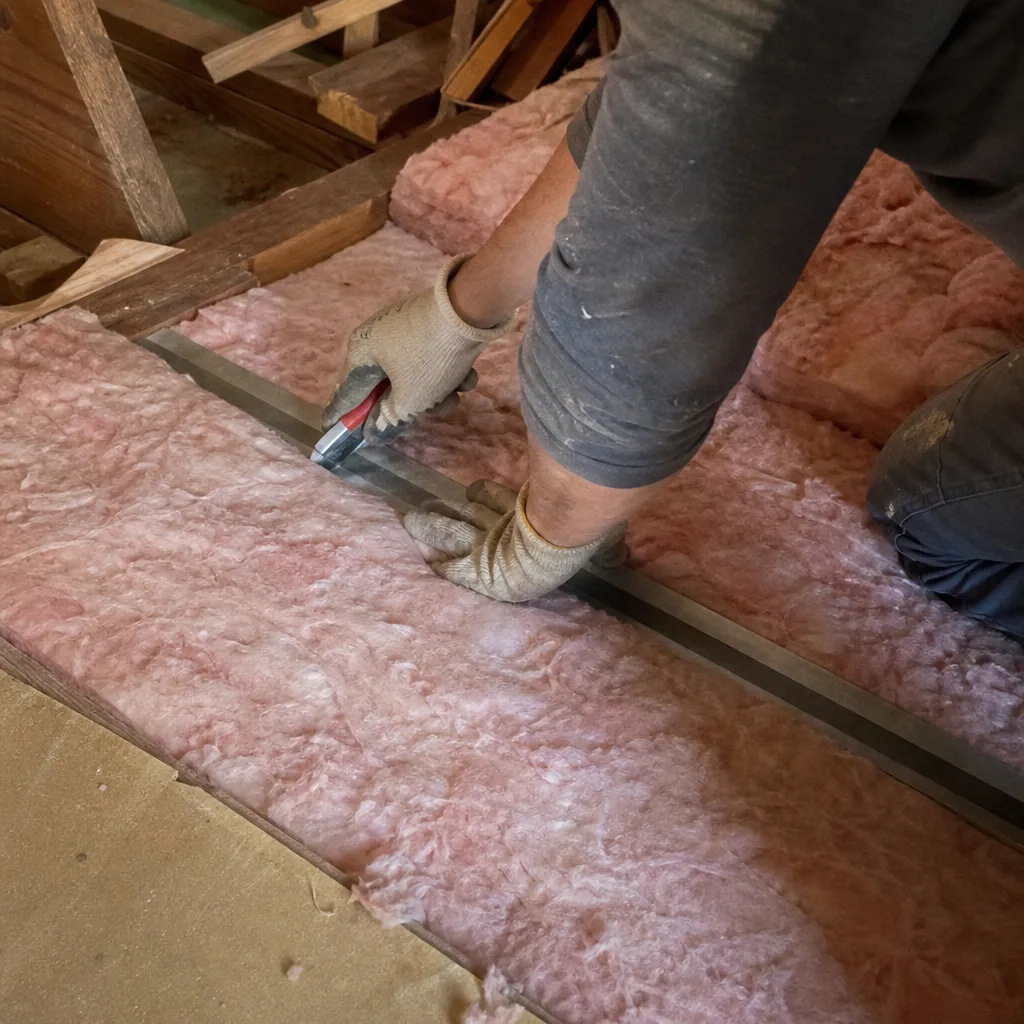
There’s a short list of things a homeowner can safely check: confirm the reflective face orientation from the attic hatch with a flashlight, look for obvious tears or darkening, and note any musty odors that suggest trapped moisture. What you cannot safely do is reposition or replace radiant barrier film in a 140°F attic with limited footing, work around energized junction boxes and can-light housings, or diagnose whether the barrier failure is actually a symptom of inadequate ventilation or missing air sealing. The sequencing matters. Seal the leaks first. The insulation has nowhere to go if the air does. We carry Rockwool-compatible radiant barrier assemblies on the truck, and most Mountain View jobs start same-day or next-day once the written scope is signed. Call (669) 259-0406 and we’ll read your situation with you.
FAQs
In Mountain View’s climate, a properly installed perforated radiant barrier over Rockwool lasts 15-25 years before the reflective surface degrades, though dust accumulation reduces effectiveness starting around year 8. Attics near El Camino Real with heavier vehicle particulate see faster surface darkening. Call (669) 259-0406 for an inspection and written estimate, estimates are free.
Small tears in accessible areas can be patched with foil tape rated for high-temperature exposure, but delamination, widespread dust darkening, or moisture damage means full replacement. We don’t patch over assemblies that have failed from incorrect original installation, it’s a temporary fix that hides the underlying problem. Call (669) 259-0406 for an honest assessment, estimates are free.
A typical 1,500 square foot Mountain View attic takes one day for removal and replacement, or two days if extensive air sealing of top plates and can lights is needed first. We won’t install new material over an unsealed attic floor, the Haven Standard doesn’t allow it. Call (669) 259-0406 to schedule, we answer live 24/7.
We stock Rockwool Comfortbatt and AFB evo in R-15 through R-23, plus perforated and non-perforated radiant barrier films compatible with both product lines, including Reflectix equivalents. Topside Attic Insulation Mountain View is an independent service provider, not affiliated with Rockwool. For same-day availability confirmation, call (669) 259-0406.
Written by Wes Okafor, Owner & Lead Insulation Technician, Topside Attic Insulation Mountain View at Topside Attic Insulation Mountain View, serving Mountain View and nearby areas.