
Rockwool Attic Air Sealing: The Mountain View Owner’s Guide
Rockwool attic air sealing in Mountain View typically runs $1,800-$3,400 installed for a single-family home between 1,200 and 2,400 square feet, and we can usually start the work within 48 hours of your call. Most homeowners discover the problem when their PG&E bill spikes during a Santa Clara Valley heat wave or when a home energy audit flags thermal bypass at the top plates. The fix is straightforward once you know what you’re looking at: sealing the air leaks first, then insulating - never the reverse.
Seal the leaks first. The insulation has nowhere to go if the air does.
Which Rockwool Models This Applies To
Rockwool’s Comfortbatt, Comfortboard, and AFB (Acoustical Fire Batt) lines all interface with attic air sealing assemblies, but the critical match point is the density and cut tolerance at penetration points - electrical boxes, chimney chases, top plates, and dropped soffits. Comfortbatt at R-30 (10.25-inch nominal) is what we see most often in Mountain View’s 1950s-1980s ranch stock, particularly in neighborhoods like Rex Manor and Monta Loma where the original ceiling joists are 2×6 or 2×8 and the batt compression is already half its design value.
To identify what you’re working with: check the black ink stamp on the batt edge for the product name and density (Comfortbatt runs 0.8-1.2 pcf depending on the application). The OEM air-sealing approach Rockwool specifies is a continuous seal layer - typically closed-cell spray foam or high-performance caulk at all penetrations - with the batt fitted to the cavity, not crammed. We stock both the OEM-compatible sealants and a denser aftermarket acrylic-latex hybrid that performs better in the wide diurnal temperature swings we get here, where attic temps can swing from 45°F to 140°F in a single summer day. That thermal cycling cracks lesser sealants inside two years.
Signs Your Rockwool Attic Air Sealing Is Failing
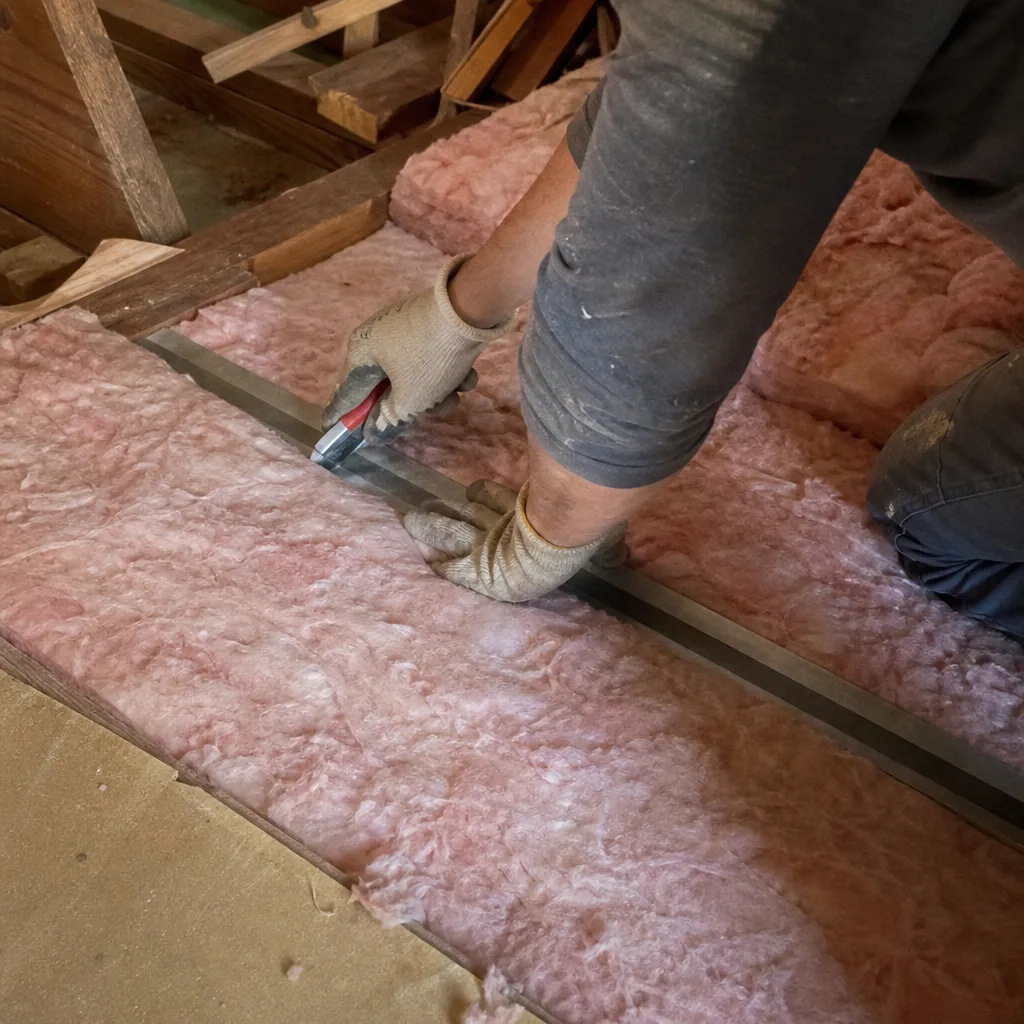
- Dust streaking on ceiling insulation. Air moving through a failed seal carries attic dust and pollen; you’ll see dark stripes where the batt meets the top plate or around can-light housings. In Mountain View, that dust often includes fine silt from the Bay Area’s summer inversion layer.
- Hot or cold ceiling spots in specific rooms. A thermal camera shows 15-25°F deltas at the drywall surface directly below unsealed penetrations. The Rockwool batt itself is fine; it’s the air bypassing it that creates the stripe.
- Ice damming or moisture staining at eaves in winter. Warm, humid interior air leaks through the attic floor, condenses on the cold roof deck, and wets the insulation from above. Rockwool is hydrophobic and won’t mold, but the framing will.
- Whistling or draft noise during windy days. The Santa Clara Valley gets sustained 25-35 mph winds in late spring; a failed seal at a plumbing vent or electrical penetration turns into an audible leak path.
- Insulation settling away from the attic floor perimeter. Rockwool doesn’t settle like fiberglass, but if the air seal failed first, convection currents pull the batt inward from the eaves over time, leaving a gap that looks like settlement but is actually air-wash displacement.
Replacement Cost & What’s Included
Most Rockwool attic air sealing jobs in Mountain View run $1,800-$3,400 for a complete attic-floor seal on a home between 1,200 and 2,400 square feet. The range depends on three things: how many can-light housings need fire-rated covers and seal boots (common in Monta Loma remodels), whether the top plates are accessible or buried under existing insulation, and if we need to build baffles at the eaves for proper ventilation.
That price includes removal and safe disposal of any compromised existing insulation, full air-sealing of all penetrations with documented blower-door testing before and after, reinstallation or replacement of Rockwool batts to proper density and cut tolerance, and a written report with photos and the ACH50 figure - air changes per hour at 50 pascals of pressure, which is how tightness gets measured. We source Rockwool direct from their West Coast distribution; no proprietary lock-in, no markup games. Under our 365-Day Done Right Promise, if the blower-door number doesn’t hold, we come back and find what moved.
DIY or Call Us?
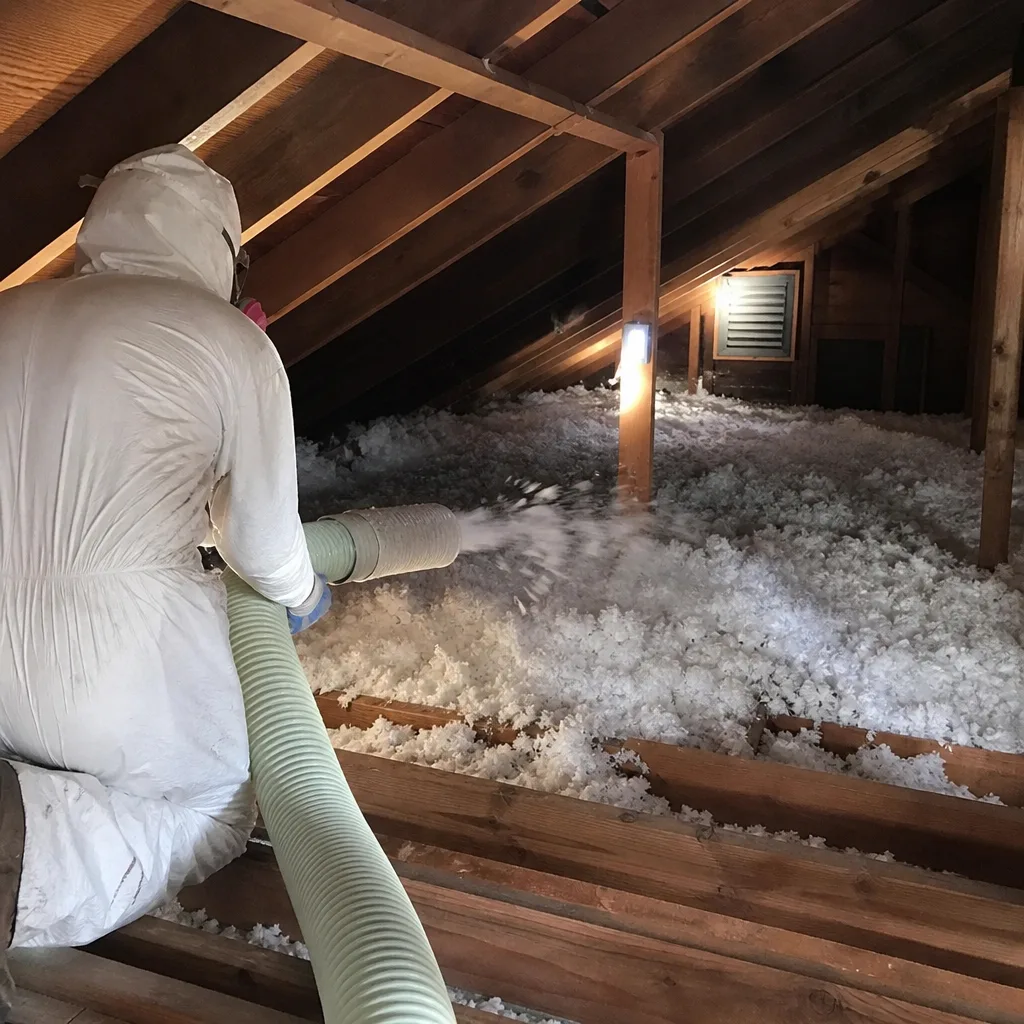
There’s a short list of what a homeowner can safely check: look for dust streaking, feel for drafts around ceiling fixtures on a windy day, and verify that attic hatches have weatherstripping and a latch that actually compresses it. What you can’t safely do is work at the top plate level over an open stairwell, handle sealants in 140°F attic temperatures without proper respiration, or diagnose whether that dark spot is air leakage or a roof leak that needs a roofer first.
We also won’t blow insulation over an unsealed attic floor - that’s not opinion, it’s sequencing. The Rockwool goes in after the leaks are stopped, not before. If you’ve already got Rockwool up there and you’re seeing symptoms, the seal layer underneath is the likely culprit. Call (669) 259-0406 and we’ll read your situation with you - free second opinion on any written estimate you’ve already collected.
FAQs
How long does Rockwool attic air sealing last?
Properly installed, the sealant layer lasts 20-30 years, but in Mountain View’s thermal-cycling climate we see acrylic-latex formulations start to crack at year 8-12. We use a hybrid sealant rated for 50°F+ daily swings and check it at the 10-year mark as part of our follow-up protocol. Call (669) 259-0406 if you’re in that window - estimates are free.
Can the air sealing be repaired, or does it all need replacement?
Spot repair works if the failure is isolated - one can-light boot, one plumbing vent seal. If you’re seeing symptoms across multiple rooms or the original seal was done as a single continuous layer, partial repair usually fails because you can’t bond new sealant to old at the edges. We assess this with a blower-door test and a smoke pencil; the numbers tell us whether spot or full replacement is the honest call. Call (669) 259-0406 for the test.
How long does the replacement take?
Most single-family homes in Mountain View take one full day for the air-sealing work and a second day if we’re replacing insulation afterward. We don’t rush the curing time on sealants - put Rockwool over uncured foam and you trap solvents. Wes Okafor’s crew sequences it: seal, test, verify, then insulate. You’ll get a text when we’re on the way and a photo record when we leave.
Do you stock Rockwool-compatible sealants and parts?
Yes - closed-cell spray foam in low-expansion formulations for electrical penetrations, fire-rated caulk for top plates and chimney chases, rigid foam baffles for eave ventilation, and pre-formed can-light covers. We also stock Reflectix radiant barrier components for the hybrid assemblies we see in some Mountain View Eichler and post-war ranch retrofits. Topside Attic Insulation Mountain View is an independent service provider, not affiliated with Rockwool.
Written by Wes Okafor, Owner & Lead Insulation Technician, Topside Attic Insulation Mountain View at Topside Attic Insulation Mountain View, serving Mountain View and nearby areas.