
Rockwool Wall Insulation in Mountain View: What to Know First
We provide independent Rockwool wall insulation service in Mountain View, typically completing diagnostic-to-installation jobs in one to two days depending on wall cavity access. Most Rockwool wall insulation projects in Mountain View homes run between $2,800 and $6,400 for a complete exterior wall treatment, and we put that price in writing before any work starts. This page is for homeowners who have Rockwool products in their walls and need to know whether those cavities can be filled, upgraded, or need full replacement. Call (669) 259-0406 for a free estimate with a written scope.
How Rockwool Products Fail - and How We Fix Them
- Rockwool Comfortbatt settling in vented wall cavities. The 3.5-inch batts installed in Mountain View’s 1960s ranch-style homes were often compressed or slid down behind the drywall, leaving a 6-inch to 12-inch gap at the top plate where conditioned air meets the attic. We pull the compromised batt, air-seal the top plate with acoustical sealant, then reinstall fresh Comfortbatt with proper friction fit or switch to dense-pack Rockwool Premium Plus if the cavity geometry is irregular.
- Rockwool Comfortboard 80 moisture retention in stucco-clad walls. Mountain View’s marine layer pushes moisture through hairline cracks in EIFS and traditional stucco; Comfortboard 80’s high density can wick and hold that moisture against the sheathing. We find this in Rex Manor and Old Mountain View properties with south-facing walls that catch afternoon fog. Our fix: remove the saturated board, assess sheathing with a moisture meter, install a vented rainscreen if the cladding allows, then replace with fresh Comfortboard cut to allow drainage.
- Rockwool AFB (Acoustical Fire Batts) sagging in metal-stud partitions. AFB was spec’d heavily in Mountain View’s 2015-2020 ADU and in-law unit boom, but metal studs at 24-inch centers don’t provide the friction fit that wood framing does. The batts drop onto the bottom track, killing both the STC rating and the fire rating. We rehang with spring wire supports or recommend switching to Rockwool Safe’n’Sound in applications where the cavity depth allows, which holds its shape better in vertical metal assemblies.
- Thermal bridging at Rockwool cavity gaps around electrical boxes. Every wall insulation job we diagnose in Mountain View has this: the electrician cut the batt to fit around a plastic box, and nobody sealed the void. Rockwool’s R-value is meaningless if air short-circuits around it. We remove the surrounding batt, box-seal with fire-rated caulk, then reinstall with a precision-cut piece that maintains contact on all six sides.
- Rockwool Premium Plus incompatible with existing spray foam in hybrid assemblies. Some Mountain View contractors layered open-cell foam over Rockwool in the 2018-2021 rush to meet Title 24; the foam’s expansion crushed the mineral wool and created voids. We map the damage with thermal imaging, remove the failed hybrid, air-seal the cavity properly, then install either pure Premium Plus dense-pack or a correctly sequenced foam-and-wool assembly depending on the target R-value and budget.
Our Rockwool Wall Insulation Process
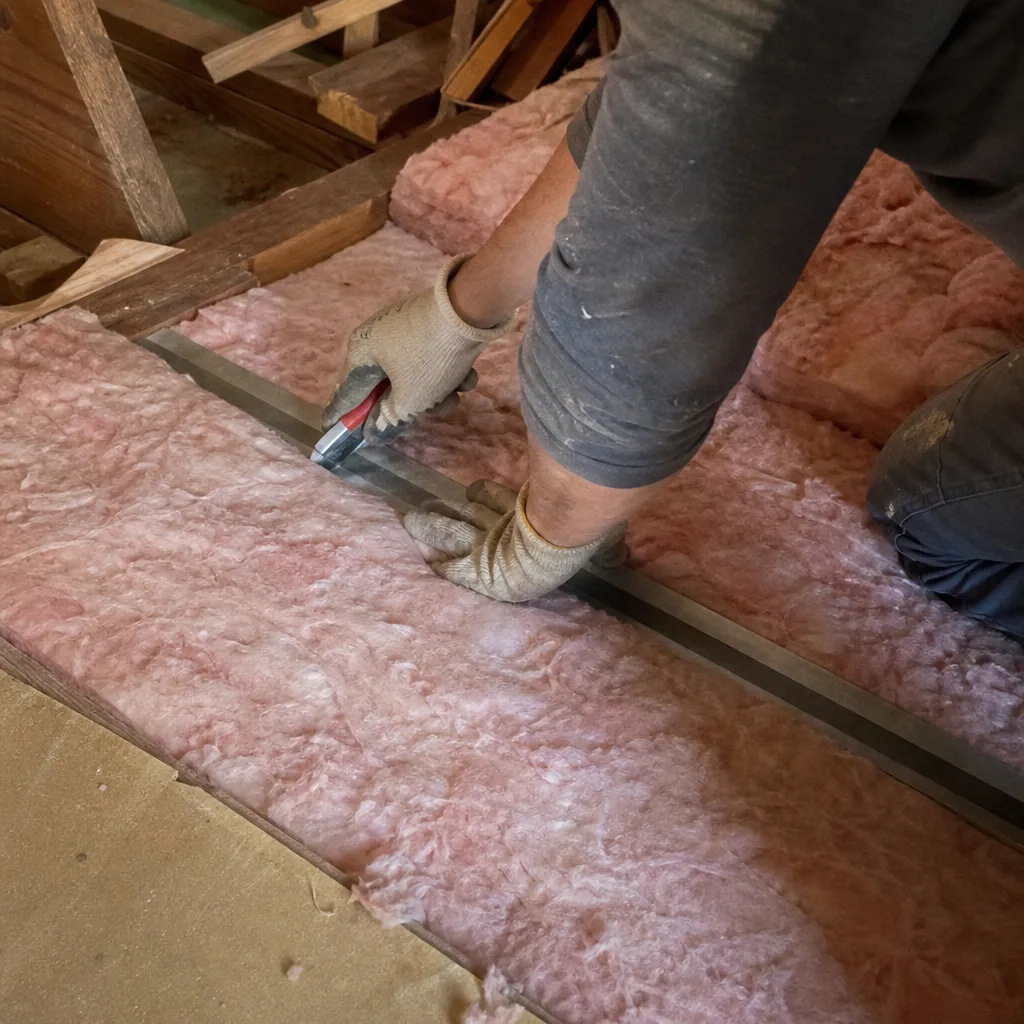
- 1
Diagnostic visit with thermal imaging and blower-door baseline. We pressurize the house to 50 pascals, record the CFM50, then use the thermal camera to map exactly which wall cavities are performing and which are bypassed air paths.
- 2
Written scope and price before any work starts. Haven Standard Clause 1: flat price, written warranty, documented photo record - all delivered before the first tool comes out of the truck.
- 3
Air sealing before insulation contact. We seal every top plate, penetration, and electrical box with fire-rated caulk and acoustical sealant. Seal the leaks first. The insulation has nowhere to go if the air does.
- 4
Material selection: OEM Rockwool or verified equivalent. We source Comfortbatt, Comfortboard, Safe’n’Sound, Premium Plus, or AFB through our supply chain - no proprietary lock-in, no counterfeit product. If the job calls for Reflectix as a radiant barrier complement, we spec it in the same scope.
- 5
Installation with density verification. Dense-pack walls get a fill tube and density check; batts get six-sided contact verification. We photograph every cavity before and after.
- 6
Post-job blower-door test and documentation. We run the house again at 50 pascals, hand you the before-and-after ACH50 figure, and add the photo record to your file. The 365-Day Done Right Promise starts when we leave.
What Rockwool Wall Insulation Costs in Mountain View
| Job Type | Typical Range | What Moves the Price |
|---|---|---|
| Drill-and-fill dense-pack Rockwool (single-story, 1,200 sq ft walls) | $2,800 - $4,200 | Cavity depth, stucco vs. siding, electrical density |
| Full exterior wall removal and reinstallation with Comfortbatt | $4,500 - $6,400 | Cladding type, sheathing condition, rainscreen requirement |
| Interior partition soundproofing with Safe’n’Sound | $1,800 - $3,200 | Metal vs. wood studs, ceiling height, existing drywall handling |
| ADU/metal-stud AFB replacement | $2,200 - $3,800 | Access constraints, fire-rated assembly requirements |
Stucco homes in Mountain View’s older neighborhoods add 15-25% for careful penetration and patching. We don’t guess - we open a test hole, look at what’s there, and put the real price in writing. Call (669) 259-0406 for a free estimate.
Why Mountain View Homeowners Call Topside Attic Insulation Mountain View for Rockwool Work
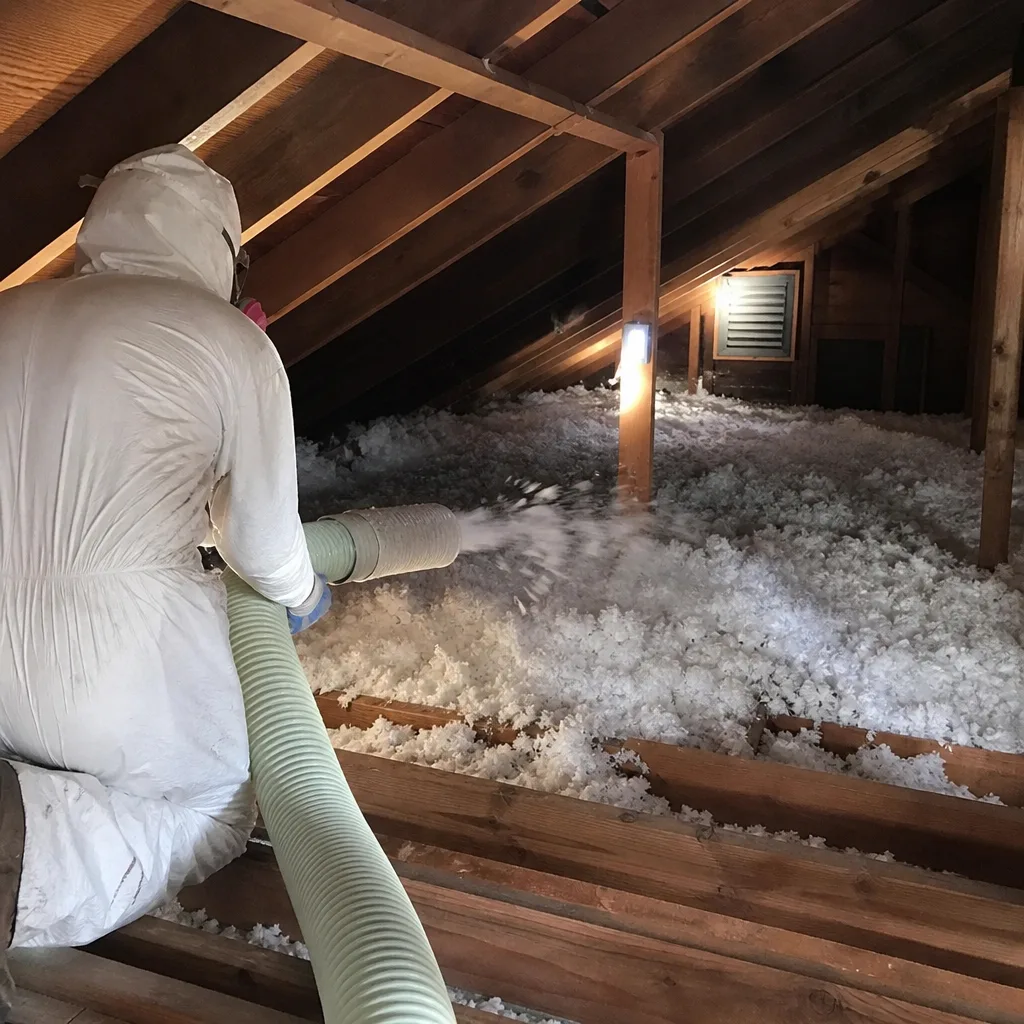
Wes Okafor’s crew has been in Mountain View’s Rex Manor neighborhood pulling out failed insulation and replacing it with assemblies that actually perform - the kind of job where the blower-door printout tells the whole story. We’re independently owned and operated, not a franchise, and we’re not affiliated with or authorized by Rockwool - we’re an independent Rockwool service provider who sources materials from multiple manufacturers including Reflectix when the assembly calls for it. Every job gets the Haven Standard: written price first, documented photo record last, and before-and-after blower-door numbers on any job where air sealing is part of the scope. The 365-Day Done Right Promise applies to all completed work, and a live person answers calls 24/7 at (669) 259-0406.
FAQs
Rockwool’s material warranty covers manufacturing defects, not installation errors or moisture damage from poor assembly sequencing. As an independent Rockwool service provider, our 365-Day Done Right Promise covers our workmanship - if the cavity settles, gaps, or underperforms because of how we installed it, we make it right. Call (669) 259-0406 with your product date code and we’ll tell you what’s covered by whom.
We source factory-spec Rockwool products - Comfortbatt, Comfortboard, Safe’n’Sound, Premium Plus, AFB - through established distribution channels. For accessories like fasteners and drainage mats, we use verified-equivalent products that meet or exceed Rockwool’s assembly requirements. We don’t install counterfeit or off-spec material; the photo record shows exactly what went into your walls.
Repair is cheaper when the batt is simply dislodged and the cavity is dry - typically $400-$800 per wall section. Full removal and replacement runs higher but is necessary when there’s moisture damage, pest intrusion, or incompatible foam overlay. We open a test hole, show you what we found, and put both options in writing with a real price for each. Call (669) 259-0406 for the diagnostic.
Most drill-and-fill jobs finish in one day; full exterior wall removals with cladding take two to three days depending on weather and sheathing condition. We don’t schedule until the written scope and price are agreed, and we text you when the technician is en route. Same-week availability is typical for non-emergency work in Mountain View.
Mineral wool is non-combustible and chemically inert - it won’t corrode copper or react with PVC. The risk is in the installation: drill-and-fill requires knowing where wires run, and dense-pack pressure can displace unsecured romex. We map electrical with thermal imaging and a borescope before cutting, and we never dense-pack over knob-and-tube wiring. If your Mountain View home still has active knob-and-tube, we’ll flag it and recommend an electrician before we proceed.
Written by Wes Okafor, Owner & Lead Insulation Technician, Topside Attic Insulation Mountain View at Topside Attic Insulation Mountain View, serving Mountain View and nearby areas.