
Rockwool Crawl Space Encapsulation: The Mountain View Owner’s Guide
Rockwool crawl space encapsulation in Mountain View typically runs $3,800-$6,200 for a complete system including vapor barrier, rigid insulation board, and sealed seams - we stock Rockwool Comfortboard 80 and Comfortboard 110 on every truck, and most jobs start same-day once we verify your crawl’s dimensions and existing moisture conditions. Most Mountain View homeowners realize something’s wrong when their first-floor hardwood starts cupping near the perimeter or their HVAC runtime spikes in February despite mild Peninsula winters.
We see this pattern constantly in Rex Manor and the older Eichler tracts off Cuesta Drive: the fiberglass batt the original builder stuffed between joists has compressed to half its labeled R-value, or the polyethylene sheet underneath tore on a foundation bolt during a routine plumbing visit. The crawl space becomes a convection loop, pulling conditioned air down through floor gaps and dumping it out through rim-joist leaks. That’s when the call comes in - not because anyone wants to spend a Saturday morning under their house, but because the PG&E bill finally demanded attention.
Which Rockwool Models This Applies To
Rockwool doesn’t sell a branded “crawl space encapsulation kit” - they manufacture the rigid mineral-wool boards and complementary accessories that contractors like us assemble into a system. The two products we specify for Mountain View’s climate zone (CEC Climate Zone 4, marine-influenced) are Comfortboard 80 and Comfortboard 110, both 2×4-foot rigid boards in thicknesses from 1.5 to 4 inches.
Comfortboard 80, at 8 pounds per cubic foot density, is the workhorse for crawl space perimeter walls and rim-joist cavities. Comfortboard 110, denser at 11 pounds per cubic foot, is what we use where the board itself needs to be the air barrier - typically the crawl space ceiling (your first-floor subfloor) when we’re not also installing a separate vapor barrier below. The model number is printed on the foil facing every fourth board; if you’re checking what’s down there now, look for “CB 80” or “CB 110” followed by the thickness code.
Here’s the compatibility gotcha we’ve learned the hard way: Rockwool’s older Conrock line, phased out around 2018, used a different facing adhesive that delaminates in sustained humidity above 70% RH. If your crawl has Conrock boards with peeling foil, the insulation value is still there but the vapor control is compromised. We don’t try to patch Conrock facing - we replace with current-spec Comfortboard and seal the seams with Rockwool’s own RockSeal membrane tape, which is formulated for the higher pH of mineral wool binders. Generic foil tape turns brittle and releases within two years on this substrate. We’ve pulled plenty of it off in Mountain View crawls.
Topside Attic Insulation Mountain View is an independent service provider with no affiliation to Rockwool - we source through standard distribution channels and don’t carry any manufacturer’s exclusive.
Signs Your Rockwool Crawl Space Encapsulation Is Failing
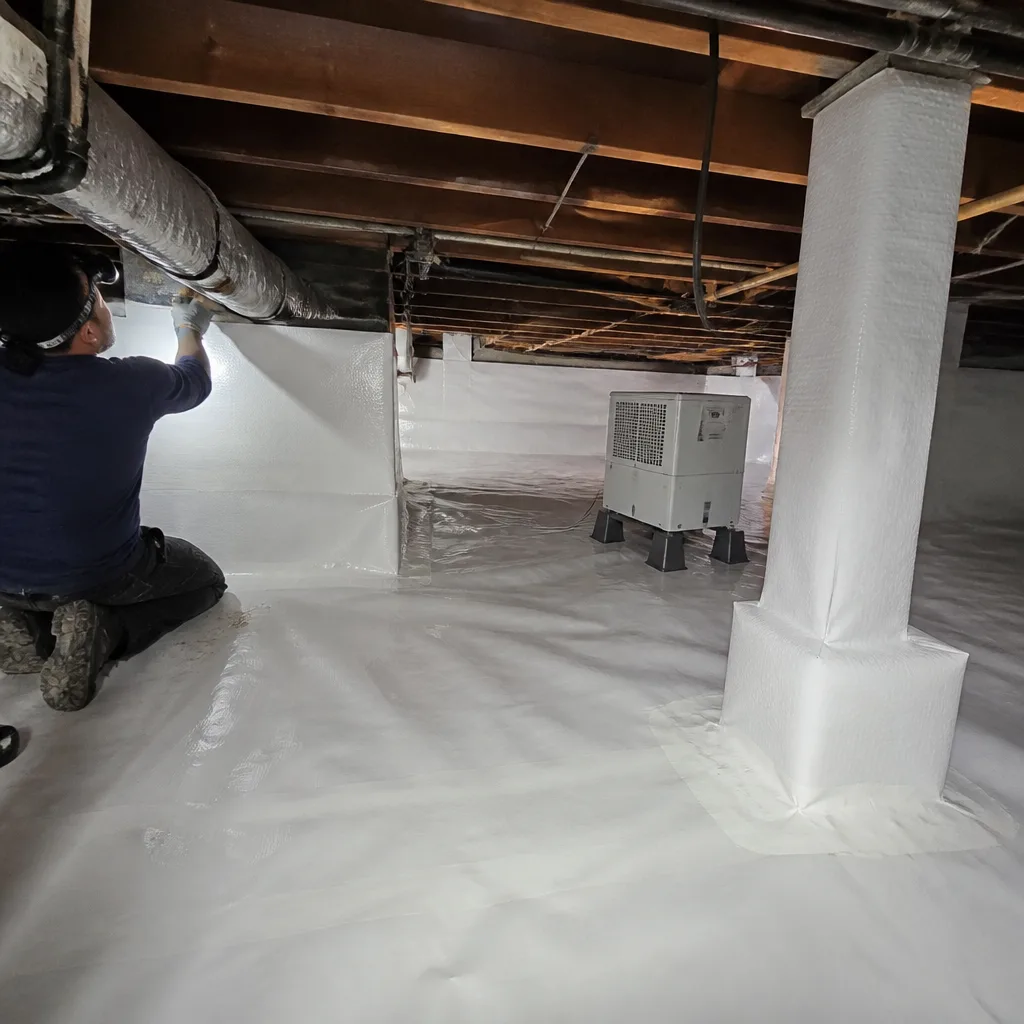
- Musty odor rising through floor registers. The vapor barrier beneath your Rockwool boards has torn or the seam tape has failed, letting soil moisture evaporate directly into the conditioned envelope. In Mountain View’s clay-heavy soils near Permanente Creek, seasonal water tables can shift the ground moisture load significantly between November and April.
- Cupped hardwood or tile tenting near exterior walls. Moisture is migrating through rim-joist gaps that were never properly air-sealed before the Rockwool went in. The boards themselves are hydrophobic and won’t mold, but they’re not a complete air barrier without companion sealing at all wood-to-concrete transitions.
- Insulation boards sagging from crawl ceiling joists. The mechanical fasteners - typically 2-inch cap nails or wire hangers - have corroded or pulled out. Rockwool is heavier than foam per R-value; underspecified fasteners fail predictably after 6-10 years in the humidity cycling of a vented crawl.
- Visible mold on wood framing despite “mold-resistant” insulation. Rockwool resists mold growth on its own fibers, but it won’t stop mold on adjacent organic surfaces. This usually means the encapsulation system is incomplete - missing a dehumidifier, or no sump pit where the grade dictates one, or foundation vents that were never sealed as part of a conditioned-crawl conversion.
- Hot/cold spots on the first floor that don’t align with duct runs. The Rockwool has settled or been displaced by rodent activity, creating thermal bypasses. We find this especially in the older ranch homes off Middlefield Road where crawl access hatches were cut too small for proper inspection and maintenance.
Replacement Cost & What’s Included
Most complete Rockwool crawl space encapsulations in Mountain View fall between $3,800 and $6,200, with the range driven by three factors: crawl square footage (typically 800-1,400 SF for a single-story Peninsula ranch), whether we’re converting from vented to conditioned crawl (adds dehumidifier and sealed-vent labor), and the condition of what’s coming out - hazardous material like rodent-soaked fiberglass adds removal and sanitation line items.
| Component | Typical Range |
|---|---|
| Rockwool Comfortboard (material only) | $1.40-$2.10 / SF of board area |
| Vapor barrier (10-mil reinforced polyethylene) | $0.90-$1.30 / SF of ground coverage |
| Rim-joist air sealing (closed-cell spray foam companion) | $380-$620 |
| Dehumidifier (conditioned-crawl conversion) | $890-$1,400 installed |
| Removal and disposal of existing failed system | $680-$1,200 |
| Documented Photo Record + blower-door if applicable | Included, no add-on |
Every job gets a Written Price Before Any Work Starts - Haven Standard Clause 1 - and the 365-Day Done Right Promise. We don’t invoice until you’ve received your photo documentation and, on jobs where the main house envelope is also being sealed, your before-and-after blower-door printout showing the actual air leakage reduction.
DIY or Call Us?
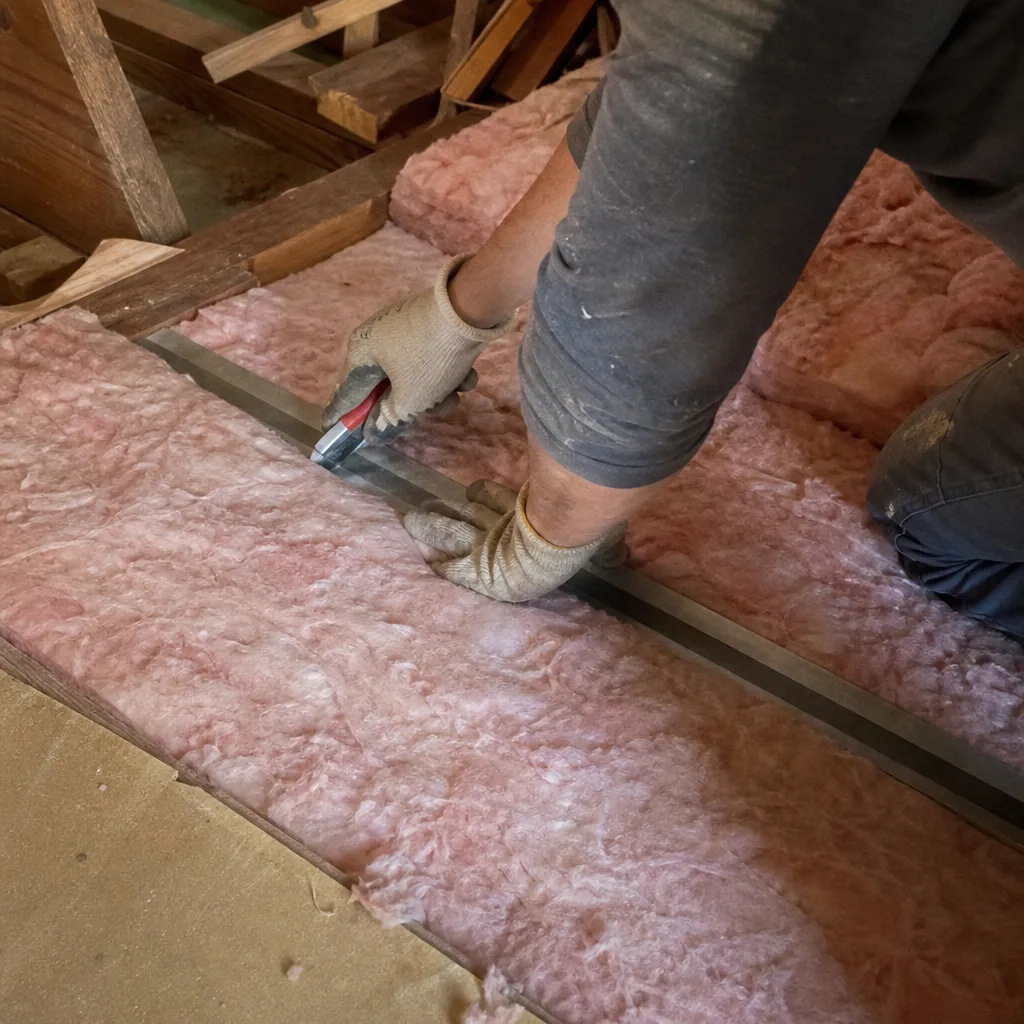
There’s a safe middle ground here, and then there’s the point where most Mountain View homeowners hand us the flashlight.
What you can check yourself: Verify your crawl’s square footage and jot down any Rockwool model numbers visible on board facings. Look for standing water, obvious vapor-barrier tears, or sagging boards. Note any musty smell intensity. This information saves us 20 minutes on arrival and gets your written price faster.
Where DIY goes wrong: Rockwool is safe to handle - no respirator required for casual contact, though we wear them for prolonged work - but the system performance depends on sequencing. Boards installed before rim-joist sealing leak air around their edges. Vapor barriers lapped wrong-side-up wick moisture instead of blocking it. And the 10-mil poly we use for ground cover is heavy; in a 2.5-foot crawl, one person can’t position it flat without kinking at the seams. We’ve been called to redo three homeowner attempts in Mountain View in the past two years alone. The materials weren’t wasted - the labor sequence was.
Seal the leaks first. The insulation has nowhere to go if the air does.
For a written price on your Rockwool crawl space encapsulation, call (669) 259-0406. We answer live, 24/7.
FAQs
Properly installed Rockwool boards last 50+ years without degradation, but the companion system components are the lifespan limiters. The 10-mil vapor barrier typically needs inspection at 15-20 years; seam tape at 10-15; dehumidifiers at 8-12 depending on runtime. Mountain View’s moderate humidity extends these intervals compared to inland Bay Area cities. Call (669) 259-0406 and we’ll check what generation of system you have - estimates are free.
Partial repair is viable if the Rockwool boards themselves are still properly fastened and the facing is intact. We can patch vapor-barrier tears, replace failed seam tape, and supplement missing air sealing without full removal. If more than 30% of the boards are sagging, compressed, or show delaminated facing, replacement is more cost-effective than chasing individual failures. We’ll tell you which category you’re in after a 20-minute crawl inspection - call (669) 259-0406 to schedule.
Most Mountain View single-story homes take two to three days: Day one for removal and disposal of the failed system plus rim-joist air sealing; day two for Rockwool installation and vapor-barrier placement; day three if a conditioned-crawl conversion with dehumidifier and vent sealing is included. We don’t rush the curing time on companion spray foam at rim joists - it’s a sequencing discipline that prevents callbacks. Call (669) 259-0406 for scheduling availability.
Yes - Comfortboard 80 and 110 in 1.5-inch, 2-inch, and 3-inch thicknesses, plus RockSeal tape, mechanical fasteners rated for mineral-wool density, and 10-mil reinforced poly in 12-foot and 16-foot widths. For 4-inch board or conditioned-crawl dehumidifiers, we pull from San Jose distribution with next-morning availability. Most Mountain View jobs start same-day once we confirm dimensions and moisture conditions on site. Call (669) 259-0406 to confirm current truck stock for your specific Rockwool model.
Written by Wes Okafor, Owner & Lead Insulation Technician, Topside Attic Insulation Mountain View at Topside Attic Insulation Mountain View, serving Mountain View and nearby areas.