
Icynene Attic Insulation: The Mountain View Owner’s Guide
Most Icynene open-cell spray foam attic insulation jobs in Mountain View run between $4,200 and $7,800 for a typical 1,200-2,400 square foot home, and we can usually inspect and quote same-day. We stock Icynene-compatible materials on every truck, including the LD-C-50 and MD-C-200 series formulations most common in Peninsula homes built between 1995 and 2015. Homeowners usually discover a problem when their PG&E bill spikes in a single billing cycle, they find hot spots in upstairs bedrooms during Mountain View’s late-summer heat, or they spot the telltale yellowing and shrinkage where the foam has pulled away from roof deck joints.
Which Icynene Models This Applies To
Icynene’s product line breaks into two families relevant to Mountain View attics: the Classic LD-C-50 open-cell series and the MD-C-200 medium-density closed-cell series. LD-C-50 was the default spec for most residential attic applications from 2005 through 2018; it installs at roughly 3.5 inches to achieve R-13 and remains vapor-permeable, which matters in our mixed coastal climate where winter condensation can accumulate on the cold side of an assembly. MD-C-200 delivers R-7 per inch and functions as both insulation and an air barrier, but it costs roughly 40% more per board foot and is overkill for most vented attics in 94040 and 94041 unless you’re converting to conditioned space.
Identifying what you have starts with the application date and the canister labels if any remain, but more often we cut a small inspection plug and read the density and cell structure directly. LD-C-50 runs 0.5 pounds per cubic foot with visible open cells under magnification; MD-C-200 hits 2.0 pounds per cubic foot and presents as rigid. The compatibility gotcha in Mountain View’s older stock, especially in the Rex Manor and Monta Loma neighborhoods, is hybrid jobs where a previous contractor sprayed LD-C-50 in summer heat without adjusting the substrate temperature, resulting in poor adhesion to dusty OSB that fails prematurely at the bond line, not in the foam body. We don’t try to patch over that with more of the same; we remove the compromised lift and start clean.
Topside Attic Insulation Mountain View is an independent service provider, not affiliated with Icynene. We source OEM material through authorized distribution, but we also carry Demilec Heatlok and CertainTeed CertaSpray equivalents when the job spec allows and the homeowner prefers. The aftermarket decision for Icynene specifically comes down to whether your existing foam needs to tie into new work chemically; different manufacturers’ A-side isocyanates and B-side resin blends don’t always play well together at the interface.
Signs Your Icynene Attic Insulation Is Failing
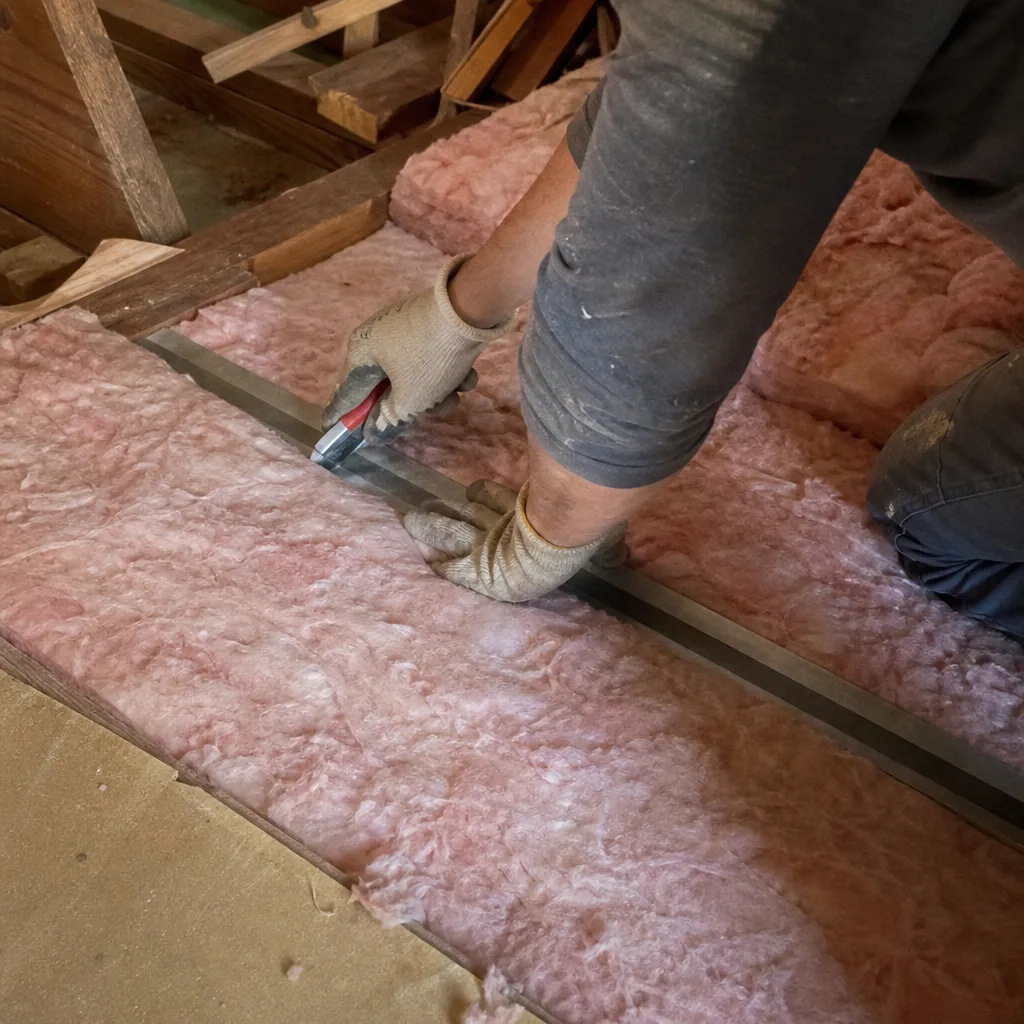
- Yellowing or amber discoloration spreading across the foam surface. This is UV degradation hitting foam that was left exposed in a semi-conditioned attic or near a gable vent. Icynene’s UV stability without a protective coating is roughly 30 days of direct exposure; in Mountain View’s high-UV index summers, even diffused light through a vented soffit can start the breakdown. The foam doesn’t lose R-value immediately, but the surface crusts and begins to powder.
- Shrinkage pulling the foam away from framing members, creating visible gaps at stud and rafter edges. This happens when the substrate was too cold or too moist during application, or when the mix ratio drifted off spec. The gap becomes a thermal bypass; our blower-door test will show it as a localized spike in air leakage even if the rest of the attic reads tight.
- Upstairs rooms that won’t hold temperature despite the HVAC running continuously. In Mountain View’s shoulder seasons, this is often the first symptom owners notice because the delta-T isn’t extreme enough to mask a compromised envelope. We see this pattern frequently in homes near the Stevens Creek corridor where morning fog keeps exterior surfaces damp and afternoon sun drives rapid drying.
- Musty or chemical odor returning after being absent for years. Fresh Icynene off-gasses amines for roughly 24-72 hours; if you’re smelling it years later, the foam may be breaking down chemically, often from contact with incompatible materials like certain oil-based wood preservatives or rodent urine that creates an acidic environment at the foam surface.
- Visible water staining on the foam surface or on drywall below. This indicates a roof leak that the foam is masking rather than preventing. Icynene is not a roof repair; it will wick water laterally and hold it against the deck, accelerating rot. We’ve found this in Monta Loma homes where the original cedar shake roof was overlaid with composition and the nail penetrations weren’t properly flashed.
Replacement Cost & What’s Included
| Scope | Price Range in Mountain View |
|---|---|
| Spot repair: localized removal and respray, up to 100 sq ft | $1,800 - $3,200 |
| Partial re-insulation: one attic zone or failed lift replacement | $3,500 - $5,500 |
| Full attic replacement: complete removal and new Icynene spray | $6,200 - $9,800 |
| Attic conversion to conditioned space with MD-C-200 | $8,500 - $14,000 |
The range driver is almost always access and prep, not the foam itself. A clear attic with a permanent ladder and a single hatch runs toward the low end; a trussed attic with a scuttle hole over a closet, compounded by existing insulation that needs complete removal first, pushes the high side. Every quote we write includes the removal, disposal, surface prep, spray application to specified thickness, and a post-job blower-door test so you can verify the air-sealing result. We publish those numbers: the pre-job CFM50 and the post-job figure, with the target improvement noted in writing before we start.
Our 365-Day Done Right Promise applies to all Icynene work. If the foam shrinks, delaminates, or fails to meet the quoted R-value and air-leakage target, we remove and replace at no charge. The warranty is written and delivered before anyone lifts a tool, per Haven Standard Clause 1.
DIY or Call Us?
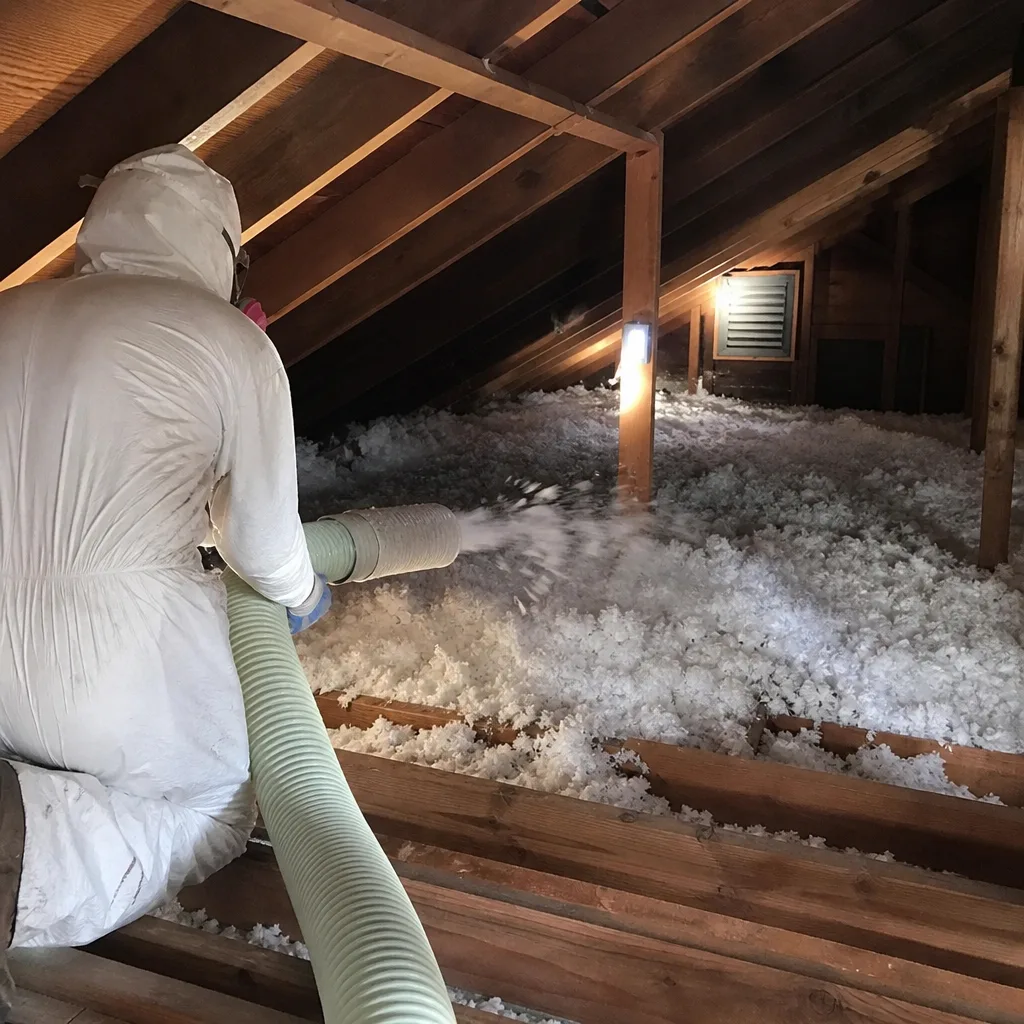
There’s a short list of what a homeowner can safely check: confirm your attic access is stable, look for the symptoms above with a flashlight, and photograph anything suspicious. What you cannot safely do is cut into, remove, or attempt to respray Icynene yourself. The two-part polyurethane chemistry requires controlled temperature, humidity, and mix ratio; off-ratio foam fails structurally and can emit isocyanate vapors that sensitize the respiratory system permanently. Even “frosted” DIY kits from the hardware store use a different formulation with lower yield and poorer adhesion than professional-grade material.
More practically, you can’t air-seal properly without a blower door to guide the work. We regularly find Mountain View attics where the owner caulked visible gaps but missed the top plate leaks that represent 60% of the total air loss. Seal the leaks first. The insulation has nowhere to go if the air does. For an inspection and written price before any work starts, call (669) 259-0406.
FAQs
Properly installed Icynene should perform for the life of the building envelope, 25 years or more, but Mountain View’s specific conditions shorten that if the original application was flawed. The marine layer moisture cycling, combined with summer UV exposure through vents, stresses the foam interface more than inland climates. We’ve replaced Icynene in Rex Manor homes that failed at 8 years due to application in cold, damp conditions. Call (669) 259-0406 and we’ll inspect what you have; estimates are free.
Localized delamination or shrinkage can sometimes be cut out and patched with new foam if the substrate is sound and the surrounding material passes adhesion testing. We do this only when the failed area is under 15% of the total attic surface; beyond that, the thermal bridging at the patch boundaries makes full replacement the better value. We test with a core pull and tell you which route makes sense before quoting either. Call (669) 259-0406 for an exact quote - estimates are free.
Most full attic removals and resprays in Mountain View take two days: one day for removal, surface prep, and air sealing, and a second day for the spray application and cure time before occupancy. We ventilate aggressively with temporary exhaust; the re-entry window is typically 24 hours after the final pass. Same-day spot repairs are possible for small areas when we have the material on the truck. Call (669) 259-0406 to check current availability.
We stock Icynene LD-C-50 and MD-C-200 formulations on every Mountain View truck, along with Demilec and CertainTeed equivalents. For same-day spot repairs, we need to confirm your existing foam series first, which we do with a quick attic inspection. We also carry Reflectix radiant barrier material for hybrid assemblies where the roof deck needs both insulation and emissivity control. Call (669) 259-0406 to schedule - a live person answers 24/7.
Written by Wes Okafor, Owner & Lead Insulation Technician, Topside Attic Insulation Mountain View at Topside Attic Insulation Mountain View, serving Mountain View and nearby areas.