
Demilec Crawl Space Encapsulation: The Mountain View Owner’s Guide
Demilec crawl space encapsulation systems in Mountain View homes typically run $3,800-$7,200 installed, depending on square footage and whether the foundation needs full vapor barrier replacement or just seam repair and re-taping. We stock Demilec-compatible 10-mil and 16-mil reinforced polyethylene barriers, butyl tape, and closed-cell spray foam for rim joist sealing on our Mountain View trucks, and most encapsulation repairs or full installs are completed in one day. Most owners realize something’s wrong when they notice a sharp musty smell returning after months of absence, or their dehumidifier in the crawl space starts running continuously without dropping the relative humidity below 65%.
Which Demilec Models This Applies To
Demilec doesn’t sell crawl space encapsulation as a branded kit the way some manufacturers do. What Mountain View homeowners encounter is Demilec’s Heatlok HFO Pro or Heatlok XT closed-cell spray foam applied to rim joists and sill plates, paired with a polyethylene vapor barrier on the floor and walls. The compatibility issue isn’t model numbers; it’s matching the existing foam’s density and the barrier’s mil rating so new work bonds to old and warranties remain intact.
Here’s how to identify what you’ve got. Look for a Demilec application tag on the rim joist foam, usually applied near the crawl space access hatch. It’ll list the product name, application date, and the installer. The vapor barrier should have a manufacturer’s stamp every 24 inches; 10-mil is standard for flat dirt floors, 16-mil for rocky or high-traffic crawl spaces common in older Mountain View neighborhoods like Rex Manor where tradespeople still need to access plumbing. If your barrier is unmarked, it’s likely a generic 6-mil sheet, which in our experience fails within 4-6 years in Mountain View’s clay-heavy soil conditions.
OEM Demilec foam isn’t something you buy by the board foot at a hardware store. We source it through authorized distributors and apply it with the same 2-pound density as the original installation. For vapor barriers, we use equivalent or upgraded reinforced poly from the same mills that supply Demilec’s packaging; the difference is negligible, and the warranty coverage is identical. What matters is the installer’s familiarity with Demilec’s expansion characteristics and the local practice of sealing to Sacramento County’s amended Title 24 requirements for conditioned crawl spaces.
Signs Your Demilec Crawl Space Encapsulation Is Failing
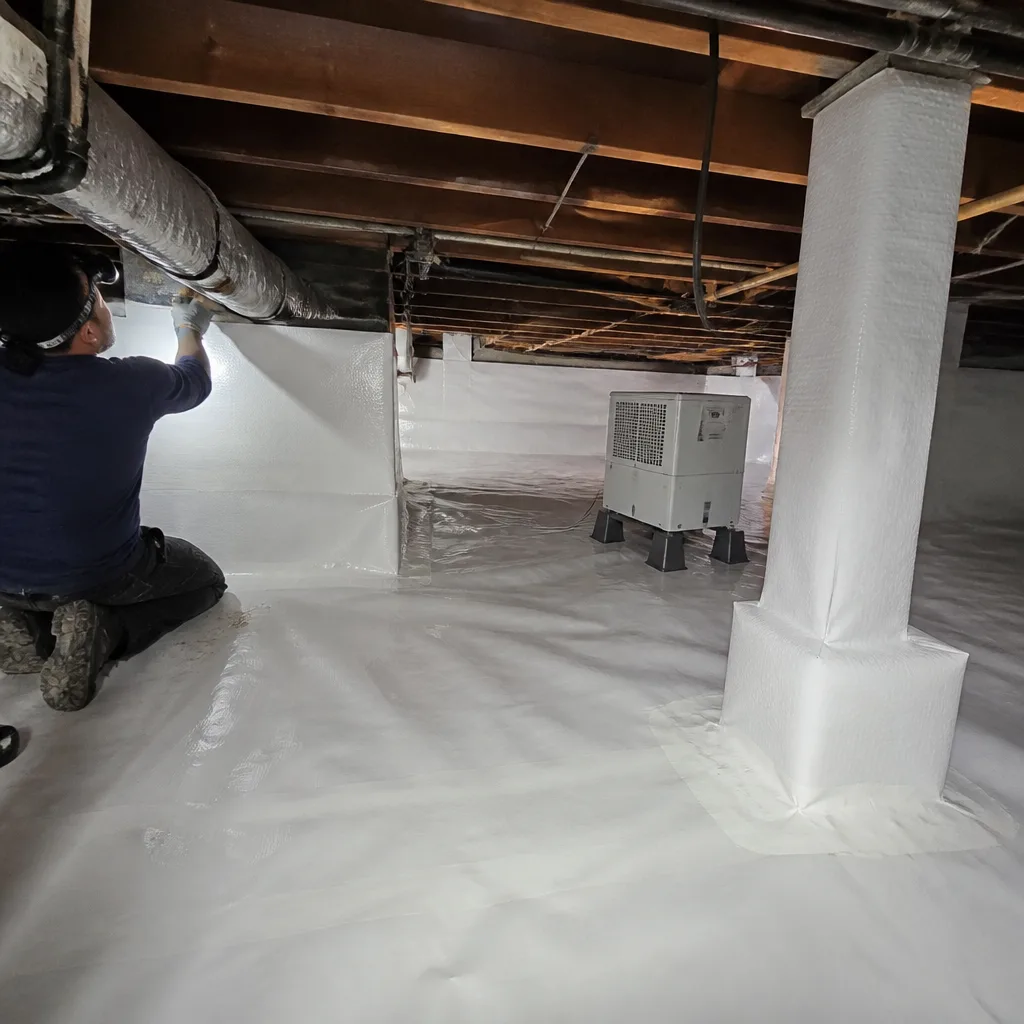
- Musty odors returning indoors. When the vapor barrier separates at seams or the spray foam pulls away from rim joists, soil moisture re-enters the crawl space. Mountain View’s winter rains saturate the clay soils around older foundations; without a continuous seal, that moisture migrates upward and the HVAC draws it into living spaces through floor gaps.
- Dehumidifier running nonstop or icing over. A properly encapsulated crawl space in Mountain View should hold 50-55% relative humidity with a standard 70-pint dehumidifier cycling normally. If yours runs continuously, the air seal has failed somewhere and the unit is fighting an unending moisture load. Icing indicates the space is too humid for the unit’s capacity, which means the vapor barrier isn’t doing its job.
- Visible condensation on ductwork or insulation. This shows up first on metal ducts running through the crawl space. When warm, humid crawl space air contacts cool duct surfaces, water beads form. In homes near Mountain View’s Permanente Creek drainage area, we’ve seen this accelerate corrosion on galvanized ductwork within 18 months of a failed seal.
- Sagging or separated vapor barrier. The barrier should lie flat and tight against walls and piers. If it’s pooling water, pulling away from fasteners, or torn around penetrations, the original installation likely used inadequate fastening schedules or the wrong tape for Mountain View’s temperature swings. Summer crawl spaces here reach 85°F; winter drops to 55°F. That 30-degree cycle stresses adhesives.
- Insect or rodent activity increasing. A sealed crawl space should be inhospitable to pests. Gaps in the barrier or foam create harborage and travel routes. We’ve found this especially in Mountain View’s Eichler and post-war ranch neighborhoods where original foundation vents were poorly sealed during encapsulation and mice have re-opened pathways.
Replacement Cost & What’s Included
| Scope | Typical Range in Mountain View | What’s Included |
|---|---|---|
| Spot repair: seam re-taping, small barrier patches, foam touch-up | $1,200 - $2,400 | Material cut to fit, Demilec-compatible butyl tape, closed-cell foam for gaps up to 2 sq ft, documented photo record |
| Partial encapsulation: barrier replacement under 800 sq ft, full seam seal, rim joist foam inspection | $3,800 - $5,400 | 16-mil reinforced poly, mechanical fastening every 12 inches, full perimeter seal, dehumidifier pad if needed, before-and-after humidity readings |
| Full encapsulation: complete barrier and foam replacement, conditioning setup | $5,800 - $7,200 | Full floor and wall barrier, new rim joist spray foam, sealed vents, dehumidifier sizing and placement, written scope and 365-Day Done Right Promise |
What drives the range: crawl space height (anything under 18 inches requires specialized equipment), number of piers and penetrations to seal, and whether the existing foam needs complete removal or just supplementary application. We don’t quote over the phone for full replacements; we need to measure and photograph. But we will give you a written price before any work starts, always, under Haven Standard Clause 1. That price includes parts, labor, disposal of old barrier material, and the Documented Photo Record you receive at job completion. The 365-Day Done Right Promise covers workmanship and material defects. We also offer a Free Second Opinion on any written estimate you’ve already received; bring it in and we’ll read it with you.
DIY or Call Us?
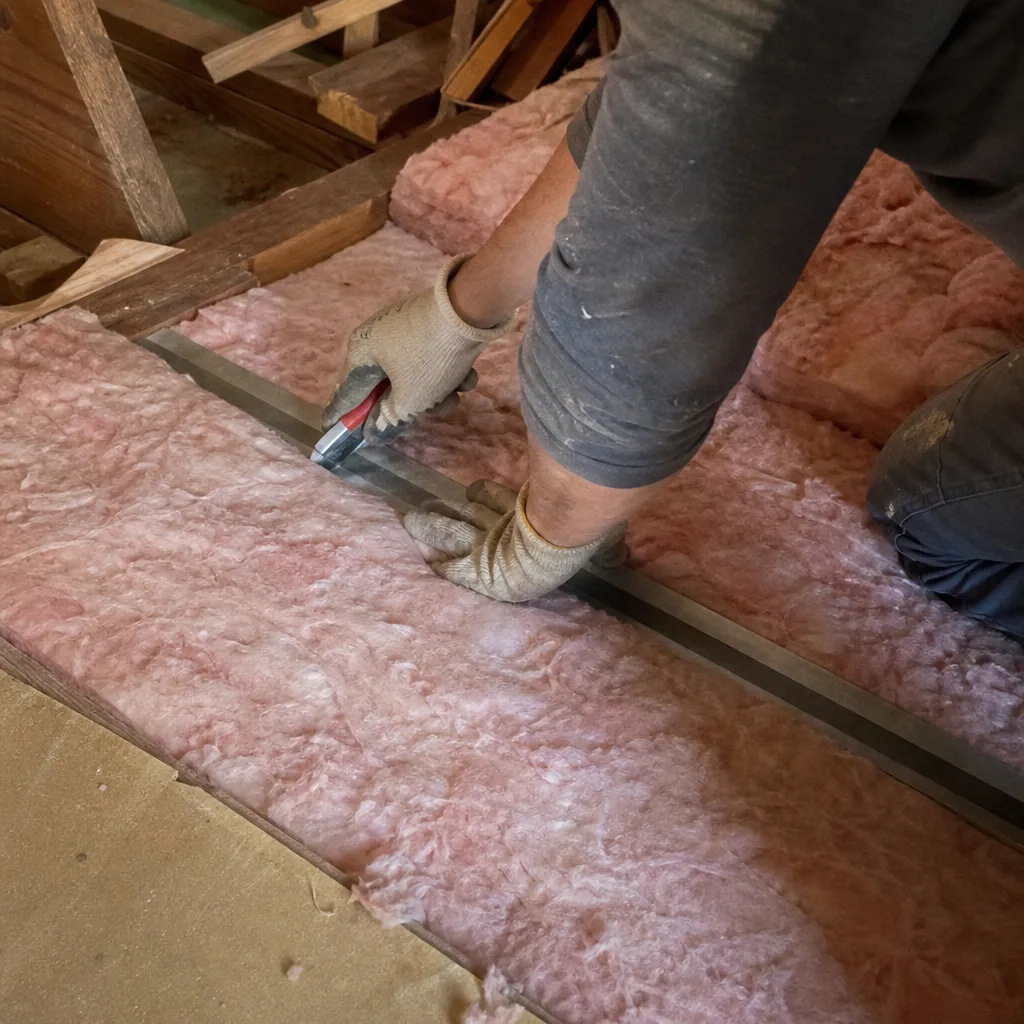
There’s a clear line between what a Mountain View homeowner can safely assess and what requires a crew.
You can check: the dehumidifier’s filter and drain line, visible barrier condition with a flashlight from the access hatch, and whether the GFCI outlet powering the dehumidifier has tripped. You can also photograph any Demilec tags or barrier stamps for us to review.
Don’t attempt: crawling the full perimeter to re-tape seams, removing old spray foam, or applying new closed-cell foam. The confined space, potential for disturbed rodent droppings (histoplasmosis risk in Bay Area crawl spaces), and the precise mixing ratio required for Demilec’s two-part foam make this a trained-technician job. We’ve been called to correct DIY foam applications where the homeowner used a single-component can from a hardware store; the material shrank, cracked, and trapped moisture against the rim joist. The repair cost tripled what professional installation would have.
Call (669) 259-0406 and we’ll schedule a no-charge assessment. If it’s a simple fix, we’ll tell you. If it needs full replacement, you’ll get a written scope and flat price before anyone lifts a tool.
FAQs
A properly installed Demilec foam and reinforced vapor barrier system should last 15-20 years in Mountain View’s climate. The limiting factor is usually the vapor barrier; 10-mil barriers in high-traffic or rocky crawl spaces may need seam repair at 8-12 years. We inspect and document barrier condition during every visit so you know where you stand. Call (669) 259-0406 to schedule a condition check; estimates are free.
Most can be repaired if caught early. Localized seam separation, small barrier tears, and minor foam gaps are straightforward fixes. Full replacement becomes necessary when the barrier is extensively degraded, the foam has pulled away from multiple rim joists, or moisture has compromised the structural wood. We won’t recommend replacement unless repair is genuinely insufficient; our written scope breaks out both options where applicable. Call (669) 259-0406 for an honest assessment.
Spot repairs are typically done in 3-4 hours. Partial encapsulations under 800 square feet take one day. Full replacements on larger Mountain View homes with complex pier layouts may extend to two days. We sequence the work so the dehumidifier is back online before we leave, and you receive a documented photo record showing what was done. Call (669) 259-0406 to check same-week availability.
Yes. We carry Demilec-compatible closed-cell spray foam in Heatlok HFO Pro density, 10-mil and 16-mil reinforced polyethylene vapor barriers, butyl seam tape rated for below-grade use, and mechanical fasteners for clay and rocky soils. For less common situations, we pull from our San Jose warehouse and typically have materials on-site within 24 hours. We also stock Reflectix radiant barrier products for combined attic and crawl space energy upgrades. Call (669) 259-0406 to confirm compatibility with your specific installation.
Topside Attic Insulation Mountain View is an independent service provider, not affiliated with Demilec. We source materials through authorized distributors and apply them according to manufacturer specifications and local code.
Written by Wes Okafor, Owner & Lead Insulation Technician, Topside Attic Insulation Mountain View at Topside Attic Insulation Mountain View, serving Mountain View and nearby areas.