
Attic Batt Insulation in Mountain View, CA
Attic batt insulation in Mountain View typically runs between $1.50 and $3.20 per square foot installed, and most single-story homes in the area land somewhere in the $1,800-$4,500 range depending on attic size, current R-value, and how much air sealing the floor needs first. For a detailed breakdown, see our 2026 Attic Insulation Cost Guide for Mountain View, CA. It’s one of the cleaner, more predictable insulation upgrades a homeowner can make – and when it’s installed correctly, with the air sealing done before the first batt goes in, the performance shows up in your utility bills within one to two billing cycles.
At Topside Attic Insulation Mountain View, batt insulation is part of a full Attic Insulation in Mountain View service line that treats the attic floor as a building-science problem, not a materials problem. Wes Okafor has led every job under The Haven Standard since 2016 – which means a written price before any work starts, a documented photo record when we leave, and before-and-after blower-door numbers on every applicable job so you can see what changed. If you’d rather talk through your attic before scheduling, call us at (669) 259-0406 – a live person answers every time.
Why Batt Insulation – and Why It Matters in Mountain View Specifically
Mountain View sits in a climate zone that’s deceptively mild on paper but genuinely hard on attics. The Santa Clara Valley’s summer afternoon temperatures regularly push attic temps above 140°F, especially in older ranch-style homes in Rex Manor, Monta Loma, and Old Mountain View where the original 1950s and 1960s construction often included little more than R-11 between the living space and a hot roof deck. Meanwhile, winter nights here are cool enough – regularly dropping into the upper 30s – that a poorly insulated ceiling loses meaningful heat from November through February.
Batt insulation – pre-cut sections of glass fiber or mineral wool fitted between ceiling joists – is often the right answer in Mountain View attics because the framing bays are typically uniform, the attic is accessible, and the work can be done without the noise and drying time that spray foam requires. It’s also easier to inspect and document, which matters to homeowners who want to verify what they paid for.
That said, batts are only as good as the air barrier beneath them. A perfectly installed R-38 batt over a ceiling full of open top-plate gaps and unblocked can light penetrations will underperform by 30 to 40 percent in real-world conditions. That’s not a materials failure – it’s an installation sequence failure. We seal first, then insulate. That order is not negotiable on any job we take.
Our full building-envelope work is documented on our home page, including the full scope of services we offer across the Bay Area.
When You Need Attic Batt Insulation
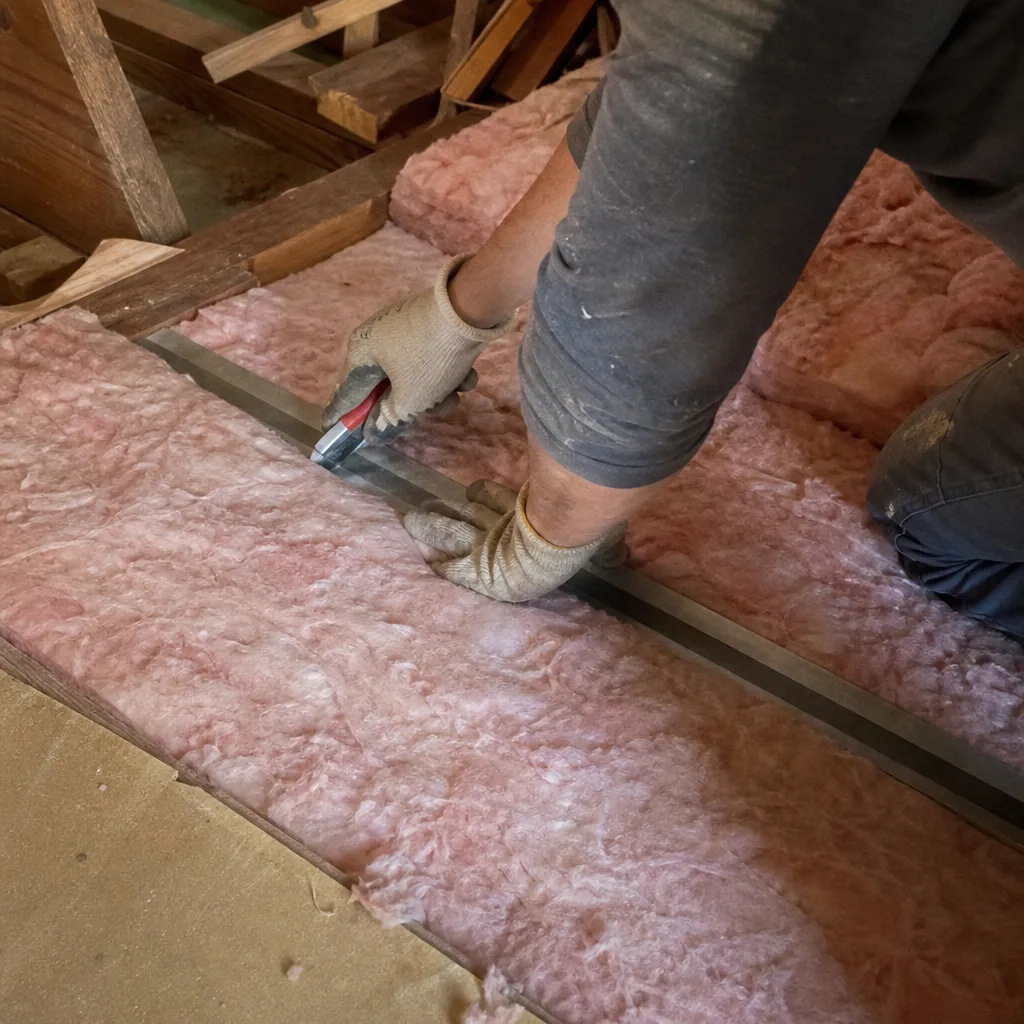
- Your existing insulation is below R-30. California’s Title 24 energy code targets R-38 minimum for most attics in Climate Zone 4 (which covers Mountain View). Homes built before 1990 frequently test below R-19, and we see R-11 batts in Monta Loma bungalows built before 1970 on a regular basis. Anything below R-30 is leaving measurable money on the table every month.
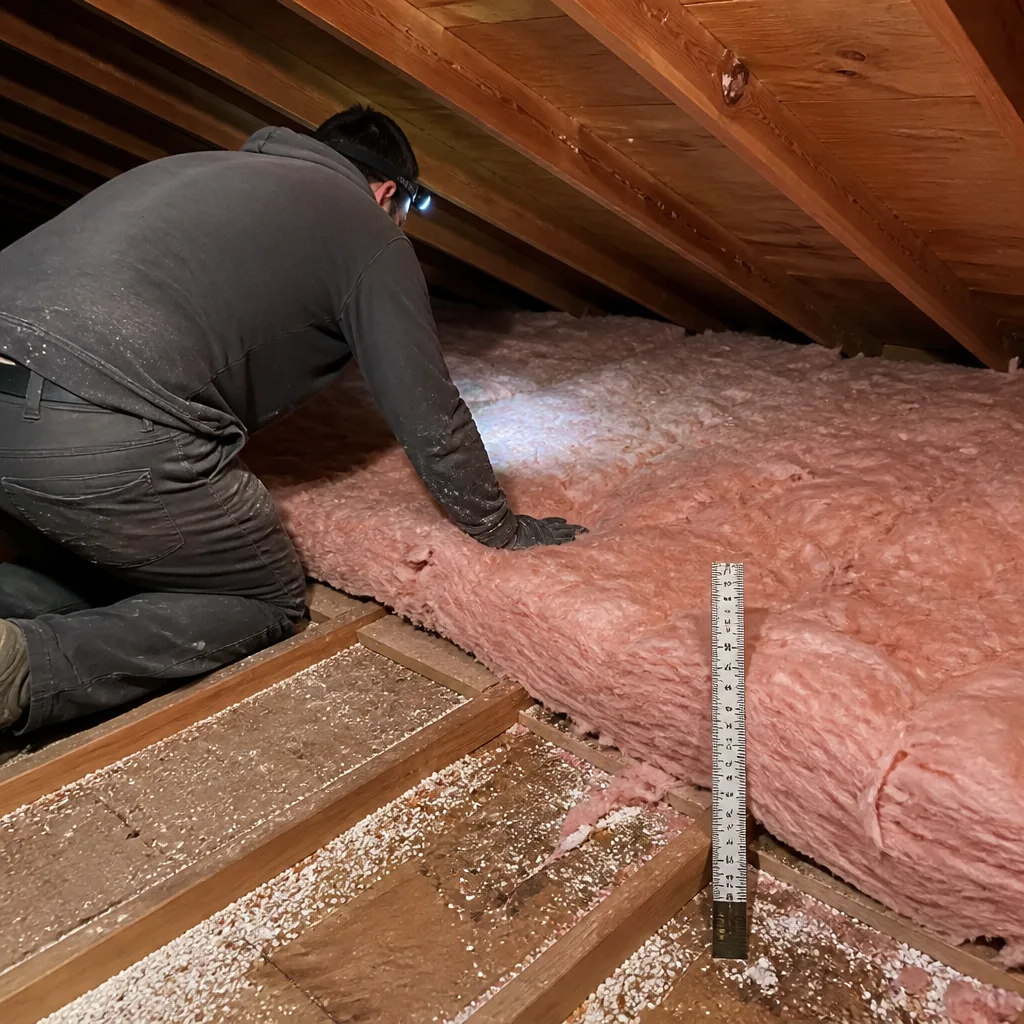
- You can see the ceiling joists when you look across the attic floor. Joists visible above the insulation surface mean the insulation layer is too thin to be effective. The batts should sit flush with or slightly above the top of the joist – if you can clearly see the wood, the R-value is not where it needs to be.
- Your upstairs rooms are noticeably hotter in summer than the rest of the house. In two-story homes in Rex Manor and the Shoreline West neighborhood, a 5-to-8 degree temperature difference between the ground floor and the second floor in July is one of the clearest signs the attic floor is conducting heat downward rather than resisting it.
- You’re replacing damaged, compressed, or rodent-contaminated insulation. Settled and compressed batts lose R-value. Contaminated insulation needs to come out before anything new goes in – we handle removal and replacement as part of the same job, and the photo record documents both the before and after condition.
- Your HVAC system runs longer cycles than your neighbors’ systems. If your air conditioner or furnace is running almost continuously to hold temperature, the attic floor is often the first place to investigate. A blower-door test will tell you whether the problem is air leakage, insulation depth, or both.
- You recently had HVAC ducts rerun or can lights added. Any attic penetration work creates new gaps in the ceiling plane. If contractors were up there without an insulation follow-up, there are almost certainly open paths between conditioned and unconditioned space that need to be sealed and re-insulated.
Our Attic Batt Insulation Process
- Written scope and price before anyone starts. Under Haven Standard Clause 1, you receive a flat written price and a written scope of work before a single tool comes off the truck. No “we’ll know more once we’re up there” language. If something unexpected turns up during the job, we stop and discuss it – we don’t charge first and explain later.
- Blower-door baseline – a pressurization reading that shows, in one number, how much air your building envelope is losing. Before we touch the insulation, we run a blower-door test and record the CFM50 figure. In Mountain View homes we’ve tested, pre-sealing readings commonly fall between 2,800 and 5,500 CFM50 depending on age and prior renovation history. That number goes into your documentation so you have a real before-measurement, not a verbal estimate of improvement.
- Air sealing of the attic floor – top plates, can lights, plumbing and electrical penetrations. We use fire-rated caulk and two-part spray foam to seal every gap we can reach from the attic side. This step takes longer than the insulation itself on older homes, but it’s what drives the blower-door number down. Skipping it and just adding batts is something we won’t do – not because it’s a policy, but because it produces a result we wouldn’t put our name on.
- Batt installation to the specified R-value. We cut and fit glass fiber batts – typically Owens Corning EcoTouch or Johns Manville Spider in applications where we need a faced product for moisture management – into each joist bay. Depth, coverage, and the absence of voids are checked before we move on. Batts are friction-fit without compression; compressed batts lose R-value proportionally to how much they’re squeezed, and we measure installed depth, not just material thickness.
- Post-installation blower-door test. Once the air sealing and insulation are complete, we run the blower-door again. The after number goes into your written record alongside the before number. A well-sealed attic floor in a Mountain View home typically shows a 35 to 55 percent reduction in CFM50 – sometimes more in homes that hadn’t been touched since original construction. You get the actual numbers, not a description of how the job went.
- Documented photo record delivered before we leave. Every job closes with a photo set that covers the pre-work condition, the air sealing, the batt installation, and the finished attic floor. The photos go to you the same day. Under The Haven Standard, this is included on every job – it’s not a premium add-on.
Attic Batt Insulation Pricing in Mountain View
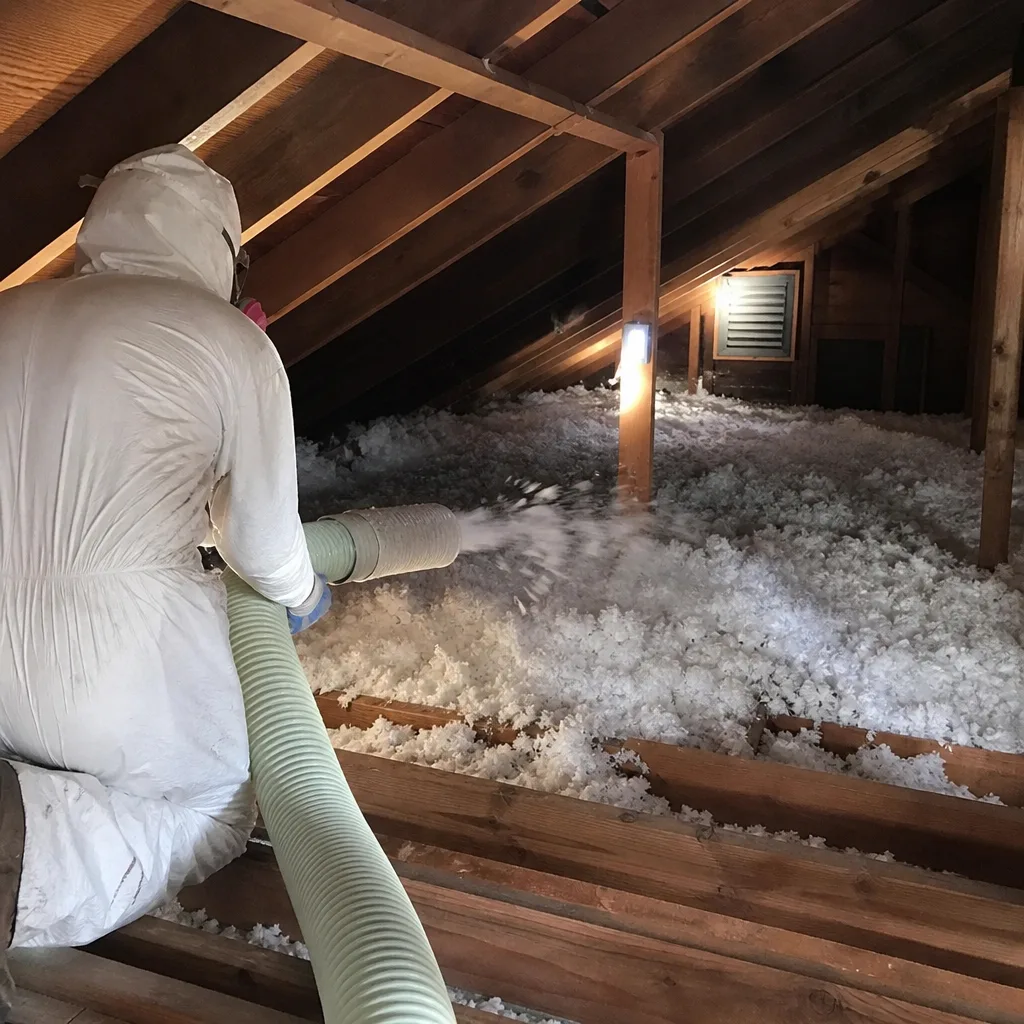
Batt insulation pricing in Mountain View depends on four things: attic square footage, the R-value target, how much air sealing the ceiling floor requires, and whether any existing insulation needs to come out first. Below are honest ranges based on what we actually see in homes here.
| Scenario | Typical Price Range |
|---|---|
| Add batts to existing partial insulation, 800-1,000 sq ft attic, minimal air sealing needed | $1,400-$2,200 |
| Full batt installation to R-38, 1,000-1,400 sq ft attic, standard air sealing included | $2,400-$3,800 |
| Full batt installation to R-49, 1,400-2,000 sq ft attic, extensive air sealing (older home, many penetrations) | $3,800-$5,500 |
| Remove old contaminated or damaged insulation, then full reinstall to R-38 | $3,200-$6,000+ |
A few things that move the number up: attic access that requires equipment staging, knee walls or irregular framing bays common in 1960s Mountain View split-levels, and attics with significant rodent damage or heavy soiling that requires cleaning before new material goes in. A few things that move it down: homes that already have some air sealing from a prior project, and attics with good vertical clearance and straightforward joist layouts.
The written price you receive before any work starts will break these components out line by line – materials, air sealing labor, blower-door testing, and any removal if needed. Nothing is bundled to hide the breakdown. If you have a competing written estimate, bring it to us or find Attic Insulation Near Me in Mountain View, CA to compare. We’ll read it with you as part of a free second opinion – not to undercut it, but to make sure you understand what’s included and what isn’t.
To get a written price for your specific attic, call (669) 259-0406.
Key Takeaways
- Air sealing comes before batts – always. Insulation over an unsealed ceiling underperforms by 30 to 40 percent in the field.
- Most Mountain View attic batt jobs run $1,400-$5,500 depending on size, R-value target, and sealing scope.
- Every job starts with a written price and ends with before-and-after blower-door numbers plus a full photo record.
- Owens Corning and Johns Manville batts are standard – no proprietary product lock-in, no materials markup we don’t disclose.
- The 365-Day Done Right Promise applies in writing – if the work isn’t right, we come back and fix it.
FAQs – Attic Batt Insulation in Mountain View
What R-value do I need for attic batt insulation in Mountain View?
R-38 is the California Title 24 minimum for Mountain View’s Climate Zone 4, and it’s the floor we install to on every new job. In practice, we recommend R-49 for homes with significant second-floor living space or HVAC equipment staged in the attic, because the incremental material cost is modest relative to the long-term performance difference. If your current insulation tests between R-11 and R-19 – which is common in Monta Loma and Old Mountain View homes built before 1978 – the upgrade to R-38 will be one of the highest-return energy improvements you can make. For an exact assessment of what your attic currently has and what it needs, call us at (669) 259-0406 – an estimate costs you nothing and comes in writing.
Is batt insulation or blown-in insulation better for attics?
Batts are better suited to attics with uniform, accessible joist bays and enough headroom to work carefully. Blown-in insulation – loose-fill cellulose or fiberglass – covers irregular framing, gets into corners without cutting, and is faster to install at scale. The honest answer is that the right choice depends on your specific attic geometry, not on which product we happen to have in the truck. In Mountain View attics built between 1950 and 1975, we find both methods appropriate depending on the structure. Either way, the air sealing step is the same – and that step matters more to your actual energy performance than which insulation form you choose.
Can batt insulation be installed over existing insulation?
Yes, in most cases. If the existing insulation is dry, free of rodent contamination, and not compressed below its functional R-value, unfaced batts can go directly over the top running perpendicular to the joists. This is a common approach in Mountain View homes where there’s an existing layer of R-11 or R-13 that’s still structurally intact – it gets you to code-minimum R-38 without the cost of full removal. We document the existing condition with photos before adding anything, so you have a clear record of what was found and what was installed on top. If the existing insulation is damaged or contaminated, Attic Insulation Replacement is the right call first – we’ll tell you which situation applies and why before any work starts.
How long does attic batt insulation last?
Glass fiber and mineral wool batts – like Owens Corning EcoTouch or Rockwool Comfortbatt – are warranted by their manufacturers for the lifetime of the structure when installed correctly and left undisturbed. In practice, the insulation itself rarely degrades; what degrades is the air barrier around it. Rodent traffic, HVAC service work, and attic storage all create gaps that reduce effective performance over time even when the batts look intact. The 365-Day Done Right Promise covers our installation work for a year from completion, and the blower-door numbers we document give you a baseline to compare against if you ever suspect performance has slipped.
Written by Wes Okafor, Owner at Topside Attic Insulation services Mountain View, serving Mountain View since 2016.