
Attic Baffles & Ventilation Prep in Mountain View, CA
Attic baffles are rigid channels – typically made of foam or cardboard – installed between roof rafters to keep soffit vents clear so outside air can move from the eave up to the ridge without being blocked by insulation. Ventilation prep is the set of tasks that has to happen before any new insulation goes in: baffles installed, existing vents checked, and airflow path confirmed. Without this step, blown-in insulation can pack tight against the soffit vents within a season and turn a correctly designed ventilation system into a dead zone.
Mountain View’s climate makes this more consequential than homeowners usually expect. The Bay Area’s mild, damp winters mean attic moisture has less opportunity to flush out between weather events. When soffit vents are blocked – either by old insulation that shifted or by new insulation added without baffles – condensation builds on sheathing and framing faster than it would in a drier inland climate. We’ve pulled back insulation in South Whisman and Rex Manor homes where sheathing showed early staining that traced directly to a blocked soffit vent, not a roof leak.
At Topside Attic Insulation Mountain View, ventilation prep is part of every insulation job – not an add-on you discover mid-project. Before anyone touches the insulation itself, we walk the attic, photograph what’s there, and confirm the ventilation path is clear. That’s part of what it means to work under The Haven Standard: the scope is written before work starts, and you know exactly what’s being done and why. If you’d like a walkthrough of what your attic needs, call us at (669) 259-0406.
This page covers attic baffles and ventilation prep specifically. For the full picture of attic insulation – R-values, material options, pricing – see our Attic Insulation in Mountain View page.
When You Need Attic Baffles & Ventilation Prep
- You’re adding blown-in insulation and the soffit vents are not currently baffled. Loose-fill insulation – cellulose from GreenFiber or fiberglass from Knauf, for example – migrates toward eaves over time. Without a baffle creating a physical channel, that material gradually seals the soffit vent from the inside. The insulation appears to be doing its job; the ventilation has quietly stopped.
- Your attic feels stuffy or damp after rainy stretches. Mountain View averages around 15 inches of rain a year, concentrated between November and March. If the attic smells musty after winter rains, inadequate airflow is the likely cause. A baffle inspection will show whether soffit-to-ridge airflow is actually moving.
- Utility bills are higher than neighbors in comparable-size homes. Several Cuesta Park and Old Mountain View homeowners have called us after noticing summer cooling bills that didn’t match their neighbors’. In a few of those cases, the issue was a combination of compressed existing insulation and blocked soffit vents – both correctable.
- You have recessed can lights in the ceiling below the attic. Older IC-rated cans are not the same as air-sealed cans, and they create pathways for conditioned air to escape directly into the attic. Before insulation goes over them, those cans need to be addressed. Baffles and ventilation prep happen at the same time as that air-sealing work.
- Your home was built before 1990 and has never had an attic assessment. A large share of the single-family housing stock in Mountain View’s Waverly Park and Willowgate neighborhoods dates to the 1960s and 1970s. Original insulation in those attics is often compressed to the point where it’s providing a fraction of its labeled R-value, and ventilation setups that were marginal when installed are now failing.
- A previous contractor added insulation without mentioning ventilation at all. If a prior job included no discussion of baffles, soffit clearance, or airflow, there’s a reasonable chance the ventilation path is now obstructed. We offer a free second opinion on any written estimate – bring it in and we’ll review it with you.
Our Attic Baffles & Ventilation Prep Process
-
Written scope and price before anyone enters the attic.
Under Haven Standard Clause 1, you receive a flat written price and a written scope of work before any work starts. The scope will specify the number of baffles, the baffle material, which vents are being cleared, and what, if any, air-sealing work is included. Nothing is decided on the fly once the crew is in the attic. -
Full attic inspection with photo documentation.
Before removing or moving any insulation, we photograph the existing conditions: current soffit vent visibility, existing baffle presence or absence, any signs of moisture or staining on sheathing, and the current state of ridge ventilation. These photos are part of your Documented Photo Record – included on every visit, not available on request. -
Soffit vent clearing and baffle installation.
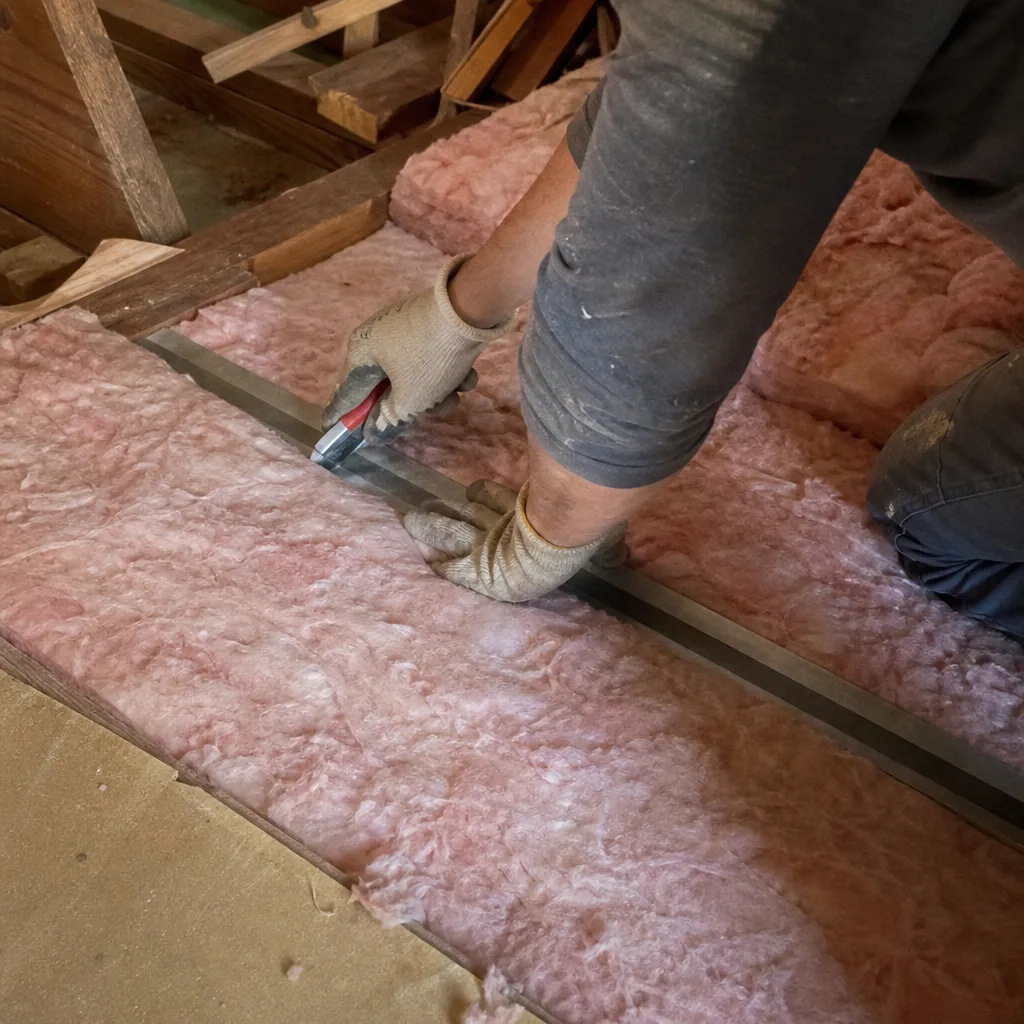
We install baffles at every rafter bay along the eave line where insulation will be added. Each baffle creates a clear, protected channel from the soffit vent up to the open attic space above the insulation level. In older Mountain View homes with narrow rafter bays, we select baffle profiles that fit without compressing against the decking. The goal is at least a 1-inch airflow channel – the minimum for meaningful soffit-to-ridge ventilation. -
Ridge and gable vent verification.
A soffit vent does nothing if there’s nowhere for the air to exit. We check ridge vents for obstruction and confirm that the net free area of exhaust venting is roughly proportionate to intake at the soffits. If we find a mismatch – which is common in homes that have had roofing work done without attention to ridge vent integrity – we document it and discuss options before insulation goes in. -
Air sealing at top plates, penetrations, and can lights.
This step happens before insulation, not after. We seal gaps at wall top plates, around plumbing and electrical penetrations, and at any can lights using appropriate materials. On applicable jobs, we run a blower-door test – a pressurization measurement that shows, in one number, how much conditioned air your building envelope is losing – before and after sealing. Those two numbers are yours to keep. -
Final documentation and handoff.
When the ventilation prep is complete and confirmed, insulation can go in. You receive the before-and-after photos, the written warranty, and – where a blower-door test was performed – both readings. This is what leaving looks like before we arrive: a documented record, not a verbal summary.
Attic Baffles & Ventilation Prep Pricing in Mountain View
Baffle installation and ventilation prep in Mountain View typically runs between $350 and $950 as a standalone scope, depending on the variables below. When this work is part of a larger Attic Insulation services job – which it usually is – it’s priced into the overall written estimate rather than as a separate line item that shows up mid-project.
| Scope | Typical Range (Mountain View) |
|---|---|
| Baffle installation only, single-story home, 1,200-1,600 sq ft attic footprint | $350 – $550 |
| Baffle installation, vent inspection, minor soffit clearing | $450 – $700 |
| Full ventilation prep including air sealing at top plates and penetrations | $650 – $950 |
| Ventilation prep combined with full attic insulation (blown-in) | $1,800 – $3,400 for most Mountain View single-family homes |
What moves the price:
- Rafter bay count and attic geometry. A standard Mountain View ranch-style home with a simple hip or gable roof has predictable rafter bay counts. Homes with dormers, multiple roof planes, or low-slope sections near additions require more time to work safely and thoroughly.
- Existing insulation depth. If older insulation has to be moved to reach the eave area for baffle installation and then repositioned, that adds labor. In some cases, especially with older fiberglass batt or compressed cellulose, it makes more sense to remove and replace rather than work around it – and that’s a separate conversation with a separate written price.
- Number of can lights and penetrations. Older homes in Castro City and the Sylvan Park neighborhoods frequently have first-generation recessed cans that require individual attention before insulation covers them. Each one adds modest time but that time adds up in a densely lit kitchen or living room ceiling.
- Accessibility. Attics with a hatch less than 22 inches wide, low ridge heights, or significant HVAC equipment in the way take longer. We’ll note any access constraints in the written scope so there are no surprises.
We don’t ask you to call for pricing and hope the number sounds reasonable when you hear it. The price is written before any work starts – that’s Haven Standard Clause 1, and it applies to every job including this one. Call (669) 259-0406 to schedule a time to look at the attic together and get that number on paper.
FAQs – Attic Baffles & Ventilation Prep
What exactly is an attic baffle and do I really need one?
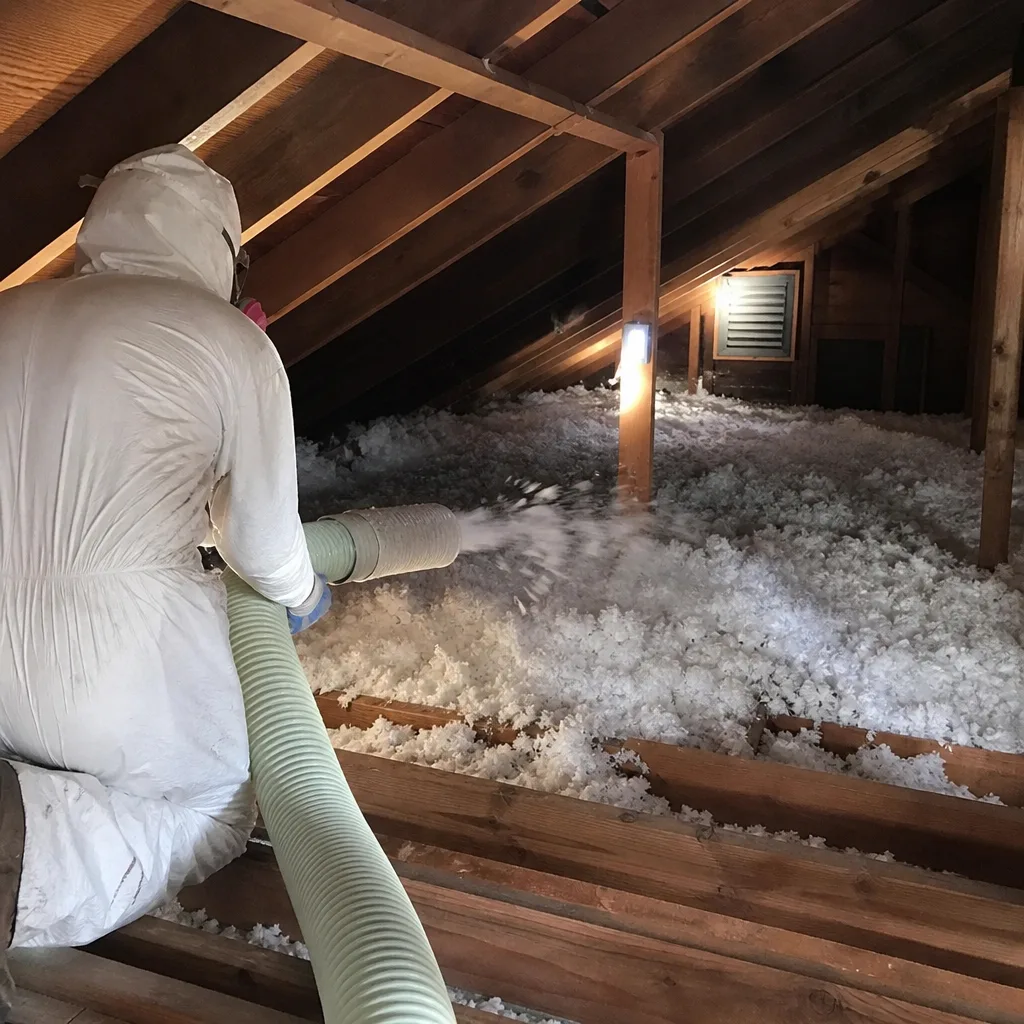
An attic baffle is a rigid channel installed between roof rafters at the eave that keeps soffit vents from being blocked by insulation. You need one at every rafter bay where blown-in or Attic Batt Insulation will be present near the eave – without it, insulation migrates into the soffit vent opening and cuts off the fresh air that’s supposed to enter at the bottom and exhaust at the ridge. In Mountain View, where attic moisture is a real concern during the rainy season, a blocked soffit vent creates conditions that can stain sheathing and degrade framing over a few years rather than a few decades. If your attic has no baffles and you’re adding insulation, this is not optional.
Can ventilation prep be done without replacing existing insulation?
Yes, in many cases. If existing insulation is in reasonable condition and not too deeply compressed, we can work at the eave line – moving insulation back, installing baffles, confirming the vent opening is clear – and then reposition the existing material. We photograph the conditions before and after either way. That said, in older Mountain View homes where insulation is 30 or 40 years old and compressed to R-7 or less, it often makes more financial sense to remove and replace at the same time; see How Much Does Attic Insulation Cost? (2026 Price Guide) - Mountain View, CA for current pricing. We’ll show you both options in writing before you decide.
How do I know whether my ridge vent is working?
You mostly can’t tell from inside the house – which is why we inspect it during ventilation prep rather than assuming it’s fine. Ridge vents can become obstructed by roofing felt installed over them during a re-roof (this happens more often than roofers would like to admit), by debris accumulation, or by incorrect installation of hip caps that bridge the vent opening. During our attic inspection, we check whether the ridge vent runs continuously, whether it’s obstructed at the opening, and whether the net free exhaust area is in reasonable proportion to the soffit intake area. We document what we find and include it in the written scope.
Does ventilation prep affect whether I qualify for a rebate on insulation in Mountain View?
PG&E’s residential insulation rebates – which have applied to qualifying Mountain View homes under various program iterations – generally require that the home meet minimum ventilation standards for the rebate to apply to insulation work. A properly documented ventilation prep, including confirmation that soffit and ridge venting meet California Title 24 requirements, supports the rebate application. We document the ventilation work as part of the job record so you have what you need. Rebate programs and amounts change; check PG&E’s current offerings directly for the specifics at the time of your project.
Key Takeaways
- Attic baffles protect soffit vents from being blocked by insulation – without them, your ventilation system fails silently over one or two seasons.
- Mountain View’s damp winters make proper attic airflow more important than in drier climates; blocked soffits accelerate sheathing moisture damage.
- Ventilation prep – baffles, vent inspection, air sealing – happens before insulation goes in, not after. Envelope Insulation Co. treats this as a prerequisite, not an upsell.
- Standalone ventilation prep in Mountain View typically runs $350-$950 depending on attic size and scope; combined with blown-in insulation, most jobs fall between $1,800 and $3,400.
- Every job includes a written price before work starts, a Documented Photo Record when the crew leaves, and a 365-Day Done Right Promise in writing.
- Before-and-after blower-door readings are included on applicable jobs so you have a number, not just a verbal assurance.
Ready to Get Your Attic’s Ventilation Right?
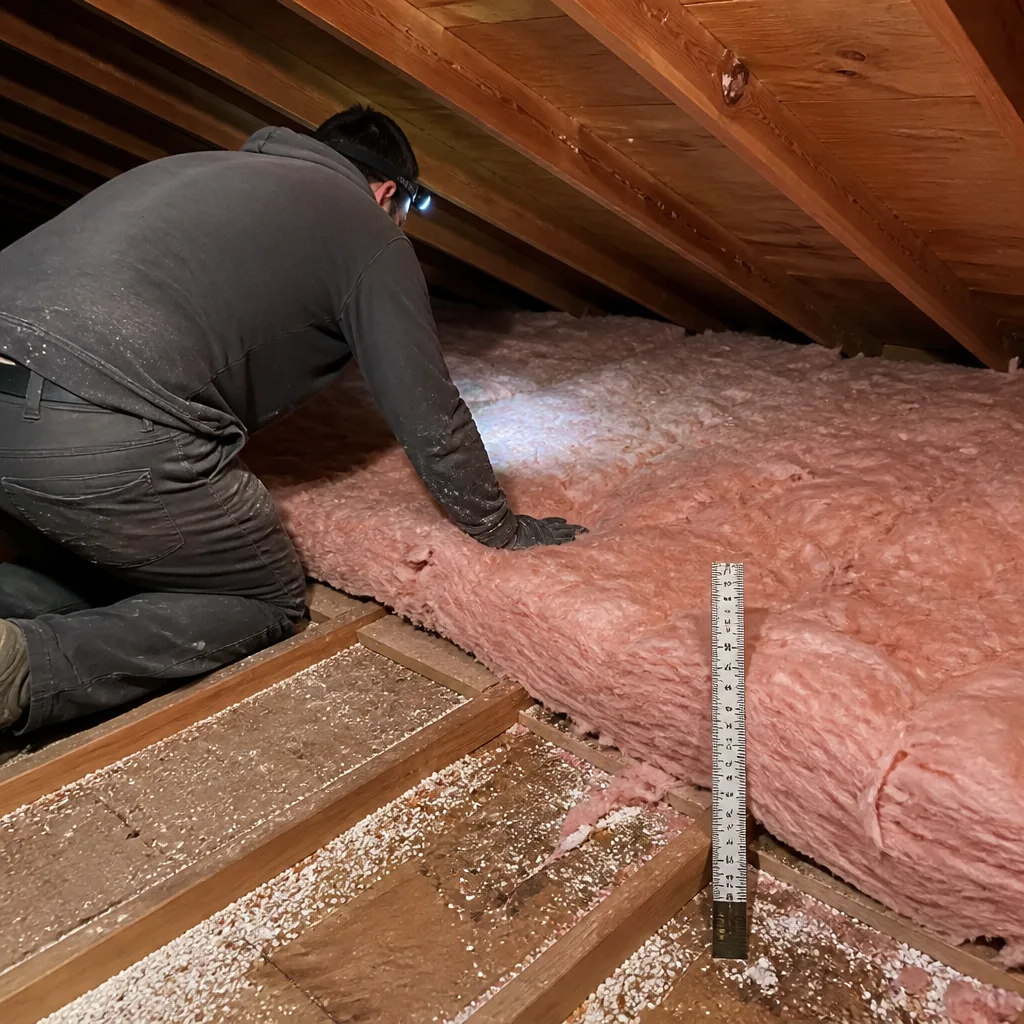
If you’re not sure whether your attic has working baffles, whether your soffit vents are actually clear, or whether ventilation prep was done before the last round of insulation was added, we can find out. We’ve worked in attics across Mountain View – from the original-construction 1960s homes in Monta Loma to newer builds in North Bayshore – and the attic tells the story pretty quickly once you’re in it. Since 2016, Topside Attic Insulation Mountain View has completed Attic Insulation Near Me in Mountain View, CA and ventilation work in more than 9,000 homes, every one with a written price before work started and a documented record when the crew left. Wes Okafor and the team are available to walk your attic, photograph what’s there, and put a flat written price in front of you before anything else happens. Call (669) 259-0406 to schedule a free estimate.
Written by Wes Okafor, Owner at Topside Attic Insulation Mountain View, serving Mountain View since 2016.