
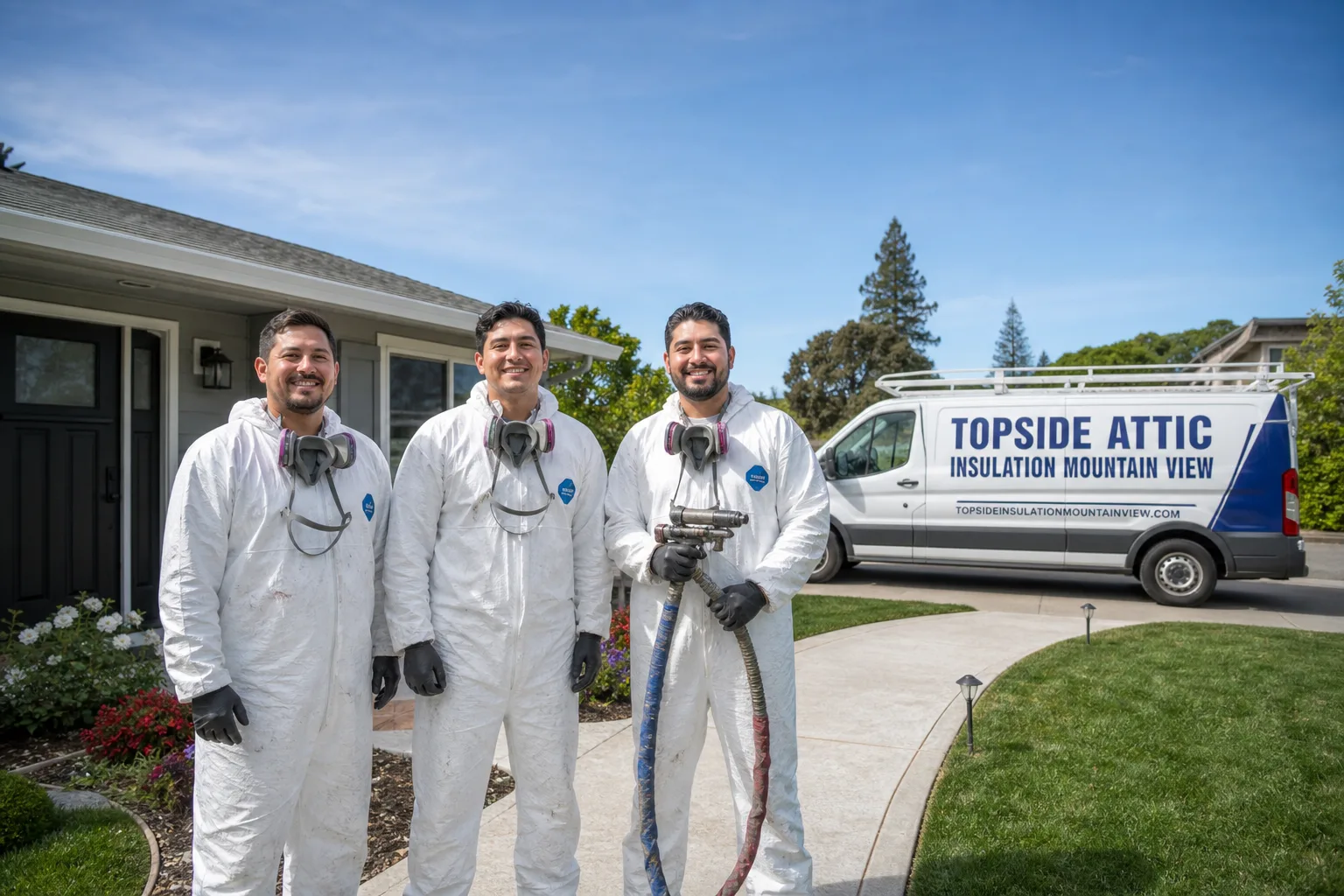
Fast, Reliable Attic Insulation Across Portola Valley
Most attic insulation jobs in Portola Valley run $2,800-$6,500 depending on access difficulty, existing material condition, and whether fire-rated products are required. We’re typically on-site within 24-48 hours of your call, and dispatch is coordinated from our Los Angeles office with crews serving Portola Valley locally. Call (669) 259-0406 for a written price before any work starts.
We’ve worked the low-profile ranches off Alpine Road, the hillside builds near Los Trancos, and the custom homes tucked along Portola Road. Portola Valley’s coastal-hill climate, seismic codes, and wildfire regulations create insulation challenges you won’t find in Menlo Park or Palo Alto flatlands. Our Attic Insulation team knows the difference.
Why Topside Attic Insulation Mountain View Is Portola Valley’s Preferred Attic Insulation Company
Our reputation in Portola Valley was built on documentation, not slogans. Homeowners here read three-star reviews as carefully as five-star ones, so we publish before-and-after blower-door numbers on every applicable job. The pressurization reading, in CFM50, shows exactly how much conditioned air your home was losing before we started and how much less it loses after we seal and insulate.
Response time to Portola Valley is 24-48 hours for standard scheduling, with live phone answering 24/7. No voicemail loops. No callback windows measured in business days.
We understand the local constraints: the San Andreas Fault runs directly through Portola Valley, and virtually every parcel sits within California’s Very High Fire Hazard Severity Zone. That means insulation work here must satisfy seismic-retrofit crawl-space access needs while using fire-rated materials to meet wildfire code. It’s a dual compliance that doesn’t exist in neighboring flatland communities. Our crews have handled it repeatedly on homes from the 1960s ranches near the town center to newer hillside builds off Old La Honda Road.
Our Attic Insulation Services in Portola Valley
Blown-In Attic Insulation
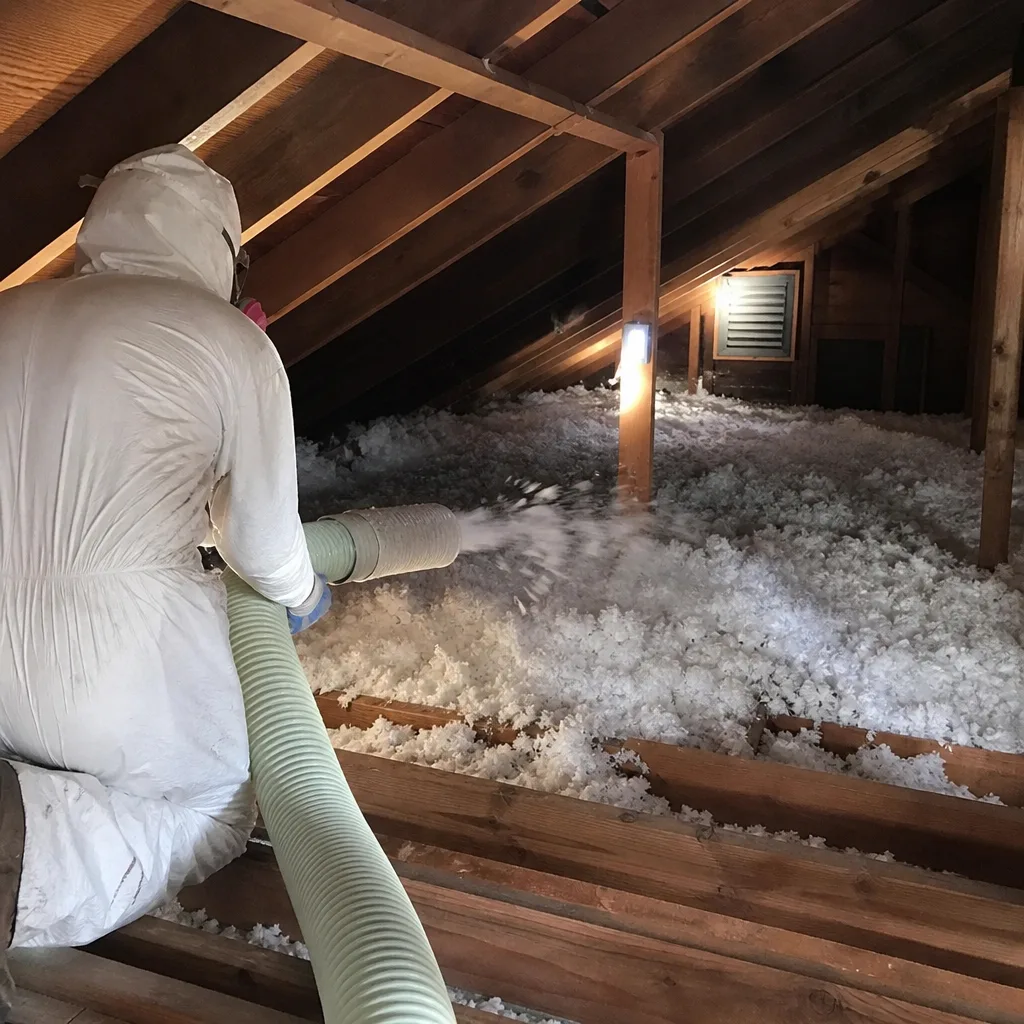
Blown-in cellulose or fiberglass is our most common install in Portola Valley for one reason: those low-profile ranch attics, built 1955-1980 with minimal vertical clearance, are nearly impossible to batt properly without compression gaps at the eaves. We blow Owens Corning or GreenFiber to full R-value, then verify coverage with our Documented Photo Record. A typical blown-in job in Portola Valley runs $3,200-$5,800 for a 1,800-2,400 square foot ranch.
Attic Batt Insulation
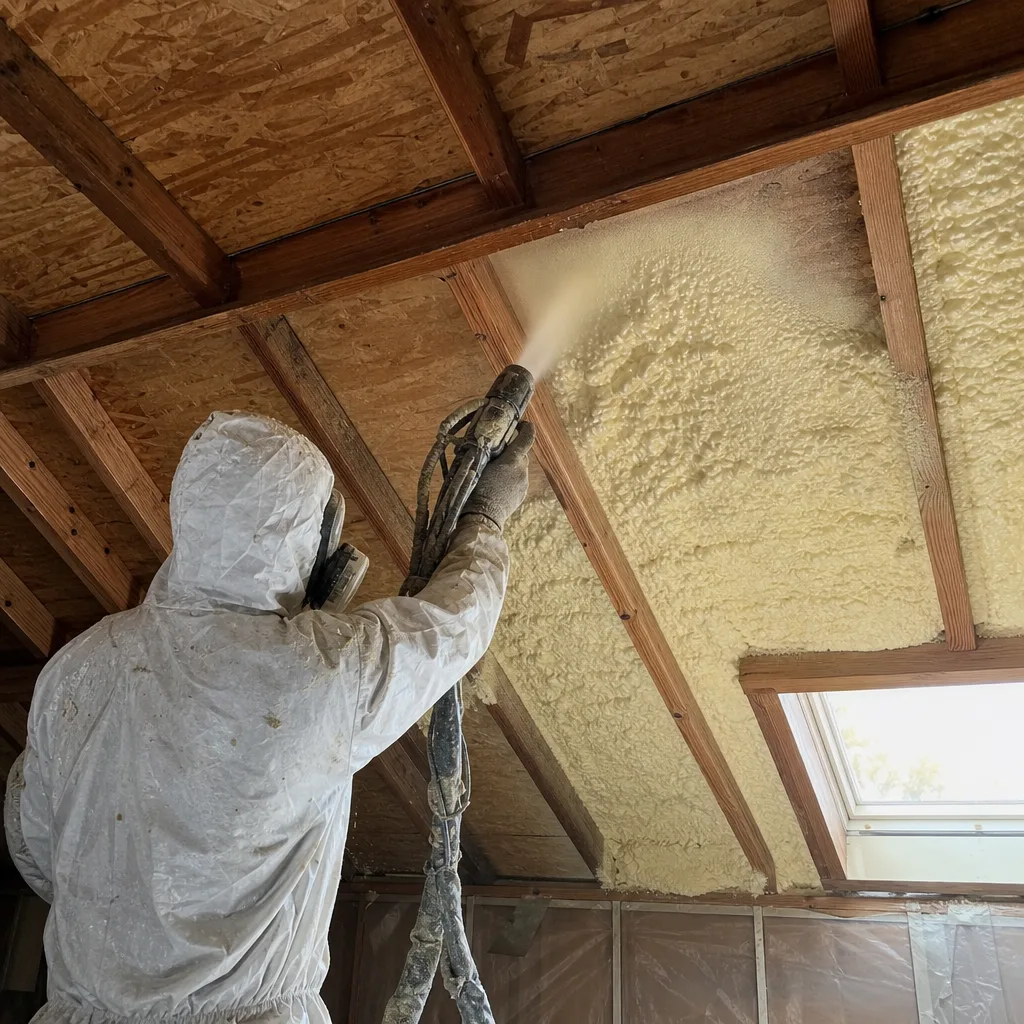
We install batts only where they make sense: partial retrofits, conditioned attic conversions, or fire-blocking applications where Rockwool batts meet the town’s wildfire code requirements. In Portola Valley, fire-rated batt installs at rim joists and top plates are often required to maintain the home’s ignition-resistant envelope. We use Knauf or Rockwool mineral wool for these assemblies, never compressing below labeled thickness.
Attic Insulation Top-Up
Top-ups are common in Portola Valley. The original 1960s batts, often unfaced fiberglass, have sagged and matted from years of marine fog and 25-30 inches of annual rainfall. But we don’t blow new material over old without inspection. Our crew checks for moisture damage, pest activity, and vapor barrier integrity first. If the existing layer is compromised, we’ll recommend full replacement. A clean top-up in Portola Valley typically runs $2,800-$4,200.
Attic Insulation Replacement
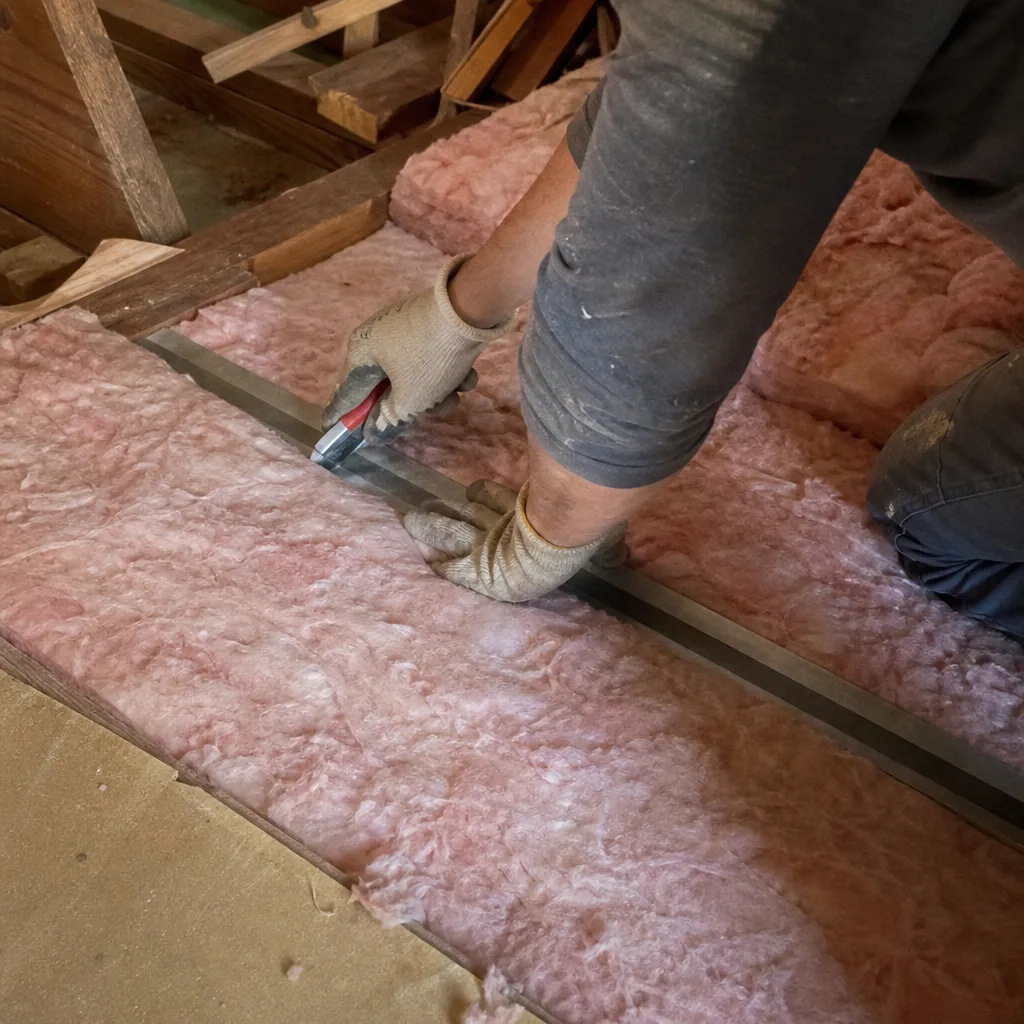
Full replacement is what we find most often in the older stock off Los Trancos Road and the Portola Valley floor near San Francisquito Creek. Original batts are removed, the attic deck is inspected for mold or rot (common where faced batts trapped moisture against framing), air sealing of top plates and penetrations is completed, and new insulation is installed to modern R-value. Replacement jobs in Portola Valley range $4,500-$6,500. Every replacement includes our before-and-after blower-door test when accessible.
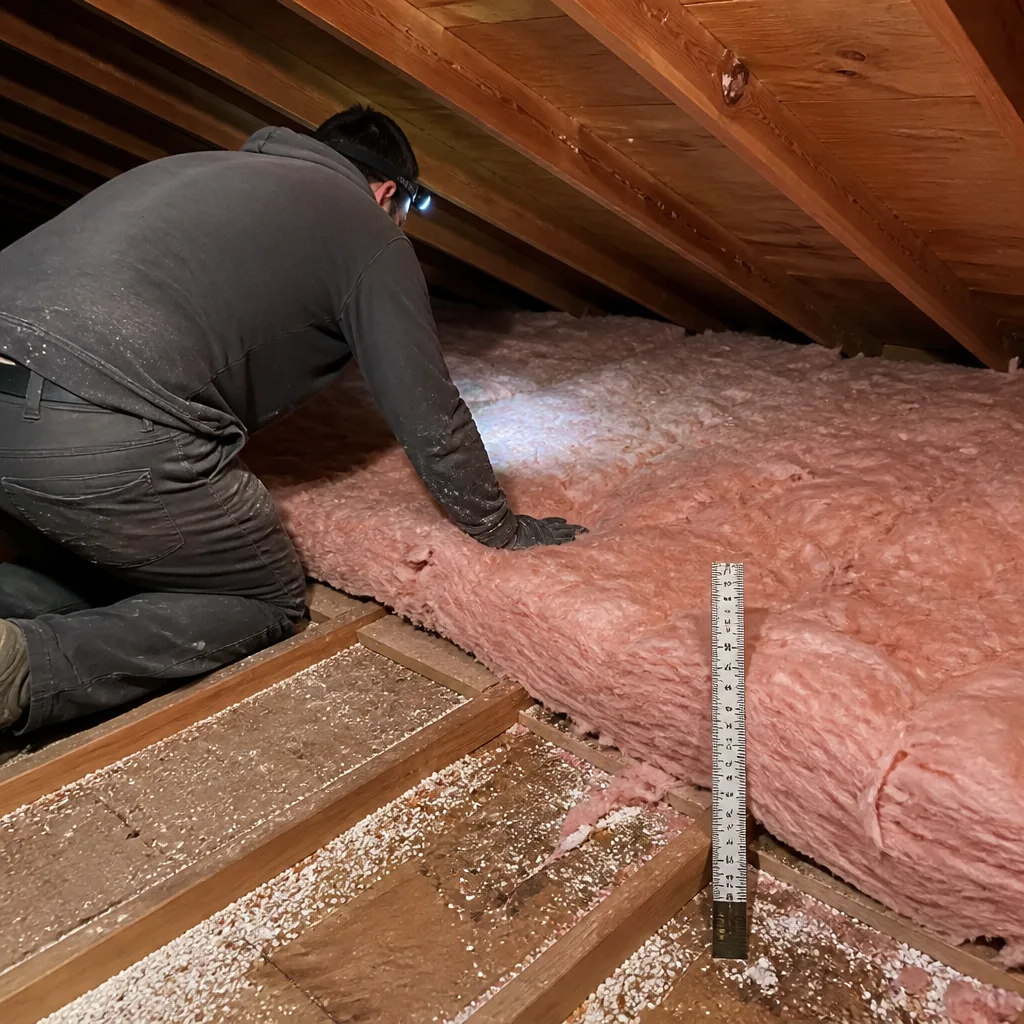
Attic Baffles & Ventilation Prep
Portola Valley’s diurnal temperature swings, 30°F drops from afternoon highs as fog pours through mountain gaps, create powerful stack effect pressure. Without proper baffles at the eaves, blown insulation blocks soffit ventilation and traps moisture. We install CertainTeed or Owens Corning rafter baffles before any blow-in work, maintaining the vented attic path that these ranch homes were designed for.
What happens when you call
- 1
A real person answersNo phone trees - you reach a local pro.
- 2
You get an upfront price rangeHonest numbers before anyone is dispatched.
- 3
A background-checked tech heads outLicensed & insured, dispatched right away.
- 4
You approve before work beginsNothing starts until you say go.
Trusted Brands We Service in Portola Valley
We source from Johns Manville, Knauf, Rockwool, and Owens Corning, among others. No proprietary lock-in means we specify what’s right for your assembly, not what moves our inventory. For Portola Valley’s wildfire code, we frequently specify Rockwool mineral wool for fire-blocking at rim joists and top plates; for the main attic field, Owens Corning blown fiberglass or GreenFiber cellulose depending on your preference and the specific R-value target. We stock standard products locally for fast turnaround on scheduled jobs.
Common Attic Insulation Problems We See in Portola Valley Homes
- Original unfaced batts matted and sagging. The marine fog rolling off the Santa Cruz Mountains keeps crawl space humidity persistently high. Decades-old unfaced fiberglass loses loft, falls away from subfloor decking, and leaves rim joist bays completely bare. The homeowner feels it as cold floors and a furnace that won’t quit.
- Faced batts trapping moisture against framing. Where prior owners or builders installed kraft-faced batts directly against wood, Portola Valley’s coastal-hill humidity condenses on the facing and wets the stud or joist. We’ve found rot and mold behind these installations far worse than anything we see on the drier Bay floor.
- Compressed or skipped coverage at eaves and rim joists. Low-profile ranch designs with tight attic access make it tempting for crews to rush the edges. The large diurnal temperature swings on the Portola Valley floor, 30°F drops as evening fog arrives, expose those gaps immediately. You feel it as drafts and uneven room temperatures.
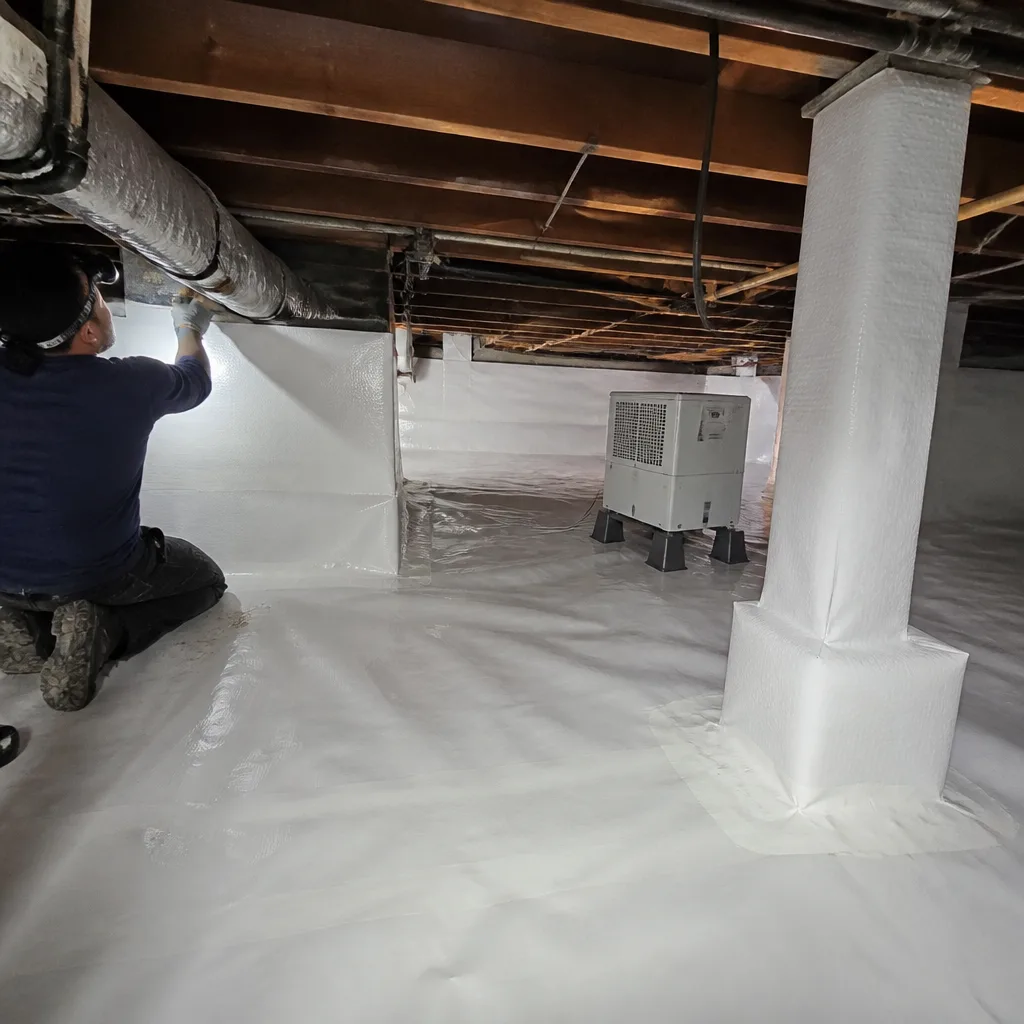
- Vapor barriers failed or missing in crawl spaces. Techs working the Portola Valley floor near Los Trancos and San Francisquito Creek drainages find ground moisture so persistent that blown-in insulation jobs require vapor barrier replacement and sealed encapsulation before any new product goes in. Skipping that step is a callback waiting for you, especially in the months after rainy season.
Pricing for Attic Insulation in Portola Valley, CA
| Service | Typical Range in Portola Valley |
|---|---|
| Attic Insulation Top-Up | $2,800 - $4,200 |
| Blown-In Attic Insulation (full) | $3,200 - $5,800 |
| Attic Insulation Replacement | $4,500 - $6,500 |
| Attic Baffles & Ventilation Prep | $800 - $1,400 (add-on or standalone) |
| Air Sealing + Blower-Door Verification | $1,200 - $2,400 (bundled with insulation) |
What moves you within these ranges: attic square footage, existing material removal requirements, access difficulty (tight hatches, steep roof pitches on hillside lots), fire-rated material specifications for wildfire code compliance, and whether crawl space vapor barrier work is needed before the attic job begins. We provide a written price before any work starts, always. Free second opinion on any written estimate from another contractor. Call (669) 259-0406 for your specific number.
We Also Serve Cities Near Portola Valley
Our crews work throughout the mid-Peninsula: Attic Insulation in Portola Valley is our focus here, but we regularly serve Menlo Park, Los Altos, Atherton, and Palo Alto. Each city has different code requirements, housing stock, and climate exposure; we adjust our specs accordingly rather than applying a single template.
Serving Portola Valley, CA - Our Local Coverage Area
We’re based in the Portola Valley area and know this community well. Use the map below to see our service coverage - if you’re nearby, we can almost certainly help.
FAQs - Attic Insulation in Portola Valley
Because virtually every parcel in Portola Valley sits within California’s Very High Fire Hazard Severity Zone, the town’s wildfire code requires ignition-resistant materials at critical envelope locations. We specify fire-rated Rockwool or equivalent mineral wool at rim joists, top plates, and other penetration points. This requirement doesn’t apply in neighboring flatland communities like Menlo Park or Palo Alto. Call (669) 259-0406 and we’ll walk through what’s required for your specific property.
A top-up adds new insulation over existing material that’s still in acceptable condition; full replacement removes everything, inspects the deck for moisture damage or rot, completes air sealing, and installs all-new product. In Portola Valley, we find that original 1960s-1970s batts are often too degraded from coastal humidity to top-up over. We’ll tell you which category your attic falls into after inspection, not before. Written price either way.
Because ground moisture on the Portola Valley floor, especially near Los Trancos and San Francisquito Creek drainages, is persistent enough to migrate upward and degrade any new insulation installed above. We replace failed vapor barriers and seal encapsulation before blowing in attic insulation; skipping this step creates callbacks when post-rainy-season humidity spikes. It’s standard on our jobs here, not an upsell.
No, if it’s done correctly. Because the San Andreas Fault runs through Portola Valley, seismic retrofit contractors need crawl-space and attic access to certain structural elements. We install insulation so it doesn’t obstruct those access points, using removable batts or detailed maps of blow-in coverage where required. This dual-compliance approach is specific to Portola Valley and hillside communities with similar seismic constraints. We coordinate with your retrofit contractor if one’s already scheduled.
Portola Valley receives 25-30 inches of annual rainfall and dense marine fog from the Santa Cruz Mountains, significantly more moisture than Palo Alto just a few miles east. This humidity degrades unfaced batts, causes faced batts to trap moisture against framing, and creates conditions where vapor barriers fail prematurely. The 30°F diurnal temperature swings also stress the building envelope more than the stable Bay floor climate. We specify materials and installation details for these conditions, not generic Bay Area assumptions.
Written by Wes Okafor, Owner at Topside Attic Insulation Mountain View, serving Portola Valley under The Haven Standard since 2016.