
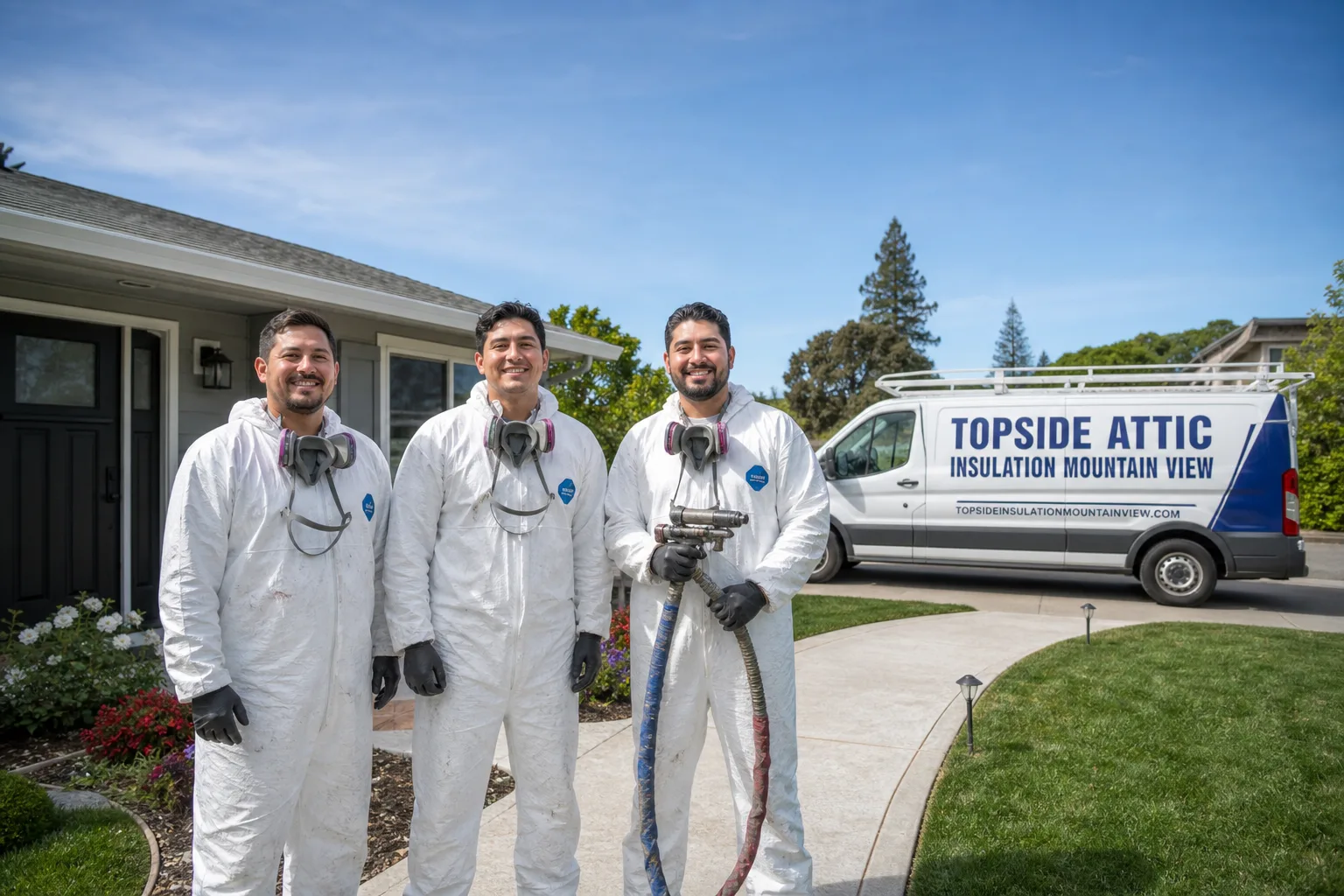
Fast, Reliable Blown-In Insulation Across East Palo Alto
Most blown-in insulation retrofits in East Palo Alto run $2,800-$6,500 for a typical 1,200-square-foot home, and we can usually inspect and price the job same week. Our crews work the full East Palo Alto grid, from the Ravenswood blocks near the Bay to the University Avenue corridor and the newer infill around Woodland Avenue. Dispatch and scheduling are coordinated from our San Francisco Bay Area office, but the technicians who arrive at your door live and work locally. They know which 1950s tract homes have open crawl spaces that pull Bay moisture, and they carry the right materials for postwar wood-frame envelopes that were never built to modern standards. Call (669) 259-0406 for a written price before any work starts.
Why Topside Attic Insulation Mountain View Is East Palo Alto’s Preferred Blown-In Insulation Company
We’ve sealed and insulated over 9,000 homes since 2016, and a significant share of them sit right here in East Palo Alto’s postwar neighborhoods. Our reviews from East Palo Alto customers consistently mention two things: the crew showed up with a written scope and price already in hand, and the before-and-after blower-door numbers proved the work actually changed something. Response time to East Palo Alto is typically next-day or same-week, depending on season, because our crews are already working Mountain View, Sunnyvale, and Palo Alto routes.
What separates us on East Palo Alto jobs is that we know the housing stock. These aren’t generic California ranch homes. They’re 1940s-1960s working-class tract construction with minimal wall cavities, uninsulated attics, and crawl spaces that sit directly on Bay mud. Our technicians have opened enough of them to recognize the failure patterns before they pull the attic hatch. Under Haven Standard Clause 1, you get a flat price, written scope, and written warranty before anyone lifts a tool. No exceptions.
Our Blown-In Insulation Services in East Palo Alto
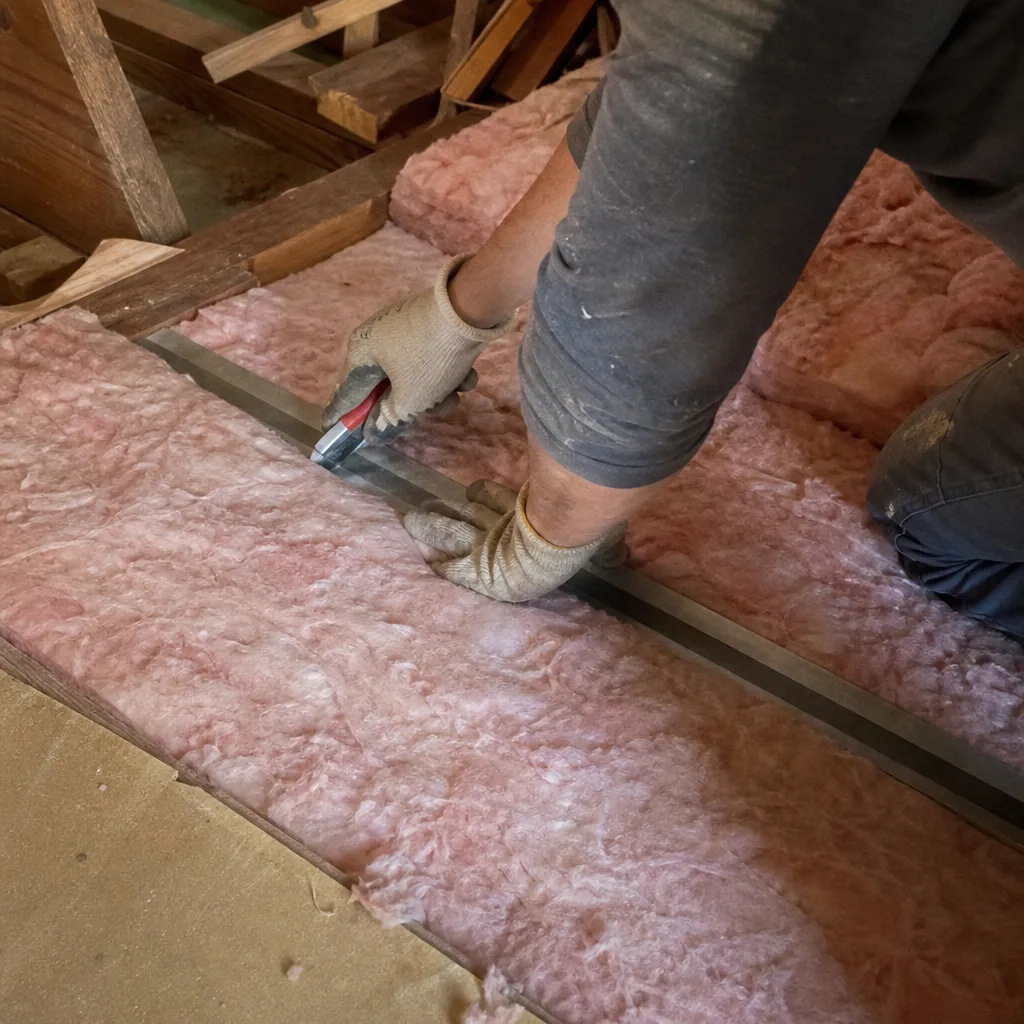
Blown-In Cellulose
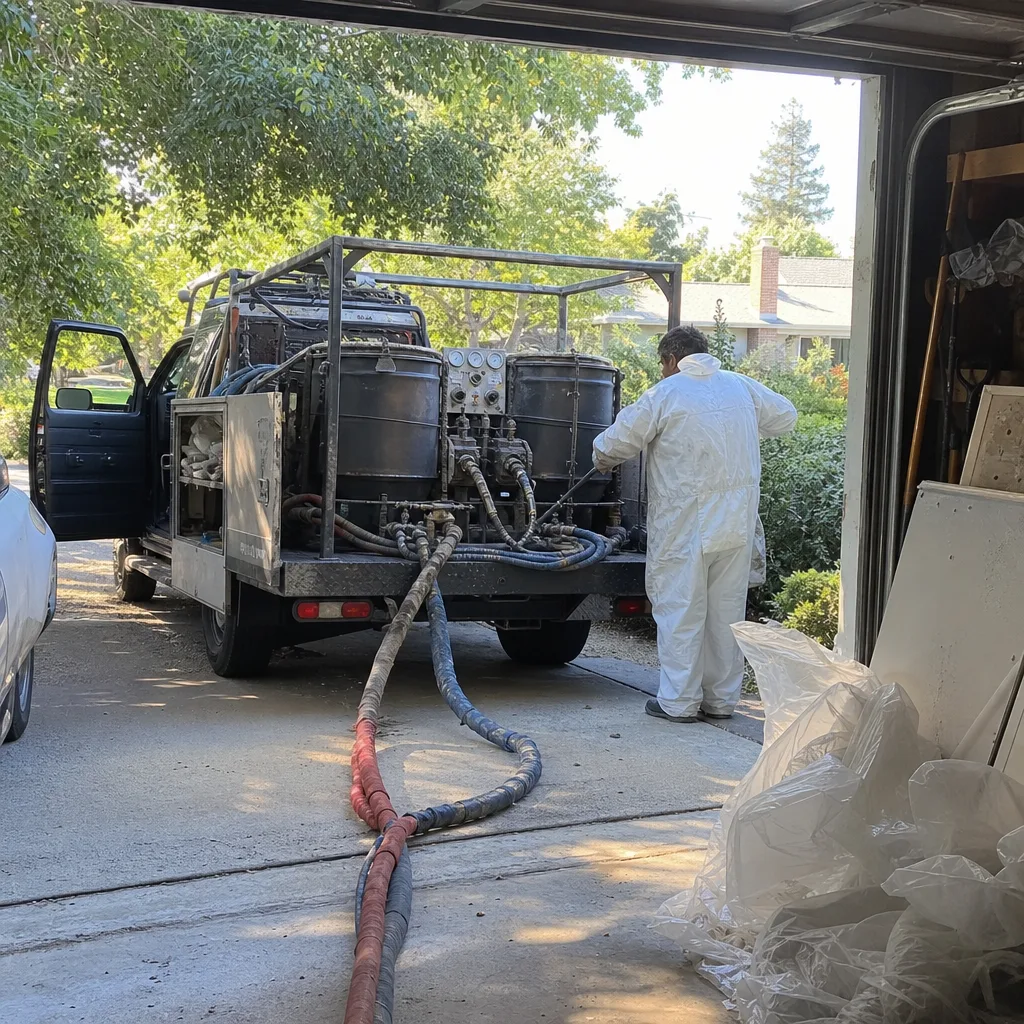
We blow GreenFiber cellulose in most East Palo Alto attics because it handles the local humidity profile better than fiberglass when installed over a properly sealed envelope. Cellulose is treated with borate for fire and pest resistance, and it packs into irregular joist bays more completely than batts. In a 1950s East Palo Alto tract home, that matters because the framing is rarely square and the original batts have sagged into gaps. We source cellulose from Owens Corning, GreenFiber, and Johns Manville, depending on availability and the specific thermal target. Every attic job starts with sealing top plates, can lights, and penetrations, then we blow to a uniform depth and document the coverage with photos.
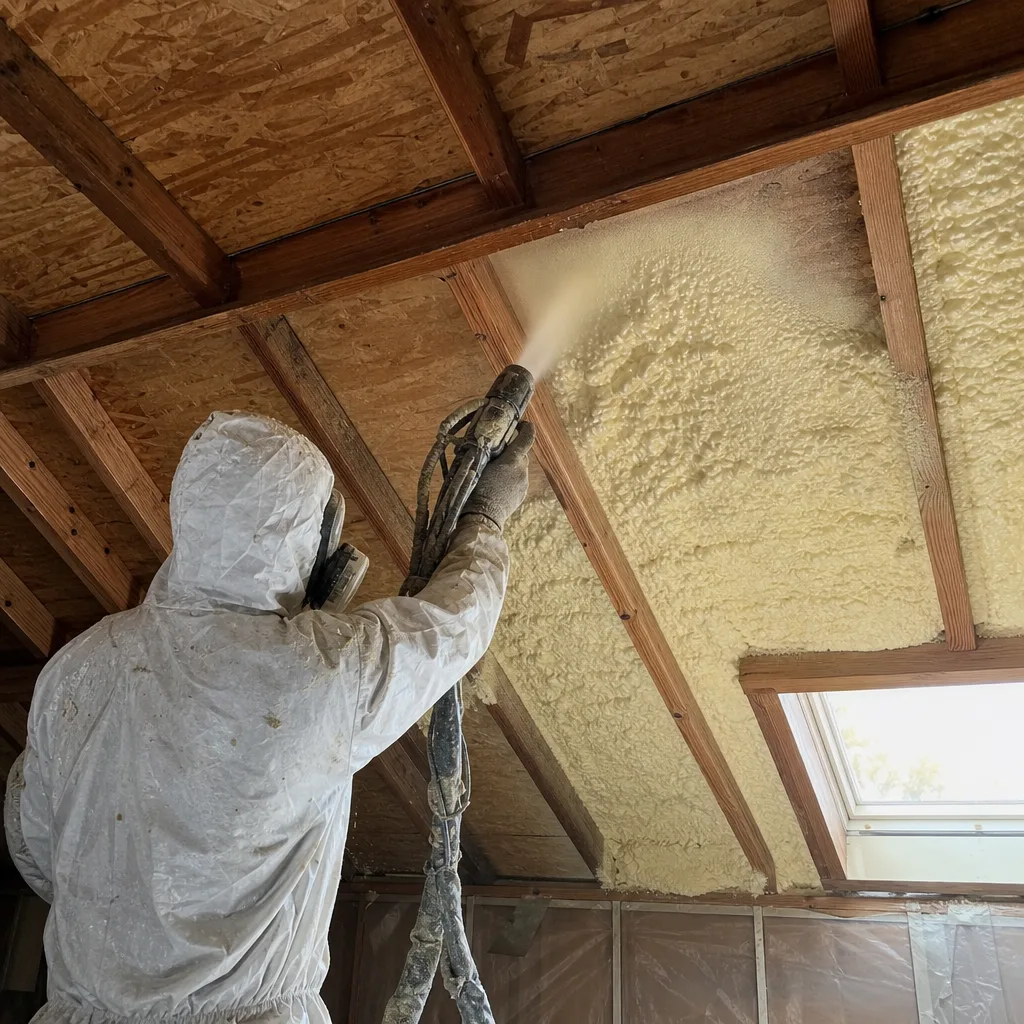
Blown-In Fiberglass
Fiberglass works well in East Palo Alto homes where the attic is already dry and the crawl space has been encapsulated. We use Knauf and CertainTeed loose-fill fiberglass for customers who want a lighter material with faster settling recovery. It’s not our default for Bay-adjacent homes with active moisture paths, but in the higher blocks near Woodland Avenue where drainage is better and the marine layer lifts earlier, fiberglass can be the right choice. We test with a moisture meter before we spec it. If the attic reads damp, we pivot to cellulose or we scope in encapsulation first.
Dense-Pack Wall Insulation
East Palo Alto’s postwar wood-frame homes were built with empty wall cavities or thin batts that have collapsed after seventy years. Dense-packing those walls with cellulose at 3.5 pounds per cubic foot fills the cavity completely and slows air movement through the envelope. But we never dense-pack without first sealing the stud bays. These homes have legacy penetrations for knob-and-tube retrofits, abandoned plumbing vents, and open top plates that connect directly to the attic. If we blow without sealing, the cellulose settles unevenly and leaves thermal gaps at the roofline. Our crew uses infrared imaging to verify fill completeness, and we give you the photos.
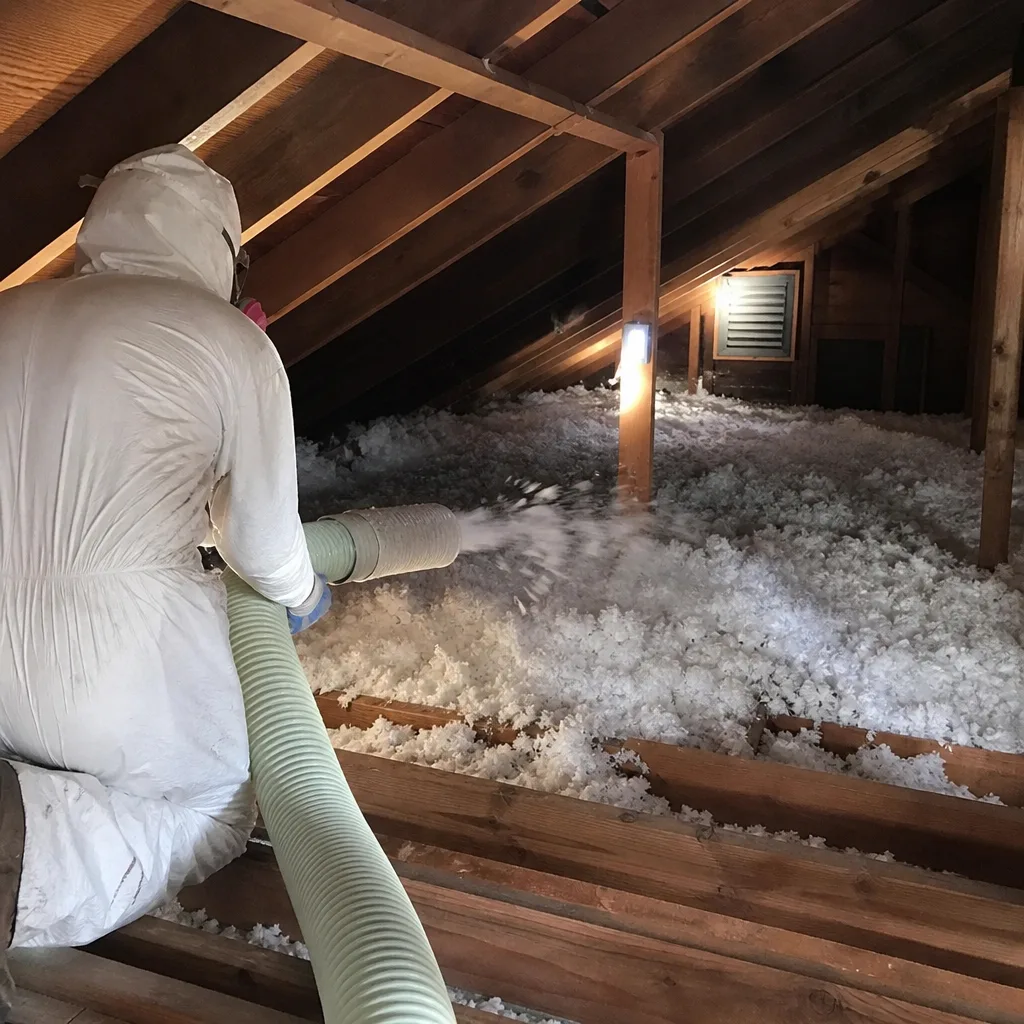
Blown-In Top-Up
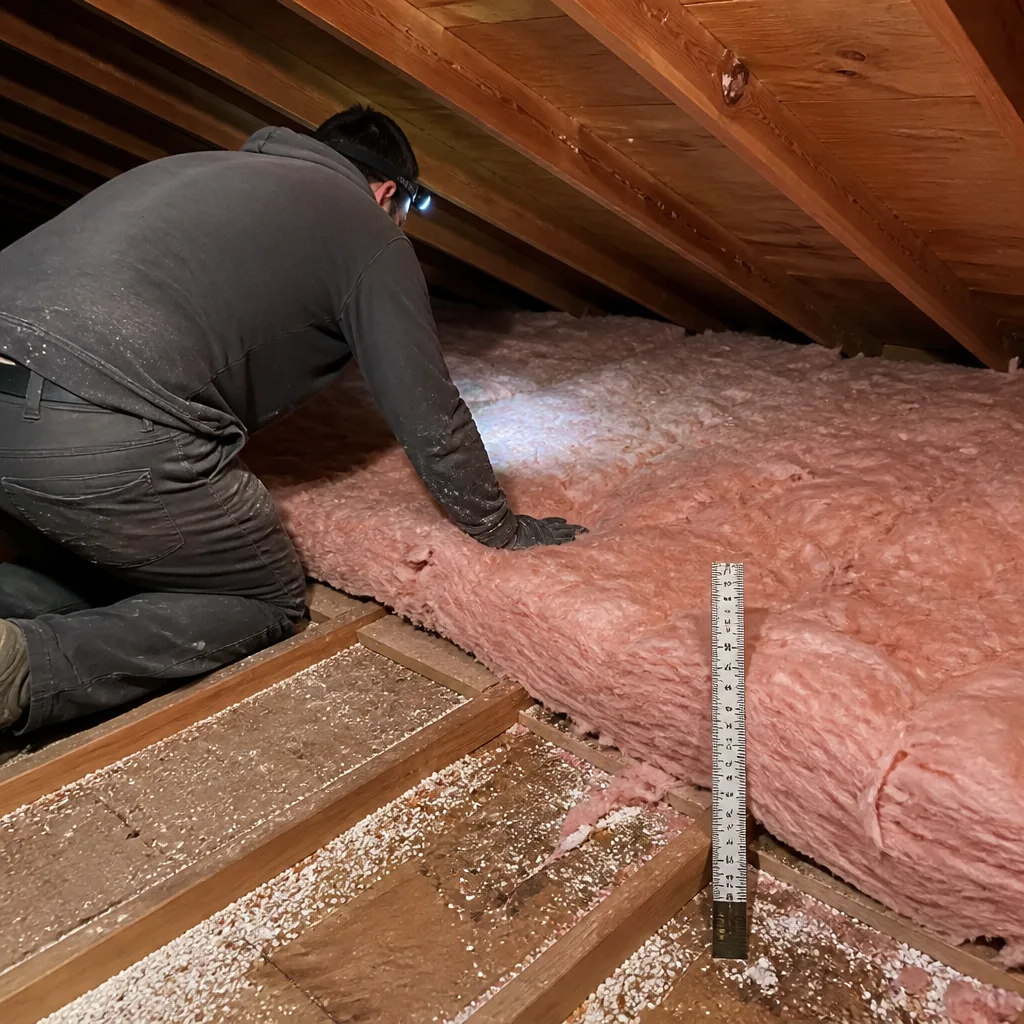
Top-ups are the most commonly requested blown-in service in East Palo Alto, and the most commonly botched. Homeowners call because their attic looks thin, and contractors blow new material over the old without inspecting what’s underneath. In East Palo Alto, that old material is often original fiberglass batts that have absorbed Bay-driven humidity and been disturbed by rodents. Blowing over them traps the moisture layer and can accelerate subfloor rot. Our protocol: inspect and photograph the existing insulation, remove compromised batts if needed, seal the attic floor, then blow fresh material to the R-value target. The homeowner gets the photo record and the blower-door delta. That’s Haven Standard.
What happens when you call
- 1
A real person answersNo phone trees - you reach a local pro.
- 2
You get an upfront price rangeHonest numbers before anyone is dispatched.
- 3
A background-checked tech heads outLicensed & insured, dispatched right away.
- 4
You approve before work beginsNothing starts until you say go.
Trusted Brands We Service in East Palo Alto
We stock blown-in materials from Johns Manville, Knauf, and CertainTeed for East Palo Alto jobs, with no proprietary lock-in that limits your options. Johns Manville fiberglass is our go-to for dry attics in the better-drained parts of town. Knauf loose-fill works across a range of density targets. CertainTeed’s cellulose line sees heavy use in our dense-pack wall jobs because it feeds cleanly through our hose rigs and packs to spec without excessive dust. We carry enough inventory at our Bay Area warehouse to avoid supply delays on standard jobs, and we source Rockwool for customers who need mineral wool’s fire resistance or moisture tolerance. Every bag is labeled, every lot is tracked, and you see the material spec in your written scope.
Common Blown-In Insulation Problems We See in East Palo Alto Homes
- Moisture-trapped original batts. In the 1940s-1960s homes that dominate East Palo Alto’s residential core, original fiberglass batts have sagged into joist bays and absorbed decades of marine-layer humidity. A simple top-up buries that damp layer, which can rot roof sheathing and breed mold. We remove compromised batts before we blow.
- Bay-driven crawl space vapor paths. East Palo Alto’s position directly adjacent to San Francisco Bay means measurably higher ambient humidity than Palo Alto across Highway 101. In lower-lying blocks near Ravenswood, we’ve found crawl spaces with sodden vapor barriers, rotted rim joists, and subfloor sheathing showing visible mold. Blown attic insulation installed over this condition pulls vapor upward instead of stopping it.
- Uneven dense-pack in unsealed wall cavities. The minimal-standard wood-frame construction in these tract homes includes open stud bays, legacy penetrations, and top plates that weren’t designed to hold insulation. Dense-packing without air sealing first lets cellulose settle and leave gaps at the roofline, exactly where heat loss is worst.
- Title 24 compliance gaps in retrofits. California’s Title 24 energy code applies to alterations and additions, and East Palo Alto’s accelerating renovation activity means more homeowners hit trigger points they didn’t expect. We document R-values and air-sealing performance so your permit package has the thermal compliance data it needs.
Pricing for Blown-In Insulation in East Palo Alto, CA
Here’s what blown-in insulation costs in East Palo Alto’s current market:
| Service | Typical Range |
|---|---|
| Attic blown-in cellulose or fiberglass (1,000-1,500 sq ft) | $2,800-$4,800 |
| Attic blown-in with full removal of old batts | $3,800-$6,200 |
| Dense-pack wall insulation (per 1,000 sq ft of wall) | $4,200-$7,500 |
| Blown-in top-up over existing insulation | $1,800-$3,400 |
| Crawl space encapsulation (required on many East Palo Alto jobs) | $3,500-$8,000 |
These ranges reflect East Palo Alto’s housing stock: smaller footprints than newer Silicon Valley construction, but more prep work due to age and moisture conditions. Jobs in the Ravenswood area frequently require crawl-space encapsulation before attic work, which adds cost but prevents the mold recurrence that cheaper bids ignore. Every job gets a written price before work starts, no exceptions. We also offer a Free Second Opinion on any written estimate from another contractor. Bring us their scope; we’ll read it with you. Call (669) 259-0406 to schedule.
We Also Serve Cities Near East Palo Alto
Our crews run daily routes through East Palo Alto and the surrounding Peninsula communities. We also work in Mountain View, Los Altos, Sunnyvale, and Palo Alto. If you’re on the border between cities, we’ll price from the nearest active crew location. Our Blown-In Insulation hub page has full service details for homeowners comparing options across the Bay Area.
Serving East Palo Alto, CA - Our Local Coverage Area
We’re based in the East Palo Alto area and know this community well. Use the map below to see our service coverage - if you’re nearby, we can almost certainly help.
FAQs - Blown-In Insulation in East Palo Alto
No, and any contractor who offers to without inspection is skipping a step that will cost you later. In East Palo Alto’s 1950s tract homes, those original batts have usually absorbed Bay-driven moisture and been disturbed by rodents. Blowing over them traps that damp layer against your ceiling drywall and roof sheathing. Our protocol is inspect, photograph, remove compromised material, seal the attic floor, then blow fresh insulation. Call (669) 259-0406 for a written price on the full scope.
Because East Palo Alto’s 1940s-1960s tract homes sit directly on the Bay under a persistent marine layer, blown-in bids here routinely become two-part jobs - crawl-space moisture control first, attic or wall dense-pack second. In lower-lying blocks near Ravenswood, we regularly find active Bay moisture intrusion: sodden vapor barriers, rotted rim joists, subfloor sheathing with visible mold. Encapsulation stops the vapor path. Without it, attic insulation pulls that moisture upward and can accelerate mold growth. This sequencing is specific to East Palo Alto’s geography; drier mid-Peninsula cities like Palo Alto or Menlo Park rarely require it. Call (669) 259-0406 and we’ll scope what’s actually needed.
Yes, but only with proper air sealing first. These homes have open stud bays, legacy penetrations from old electrical and plumbing work, and top plates that connect directly to unconditioned attic space. We seal every penetration with foam, install blocking where needed, then dense-pack at 3.5 pounds per cubic foot. The result is a filled cavity without the settlement gaps that cause thermal bypass at the roofline. We verify with infrared imaging and include the photos in your documented record.
We stock Johns Manville, Knauf, and CertainTeed blown-in materials, with GreenFiber cellulose for moisture-tolerant applications and Rockwool where fire resistance or mineral wool performance is specified. No proprietary lock-in. The brand we spec depends on your home’s moisture profile, your thermal target, and what’s available without delay. You see the exact material and R-value in your written scope before anyone starts.
Yes, if your project triggers Title 24 alteration requirements - common in East Palo Alto right now because of the renovation activity driven by surrounding Silicon Valley development pressure. Title 24 mandates minimum insulation R-values and verified air-sealing performance for certain alterations and additions. We document blower-door readings and insulation depths so your permit package has the compliance data it needs. If you’re not sure whether your project triggers Title 24, bring us your permit scope and we’ll read it with you. Estimates are free.
Written by Wes Okafor, Owner at Topside Attic Insulation Mountain View, serving East Palo Alto since 2016.