
CertainTeed Attic Insulation: The Mountain View Owner’s Guide
We stock and install CertainTeed-compatible blown-in fiberglass and batts for Mountain View attics, with most complete attic jobs running $2,800-$5,400 depending on square footage and whether the attic floor needs air sealing first. Same-day installation is available when the attic is accessible and prepped. Most Mountain View homeowners discover their CertainTeed insulation is failing when they notice hot second-floor rooms in July despite the AC running nonstop, or when they pull down the attic ladder and find batts compressed to half their labeled thickness by decades of storage traffic and rodent nesting.
Which CertainTeed Models This Applies To
CertainTeed’s attic insulation line breaks into three families you’ll find in Mountain View homes built from the 1970s through the mid-2010s: InsulSafe SP (blown-in fiberglass, the pink stuff), OPTIMA (higher-density blown-in for 2×10 or deeper cavities), and SpeedyR (batts and rolls, common in tract homes with kneewall attics). The product code is printed on the paper facing of batts or stamped on the bag label of blown-in material, usually starting with a two-letter series code followed by an R-value number.
Here’s the compatibility gotcha we run into regularly in Rex Manor and the Monta Loma neighborhood: InsulSafe SP and OPTIMA are not interchangeable in the same cavity depth. OPTIMA achieves its R-49 rating in a 14-inch depth; InsulSafe SP needs closer to 16 inches for the same thermal resistance. If your existing insulation is compacted below 12 inches, you’re not getting the R-value on the label regardless of what was originally installed. We also see homeowners mix blown-in fiberglass with cellulose, which violates both manufacturers’ warranties and creates friction settling at the interface.
Topside Attic Insulation Mountain View is an independent service provider, not affiliated with CertainTeed. We source CertainTeed materials through authorized distribution, but we also stock Johns Manville, Knauf, and Owens Corning equivalents when the project spec or availability calls for it. No proprietary lock-in.
Signs Your CertainTeed Attic Insulation Is Failing
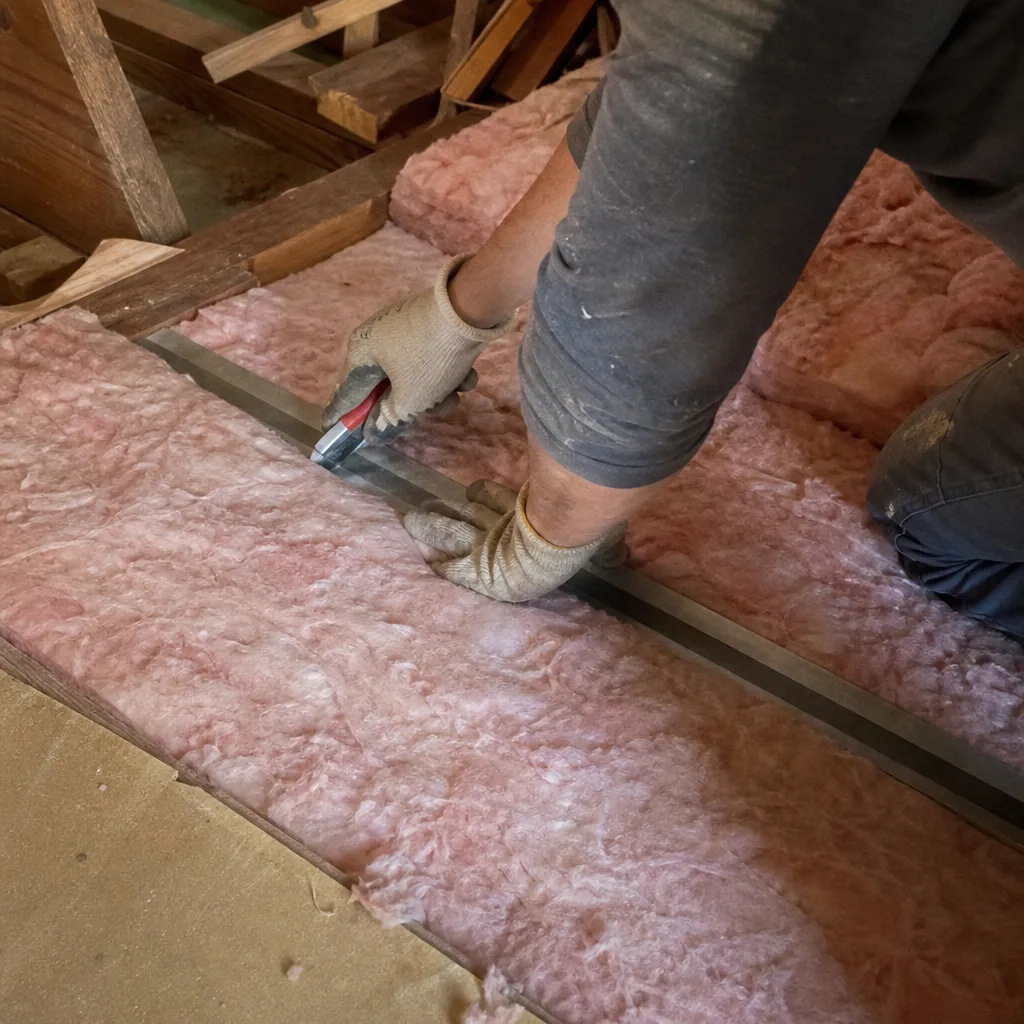
- Uneven temperatures between rooms on the same floor. This usually means the insulation has shifted or settled, creating thermal bypasses. In Mountain View’s older Eichler and ranch-style homes with flat or low-slope roofs, we find blown-in fiberglass has migrated toward the eaves, leaving the center of the attic nearly bare.
- Ice damming or persistent moisture stains on ceiling drywall. When CertainTeed batts are compressed against the underside of the roof deck, they lose loft and R-value while trapping humidity. The Santa Clara Valley’s mild winters still produce enough temperature differential for condensation when attic ventilation is choked by insulation blocking soffit vents.
- Energy bills climbing year over year with no rate change. Fiberglass doesn’t degrade chemically, but it does compact. A 1980s InsulSafe installation originally rated at R-30 may perform at R-15 or lower once it’s been walked on, burrowed through by roofers, or saturated with dust.
- Visible gaps around light fixtures, chimneys, or top plates. The insulation itself may be intact, but air sealing was skipped at installation. Conditioned air leaks around the insulation, rendering it a filter rather than a thermal barrier. We see this constantly in Monta Loma additions from the 1990s.
- Rodent droppings, nesting material, or urine stains in the insulation. Once contaminated, fiberglass batts cannot be sanitized effectively. The material must be removed, the attic cleaned and sealed, then replaced. This is a health issue, not a performance issue.
Replacement Cost & What’s Included
Most complete CertainTeed attic insulation replacements in Mountain View run $2,800-$5,400 for a 1,200-2,400 square foot home. The lower end applies when we’re adding blown-in fiberglass over intact existing material in a well-sealed attic. The upper end includes insulation removal, attic cleaning, comprehensive air sealing of top plates and penetrations, and new OPTIMA or InsulSafe SP to current Title 24 standards.
What drives the range: attic accessibility (scuttle vs. pull-down stairs vs. no access at all), whether the existing material is contaminated, and whether the roof deck shows moisture damage that needs addressing first. We don’t blow new insulation over wet or moldy substrate. That’s not a upsell; it’s a sequencing requirement.
Every job closes with a Documented Photo Record and, on air-sealing jobs, before-and-after blower-door numbers. Under Haven Standard Clause 1, you get a written price, written scope, and written warranty before anyone lifts a tool. The 365-Day Done Right Promise covers all completed work.
DIY or Call Us?
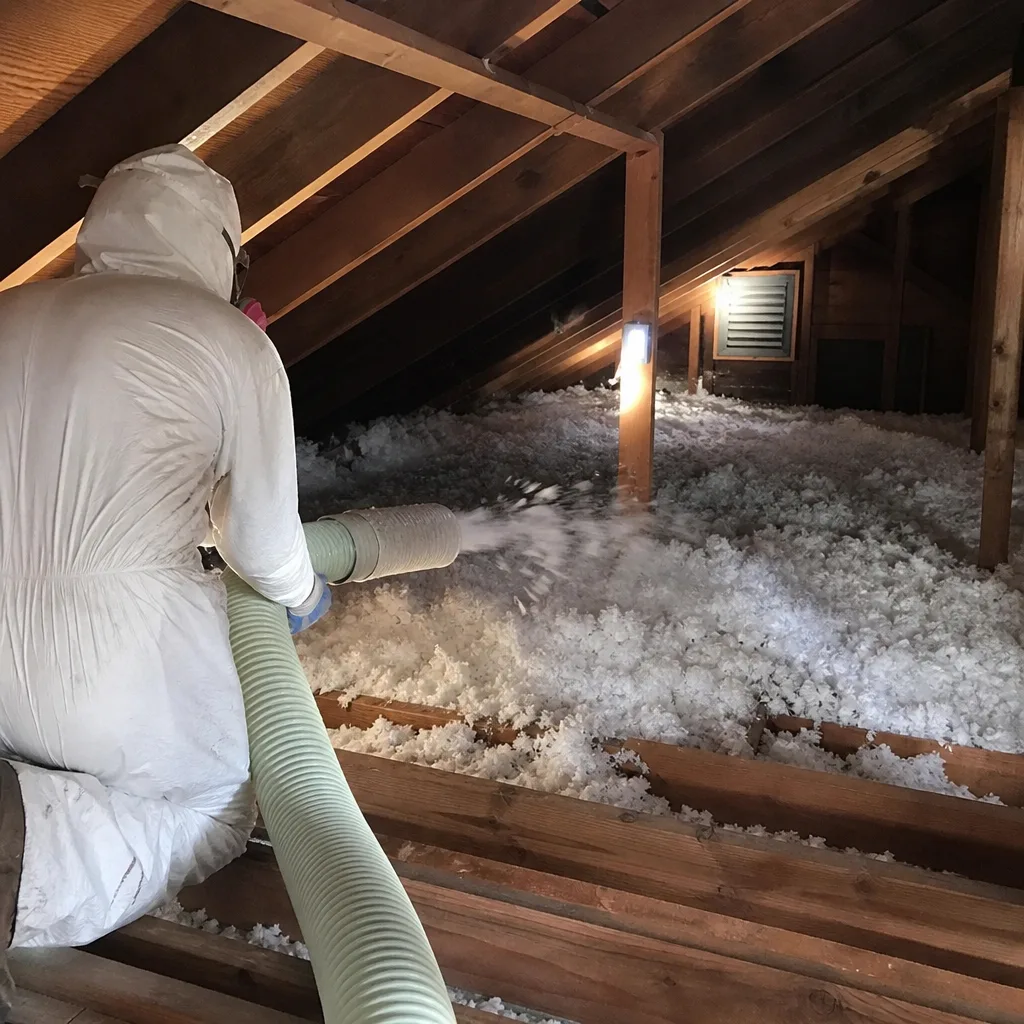
There’s no high-tension danger here like a garage door spring, but attic work has its own hazards. Homeowners can safely check: attic access point location, approximate insulation depth with a ruler, visible gaps around fixtures, and whether soffit vents are blocked. Take photos. That’s useful information for any contractor.
Where DIY goes wrong: disturbing vermiculite insulation (possible asbestos, pre-1990 homes), stepping through ceiling drywall, working near energized knob-and-tube wiring still present in some Mountain View bungalows, and compressing batts while installing them. Blown-in fiberglass requires a hopper and proper PPE; without it, you’re breathing glass fibers and distributing material unevenly.
We carry CertainTeed-compatible materials on the truck for most standard jobs. Call (669) 259-0406 for a free estimate and we’ll read your attic with you, photo by photo.
FAQs
Blown-in fiberglass can maintain its labeled R-value for 80-100 years if left undisturbed, but “undisturbed” is the rare attic. In practice, we find Mountain View insulation performing below spec after 15-25 years due to compaction, moisture cycling, and rodent activity. The mild climate reduces thermal shock compared to the Midwest, but it doesn’t prevent settling or contamination. Call (669) 259-0406 for a free estimate - we’ll measure what you actually have.
Spot repair works only when the existing material is clean, dry, and uncompressed. We can add blown-in fiberglass to achieve uniform depth in isolated areas. If the original batts are contaminated, compacted, or mixed with cellulose, partial repair creates thermal bridges and voids warranty coverage. Most Mountain View jobs we quote end up as removal-and-replace because the existing material fails one of those three tests. Call (669) 259-0406 for an exact scope - estimates are free.
Most residential jobs in Mountain View finish in one day: morning for removal and air sealing, afternoon for installation and cleanup. Two days when we find moisture damage, active rodent entry points that need exclusion work, or when the attic is packed with stored items that need clearing first. We don’t rush the air sealing. Seal the leaks first. The insulation has nowhere to go if the air does.
We stock InsulSafe SP and OPTIMA-equivalent blown-in fiberglass on our Mountain View trucks for same-day installation on standard jobs. Batts and specialized products like CertainTeed’s MemBrain smart vapor retarder typically require a one-day pull from San Jose distribution. We also stock Johns Manville, Knauf, Owens Corning, and Rockwool equivalents when availability or project specs call for them. Call (669) 259-0406 to confirm stock for your specific job.
Written by Wes Okafor, Owner & Lead Insulation Technician, Topside Attic Insulation Mountain View at Topside Attic Insulation Mountain View, serving Mountain View and nearby areas.