
Demilec Vapor Barrier Installation: The Mountain View Owner’s Guide
Demilec vapor barrier installation in Mountain View typically runs $1,800-$3,400 for a standard crawl space or attic application, and we stock Demilec-compatible membrane on every truck for same-day starts. Most homeowners realize something’s wrong when their crawl space starts smelling musty in February or their hardwood floors cup at the edges during the first hot week in June. That’s usually a failed or missing vapor barrier letting ground moisture migrate straight up through the floor assembly.
Which Demilec Models This Applies To
Demilec doesn’t sell vapor barriers as standalone branded SKUs the way they market their spray foam systems. What Mountain View homeowners are actually looking for is Demilec-compatible polyethylene or reinforced membrane installed in conjunction with, or adjacent to, Demilec spray foam work - typically in crawl spaces where Demilec Heatlok HFO or Demilec SEALECTION 500 was applied to rim joists or subfloor decking. The compatibility question is membrane thickness and permeance rating, not a model number match.
We see this most often in homes off Central Expressway and in the Rex Manor neighborhood, where 1950s-1970s ranch crawl spaces got partial Demilec foam treatment on the rim joists but never got a proper ground vapor barrier. The foam is doing its job; the dirt floor underneath is still evaporating 10-15 gallons of water per day into the space. What we install is 10-mil or 15-mil reinforced polyethylene, seam-taped and mechanically fastened, with a perm rating below 0.1 - that’s the spec that actually blocks vapor migration, not the thin 6-mil sheeting you’ll find at hardware stores.
OEM in this context means virgin resin polyethylene meeting ASTM E1745 Class A standards. The aftermarket equivalent we stock is the same material sourced through Johns Manville and CertainTeed distribution; the difference is warranty documentation, not membrane performance. We don’t use recycled-content sheeting in Mountain View crawl spaces - the calcium carbonate filler breaks down faster in our clay-heavy soils, especially in the Whisman Station area where groundwater sits high.
Signs Your Demilec Vapor Barrier Installation Is Failing
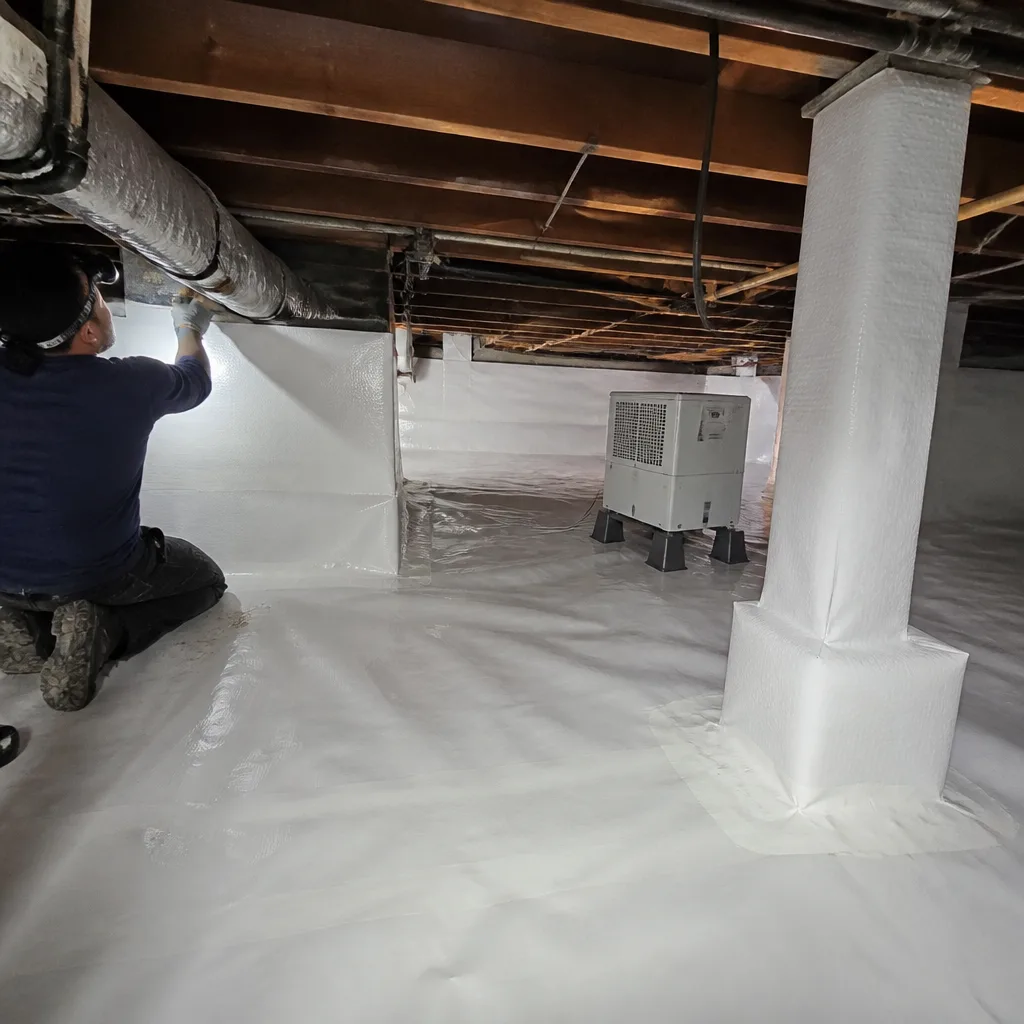
- Musty odors that worsen after rain. Mountain View’s winter rains saturate the clay soils in Old Mountain View and the Monta Loma neighborhood; without a proper barrier, that moisture evaporates upward and gets trapped by floor insulation. The smell is mold metabolites, and it means your indoor air is pulling from the crawl space through the stack effect.
- Cupping hardwood or laminate floors. Wood absorbs moisture from below faster than it releases it above. We measured 78% relative humidity in a Rex Manor crawl last March where the homeowner’s original 4-mil barrier had shredded against foundation bolts - the oak floors above were reading 14% moisture content, three points over acceptable.
- Insulation sagging or falling from floor joists. Fiberglass batts lose R-value when they absorb moisture and compress. In a properly sealed crawl with a functioning vapor barrier, insulation stays dry and in place. If yours is hanging like wet laundry, the barrier failed first and the insulation is now a mold vector.
- White efflorescence on foundation walls. That’s mineral salts left behind when water evaporates through concrete. It means vapor is moving through the assembly, and your barrier either has gaps, tears, or was never extended up the walls to grade level as it should have been.
- Higher summer cooling bills with no equipment change. A damp crawl space adds latent load - your AC works harder to dehumidify air that’s picking up moisture from below. We’ve seen blower-door numbers shift by 300-400 CFM50 just from sealing a crawl space properly, because the house stops pulling that damp air through the floor gaps.
Replacement Cost & What’s Included
| Scope | Typical Range in Mountain View |
|---|---|
| Standard crawl space (800-1,200 sq ft), 10-mil barrier, ground only | $1,800-$2,600 |
| Extended scope: barrier up foundation walls to grade, seam-taped, sealed to piers | $2,400-$3,400 |
| Attic vapor barrier (knee wall or vaulted ceiling application) | $2,200-$3,800 |
What drives the range: accessibility (crawl height, debris removal, active rodent damage), whether we need to remove and dispose of failed existing material, and whether the job includes perimeter sealing to the walls. Every quote is a written price before any work starts - Haven Standard Clause 1 - and includes the Documented Photo Record showing pre-condition, installed membrane with seam detail, and final coverage. The 365-Day Done Right Promise covers workmanship and material defect. We don’t charge separately for the blower-door test when it’s bundled with air-sealing work above; if we’re only doing vapor barrier, we’ll still run a basic pressure test to confirm the floor assembly isn’t pulling excessive crawl air.
DIY or Call Us?
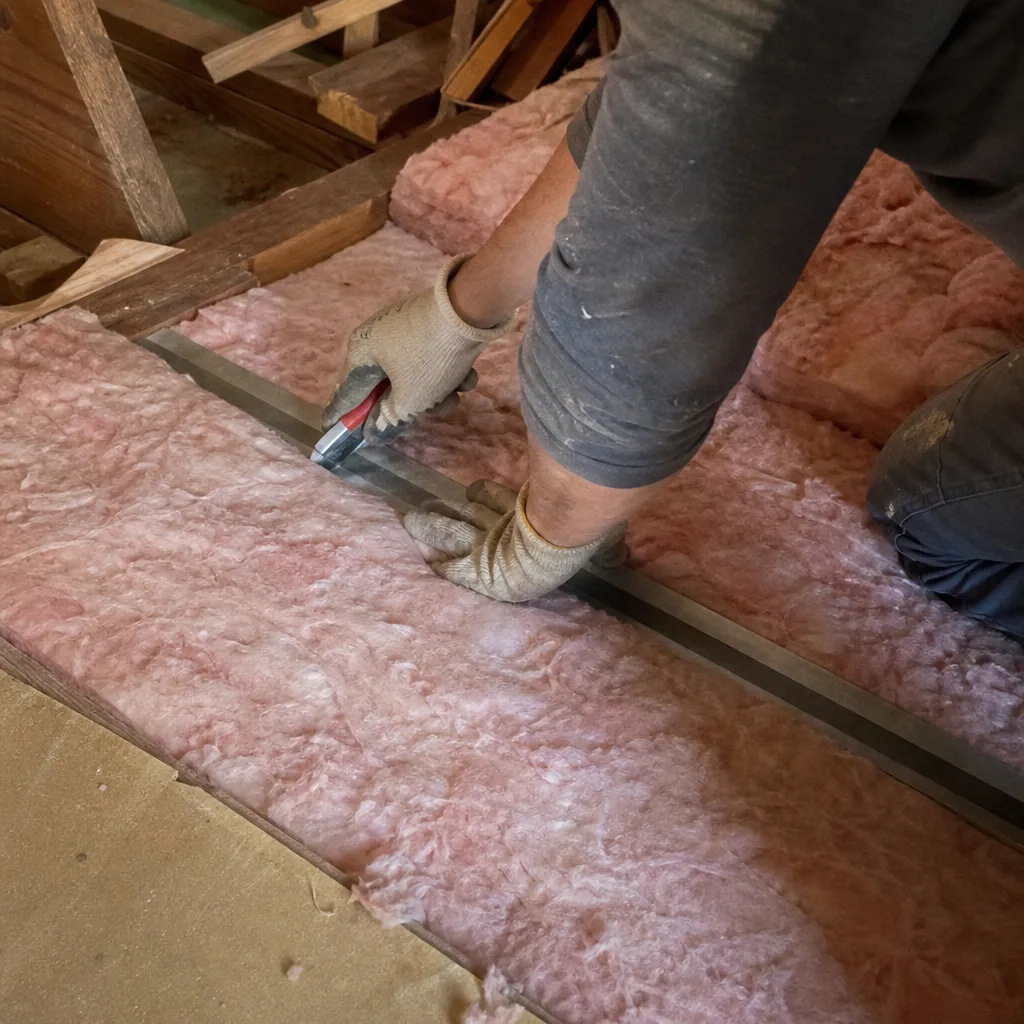
What you can safely check: crawl down with a flashlight and look for tears, standing water, or barrier edges that have pulled away from walls. Measure the thickness with a caliper if you can - 6-mil sheeting feels like a heavy grocery bag; 10-mil feels like a contractor trash bag. If you find 6-mil or less, it was never adequate for Mountain View’s soil conditions.
Where DIY goes wrong: cutting around piers and plumbing without overlapping seams properly, failing to seal the perimeter to the wall (tape won’t stick to dirty concrete), and using non-reinforced material that tears on the first service call. More critically, if your crawl space has knob-and-tube wiring or a gas water heater with atmospheric venting, disturbing the space without knowing what you’re looking at is a genuine safety issue. We background-check and uniform our technicians for a reason - they’ve been trained to spot what shouldn’t be there.
Seal the leaks first. The insulation has nowhere to go if the air does. Call (669) 259-0406 for a written price and a free second opinion on any estimate you’ve already received.
FAQs
Properly installed 10-mil or 15-mil reinforced polyethylene lasts 15-20 years in Mountain View’s climate, though we’ve replaced barriers after 8 years in homes near Permanente Creek where seasonal groundwater is aggressive. The failure mode is almost always mechanical damage during service work, not material degradation. Call (669) 259-0406 for an exact quote - estimates are free.
Patching works for isolated punctures smaller than a fist using compatible polyethylene tape, but widespread tearing, thinning, or perimeter separation means full replacement. We’ve seen too many “patched” barriers in the Monta Loma neighborhood that were really just a dozen taped holes letting moisture through at every seam. Call (669) 259-0406 for an exact quote - estimates are free.
Most crawl spaces in Mountain View take one day for a two-person crew; larger or debris-filled spaces may run into a second day. We don’t start work without a written price, and we don’t leave without the Documented Photo Record. Call (669) 259-0406 to schedule.
Yes - 10-mil and 15-mil reinforced polyethylene, seam tape, mechanical fasteners, and wall-seal mastic. We’re an independent service provider, not affiliated with Demilec, but we source membrane that meets the same ASTM specs used in Demilec-certified installations. Same-day starts are available for most Mountain View addresses when you call (669) 259-0406 by noon.
Written by Wes Okafor, Owner & Lead Insulation Technician, Topside Attic Insulation Mountain View at Topside Attic Insulation Mountain View, serving Mountain View and nearby areas.