
GreenFiber Attic Air Sealing: The Mountain View Owner’s Guide
GreenFiber attic air sealing in Mountain View typically runs $1,800-$3,400 for a complete seal of top plates, penetrations, and the attic floor plane, with most jobs finished in a single day. We stock GreenFiber-compatible sealants, fire-rated caulk, and rigid foam blocking on every truck, and we can usually schedule within 48 hours. Most Mountain View homeowners figure out something’s wrong when their upstairs rooms won’t cool below 78°F in July despite the AC running nonstop, or when they spot dusty insulation streaks near recessed lights - signs that conditioned air is escaping through gaps the original builder never closed.
Which GreenFiber Models This Applies To
GreenFiber doesn’t manufacture a dedicated “air sealing system” the way they sell blown-in cellulose insulation by the bag. What we’re talking about is the air sealing work that must precede any GreenFiber insulation installation - or the repair of that sealing layer when it fails. If your attic has GreenFiber cellulose already in place, the critical components are the sealant at top plates (the horizontal framing member where interior walls meet the ceiling), the fire-rated caulk around electrical penetrations, the rigid foam baffles at can lights, and the weatherstripped attic hatch.
We identify what’s there by pulling back the cellulose at a few test spots and reading what’s on the caulk bead or foam label. GreenFiber installations from 2015-2020 often used Tremco acoustical sealant or 3M Fire Block Foam; after 2020, we see more Owens Corning JointSealR foam tape paired with GreenFiber’s own blown-in product. The OEM-spec approach matches the original sealant chemistry so new and old bond properly. Aftermarket equivalents from DAP or Great Stuff Fireblock work fine structurally, but in Mountain View’s dry summers and mild winters, we’ve found the OEM-spec elastomerics hold their flexibility longer at the plywood-to-drywall joints that expand and contract with daily temperature swings.
Signs Your GreenFiber Attic Air Sealing Is Failing
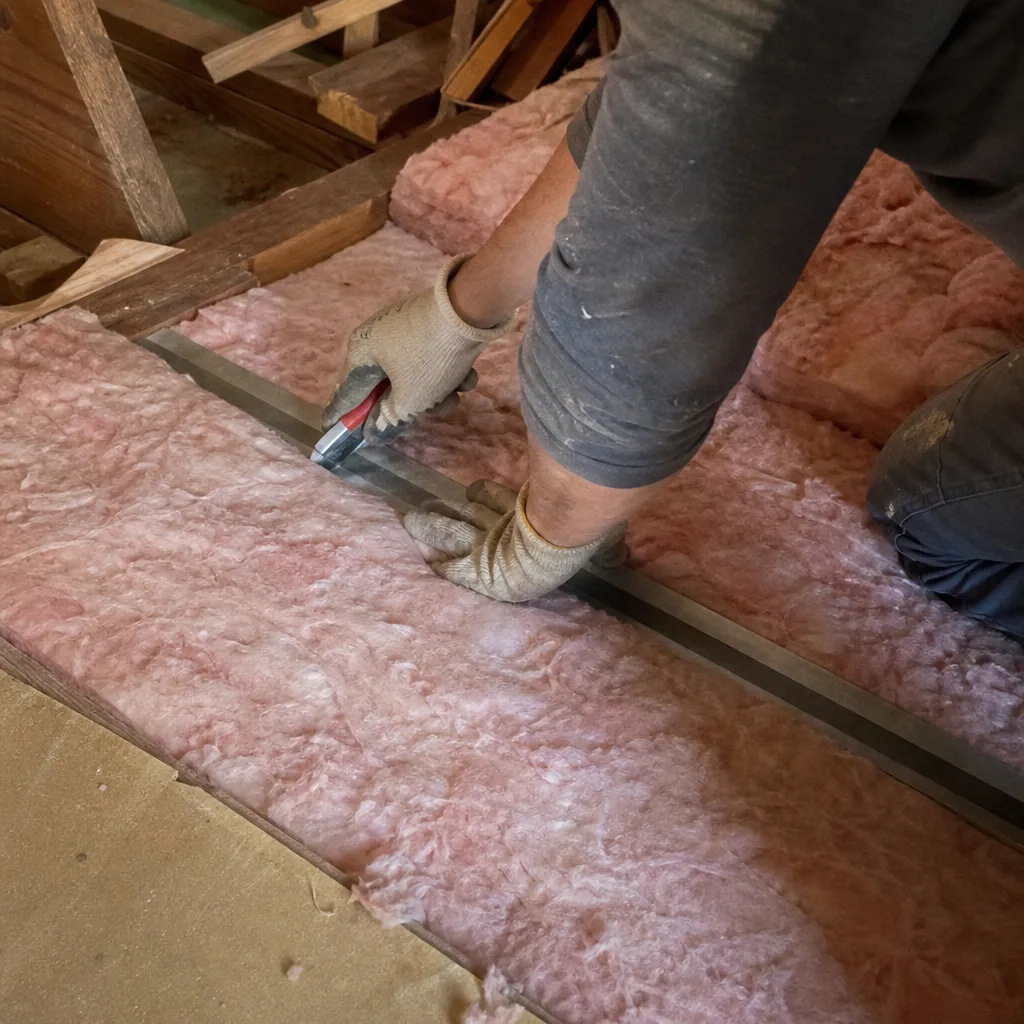
- Hot second-floor rooms in summer, cold ones in winter. Conditioned air is leaking into the attic through unsealed top plates or electrical boxes, forcing your HVAC to oversize its runtime. The blower-door reading climbs, and your PG&E bill follows.
- Dusty streaks or dark lines across insulation surfaces. These are thermal tracking marks - air moving through gaps carries dust that deposits on the cellulose. We see this pattern most often in Mountain View’s Rex Manor and Monta Loma neighborhoods, where 1950s-70s builds had minimal original sealing.
- Drafty rooms below recessed can lights. Unsealed IC-rated housings leak air directly from conditioned space into the attic. The fix is a fire-rated foam cap or preformed rigid enclosure, not more insulation piled on top.
- Ice damming or moisture staining on ceiling drywall. Warm, moist interior air hits cold attic sheathing and condenses. In Mountain View’s occasional winter cold snaps, this shows up as water spots or, in worse cases, mold on the north-facing roof slope.
- Insulation depth looks uneven or settled with visible “holes.” Air moving through gaps disturbs loose-fill cellulose over time, creating low spots. The insulation didn’t walk away; the air current underneath it did.
Replacement Cost & What’s Included
Most complete attic air sealing jobs in Mountain View run $1,800-$3,400, with smaller partial repairs (a few can lights and the attic hatch) starting around $650. The range depends on attic square footage, accessibility (truss height, whether there’s a permanent floor), and how much cellulose we need to temporarily move to access the leaks. We don’t quote by phone without photos or a site visit - but we do provide a written price before any work starts, always, under Haven Standard Clause 1.
What’s in that price: labor to remove and replace existing insulation in work zones, all sealant and foam materials, fire-rated enclosures for penetrations, weatherstripping for the hatch, and the blower-door test before and after. You get the written scope, the warranty, and the photo record when we leave. The 365-Day Done Right Promise covers labor and materials; if a seal fails or we missed a penetration, we come back and fix it.
DIY or Call Us?
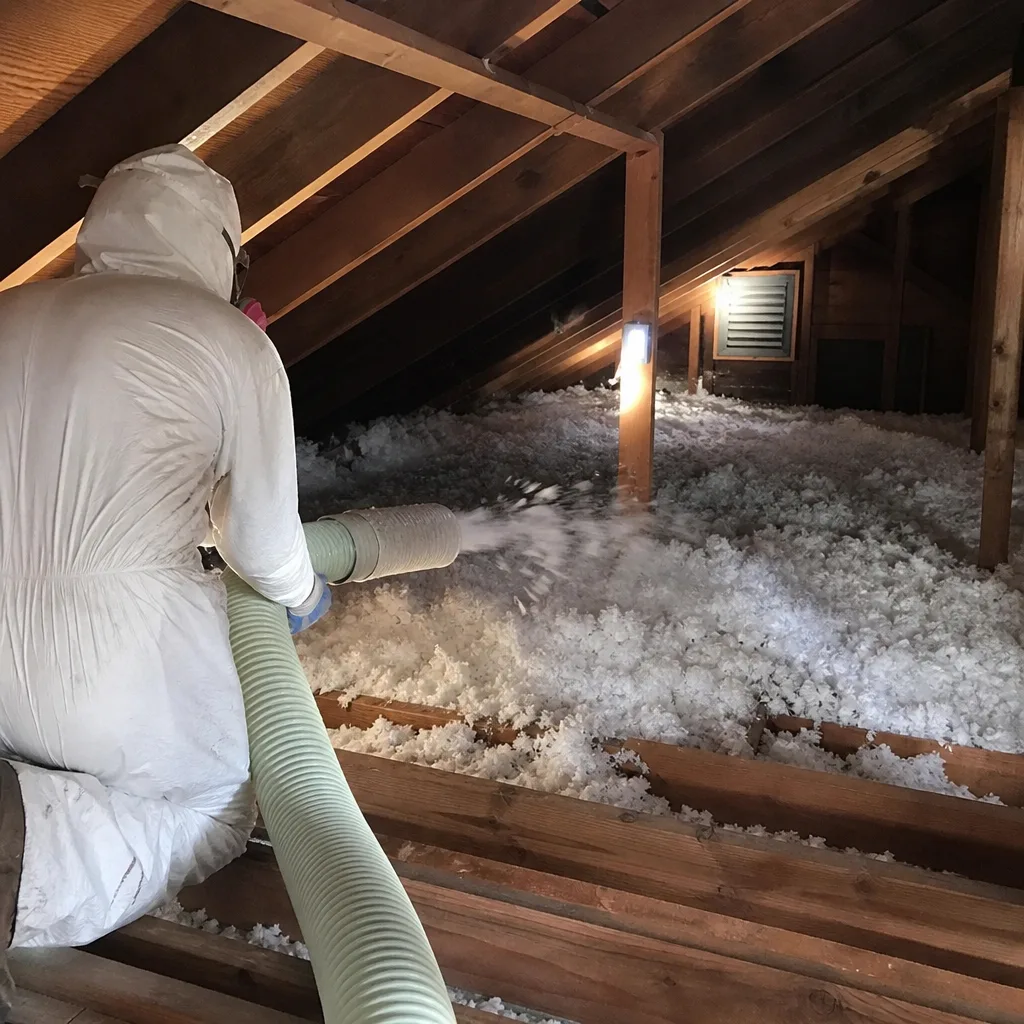
Here’s what you can safely check yourself: turn off the attic lights, close the hatch, and look up from the living space on a sunny day. Pinpoints of daylight around fixtures or the hatch perimeter mark leaks. A smoke pencil or even a stick of incense held near outlets on exterior walls can reveal air movement. Document what you find with photos.
Where DIY goes wrong: working around energized electrical boxes, walking through loose-fill insulation over a drywall ceiling (fall-through risk), and applying fire-rated sealants incorrectly - non-rated foam near a can light is a code violation and a fire hazard. The real failure mode, though, is sealing only what you can see from the hatch and missing the top plates buried under six inches of cellulose. That’s where most of the air leaves. Seal the leaks first. The insulation has nowhere to go if the air does. For a written price and a crew that sequences the work correctly, call (669) 259-0406.
FAQs
Quality air sealing lasts 20-30 years if the attic isn’t disturbed, though we recommend a visual check every 5-7 years. Mountain View’s mild climate means less thermal cycling than inland areas, but the daily expansion and contraction at plywood-to-drywall joints slowly fatigues acrylic caulks - another reason we prefer elastomeric sealants that stay flexible. Call (669) 259-0406 if you’re unsure what was used originally; we can read the label on a test pull.
Spot repair works if the original sealant is still flexible and the leak is isolated to one or two penetrations. Once the caulk has hardened, cracked, or pulled away from the substrate, partial repair is usually false economy - you’ll be back in two years for the section you skipped. We assess this on every job and tell you straight whether spot or full replacement makes sense.
Most Mountain View attics take one full day, with larger or more complex jobs (steep pitches, extensive recessed lighting, rodent damage requiring cleanup first) stretching to two. We arrive with the materials already loaded; no “we’ll come back tomorrow with the right foam” delays. You’ll have the before-and-after blower-door numbers and the photo record before we leave.
Yes - Tremco acoustical sealant, 3M Fire Block Foam, Owens Corning JointSealR tape, and preformed fire-rated can light enclosures are on every truck. We also stock Reflectix baffle materials for jobs where the original installer used radiant-barrier hybrid assemblies. We’re an independent service provider with no affiliation to GreenFiber, so we match the material to what your attic actually needs rather than pushing a proprietary product line.
Written by Wes Okafor, Owner & Lead Insulation Technician, Topside Attic Insulation Mountain View at Topside Attic Insulation Mountain View, serving Mountain View and nearby areas.