
GreenFiber Attic Insulation: The Mountain View Owner’s Guide
GreenFiber blown-in cellulose insulation installed in a typical Mountain View attic runs between $2.80 and $4.20 per square foot, with most single-story homes in the 1,200-1,800 square foot range falling between $3,400 and $6,200 for a complete attic replacement including air sealing. We stock GreenFiber-compatible cellulose on every truck and can usually start the same day you call. Most Mountain View homeowners discover their GreenFiber insulation has failed when they notice hot second-floor rooms in July, find compressed or settled material below the recommended R-38 depth, or spot rodent damage after a rainy winter - the damp Bay Area climate accelerates cellulose degradation when attic ventilation is poor.
Which GreenFiber Models This Applies To
GreenFiber produces loose-fill cellulose under two primary product lines that you’ll find in Mountain View attics: Sanctuary, their standard blown-in insulation rated at R-3.7 per inch, and Low Dust, formulated with a different fiber treatment that reduces airborne particles during installation. The product line is printed on the paper bag remnants usually left in attic corners; if those are gone, we identify it by fiber density and the presence of GreenFiber’s borate fire retardant, which leaves a faint grayish cast distinct from the brighter white of Johns Manville or the denser, darker pack of Owens Corning cellulose.
Here’s the compatibility gotcha we’ve run into in Rex Manor and Old Mountain View homes: GreenFiber Sanctuary installed before 2019 used a slightly coarser fiber cut that packed differently around recessed can lights and top plates. If you’re topping off existing GreenFiber, matching the fiber treatment matters more than matching the brand - borate-treated cellulose plays fine with ammonium sulfate-treated, but the settling rates diverge over time and you end up with uneven thermal layers. We source GreenFiber direct from their West Coast distribution, but we also stock Knauf and CertainTeed cellulose with equivalent R-values and fire ratings when the original spec has been discontinued.
Topside Attic Insulation Mountain View is an independent service provider - we’re not affiliated with GreenFiber or its parent company. We choose materials based on what performs in this specific climate, not on distributor incentives.
Signs Your GreenFiber Attic Insulation Is Failing
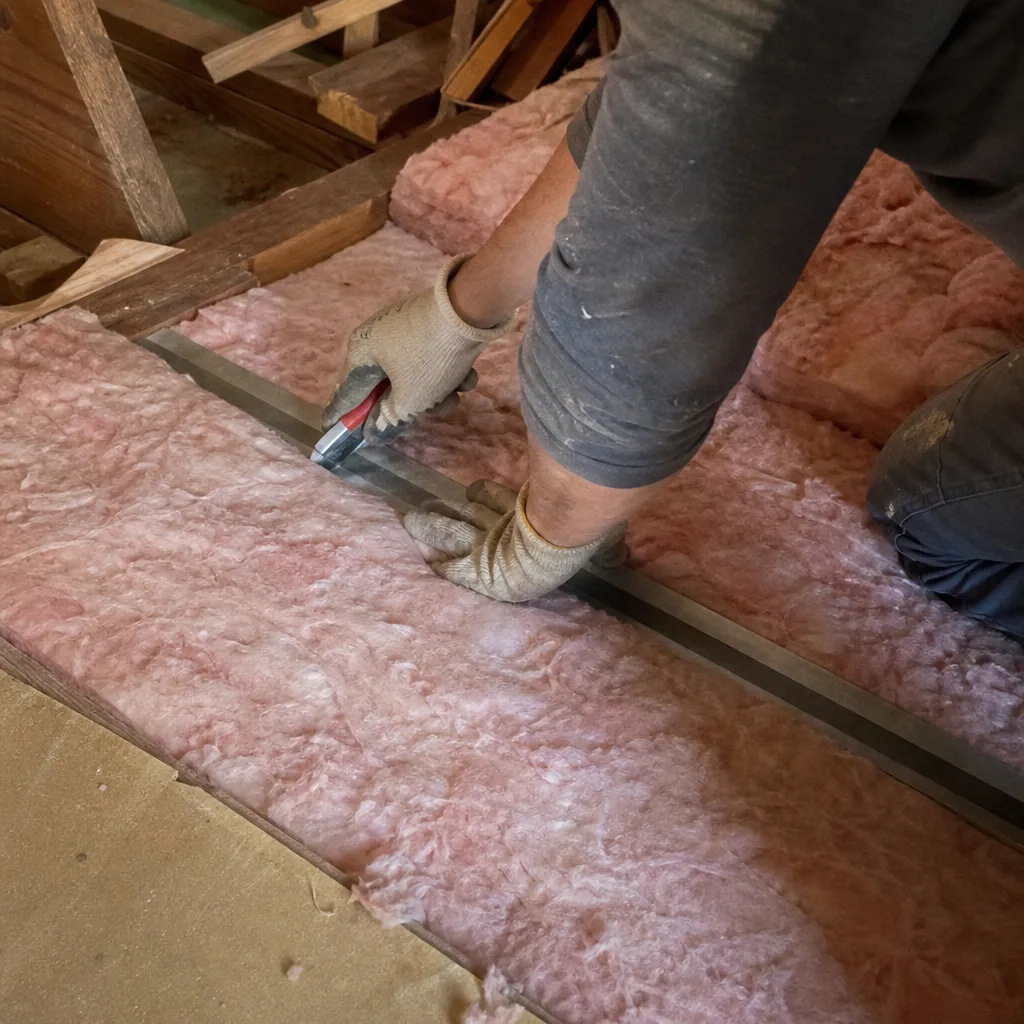
- Uneven temperatures room-to-room. Cellulose that has settled below the joist tops, or shifted away from eaves during prior work, creates thermal bypasses. In Mountain View’s Cuesta Park neighborhood, we regularly find original GreenFiber installations compacted to R-20 equivalent or less after fifteen years of foot traffic from HVAC technicians who never replaced what they disturbed.
- Visible moisture or mold on attic sheathing. GreenFiber’s borate treatment resists mold, but it doesn’t fix ventilation. When bathroom fans vent into the attic instead of through the roof - common in 1960s Mountain View ranch homes - saturated cellulose loses loft and R-value permanently. The material doesn’t bounce back after drying.
- Rodent tunnels and nesting material. Cellulose is attractive to roof rats once they breach the envelope. In the Whisman Station area, we’ve pulled out GreenFiber that had been re-engineered into burrow systems, with the original R-38 compressed to less than R-15 in traveled zones.
- Dust settling through recessed light fixtures. This signals both failed air sealing and degraded insulation. Fine cellulose particles migrate through gaps that were never sealed at installation; the GreenFiber itself may be intact, but the thermal boundary has failed at the penetration.
- Energy bills climbing year-over-year with no rate change. We compare current usage to the same billing period three years prior. When a Mountain View homeowner’s July PG&E bill jumps 30% with no lifestyle change, the attic is the first place we look - and compacted or displaced GreenFiber is usually the culprit.
Replacement Cost & What’s Included
| Scope | Price Range (Mountain View) |
|---|---|
| GreenFiber cellulose removal + disposal | $1.20-$1.80 / sq ft |
| Attic air sealing (top plates, penetrations, can lights) | $800-$1,400 typical |
| GreenFiber Sanctuary blown-in to R-38 | $1.60-$2.40 / sq ft |
| Complete replacement (remove, seal, reinsulate) | $3,400-$6,200 most homes |
What drives the range: attic square footage is straightforward, but access difficulty isn’t. A 1,400 square foot attic with a standard hatch and full headroom runs toward the lower end. The same footprint with a scuttle hole in a closet, engineered trusses that restrict movement, or active rodent issues requiring cleaning before we start - that pushes toward the higher number. Every quote we write breaks out removal, sealing, and insulation as separate line items. You see what each costs before anyone climbs a ladder. Under Haven Standard Clause 1: flat price, written scope, written warranty before anyone lifts a tool.
The 365-Day Done Right Promise covers the installation and the materials. If the GreenFiber settles more than half an inch in year one, or if a penetration we sealed shows leakage on re-test, we return and correct it.
DIY or Call Us?
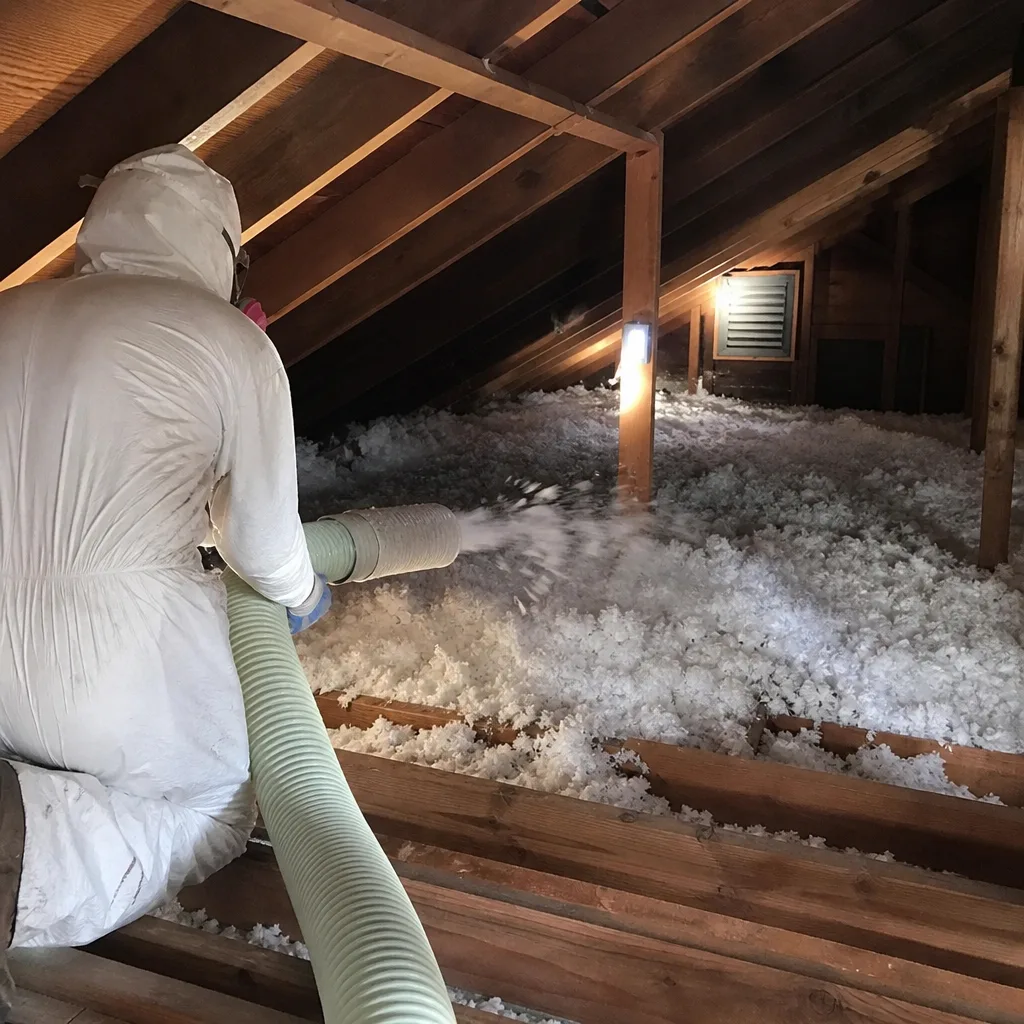
Here’s what you can safely check yourself: measure your current insulation depth with a ruler at three points - center, north eave, south eave. If it’s below 10 inches, you’re under R-38. Look for the GreenFiber bag remnants in corners to confirm what you’ve got. Photograph any moisture, mold, or rodent activity. That’s useful information, and it costs nothing.
Here’s where DIY goes wrong: removing old cellulose without proper respirators and negative-air containment stirs up decades of dust, rodent waste, and degraded fire retardant. Blowing new GreenFiber to consistent depth requires calibrated equipment and someone who knows how to avoid blocking soffit vents - we’ve seen well-meaning homeowners insulate right over their ventilation, creating condensation problems that didn’t exist before. And without a blower-door test, you’re guessing at the air leaks. We don’t guess. We measure, seal, then insulate, then measure again.
Seal the leaks first. The insulation has nowhere to go if the air does.
Call (669) 259-0406 when you’re ready for a written price. Estimates are free, and we stock GreenFiber-compatible cellulose on every truck.
FAQs
Properly installed GreenFiber cellulose lasts 20-30 years, but in Mountain View’s climate the practical lifespan is often 12-18 years before settling and moisture exposure reduce performance below R-38. Attics with poor ventilation or frequent technician traffic compress faster. Call (669) 259-0406 and we’ll measure your current depth - estimates are free.
Top-offs are possible when the existing GreenFiber is dry, uncontaminated, and uniformly settled; we add to reach R-38 and match the fiber treatment. If there’s moisture damage, rodent activity, or incompatible material mixed in, removal and replacement is the only sound approach. We document what we find with photos and explain which path applies before quoting either way. Call (669) 259-0406 for an assessment.
Most Mountain View homes complete in one day: removal in the morning, air sealing through midday, blown-in installation and cleanup by late afternoon. Larger attics or those requiring extensive rodent remediation may extend to a second day. We provide a written schedule with the price, not a vague window. Call (669) 259-0406 to book.
We stock GreenFiber-compatible blown-in cellulose on every truck, along with Knauf and CertainTeed equivalents with matching fire ratings and R-values. For standard R-38 jobs in Mountain View, we typically start within 24-48 hours of your call. Specialty densities or acoustic-rated applications may require a day to pull from distribution. Call (669) 259-0406 to confirm availability for your specific job.
Written by Wes Okafor, Owner & Lead Insulation Technician, Topside Attic Insulation Mountain View at Topside Attic Insulation Mountain View, serving Mountain View and nearby areas.