
GreenFiber Spray Foam Insulation in Mountain View: What to Know First
We provide independent GreenFiber spray foam insulation service in Mountain View, typically scheduling diagnostics within 24 to 48 hours and completing most jobs in a single visit. Our written price arrives before any work starts, and we publish before-and-after blower-door numbers on every applicable job so you can verify the result yourself. This page is for homeowners who already have GreenFiber insulation in their Mountain View home and need spray foam added or corrected, whether that’s open-cell on a roof deck, closed-cell in a crawl space, or rim-joist work in a garage. Call (669) 259-0406 for a free estimate or a second opinion on any written quote you’ve already received.
How GreenFiber Products Fail - and How We Fix Them
- GreenFiber All-Borate cellulose settling in vaulted ceilings - The loose-fill product settles 15 to 20 percent over time in steep-slope applications, creating a thermal bypass at the ridge where spray foam was supposed to meet it. We find this constantly in Mountain View’s 1960s Eichler and ranch-style homes in the Cuesta Park area. Our fix: remove the settled cellulose, air-seal the top plates and electrical penetrations with closed-cell spray foam at the transition zone, then reinstall to proper density with a staged blow that prevents future drop.
- GreenFiber stabilized cellulose moisture uptake in crawl spaces - The borate stabilization resists fire and pests but doesn’t block vapor; in Mountain View’s clay-heavy soils around Rex Manor and Monta Loma, we’ve pulled saturated batts that read 28 percent moisture content on our pin meter. The fix isn’t more cellulose. We strip it, apply closed-cell spray foam to the rim joist and subfloor perimeter as a vapor barrier, then use only moisture-tolerant materials below grade.
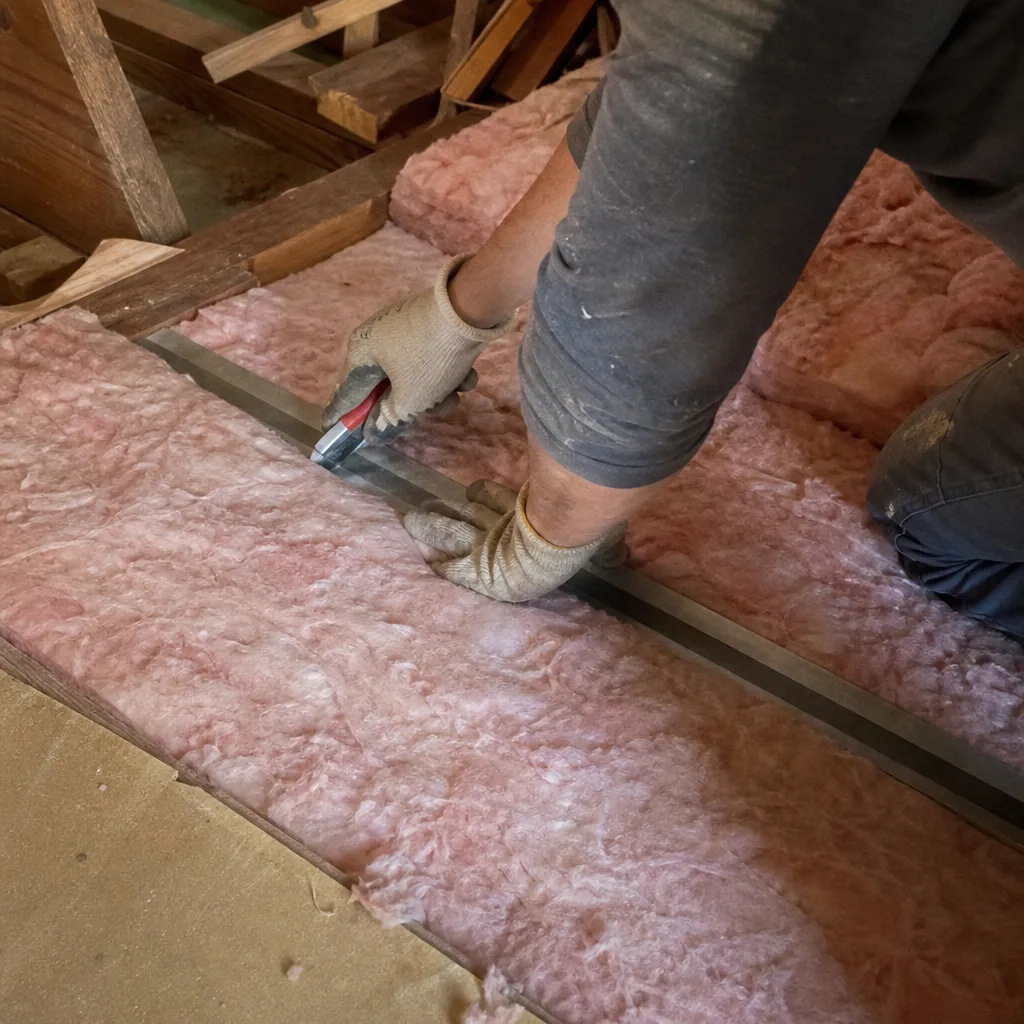
- GreenFiber Sanctuary batt compression in kneewalls - The R-13 and R-19 batts are often stuffed into 2×4 and 2×6 kneewalls by framers who never read the compression chart. A compressed R-19 in a 2×4 cavity performs at R-11 or worse. We remove the compressed batt, seal the kneewall sheathing joints with open-cell spray foam for air tightness, then reinstall the GreenFiber batt at proper thickness or switch to a higher-R spray foam application if the cavity geometry allows.
- GreenFiber low-density spray foam shrinkage at stud bays - The open-cell formulation used in some Mountain View production builds from 2018 to 2022 shrinks 3 to 5 percent as it cures, pulling away from studs and creating convection loops. You see it as dark stripes on thermal imaging in winter. We cut away the shrunken foam, reapply at the manufacturer’s specified pass thickness with proper temperature and humidity control, and verify with a smoke pencil that the gap is gone.
- GreenFiber retrofit jobs where the attic floor was never sealed first - This isn’t a product failure; it’s a sequencing failure we see on almost every GreenFiber retrofit we inherit. Blown cellulose over unsealed top plates, can lights, and plumbing chases just filters air. We vacuum the cellulose to deck, seal every penetration with targeted closed-cell spray foam, run the blower-door test, then reinstall the GreenFiber. The ACH50 number always drops by half or better. Seal the leaks first. The insulation has nowhere to go if the air does.
Our GreenFiber Spray Foam Insulation Process
- 1
Call and scheduling - A live person answers, 24/7. We book a diagnostic window and text you when Wes or a named technician is en route.
- 2
Site diagnostic and blower-door baseline - We pressurize the house to 50 pascals, record the CFM50 and ACH50, and thermal-scan the GreenFiber installation to find bypasses, compression, or shrinkage gaps.
- 3
Written scope and price - Before any work starts, you get a written price, a written scope, and a written warranty. Haven Standard Clause 1. No exceptions.
- 4
Air sealing first, then insulation - We seal all penetrations at the attic floor, rim joist, or roof deck with the appropriate spray foam type before adding or correcting any GreenFiber product.
- 5
Application and real-time verification - Spray foam goes in at specified pass thickness, temperature, and humidity. We check with a moisture meter and smoke pencil as we work.
- 6
Final blower-door test and documentation - We run the house again at 50 pascals, print the before-and-after numbers, photograph the completed work, and deliver your Documented Photo Record and written report.
What GreenFiber Spray Foam Insulation Costs in Mountain View
Most GreenFiber spray foam correction jobs in Mountain View run between $2,400 and $5,800. A typical single-zone attic air seal plus targeted closed-cell spray foam at top plates and penetrations, with GreenFiber cellulose reinstalled, lands around $3,200 to $4,100. Full crawl-space rim-joist closed-cell work in a 1,200-square-foot home runs $4,200 to $5,800. Roof-deck open-cell spray foam in a vaulted ceiling, where we’re removing settled GreenFiber and starting over, can reach $6,500 to $9,000 depending on accessibility.
What moves the price: cavity depth and geometry, existing material removal, whether the attic has active rodent damage requiring cleaning, and how many can lights or HVAC penetrations need sealing. We also service Reflectix radiant barrier systems when they’re part of the same envelope assembly. Every estimate is free, and we offer a Free Second Opinion on any written estimate you’ve already collected. Call (669) 259-0406 for your written price.
Why Mountain View Homeowners Call Topside Attic Insulation Mountain View for GreenFiber Work
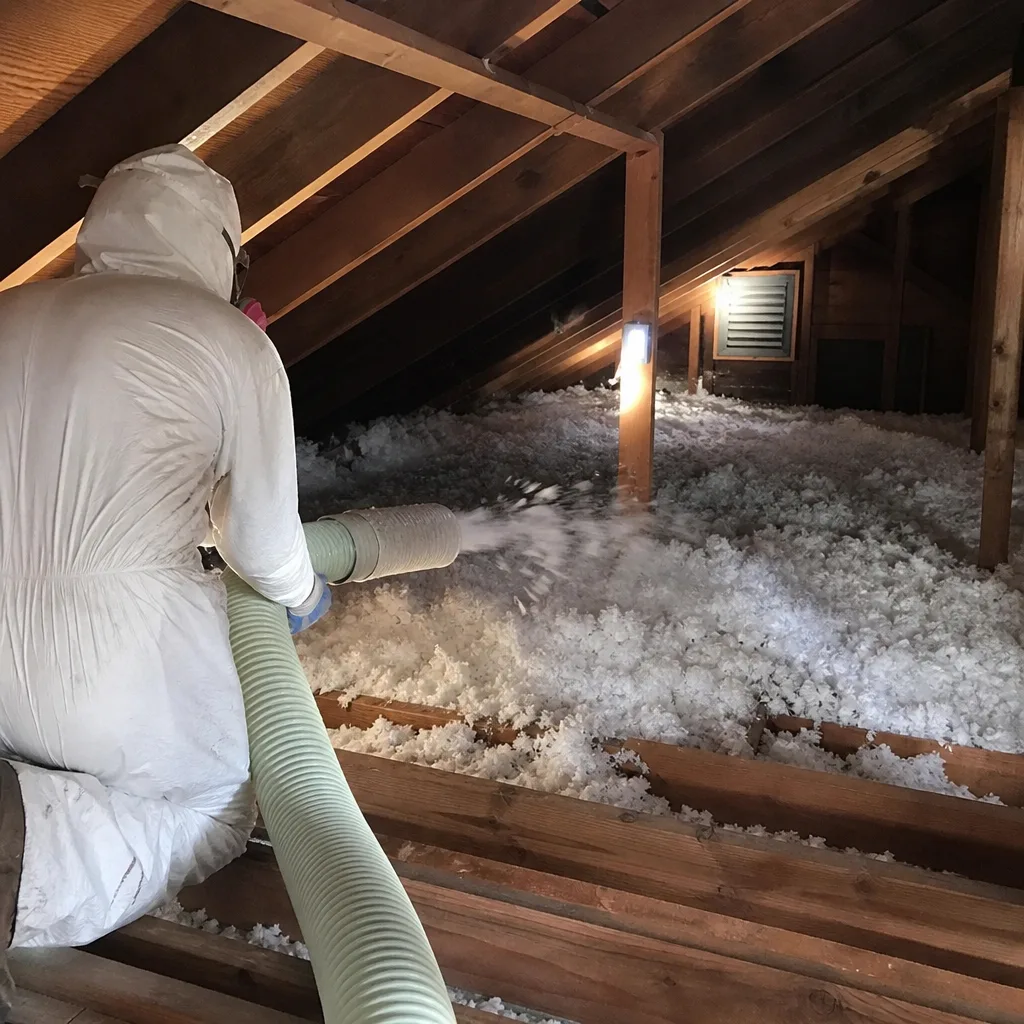
We’ve been in Mountain View’s Rex Manor neighborhood pulling out compacted fiberglass batts and replacing them with properly staged blown-in cellulose since before most of the current crop of insulation companies existed. Wes Okafor picked up his trade fundamentals at Richard J. Daley College and spent the better part of two decades working jobs up and down the San Francisco Peninsula. Our crew knows the difference between a GreenFiber All-Borate job that was done right and one that was done fast.
Every job carries the 365-Day Done Right Promise. You get a named technician, a text when they’re on the way, and a Documented Photo Record when they leave. On applicable jobs, the before-and-after blower-door printout shows exactly how much tighter your home got. We’re independently owned and operated under The Haven Standard since 2016, not a franchise, and we source materials from Owens Corning, Johns Manville, Knauf, Rockwool, CertainTeed, Icynene, Demilec, and GreenFiber with no proprietary lock-in.
FAQs
No, product warranties cover material defects regardless of who installs or services them, though improper application can void coverage. As an independent GreenFiber service provider, we document our installation conditions, temperatures, and pass thicknesses so any future claim has a paper trail. If you’re concerned about a specific warranty term, bring us the paperwork and we’ll read it with you. Call (669) 259-0406.
Yes, R-value is a measured property, not a brand feature. We can specify equivalent open-cell or closed-cell products from Icynene, Demilec, or Johns Manville that match or exceed the R-value per inch of your existing GreenFiber installation. We note the alternative in your written scope with no pressure either way.
Repair is cheaper when the failure is localized shrinkage or a small gap, typically $800 to $1,800. Full removal and replacement makes sense when the foam is water-damaged, improperly sequenced over unsealed leaks, or applied so far below specification that spot fixes would leave you with a patchwork envelope. We quote both options when both apply. Call (669) 259-0406 for a free evaluation.
Most diagnostics happen within 24 to 48 hours of your call, and most jobs complete in one day. Two-day jobs are usually full crawl-space or roof-deck work where we need cure time between passes. We don’t rush cure chemistry; we schedule correctly.
We stock common GreenFiber-compatible spray foam components and can source specific formulations within two to three business days. For standard open-cell and closed-cell work, we typically have material on the truck. If your job requires a specific GreenFiber SKU, we confirm availability when we deliver your written price, not after we’ve started.
Written by Wes Okafor, Owner & Lead Insulation Technician, Topside Attic Insulation Mountain View at Topside Attic Insulation Mountain View, serving Mountain View and nearby areas.