
Johns Manville Radiant Barrier Installation: The Mountain View Owner’s Guide
We stock and install Johns Manville-compatible radiant barrier systems in Mountain View, with most attic retrofits running between $2,400 and $4,800 depending on roof pitch and square footage. Same-day installation is available when the material is on the truck, which it usually is for JM AP Foil-Faced and Formaldehyde-free batts in the standard 4-foot widths. Most Mountain View homeowners realize their radiant barrier is compromised when the upstairs bedrooms won’t cool below 78°F even after sunset, or when their summer PG&E bill jumps 30% against the same thermostat setting.
Which Johns Manville Models This Applies To
We work with the full Johns Manville attic radiant barrier line, including AP Foil-Faced sheathing, FSK-25 facing on formaldehyde-free batts, and the JM Spider custom-blown systems with radiant-enhanced components. The critical identifier is the facing label: AP Foil-Faced products carry a stamped ASTM C1313 compliance mark, while the FSK-25 line shows a kraft-fiber-scrim-kraft laminate with the JM logo and R-value printed at 24-inch intervals. Measure your existing material width before calling; Mountain View tract homes from the 1960s through 1980s often have 24-inch on-center framing that takes 23-inch batts, while post-1995 builds in neighborhoods like Monta Loma and The Crossings moved to 16-inch centers requiring 15-inch widths.
For OEM versus aftermarket, Johns Manville’s foil facing is proprietary in its emissivity rating, typically 0.03 to 0.05. Generic foil-faced products can match the reflectivity but often miss the long-term adhesion spec that keeps the facing bonded through Peninsula temperature swings. We source JM direct for facing-critical applications and use Knauf or Owens Corning equivalents only where the customer requests it or where the application is non-critical. We are an independent service provider with no affiliation to Johns Manville.
Signs Your Johns Manville Radiant Barrier Installation Is Failing
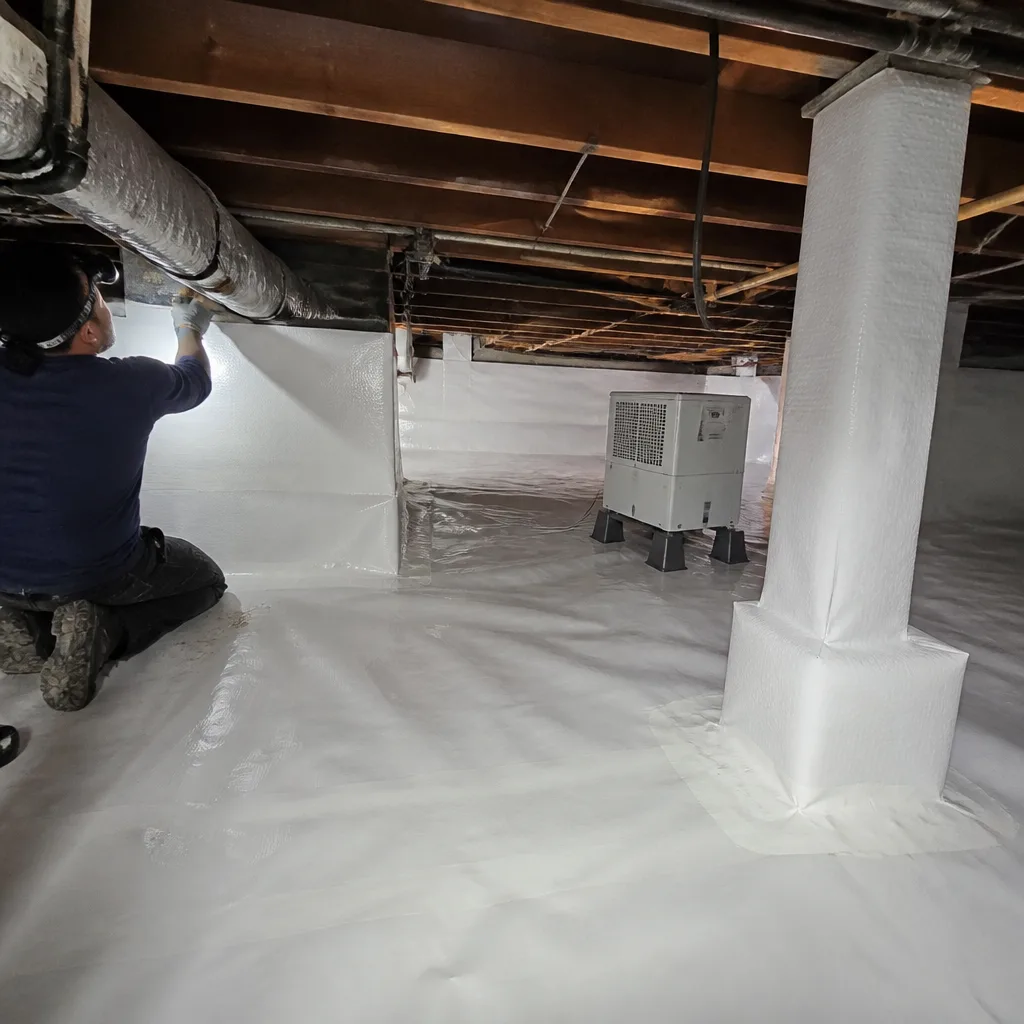
- Hot ceiling patches in afternoon sun. The foil facing has delaminated or torn at the staple line, creating gaps where radiant heat transfers directly to the drywall. In Mountain View’s south-facing slopes above 101, we see this where attic temperatures exceed 140°F and the adhesive backing degrades.
- Cooling runs continuously from 2 PM to 8 PM. The barrier’s emissivity has risen above 0.10, meaning it’s re-emitting rather than reflecting infrared. This happens when dust accumulation bonds to the foil surface, common in homes near the Bayshore or Rengstorff corridors with higher particulate load.
- Visible corrosion or oxidation on the foil face. Moisture from unsealed ceiling penetrations has reached the aluminum layer. The kraft backing wicks water, and once oxidation starts at any point, it spreads along the grain structure of the deposited metal.
- Sagging or fallen batts at the eaves. Staples have pulled through compressed fiberglass or the facing has torn at fastener points. JM batts in 24-inch widths are particularly prone to this when installed without proper friction fit or supplemental wire supports.
- Musty odor from ceiling registers in summer. The radiant barrier has trapped moisture against the roof deck because the attic ventilation ratio is insufficient for the barrier’s presence. Mountain View’s marine layer days create conditions where a 1:150 ventilation ratio becomes inadequate with full radiant barrier coverage.
Replacement Cost & What’s Included
Most Johns Manville radiant barrier replacements in Mountain View run $2,400 to $4,800 for attics between 1,200 and 2,500 square feet. The low end covers straight removal and replacement of existing foil-faced batts with proper staging; the high end includes air sealing of all top plates, can lights, and penetrations before the new barrier goes in, plus blower-door verification. We don’t price by the square foot alone because the labor multiplier changes dramatically with roof pitch: a 12:12 pitch in the Waverly Park hills takes nearly triple the time per square foot compared to a 4:12 ranch in Old Mountain View.
Every job includes the Documented Photo Record, written scope, and written warranty delivered before work starts. Where applicable, we provide before-and-after blower-door numbers so you can verify the air-sealing result in ACH50, not just take our word for it. The 365-Day Done Right Promise applies to all completed radiant barrier work.
DIY or Call Us?
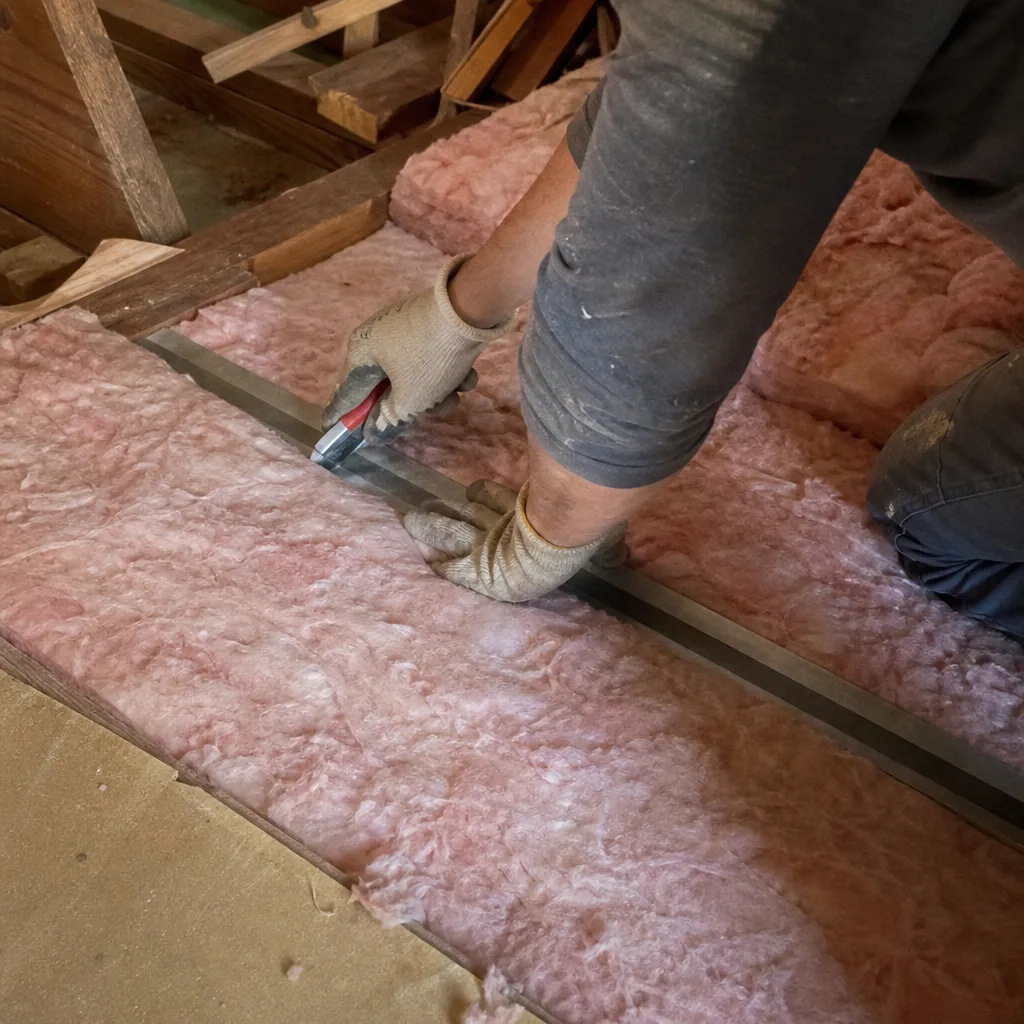
There’s no high-tension danger with radiant barrier replacement, but there are ways to waste money fast. A homeowner can safely verify the facing label, measure batt widths, and check for obvious tears from the attic hatch with a headlamp. What goes wrong: installing new foil facing over an unsealed attic floor, which pressurizes conditioned air into the insulation cavity and defeats the barrier from below; or compressing batts to fit, which drops the effective R-value by half. We’ve pulled out DIY jobs in Rex Manor where the homeowner achieved a 0.45 emissivity surface that might as well have been painted drywall. Seal the leaks first. The insulation has nowhere to go if the air does. For a written price before any work starts, call (669) 259-0406.
FAQs
In Mountain View’s climate, properly installed JM foil-faced barriers last 20 to 30 years before facing degradation becomes significant. The limiting factor is usually dust accumulation on the foil surface rather than material failure, which is why attic air sealing matters: less infiltration means less particulate load. Call (669) 259-0406 for an assessment of your current barrier’s condition.
Localized tears can be patched with matching foil tape, but delamination or widespread oxidation requires full replacement because the emissivity specification is compromised across the surface. We don’t recommend partial replacement in the same plane; the thermal boundary becomes irregular and can create condensation points. Call (669) 259-0406 for a free second opinion on any written estimate you’ve received.
Most residential attic replacements take one to two days: half a day for removal and air sealing, half a day for installation and blower-door verification. Steep pitches or attics with extensive storage decking extend the timeline. We provide a written schedule with the written price before anyone lifts a tool.
We stock JM AP Foil-Faced and FSK-25 batts in 15-inch and 23-inch widths on the truck for same-day installation in standard Mountain View framing configurations. Custom widths or Spider blown systems require a one-day material pull from the San Jose distribution point. Call (669) 259-0406 to confirm availability for your specific application.
Written by Wes Okafor, Owner & Lead Insulation Technician, Topside Attic Insulation Mountain View at Topside Attic Insulation Mountain View, serving Mountain View and nearby areas.