
Knauf Attic Air Sealing: The Mountain View Owner’s Guide
Knauf attic air sealing repair and replacement in Mountain View typically runs $340-$780 for most single-family homes under 2,200 square feet, and we stock the Knauf-compatible acrylic latex sealants, fire-rated foam, and gasket materials on our trucks for same-day completion. Most homeowners discover the problem when their upstairs rooms won’t stay cool in August despite new insulation, or when a home energy audit flags pressure pan readings above 3 pascals at the attic floor. The sealant has cracked, the foam has pulled away from the top plate, or the gasket around the chase has compressed - and conditioned air is walking straight out through the ceiling plane.
Which Knauf Models This Applies To
Knauf doesn’t sell attic air sealing as a named “system” the way they sell EcoSeal or Intelliseal through some regional distributors, but their specified materials show up in two distinct contexts: new construction where the builder followed Knauf’s 2019-2024 envelope guidelines, and retrofit jobs where a previous contractor used Knauf-certified acrylic sealant (the blue-labeled tubes, not the standard white caulk) or Knauf-recommended fire-rated expanding foam at penetration points. The compatibility issue isn’t the brand name on the tube - it’s whether the original installer used the right product for the substrate. We’ve found blue-labeled Knauf acrylic on OSB top plates that needed solvent-based sealant, and we’ve found their FR foam overfilled in electrical chases where it crushed the Romex jacket. To identify what you’ve got, look for the Knauf batch code on any remaining tube or canister; it starts with KNAF followed by a two-digit year. If the code reads KNAF19 or KNAF20, you’re in the window where Knauf specified a lower-expansion foam that often shrank in Mountain View’s dry summer heat, leaving gaps at the top plate. We carry both the corrected formulation and compatible aftermarket equivalents from Tremco and 3M that test within the same CFM50 range on our blower-door.
Signs Your Knauf Attic Air Sealing Is Failing
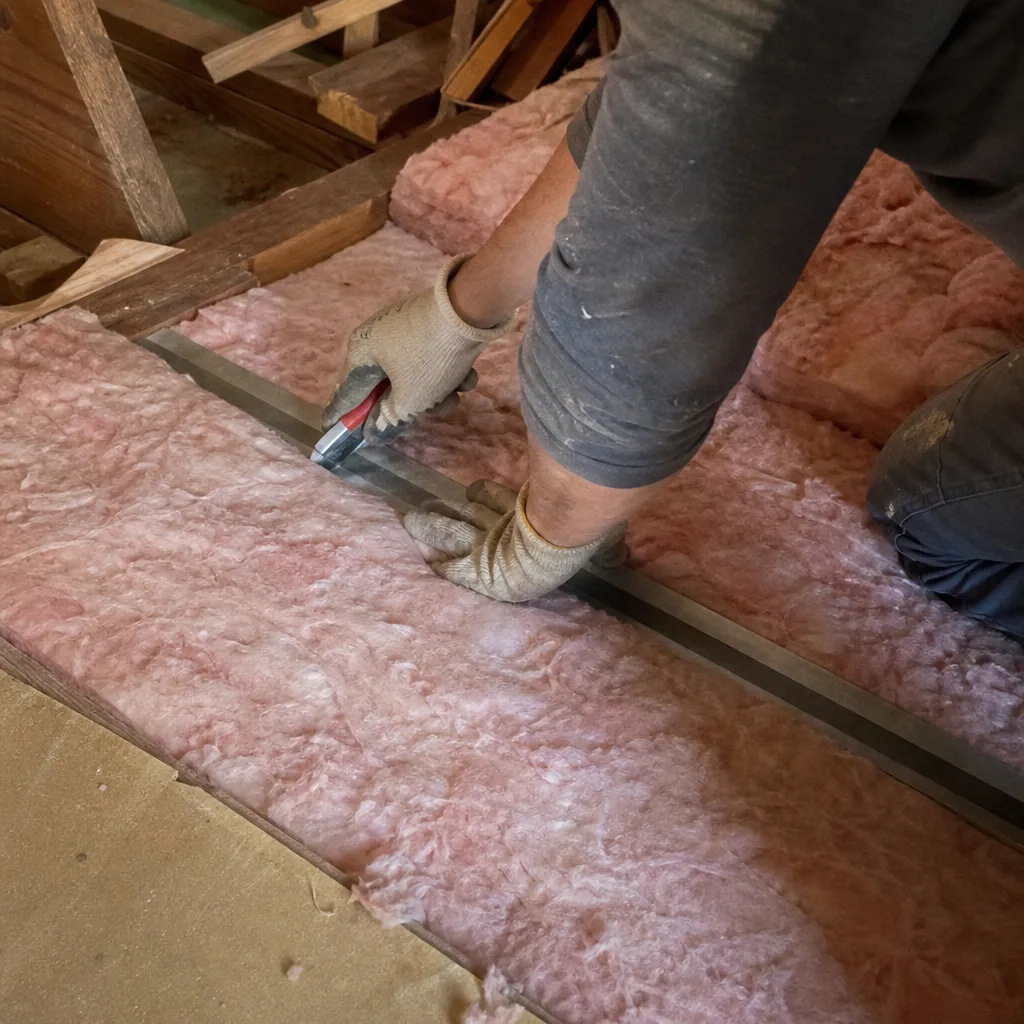
- Upstairs rooms run 8-12 degrees warmer than downstairs in July. The thermal bypass at the attic floor is pulling conditioned air upward faster than your HVAC can replace it; the Knauf sealant was likely applied over dusty sheathing and never achieved bond.
- Dust streaks on ceiling drywall near interior walls. These “ghost marks” follow the path of air moving through gaps at the top plate; in Mountain View’s Rex Manor and Cuesta Park neighborhoods, we see this where original 1950s framing meets newer Knauf retrofit sealant that couldn’t span the irregular gaps.
- Can lights flicker or hum when the attic fan runs. The pressure boundary has failed at the electrical penetration; Knauf FR foam was either underfilled or damaged by subsequent wiring work, creating a pressure pan failure point.
- Ice damming or uniform roof melt patterns in winter. Warm attic air is reaching the sheathing through bypasses the sealant was supposed to block; even Mountain View’s mild winters show this when stack effect pulls heated air through a failed chase seal.
- Blower-door test shows minimal improvement after insulation upgrade. A previous contractor blew cellulose or fiberglass over unsealed penetrations; the Knauf materials, if they were used at all, are buried and inaccessible, doing nothing while the insulation acts as a filter, not a barrier.
Replacement Cost & What’s Included
Most Knauf attic air sealing jobs in Mountain View run $340-$780 for homes between 1,200 and 2,200 square feet. The low end covers accessible attics with straightforward top-plate and penetration work using compatible aftermarket sealants; the high end involves cathedral ceilings, multiple HVAC chases, or removal of failed Knauf foam that must be cut out before reapplication. What drives the range: attic height (steep pitches in the Waverly Park hills add labor), quantity of can lights and bath fan penetrations, and whether we need to sequence the work before new insulation goes in. Every job includes the sealant or foam material, labor, cleanup, and our Documented Photo Record showing before-and-after images of each penetration. On jobs where we can run a blower-door test - which is most of them - we include pre- and post-sealing CFM50 readings so you see the actual air loss reduction. We don’t charge separately for the test; it’s part of proving the work performed. Under Haven Standard Clause 1, you get a written price before anyone starts, and the 365-Day Done Right Promise covers any callback for material separation or adhesion failure.
DIY or Call Us?
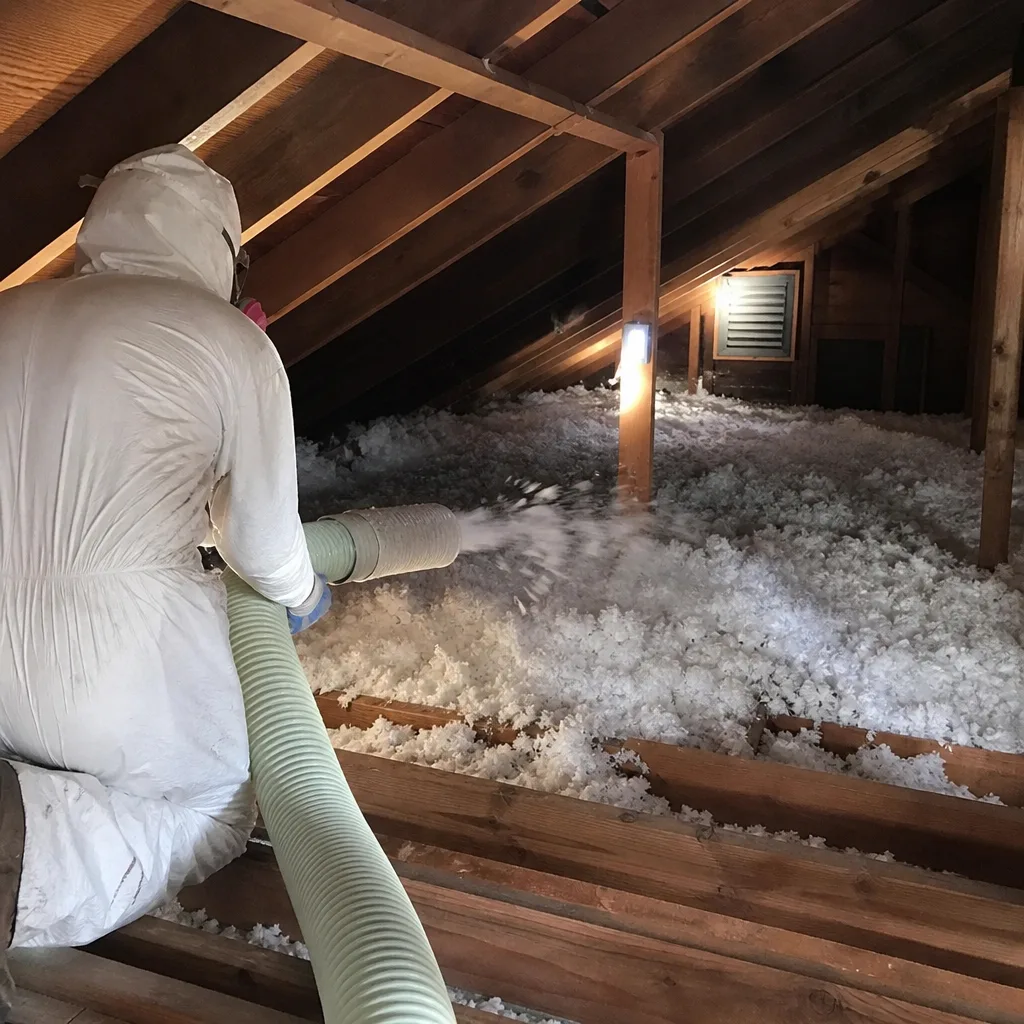
Here’s what you can safely check yourself: look at the attic floor from the hatch with a flashlight for obvious gaps at interior wall top plates, pulled-away foam around chimneys or flues, or crumbling sealant at duct chases. Don’t touch electrical penetrations, don’t step between joists, and don’t assume more caulk from the hardware store fixes the problem - Knauf specified products for specific substrates, and generic acrylic won’t bond to dusty OSB or fire-rated foam won’t flex where the structure moves. Where DIY goes wrong: homeowners often seal the wrong side of the assembly (the attic side of a dropped soffit instead of the chase interior), or they compress batt insulation against hot can lights while missing the actual air leak two feet away. The real measurement that matters is the pressure pan test, and that takes a blower door and a manometer. If you’ve found failed Knauf sealant or you’re chasing a thermal bypass you can’t locate, call (669) 259-0406. We’ll read your situation over the phone, and if it makes sense, we’ll schedule a free estimate with a written price before any work starts.
FAQs
How long does Knauf attic air sealing last in Mountain View’s climate?
Properly applied acrylic latex sealant lasts 15-20 years in Mountain View’s dry, mild climate, but the 2019-2020 Knauf foam formulations showed shrinkage issues within 3-5 years due to lower expansion ratios that didn’t account for our summer heat cycles. Call (669) 259-0406 and we can check your batch code - estimates are free.
Can the sealant be repaired instead of replaced?
Spot repairs work if the original material is still flexible and the gap is under 1/4 inch; once Knauf foam has shrunk or acrylic has hardened and cracked, partial patching creates a discontinuous air barrier that fails under blower-door testing. We recommend full replacement for any failure over 3 years old. Call (669) 259-0406 for an exact quote - estimates are free.
How long does the replacement take?
Most Knauf attic air sealing replacements in Mountain View take 3-5 hours for a crew of two, including setup, removal of failed material, surface prep, reapplication, and cleanup. Jobs with cathedral ceilings or multiple chases can run a full day. Same-day completion is standard when you call before noon.
Do you stock Knauf parts on your truck?
We stock Knauf-compatible acrylic sealant, fire-rated expanding foam, and gasket materials matched to their specified applications; we are an independent service provider, not affiliated with Knauf, and we also carry equivalent-grade materials from Tremco and 3M when compatibility or availability favors them. Every truck carries enough for a typical Mountain View home, and we don’t start a job we’re not prepared to finish.
Topside Attic Insulation Mountain View is independently owned and operated under The Haven Standard since 2016. We also stock parts for Reflectix and other major envelope material brands.
Seal the leaks first. The insulation has nowhere to go if the air does.
Ready to stop losing conditioned air through your ceiling? Call (669) 259-0406 for a free estimate with a written price before any work starts. Wes Okafor and our crew serve Mountain View and nearby Peninsula communities, and we’ll bring the blower door to prove the result.
Written by Wes Okafor, Owner & Lead Insulation Technician, Topside Attic Insulation Mountain View at Topside Attic Insulation Mountain View, serving Mountain View and nearby areas.