
Owens Corning Attic Insulation: The Mountain View Owner’s Guide
Owens Corning attic insulation replacement in Mountain View typically runs $2.80 to $4.50 per square foot installed, with most single-story homes in the 1,200 to 1,800 square foot range landing between $3,400 and $6,200 for a complete attic restage. We stock Owens Corning PINK blown-in fiberglass and ProCat loose-fill on the truck, and we can usually inspect and start the same day you call. Most Mountain View homeowners figure out their insulation is failing when the upstairs bedrooms won’t cool below 78 degrees in July, or when they pull down the attic ladder and see batts compressed to half their labeled thickness, stained from roof leaks, or scattered by rodents that got in through unsealed penetrations.
Which Owens Corning Models This Applies To
Owens Corning labels their residential attic insulation by product line and R-value target, not by a model year like an appliance. The three you’ll encounter in Mountain View attics are PINK Fiberglas blown-in (L77 or M77 on the bag, denoting density), ProCat Professional loose-fill (the higher-grade option with stabilized fiber), and the older R-30 or R-38 batts that were likely original to homes built between 1965 and 1995. Check the paper facing on batts, or the printing on any loose-fill bags left behind by the last installer. The critical compatibility gotcha: Owens Corning’s blown-in requires a minimum settled depth of 14 inches to hit R-38, but if your attic floor has recessed can lights or a dropped soffit, you can’t just blow to depth without first building insulation dams or switching to covers rated for contact. We see this in Rex Manor and Monta Loma ranch homes constantly. The OEM material is what we install, though we also carry Johns Manville and Knauf equivalents for homeowners who want to compare thermal performance data sheet to data sheet. Topside Attic Insulation Mountain View is an independent service provider, not affiliated with Owens Corning.
Signs Your Owens Corning Attic Insulation Is Failing
- Uneven temperatures room to room. When the R-value has degraded from moisture compression or displacement, heat transfers through the ceiling assembly faster on one side of the house than the other. You’ll feel it as a hot spot in the hallway or a bedroom that the HVAC never quite reaches.
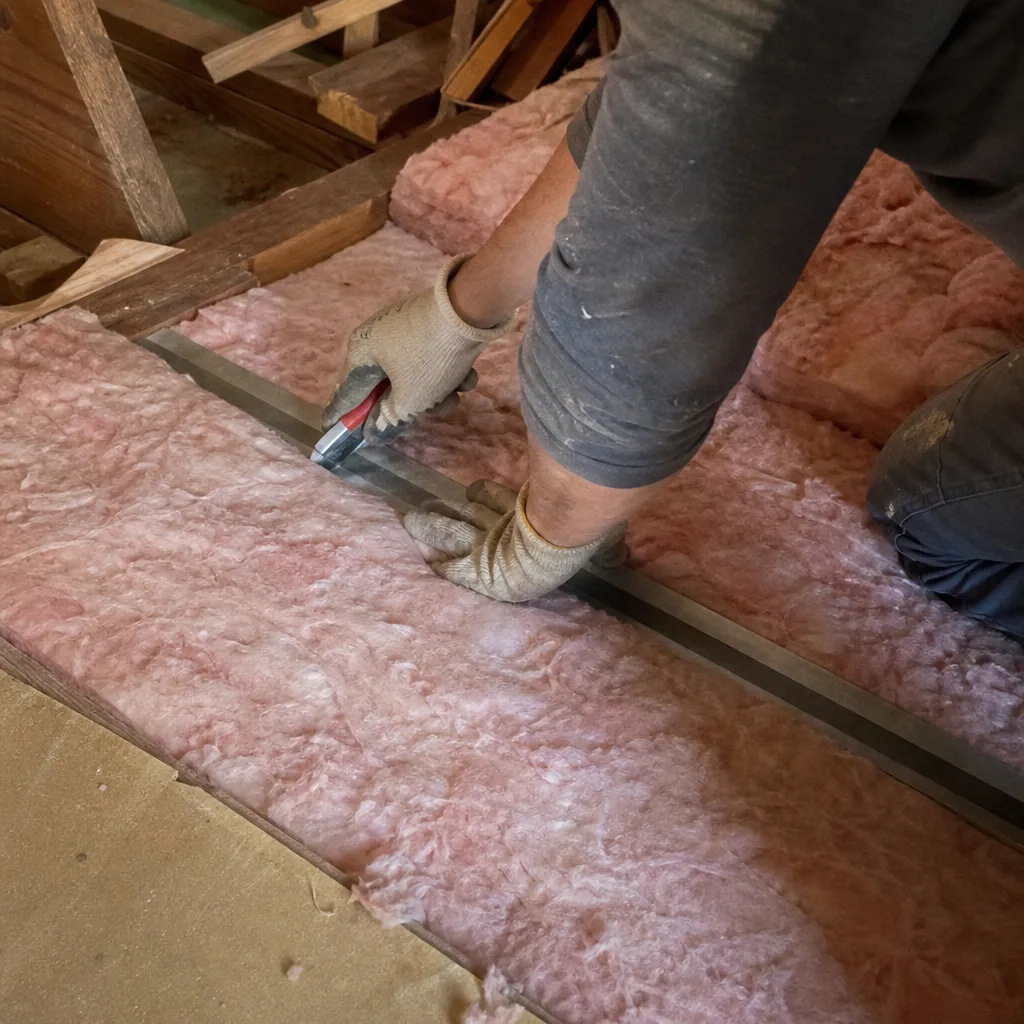
- Visible compression or matting. Fiberglass batts lose loft when walked on, when boxes are stored on them, or when moisture from bathroom vents condenses in the fiber. A compressed R-30 batt performs closer to R-15, and you can spot it from the attic hatch.
- Water staining or mold spotting on the facing. Mountain View’s marine layer pushes humidity through roof vents on still mornings; if your bathroom fan terminates in the attic instead of through the roof, that warm moist air hits the cold roof deck and soaks the insulation from above.
- Rodent nesting material mixed with fibers. Mice compress tunnels through blown-in, and their waste degrades the fiber while creating air gaps. We find this most often in older homes near Whisman Station where the original construction left gaps at top plates.
- Ice damming or excessive summer heat in the attic. Inadequate insulation lets conditioned air escape through the ceiling, warming the roof deck in winter and overworking the AC in summer. Your energy bill climbs before you notice the comfort problem.
Replacement Cost & What’s Included
Most complete attic restages in Mountain View run $3,400 to $6,200 for homes between 1,200 and 1,800 square feet of attic floor, with larger two-story homes in the Slater area sometimes reaching $8,500 when we’re removing old material, sealing, and restaging to R-49. The range breaks down simply: removal of failed insulation adds $0.80 to $1.20 per square foot, air sealing of top plates, can lights, and penetrations adds $800 to $1,800 depending on access, and the new Owens Corning blown-in material plus labor runs $2.00 to $2.80 per square foot. We don’t quote by phone without seeing the attic, because we need to know whether your can lights are IC-rated, whether the HVAC chase is sealed, and how much old material we’re pulling out. What you get: a written price before any work starts, a Documented Photo Record of every stage, and before-and-after blower-door numbers showing the actual air leakage reduction. Under Haven Standard, the 365-Day Done Right Promise covers the installation and the seal quality, not just the material.
DIY or Call Us?
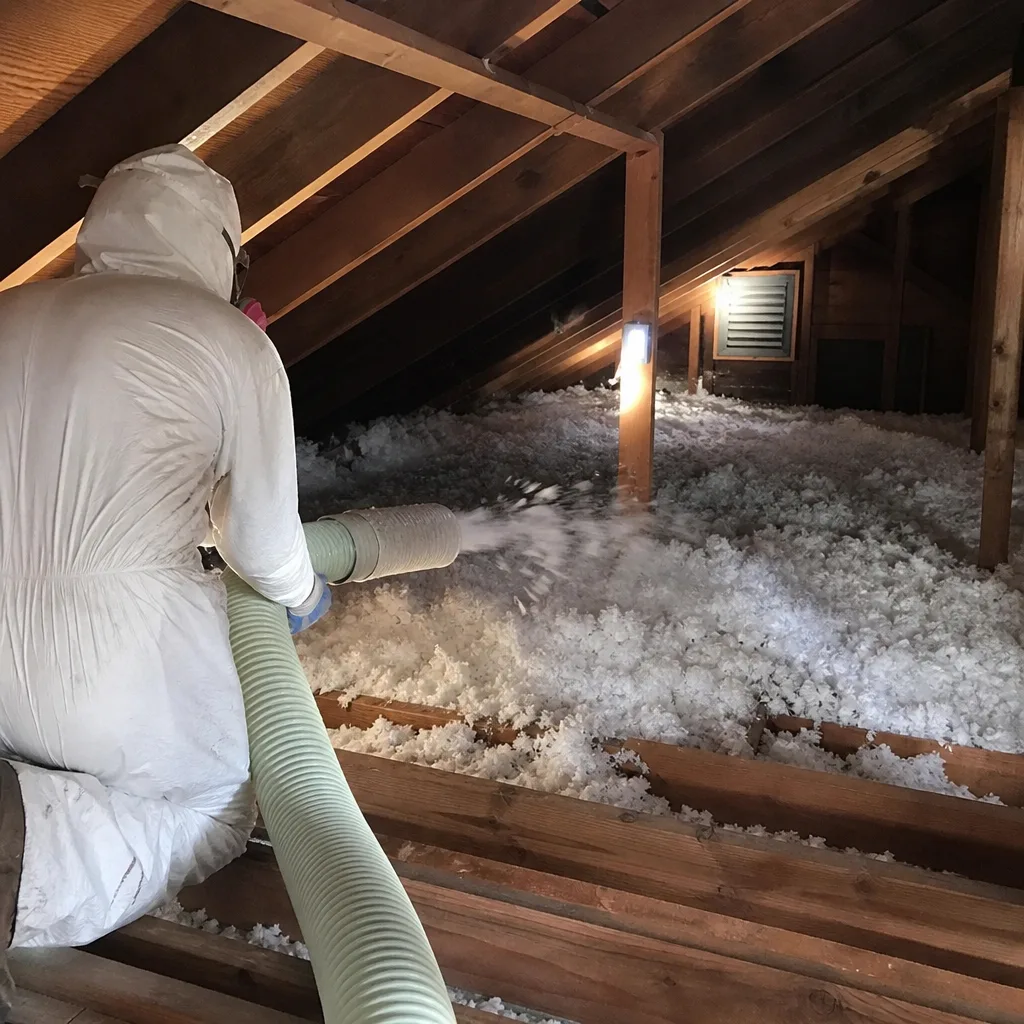
Here’s what you can safely check yourself: measure your current insulation depth with a ruler, look for the Owens Corning product label on any visible bags or batts, and note any water staining or compressed areas from the attic hatch. What goes wrong fast in DIY: disturbing old insulation without respiratory protection and proper containment, burying non-IC-rated can lights in loose-fill (fire hazard), and blowing new material over unsealed air leaks that will just pump conditioned air through the fiber for years. The insulation performs poorly, and you never know why. We also see homeowners install baffles incorrectly, blocking soffit vents and trapping moisture. If you’re going up there, wear an N95 minimum. Better yet, call us at (669) 259-0406 and we’ll inspect, photograph what we find, and give you a written price before anyone lifts a tool.
FAQs
Properly installed Owens Corning fiberglass attic insulation lasts 80 to 100 years in theory, but in Mountain View’s actual conditions we see effective performance drop after 15 to 25 years from moisture cycling, rodent activity, and compression from storage or maintenance traffic. The fiber doesn’t disappear, but the R-value degrades when air gaps form and the material packs down. Call (669) 259-0406 for an attic inspection and we’ll measure what’s actually left up there.
Spot repair works only when the failure is isolated, such as a single wet section near a bathroom vent or a compressed path where an installer walked. Widespread compression, rodent contamination, or insulation installed over unsealed leaks means replacement is the only fix that restores performance. We won’t blow new material over old problems and call it done. Bring us any written estimate and we’ll give you a free second opinion on whether the scope matches the actual condition.
Most Mountain View homes are a one-day job: removal in the morning, air sealing and prep through midday, and blowing new Owens Corning material in the afternoon. Larger homes or those with finished attic spaces that need careful protection may run into a second day. We give you a written schedule with the price, not a guess.
We carry Owens Corning PINK blown-in and ProCat on the truck, along with Johns Manville, Knauf, and Rockwool equivalents. For standard R-38 and R-49 restages, we can inspect and start same-day or next-day. Specialty orders like Owens Corning Foamular rigid board for knee wall applications take 48 to 72 hours. Call (669) 259-0406 to confirm current stock for your specific job.
Written by Wes Okafor, Owner & Lead Insulation Technician, Topside Attic Insulation Mountain View at Topside Attic Insulation Mountain View, serving Mountain View and nearby areas.