
Owens Corning Vapor Barrier Installation: The Mountain View Owner’s Guide
Most Owens Corning vapor barrier installations in Mountain View run between $1,800 and $3,400 for a standard single-story crawl space or basement wall application, including material, labor, and seam sealing. We stock Owens Corning Foamular NGX and EcoTouch-compatible vapor barrier membranes on our trucks, and we can usually schedule installation within 48 hours. Homeowners typically discover the problem when they notice a persistent musty smell in first-floor closets, see condensation beads forming on ductwork in a Mountain View crawl space, or find their existing polyethylene sheeting has gone cloudy and brittle - the telltale sign that it’s no longer blocking moisture migration from soil to framing.
Which Owens Corning Models This Applies To
Owens Corning does not sell a standalone “vapor barrier” branded under its insulation line. What Mountain View homeowners are usually matching is a vapor retarder or vapor barrier membrane installed alongside Owens Corning Foamular rigid foam board (XPS), EcoTouch fiberglass batts, or Propink blown-in loosefill in crawl spaces, basements, or conditioned attic assemblies. The critical compatibility question is whether your existing assembly uses a Class I vapor barrier (0.1 perm or less, typically 6-mil polyethylene) or a Class II vapor retarder (1.0 perm or less, like kraft-faced batts or certain smart membranes).
If you have Foamular NGX on your crawl space walls, the vapor barrier should lap over the bottom edge of the foam board and extend 6 to 12 inches up the wall, sealed with compatible tape - not duct tape, which degrades in damp crawl spaces. We see a common mismatch in older Mountain View homes near Rengstorff Park: contractors installed 6-mil poly on the dirt floor but never sealed it to the wall insulation, creating a thermal bypass where moist air rides right past the barrier. The OEM-spec approach uses Owens Corning-recommended seam tape and termination bars at wall transitions. We also install quality aftermarket equivalents from Reflectix when the job calls for a radiant-vapor hybrid barrier in particularly damp crawl spaces.
Topside Attic Insulation Mountain View is an independent service provider, not affiliated with Owens Corning. We source materials through standard distribution channels and select the barrier spec based on your existing assembly, not a brand mandate.
Signs Your Owens Corning Vapor Barrier Installation Is Failing
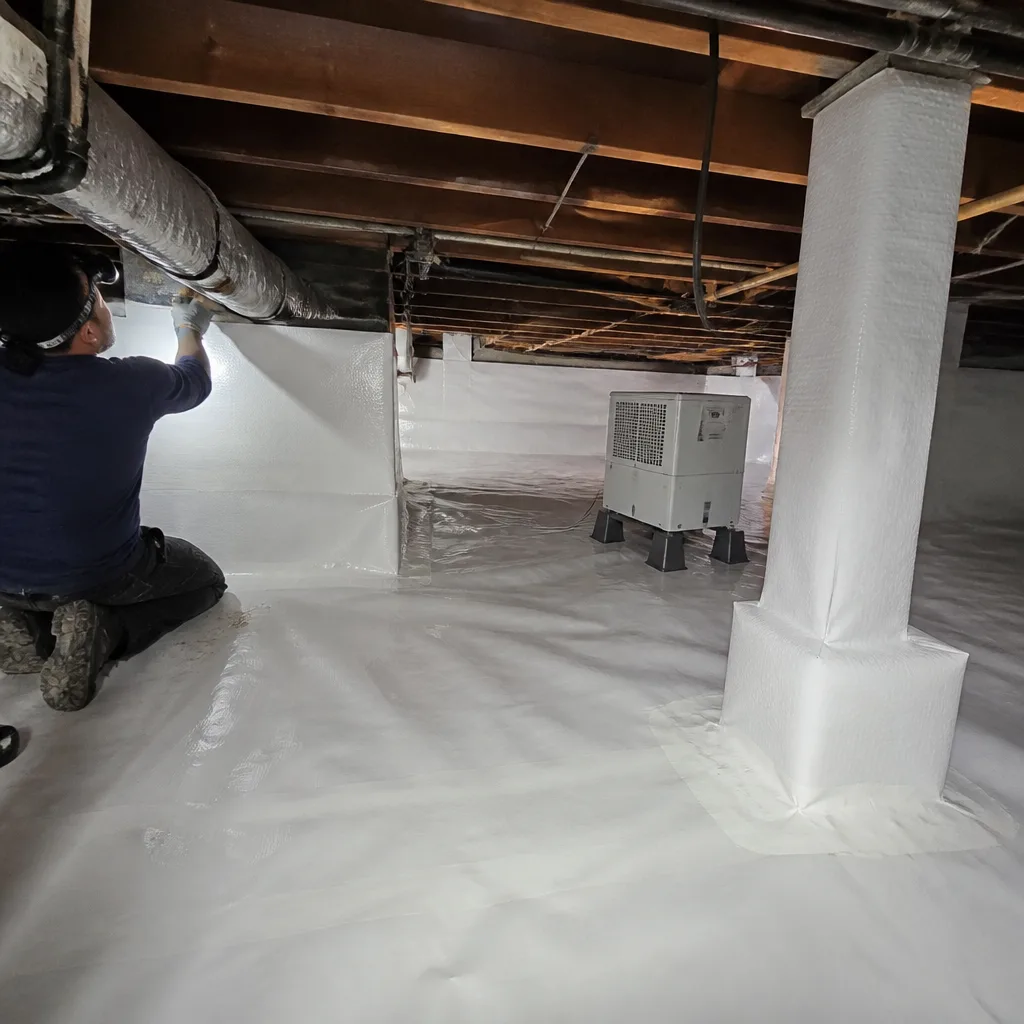
- Cloudy or chalking polyethylene sheeting. Clear 6-mil poly turns milky white as UV exposure and soil chemistry oxidize the plastic. In Mountain View’s clay-heavy soils near Permanente Creek, we’ve measured vapor barriers losing flexibility in as little as 8 years - well before the 15-year nominal lifespan - because soil pH accelerates embrittlement.
- Condensation on insulation surfaces. When the vapor barrier fails, moisture that should be blocked at the soil line instead migrates into fiberglass batts or rigid foam. The insulation becomes damp to the touch, and its effective R-value drops by 30 to 50 percent even before mold appears.
- Musty odors that worsen after rain. Mountain View’s winter rains saturate the top layer of soil, raising crawl space humidity for weeks. A functioning vapor barrier keeps relative humidity below 70 percent under the house; a failed one lets it spike into the 80s, and your nose knows the difference.
- Wood rot at sill plates or rim joists. This is the expensive one. Moisture wicking through a compromised barrier condenses on the coldest wood surfaces - typically the rim joist where the foundation meets the floor system. We’ve replaced rim joists in Rex Manor homes where the vapor barrier had a single unsealed seam that went unaddressed for three years.
- Peeling tape at seams and penetrations. Vapor barrier tape fails first at the seams because that’s where installation stress concentrates. If you can pull tape loose with light finger pressure, the barrier’s continuity is broken and moisture is already bypassing it.
Replacement Cost & What’s Included
In Mountain View, a full crawl space vapor barrier replacement typically falls between $1,800 and $3,400 for homes under 2,000 square feet of footprint. The range depends on three factors: accessibility (how much of the crawl space we can stand in versus belly-crawl), whether we need to remove and dispose of old contaminated material, and whether the job includes re-taping wall transitions or installing a new sump pit perimeter.
| Component | Typical Range |
|---|---|
| 6-mil polyethylene, 2,000 sq ft floor | $400 - $650 |
| Seam tape, termination bars, mechanical fasteners | $180 - $320 |
| Labor: removal, prep, installation | $900 - $1,800 |
| Disposal of failed barrier | $200 - $350 |
| Post-installation moisture meter verification | Included |
Every vapor barrier job includes a Documented Photo Record - before, during, and after - plus a written scope and our 365-Day Done Right Promise. If moisture readings don’t show improvement, we return and correct it. Under Haven Standard Clause 1, you get the written price before anyone enters the crawl space.
DIY or Call Us?
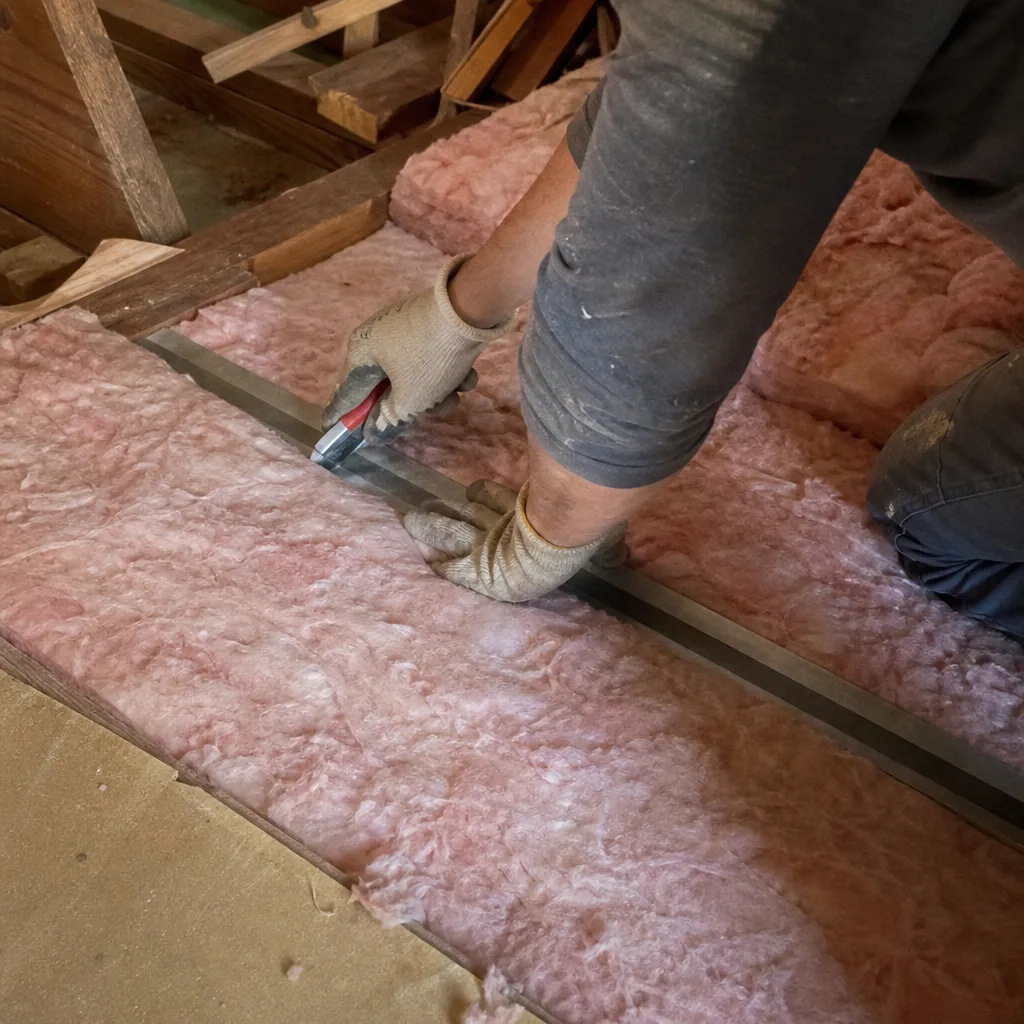
There’s a honest middle ground here. A homeowner can safely inspect their own vapor barrier with a flashlight and a moisture meter from the hardware store. Look for the five symptoms above, photograph any suspect seams, and note whether your crawl space has standing water after rain - that’s a drainage problem, not a barrier problem, and no amount of plastic sheeting will fix it.
Where DIY goes wrong is in the details that determine whether the barrier actually works. Overlapping seams by 12 inches instead of sealing them with proper tape creates a moisture highway. Failing to lap the barrier up the wall and secure it creates a gap at the most critical junction. And in Mountain View’s older homes, we regularly find asbestos-containing vermiculite or rodent-damaged insulation beneath failed barriers - disturbances that require proper containment. We don’t recommend homeowners crawl through contaminated spaces.
Seal the leaks first. The insulation has nowhere to go if the air does. Call (669) 259-0406 and we’ll walk through what you found, or schedule a free second opinion on any written estimate you’ve already received.
FAQs
In Mountain View’s mild, marine-influenced climate with clay soils, a properly installed 6-mil polyethylene vapor barrier typically lasts 10 to 15 years, though we’ve seen premature failure in as little as 8 years near areas with higher soil alkalinity. The barrier degrades from the soil side, not from above, so visual inspection from the crawl space entrance won’t catch early deterioration. Call (669) 259-0406 for a free moisture assessment - estimates are free.
Localized patching works if the failure is limited to one or two seams and the surrounding material is still flexible and clear. We cut a patch that extends 12 inches past the damaged area on all sides and seal with double-run vapor barrier tape. If the poly is cloudy, brittle, or has multiple failure points, replacement is more cost-effective than chasing individual leaks. Call (669) 259-0406 and we’ll tell you which category you’re in - no charge for the assessment.
Most single-story Mountain View homes take one full day for removal, prep, and new barrier installation; larger homes or those requiring extensive drainage correction may extend to a second day. We schedule morning arrivals with a text when the technician is en route, and you receive the Documented Photo Record by end of day. Call (669) 259-0406 to check next available slots.
Yes - we carry 6-mil and 10-mil polyethylene sheeting, Owens Corning-recommended seam tapes, and termination hardware on every truck, along with Reflectix radiant barrier materials for hybrid applications. For Foamular NGX assemblies, we match the barrier spec to the existing wall insulation thickness and soil conditions, not a one-size-fits-all roll. Call (669) 259-0406 to confirm compatibility with your specific assembly.
Written by Wes Okafor, Owner & Lead Insulation Technician, Topside Attic Insulation Mountain View at Topside Attic Insulation Mountain View, serving Mountain View and nearby areas.