
Rockwool Attic Insulation: The Mountain View Owner’s Guide
Most Rockwool attic insulation jobs in Mountain View run between $2.80 and $4.20 per square foot installed, depending on the R-value target and whether the attic floor needs air sealing first. We stock Rockwool Comfortbatt and AFB (Acoustical Fire Batt) in common joist widths on our Mountain View truck, and we can usually inspect and quote same-day. Homeowners typically call us after noticing the upstairs bedrooms won’t stay cool during Mountain View’s late-summer heat spikes, or after a home inspector flagged compressed, displaced, or moisture-stained batts during a sale.
Which Rockwool Models This Applies To
Rockwool’s residential attic line breaks into two families: Comfortbatt, the semi-rigid batt designed for standard wood-framed cavities, and AFB, the slightly softer batt used where acoustical dampening matters alongside thermal performance. For Mountain View attics built between 1950 and 1985, we most often pull out old R-19 fiberglass and replace it with Comfortbatt R-30 or R-38, which matches California Title 24 requirements for our climate zone.
Identification is straightforward if the original installer left the poly sleeve. Look for the black-and-white Rockwool label showing density (Comfortbatt runs 4.2 lbs/ft³, AFB closer to 2.5), nominal R-value, and cavity width, 15.25″ or 23.25″. No label? Measure the batt thickness and weigh a square foot on a bathroom scale. Rockwool’s mineral wool is noticeably heavier than fiberglass and holds its shape when compressed, unlike fiberglass, which springs back poorly.
We source Rockwool through standard distribution channels alongside Owens Corning, Johns Manville, and Knauf. We’re an independent service provider, not affiliated with Rockwool. For most Mountain View attics, OEM Rockwool is the right call, though we occasionally spec Knauf EcoBatt where the homeowner wants a binder with no formaldehyde. The compatibility gotcha: Rockwool Comfortbatt R-38 is 11.25″ thick. Many older Mountain View attics with 2×8 joists only have 7.25″ of cavity depth. We solve that with a raised heel truss detail or by layering R-23 over a sealed attic floor, not by compressing the batt, which kills the R-value.
Signs Your Rockwool Attic Insulation Is Failing
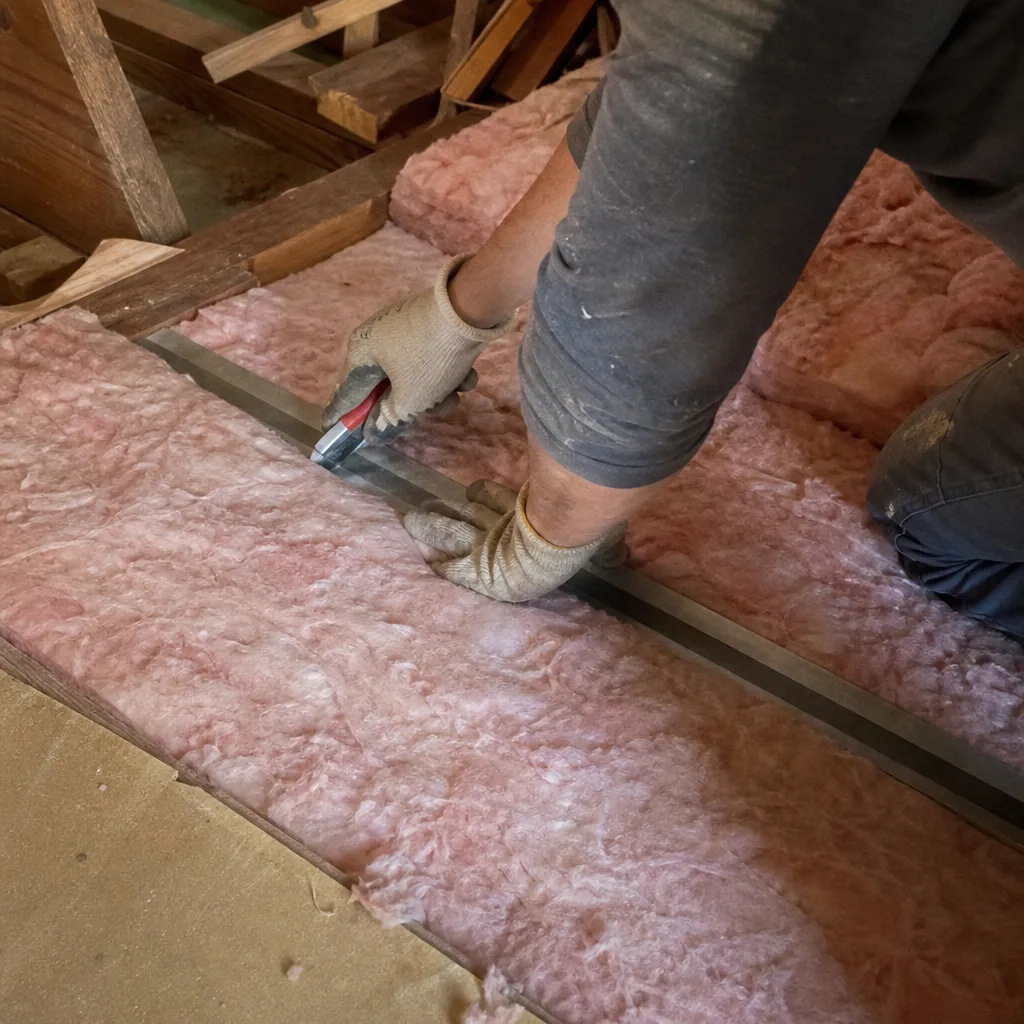
- Uneven temperatures room-to-room. When Rockwool batts slide off sloped ceilings or get kicked aside by service workers, you get thermal bypasses. We find this constantly in Mountain View’s Eichler and ranch-style homes where the attic access is a small hatch and every HVAC tech since 1987 has crawled past the same corner.
- Ice damming or moisture staining on the ceiling below. Rockwool itself doesn’t mold, but if warm, humid interior air leaks through a top plate gap and hits cold roof sheathing, condensation forms. The batt gets wet, compresses, and the R-value drops by half. Mountain View’s winter temperature swings, 30°F at dawn, 65°F by noon, make this worse than the Peninsula average.
- Dust settling on attic floor joists. This is the telltale sign of air leakage. Insulation should be fuzzy on top. If the joists are clean and gray, air is moving through the attic fast enough to filter dust through the batt. Your conditioned air is leaving, and attic air is entering the house.
- Hot ceiling surfaces in August. Rockwool Comfortbatt R-30 should keep the drywall below 85°F even when the attic hits 140°F. If your infrared thermometer reads 95°F or higher on the ceiling at 3 PM, the insulation is compressed, displaced, or the wrong product was installed to begin with.
- Rodent tunneling or nesting material. Rockwool is mineral wool, so mice don’t eat it, but they’ll burrow through it for nesting. We find this in Mountain View’s older neighborhoods near Whisman Park, where mature trees give roof rats easy attic access. The tunnels create voids that defeat the insulation entirely.
Replacement Cost & What’s Included
| Scope | Price Range (Mountain View) |
|---|---|
| Remove old insulation, air seal attic floor, install Rockwool Comfortbatt R-30 | $3,800 - $5,400 |
| Same, with R-38 and raised storage platform | $4,600 - $6,800 |
| Air seal only (no insulation replacement) | $1,200 - $2,100 |
| Partial replacement (localized damage, one zone) | $1,800 - $2,900 |
What drives the range: attic square footage, joist spacing (16″ on center vs. 24″ on center changes material waste), current insulation condition (hazmat pricing if we find rodent waste requiring remediation), and whether the attic floor needs a proper air seal before the Rockwool goes in. We don’t quote insulation without sealing first. Seal the leaks first. The insulation has nowhere to go if the air does.
Every job closes with a written scope, a Documented Photo Record, and on applicable jobs, before-and-after blower-door numbers. The 365-Day Done Right Promise covers the work. Call (669) 259-0406 for a written price before any work starts.
DIY or Call Us?
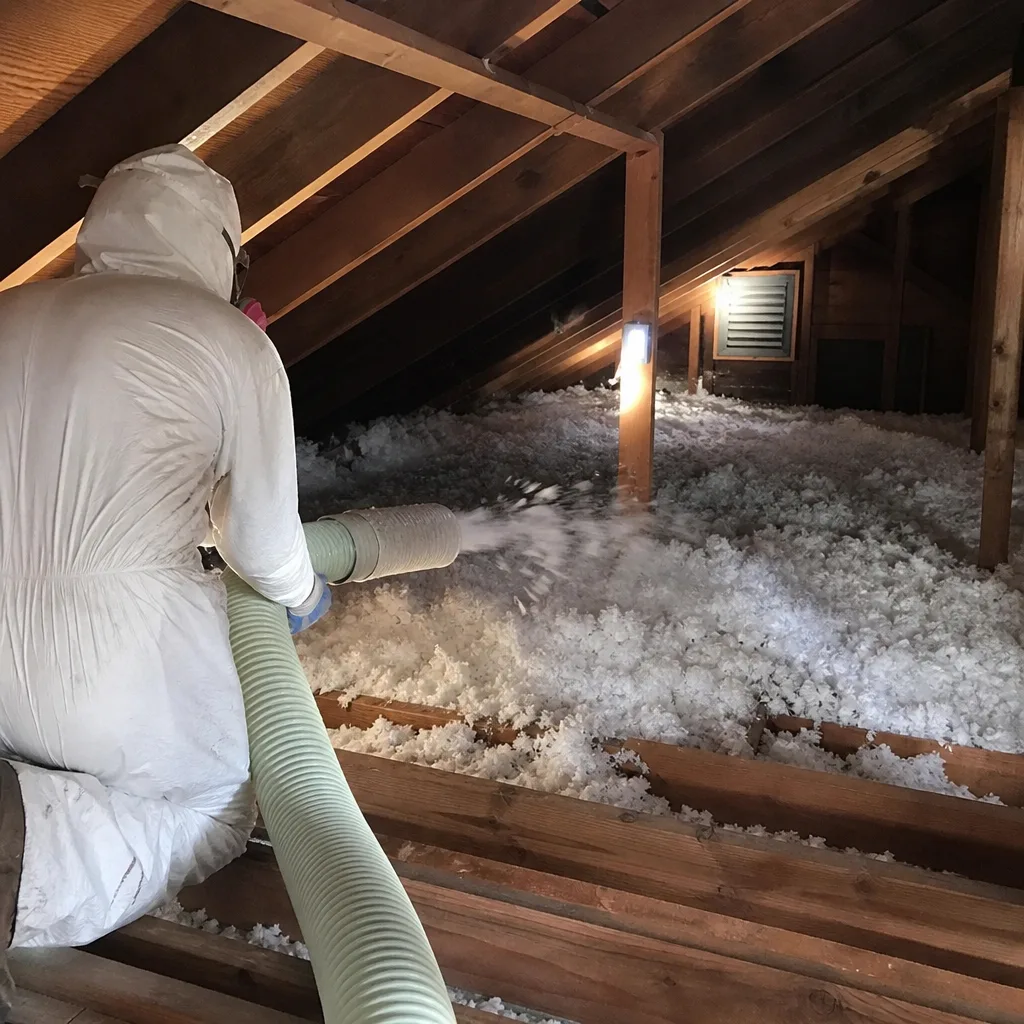
What you can safely check yourself: measure your attic floor square footage, note the joist spacing, and look for obvious displacement or moisture staining. Use a flashlight and a dust mask. Don’t disturb anything that looks like vermiculite, the pebbly gray insulation common in pre-1990 homes, which may contain asbestos.
Where DIY goes wrong: Rockwool is heavier than fiberglass, about 4.2 lbs/ft³ for Comfortbatt, and it cuts with a serrated knife, not scissors. More importantly, most Mountain View attics have significant air leakage at top plates, wire penetrations, and can light housings that a homeowner won’t spot from the hatch. Blowing or laying insulation over unsealed leaks is like throwing a blanket over a window that’s still open. We’ve pulled out too many DIY jobs where the homeowner spent $1,200 on material and got maybe 40% of the performance they paid for.
Wes Okafor and our crew carry blower doors, infrared cameras, and the right respirators for attic work. If you want the numbers that prove the result, call (669) 259-0406.
FAQs
Rockwool mineral wool doesn’t settle or degrade chemically, so the material itself is good for 50+ years. The installation fails first. In Mountain View’s climate, with temperature swings and occasional roof leaks, we see batts displaced or moisture-compromised within 10-15 years if the attic floor wasn’t air-sealed properly at installation. Call (669) 259-0406 and we’ll check what you’ve got.
Yes, if the damage is localized and the remaining batts are dry, intact, and still at full thickness. We patch with matching Rockwool width and density, then air-seal the surrounding area so the problem doesn’t repeat. If more than 30% of the attic is compromised, full replacement is usually more cost-effective. We give free second opinions on any written estimate.
A typical 1,200-square-foot attic in Mountain View takes one day for removal, air sealing, and new Rockwool installation. Larger attics or jobs requiring raised storage platforms run into a second day. We arrive with a named technician, text when we’re on the way, and leave you with a documented photo record and written scope.
We carry Comfortbatt in 15.25″ and 23.25″ widths, R-23 and R-30, on our Mountain View truck. R-38 and AFB require a one-day pull from distribution. For same-day starts, we typically air-seal first while material is en route. Call (669) 259-0406 to confirm current stock for your joist spacing.
Written by Wes Okafor, Owner & Lead Insulation Technician, Topside Attic Insulation Mountain View at Topside Attic Insulation Mountain View, serving Mountain View and nearby areas.