
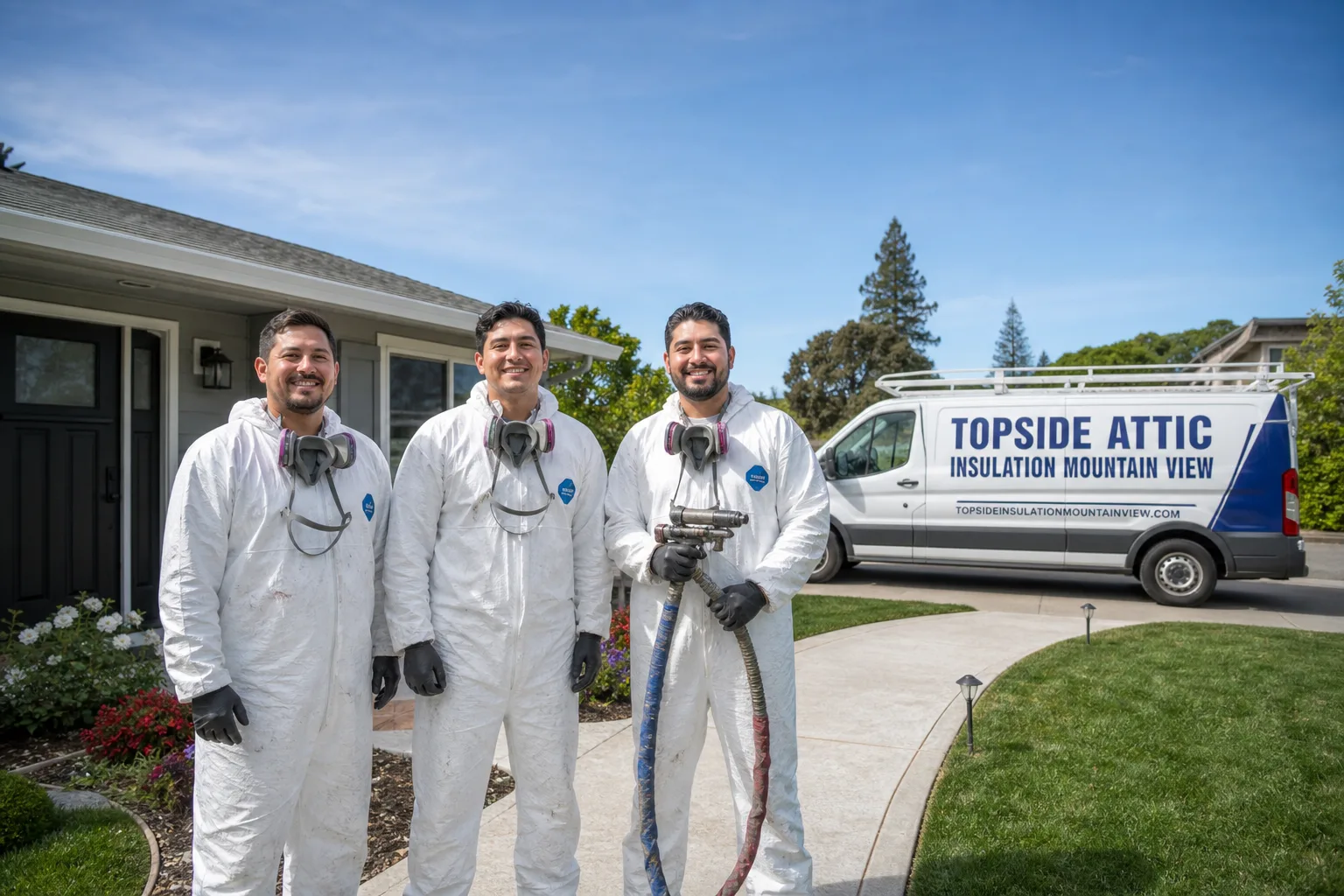
How Much Does Wall Insulation Cost in Mountain View?
Wall insulation in Mountain View, CA typically costs between $1,800 and $6,500 for a whole-home project, depending on wall area, insulation type, and whether existing material needs to come out first. Most single-story homes in the Cuesta Park and Old Mountain View neighborhoods run $2,200 to $3,800 for blown-in wall insulation without major prep work. If spray foam or a full removal-and-replacement is involved, that range shifts to $4,000 to $6,500 or higher.
Wall Insulation Cost Breakdown (2026)
Wall insulation pricing in Mountain View, CA depends heavily on which method goes into your walls and how accessible they are. The table below reflects what we see on actual jobs in this market – not national averages pulled from a database.
| Insulation Type / Scope | Typical Cost Range (Mountain View, 2026) | Best For |
|---|---|---|
| Dense-pack cellulose (existing walls, retrofit) | $1.80 – $2.60 per sq ft of wall area | Older Mountain View ranches, 1950s-70s tract homes |
| Dense-pack fiberglass (existing walls, retrofit) | $2.00 – $2.90 per sq ft of wall area | Homes where moisture is a concern; similar retrofit profile |
| Open-cell spray foam (new construction or open walls) | $1.50 – $2.20 per board foot | Gut renovations, additions, open-stud framing |
| Closed-cell spray foam (open walls) | $3.00 – $4.50 per board foot | High-performance builds, garages, areas needing vapor control |
| Batts (fiberglass or mineral wool, open walls only) | $0.60 – $1.10 per sq ft of wall area | New construction or full drywall tear-out remodels |
| Insulation removal only (old batt or degraded material) | $400 – $1,200 depending on scope | Rodent-damaged walls, wet insulation, remodels |
| Whole-home retrofit (1,400-2,000 sq ft home, dense-pack) | $2,200 – $4,500 total installed | Typical Mountain View single-family home built before 1990 |
| Whole-home retrofit with air sealing + blower-door test | $3,200 – $6,500 total installed | Performance-focused projects; qualifies for rebate documentation |
A few things drive those ranges in the Mountain View market specifically. Labor costs here run higher than in the Central Valley – experienced insulation crews in Santa Clara County bill at rates that reflect the local cost of doing business. Materials sourced from Owens Corning, Johns Manville, Knauf, Rockwool, CertainTeed, Icynene, Demilec, and GreenFiber are priced at current market rates with no proprietary product lock-in on our end, which means the recommendation you get from us is based on your walls, not on what we happen to stock.
One more variable that people don’t account for: air sealing. At Envelope Insulation Co., we treat air sealing as a prerequisite, not an optional add-on. Before any insulation goes into your walls, top plates, penetrations, and any identifiable gaps are sealed. That step adds cost – typically $300 to $900 depending on the scope – but it’s also the difference between insulation that performs to its rated R-value and insulation that underperforms because conditioned air is still moving freely around it. We document the result with a before-and-after blower-door test on applicable jobs: a pressurization reading that gives you one number showing how much air your building envelope was losing before we started and how much it’s losing after.
For a quick sense of how your Mountain View home fits into these ranges, our Wall Insulation in Mountain View service page walks through the most common scenarios we see in this market.
What Affects Wall Insulation Pricing in Mountain View
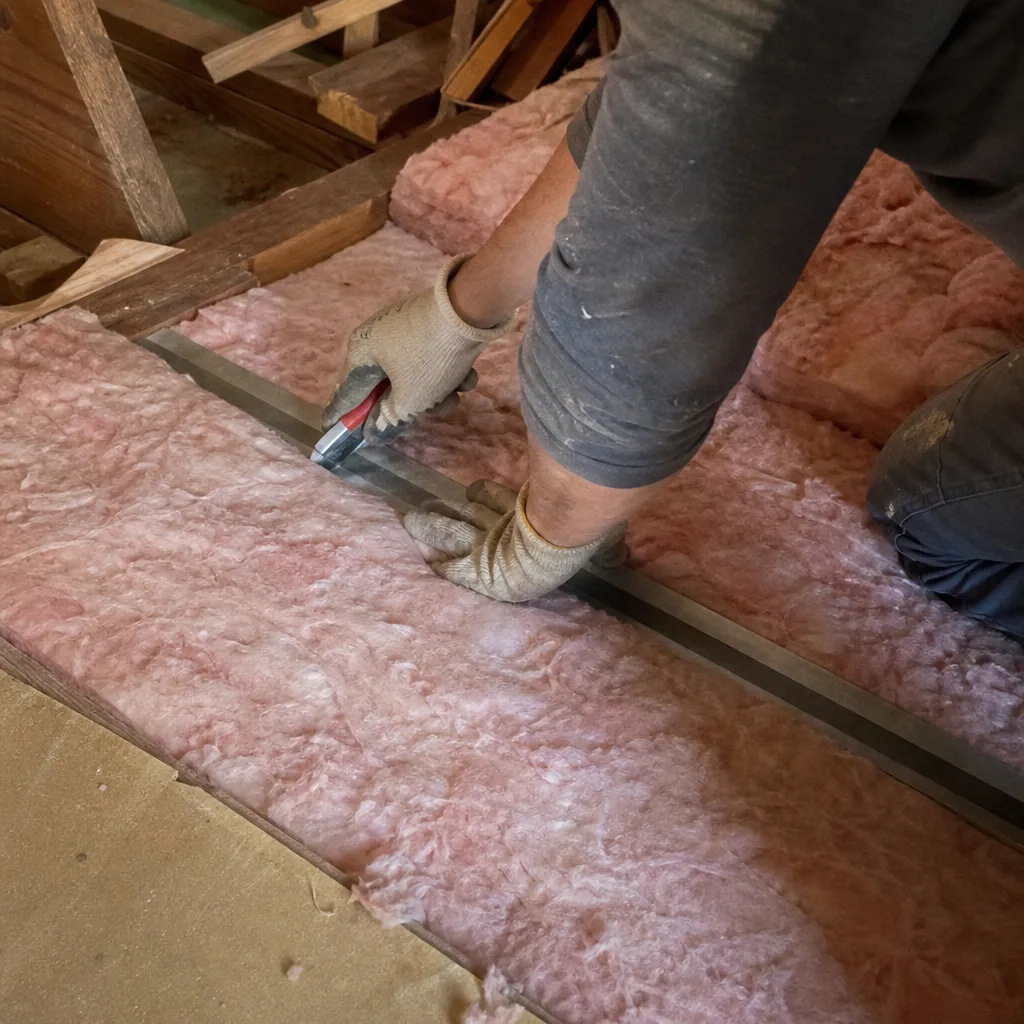
- Home age and wall construction: Mountain View has a substantial stock of homes built between 1945 and 1975 in neighborhoods like Monta Loma, Rex Manor, and Waverly Park. Those homes typically have 2×4 framing with 3.5-inch cavities and zero original insulation or badly degraded fiberglass batts. Retrofitting these walls with dense-pack cellulose or fiberglass through small access holes in the exterior (or interior) siding costs more than simply installing batts in open studs during new construction, but it’s almost always the only practical option without tearing out all the drywall.
- Wall area and linear footage: More wall surface means more labor hours and more material. A 1,600-square-foot Mountain View home with a simple floor plan might have 900 linear feet of exterior wall to treat; a two-story home or one with a complex footprint could exceed 1,400 linear feet. Every additional hundred square feet of wall adds roughly $180 to $260 in dense-pack cellulose costs at current Mountain View market rates.
- Insulation type selected: Dense-pack cellulose and dense-pack fiberglass are the most common retrofit choices here and represent the middle of the price range. Closed-cell spray foam costs two to three times more per square foot but provides a vapor retarder and significantly higher R-value per inch – useful in garages or in homes where moisture management is a documented problem. Open-cell foam is less expensive than closed-cell but still requires open stud bays, making it more realistic for gut renovations than standard retrofits.
- Access method – interior vs. exterior drilling: Blown-in wall insulation requires drilling access holes roughly every 16 inches between studs – either through the exterior siding or through the interior drywall. Drilling through fiber cement or stucco (common in Mountain View’s mid-century homes) takes more time and requires careful patching. Interior drilling is faster but means patching drywall. Your siding type affects both labor time and the final patch cost, which is sometimes handled separately by a painter or drywaller.
- Existing insulation condition: If the walls already have old fiberglass batts that have settled, gotten wet, or been contaminated, removal comes first. Insulation removal from wall cavities is painstaking work – it usually runs $400 to $1,200 for a typical Mountain View home – and skipping it would mean blowing new material into a compromised cavity. We document what we find with photos before and after, so you can see exactly what was in the wall before anything new goes in.
- Air sealing requirements: Mountain View’s Mediterranean climate means mild winters by national standards, but the Bay Area’s diurnal temperature swings (warm days, cool nights year-round) mean that conditioned air escaping through wall top plates and electrical penetrations is a real, ongoing energy drain. Air sealing wall top plates, outlet boxes, and any penetrations before insulating adds $300 to $900 to a project but is reflected directly in the post-job blower-door reading. We publish those numbers on every applicable job, which is why we’re specific about this cost rather than quietly absorbing it into a project estimate.
Mountain View-Specific Considerations
Mountain View’s building stock is worth understanding if you’re getting quotes from multiple contractors. The city’s postwar expansion – particularly in the Cuesta Park, Monta Loma, and Old Mountain View areas – produced thousands of single-story ranch homes with wood-frame walls and original single-pane windows that are now 50 to 70 years old. These homes have wall cavities that have often gone uninsulated for decades, or contain original fiberglass batts that have compressed to near-zero R-value. The upside: a well-executed dense-pack retrofit on one of these homes often produces a measurable air-sealing improvement even before accounting for the thermal benefit of the insulation itself, because the dense material can help reduce infiltration through small gaps in the framing.
The city’s proximity to the Bay also matters. Homes within a mile of the marshlands near Shoreline Park occasionally deal with elevated ambient moisture, which affects material selection. Dense-pack cellulose has a reasonable moisture-buffering capacity, but in homes with documented moisture intrusion, closed-cell spray foam or mineral wool batts (in open-cavity applications) are better choices. We treat moisture as a diagnostic question, not an assumption – the written scope you receive before any work starts reflects what we actually found in your walls, not a one-size recommendation.
Mountain View falls under Santa Clara County building codes. Wall insulation retrofits on existing homes generally don’t require a permit, but if you’re adding insulation as part of a permitted remodel or new addition, the work needs to meet California’s Title 24 energy code requirements. For 2×4 framing, Title 24 typically requires R-13 minimum for exterior walls in Climate Zone 4, which covers Mountain View. Dense-pack cellulose at 3.5 inches achieves roughly R-13 to R-14, which meets code. Closed-cell spray foam at 2 inches achieves around R-12 to R-13 – sometimes supplemented with a thin layer of rigid foam on the exterior to reach the target in high-performance projects.
If you’re also evaluating your attic at the same time – which we’d recommend, since attic losses typically dwarf wall losses in Mountain View’s climate zone – the home page gives an overview of the full building-envelope services we provide.
How to Save on Wall Insulation in Mountain View
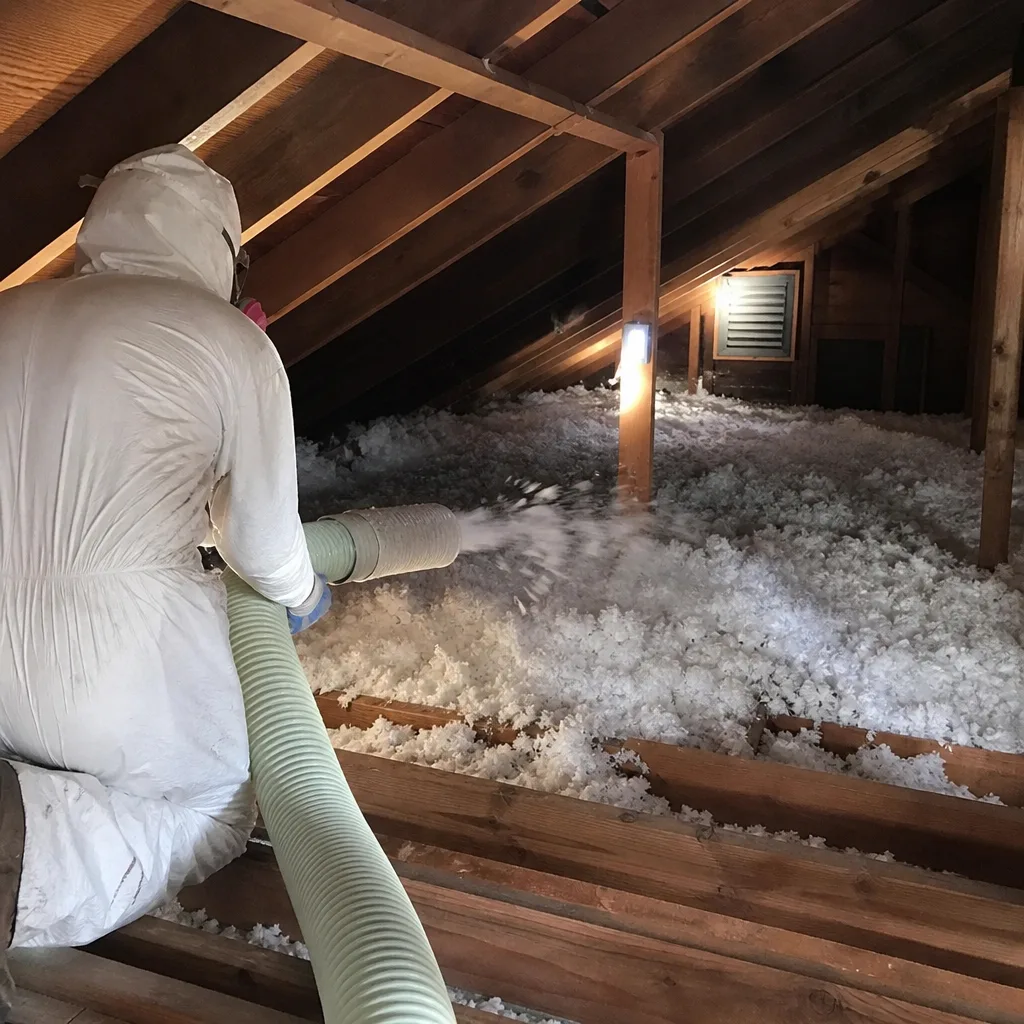
There are a few legitimate ways to reduce the cost of wall insulation without compromising the performance of the finished job. Here’s what actually moves the number.
Combine wall insulation with attic work
If your attic also needs insulation, air sealing, or removal work, scheduling both projects together reduces mobilization costs. A crew already on-site with equipment set up doesn’t need to charge a second trip fee. On jobs where we’re doing both attic and wall work, the combined job is almost always cheaper per square foot than two separate visits. This is one of the more reliable ways to save $300 to $600 on a Mountain View project without sacrificing any scope.
Choose the right material for your wall type, not the most expensive one
Closed-cell spray foam is excellent for specific applications – open stud cavities, garages, moisture-prone areas. But using it for a standard wall retrofit on a 1960s Mountain View ranch when dense-pack cellulose would achieve similar thermal performance at roughly half the cost isn’t a performance upgrade; it’s an unnecessary expense. A written scope and price before any work starts, which is how we operate under Haven Standard Clause 1, means you can read the recommendation and ask exactly why a particular material was specified before anyone lifts a tool.
Check for utility rebates before scheduling
PG&E offers rebates through its Energy Upgrade California program for qualifying insulation work, and the Bay Area Regional Energy Network (BayREN) provides additional rebates for envelope improvements in Santa Clara County. Amounts change annually, but wall insulation upgrades in homes that can document pre- and post-installation conditions have historically qualified for $200 to $600 in rebates. The before-and-after blower-door test we provide on applicable jobs produces exactly the kind of documented performance change that rebate programs ask for. Ask us about this when you call for your estimate.
Get the air sealing done at the same time
This sounds counterintuitive as a savings tip since air sealing adds to the project cost. But adding it later – as a separate mobilization, after the walls are already closed up – costs more than doing it while the walls are accessible or while a crew is already on-site. The performance gain from insulation installed over a sealed building envelope is also substantially higher than insulation installed over an unsealed one, which means you get more energy savings per dollar spent when the work is sequenced correctly.
Get a written price before agreeing to anything
This protects you from scope creep and from quotes that look low because they’ve omitted line items (like patching, or disposal of removed material) that will appear on the final invoice. Under Haven Standard Clause 1, the price we give you before work starts is the price – flat, in writing, with a written scope and written warranty attached. If you have a competing written estimate, bring it to us. We offer a free second opinion on any written estimate and will read it with you line by line. Call (669) 259-0406 to schedule your free estimate or to have us review a quote you’ve already received.
FAQs – Wall Insulation Cost in Mountain View
How much does it cost to insulate the walls of a typical Mountain View home?
Most single-family homes in Mountain View run between $2,200 and $4,500 for a whole-home wall insulation retrofit using dense-pack cellulose or fiberglass. Homes under 1,400 square feet in neighborhoods like Monta Loma or Rex Manor often land at the lower end; larger homes or those needing removal of old material first tend to fall between $3,500 and $6,500. The specific number depends on your wall area, your siding type, and whether air sealing is included. Call (669) 259-0406 for a free estimate with a written price before any work starts.
Is blown-in wall insulation worth it in Mountain View’s climate?
Yes – and the Bay Area’s diurnal temperature swings are part of why. Mountain View homes sit in Climate Zone 4, where summer days can hit the high 80s and nights drop 25 to 30 degrees. Walls with no insulation or compressed, degraded batts are losing conditioned air in both directions throughout the day. Dense-pack cellulose or fiberglass blown into those cavities typically achieves R-13 to R-14, which meets California Title 24 minimum requirements and measurably reduces HVAC load. On homes where we also seal the building envelope before insulating, the before-and-after blower-door readings consistently show significant reductions in air leakage – documented in writing and in photos that you keep.
How long does wall insulation installation take in Mountain View?
A whole-home wall insulation retrofit on a typical 1,500-square-foot Mountain View home takes one to two days including drilling, blowing, and patching access holes. If the project includes insulation removal, air sealing, or both, add another half-day to full day depending on complexity. We give you a timeline estimate in writing as part of the project scope before anyone starts – so there’s no guessing about when your home will be back to normal.
What R-value should wall insulation be in Mountain View, CA?
California Title 24 requires a minimum of R-13 for 2×4 exterior walls in Climate Zone 4, which covers Mountain View. Dense-pack cellulose or fiberglass at 3.5 inches (standard 2×4 stud cavity) achieves R-13 to R-14, meeting that requirement. If your home has 2×6 framing – more common in homes built after 1990 or in custom construction – you have a 5.5-inch cavity that can accommodate R-19 to R-21 in dense-pack or batts, or a higher R-value with spray foam. We confirm your wall framing before writing the scope, so the specified material and R-value is based on your actual walls.
Does wall insulation require a permit in Mountain View?
A straight wall insulation retrofit on an existing Mountain View home generally does not require a building permit from the City of Mountain View’s Building and Safety Division. However, if the insulation work is part of a larger permitted renovation or new addition, the work must be documented and meet Title 24 requirements. We flag this during the estimate process so you’re not caught off guard. If a permit is needed for your specific project, we’ll tell you before the written price is issued – not after the work is done.
Can you insulate walls without removing drywall?
Yes – and this is the standard approach for existing homes in Mountain View. Dense-pack cellulose or fiberglass is blown into wall cavities through small access holes drilled either through the exterior siding or through the interior drywall, typically at 16-inch intervals between studs. The holes are then patched. No full drywall tear-out is needed. The exception is if existing insulation needs to be removed first or if the project involves significant structural work – in those cases, open cavities change the options and costs. Your written scope will specify the access method before any drilling starts.
How do I know if my Mountain View home’s walls are uninsulated?
The fastest check is an outlet or switch plate test: remove a cover plate on an exterior wall and look into the gap around the electrical box. If you see open framing or an empty cavity, the wall is likely uninsulated. A thermal imaging camera during a home energy audit gives a more complete picture – we can identify which walls are cold (empty) and which have some material in them, and document it photographically. Homes in Mountain View built before 1978 are frequently uninsulated or under-insulated, particularly in the Monta Loma, Waverly Park, and Cuesta Park neighborhoods. Call (669) 259-0406 to schedule a free estimate and we’ll assess your walls before writing a price.
Why Mountain View Homeowners Choose Envelope Insulation Co.
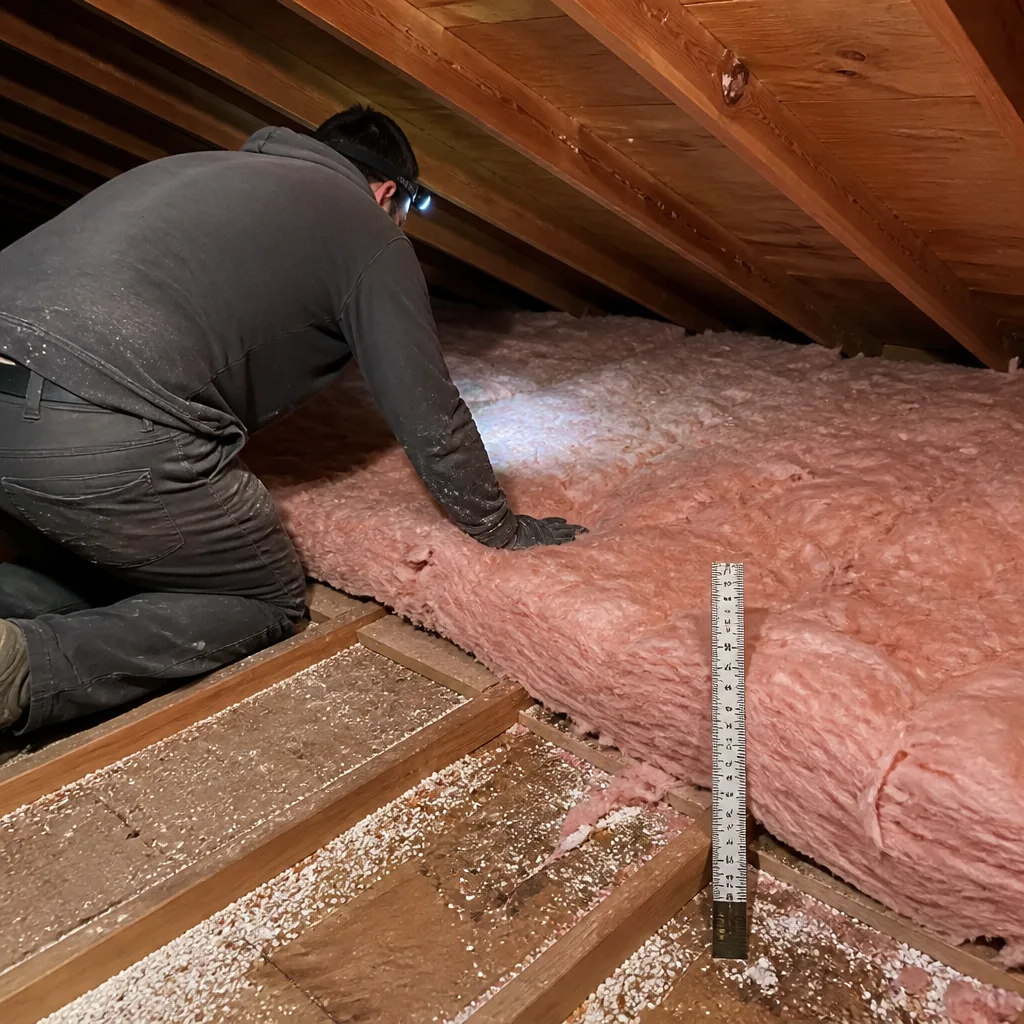
Since 2016, we’ve worked through more than 9,000 homes across the Bay Area – every one with a written price before work started and a documented photo record when the crew left. Wes Okafor leads the team, and the standard he set from day one is the same one that applies today: seal the building envelope before insulating it, document the result with real numbers, and put the price in writing before anyone lifts a tool.
That sequencing – air sealing first, then insulation – isn’t common practice in this market. Most contractors blow insulation into whatever they find and move on. We don’t do that, because insulation installed over an unsealed building envelope consistently underperforms its rated R-value. The blower-door test we run on applicable jobs quantifies exactly what changed: a pressurization reading before work and a reading after, both in your documentation, both in numbers you can read yourself.
The 365-Day Done Right Promise applies to every completed job. If something isn’t right, we make it right – and that commitment is in writing before work starts, not offered after the fact. Background-checked, uniformed technicians handle every job, and a live person answers calls at (669) 259-0406 around the clock, no voicemail.
If you’ve already received a written estimate from another contractor, bring it to us. We offer a free second opinion on any written estimate and will walk through it with you – line by line, in plain terms. There’s no pressure to switch, and you’ll leave with a clearer picture of what you’re being sold regardless of who you hire.
Key Takeaways
- Wall insulation in Mountain View costs $1,800 to $6,500 for most whole-home projects, with the typical range for a retrofit landing between $2,200 and $4,500.
- Dense-pack cellulose runs $1.80 to $2.60 per square foot of wall area and is the most common retrofit method for Mountain View’s mid-century housing stock.
- Air sealing before insulating is a prerequisite, not an upsell – and the result is documented with before-and-after blower-door readings on applicable jobs.
- California Title 24 requires R-13 minimum for exterior walls in Mountain View (Climate Zone 4). Dense-pack at 3.5 inches meets that threshold.
- Most wall insulation retrofits in Mountain View do not require a permit, but permitted remodel projects must meet Title 24 documentation requirements.
- PG&E and BayREN rebates may reduce net cost by $200 to $600 for qualifying projects with documented performance data.
- A written price before any work starts – always. That’s Haven Standard Clause 1, and it’s not negotiable on any job we take.
Get a Written Price for Your Mountain View Home
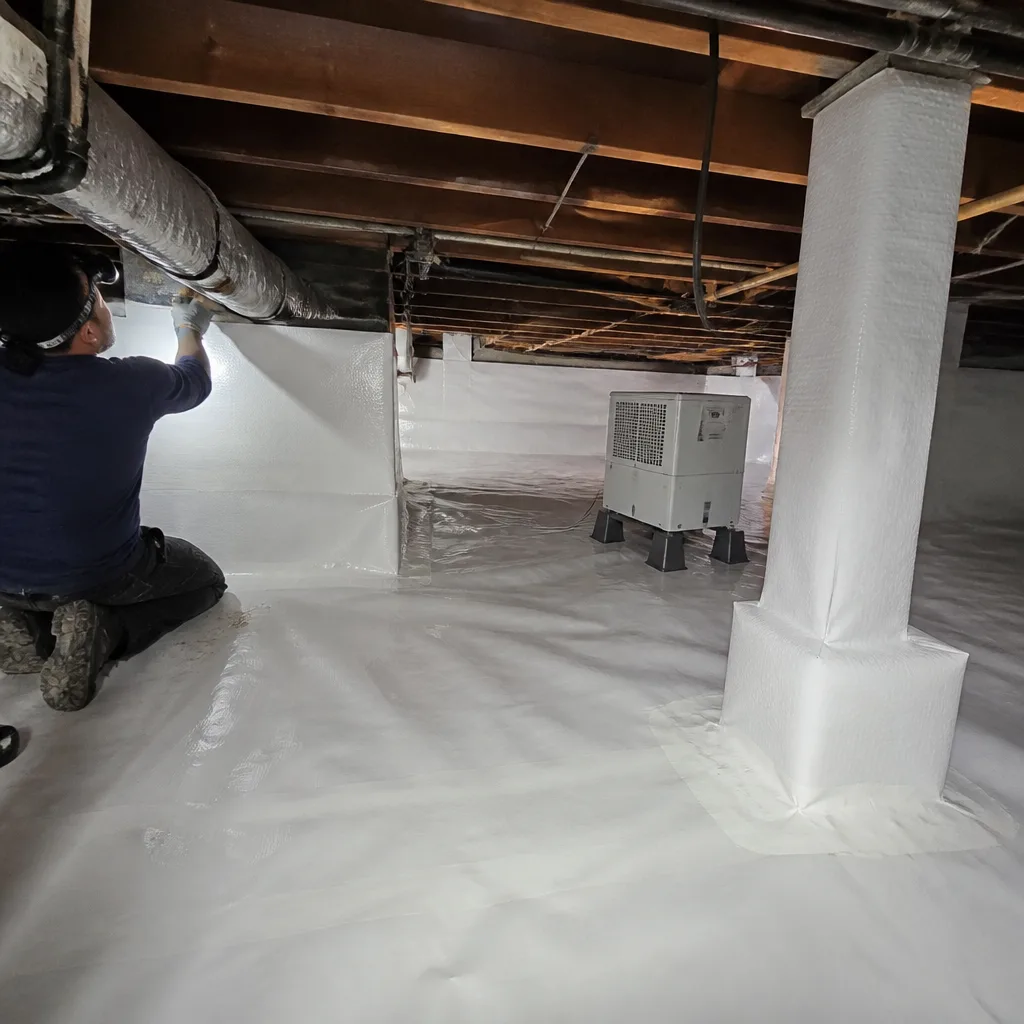
If your home was built before 1990, there’s a better-than-even chance the walls are either uninsulated or contain insulation that’s no longer performing. The only way to know what’s actually in your walls – and what it will cost to fix – is a proper assessment with a written price attached to it.
Wes Okafor and the team at Envelope Insulation Co. provide free estimates for our Wall Insulation services in Mountain View and throughout Santa Clara County. You’ll get a flat price in writing, a written scope, and a written warranty before anyone starts work. If you have a competing quote, bring it – we’ll review it with you at no charge.
Call (669) 259-0406 to schedule your free estimate. A live person answers, any time of day.
Written by Wes Okafor, Owner at Envelope Insulation Co. (operating as Topside Attic Insulation Mountain View), serving Mountain View, CA since 2016.
Pricing reflects the Mountain View market as of 2026. Topside Attic Insulation Mountain View offers free estimates – call (669) 259-0406.
What Our Customers Say
"Crawl space encapsulation done properly. Photographs of the vapour barrier at every seam, and the damp smell in the hallway is gone."
- Ainsley P."Fixed price, clean work, and they hauled the old material away as agreed."
- Todd M."Two other companies quoted to blow more insulation on top of what was there. These were the only ones who said the existing material had to come out first, and explained why."
- Clifford E.