

Trusted Spray Foam Insulation for Mountain View Homeowners
Spray Foam Insulation in Mountain View typically costs $2,800-$7,500 for residential projects, with most attic applications completed in one day. At Topside Attic Insulation Mountain View, we’ve sealed and insulated over 9,000 homes since 2016, and every job starts with a written price before any work begins. Call (669) 259-0406 to speak with a live person 24/7, or read on to see exactly what you’ll get.
Mountain View’s mild climate still delivers real temperature swings, summer days pushing 80°F while winter nights drop into the 40s. The older stock in neighborhoods like Old Mountain View and the Eichler-heavy pockets near Monta Loma were built with little to no insulation at the roof deck, and even homes from the 1990s in Castro City often have gaps at rim joists and garage ceilings that bleed conditioned air year-round. We’ve walked hundreds of these attics. The pattern is consistent: the insulation that exists is compressed, discontinuous, or installed over air leaks that were never sealed first.
Our approach treats air sealing as a hard prerequisite, not an upsell. We won’t blow or spray any insulation until top plates, can lights, plumbing penetrations, and electrical chases are sealed. Then we document the result with before-and-after blower-door numbers so you can see the performance change you paid for. Under The Haven Standard since 2016, every job closes with a written warranty, a Documented Photo Record, and flat pricing that was agreed to before anyone lifted a tool.
What Our Spray Foam Insulation Service Includes
Open-Cell Spray Foam
Open-cell spray foam is a half-pound density foam that expands to fill cavities and remains soft to the touch, making it ideal for attic floors and wall cavities where you need both insulation and some sound dampening. In Mountain View, we use it most often in vented attics where the roof deck stays cool and the insulation belongs on the floor plane. The open-cell structure allows some vapor permeability, which matters in our climate where seasonal humidity shifts can trap moisture against sheathing if the assembly isn’t designed right. We specify open-cell from suppliers like Owens Corning and Johns Manville, matched to the specific assembly so you don’t get a one-product-fits-all application.
Closed-Cell Spray Foam
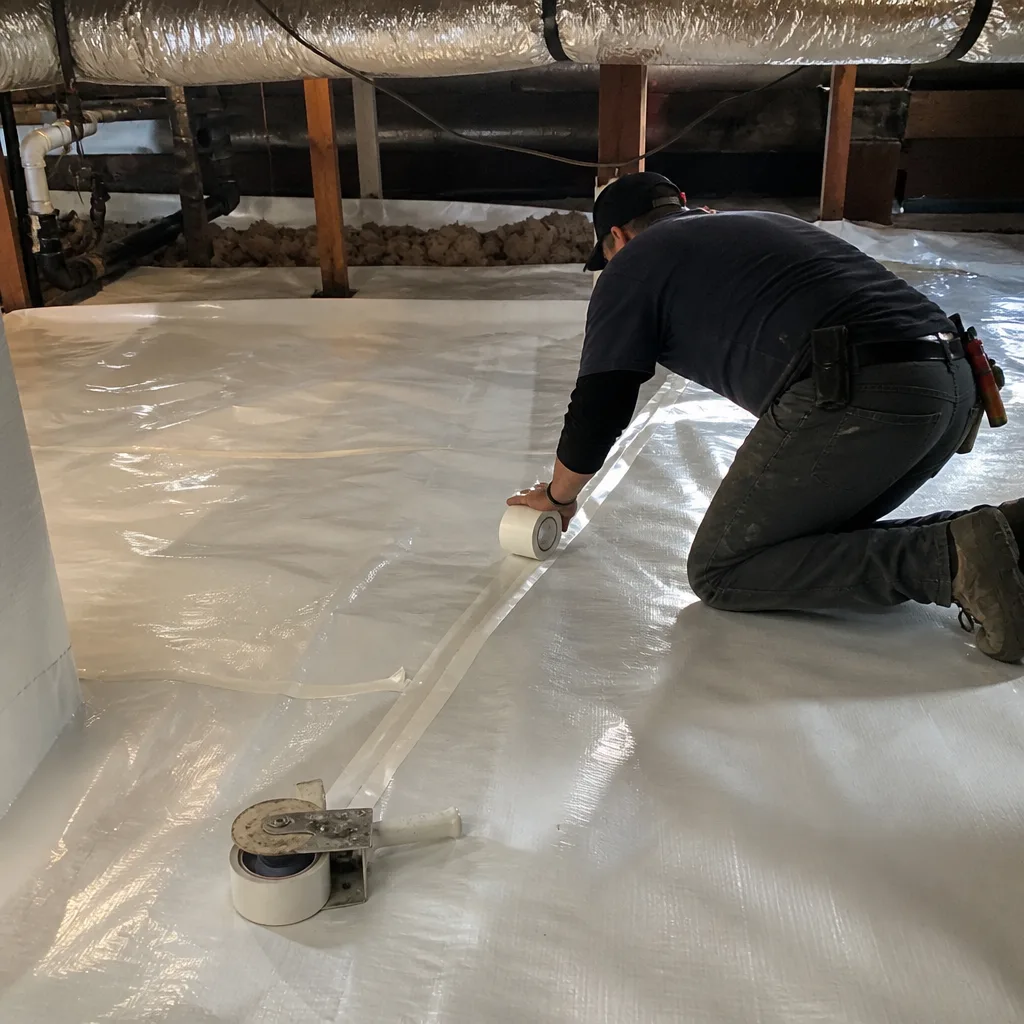
Closed-cell spray foam is a two-pound density material that cures rigid and delivers R-6.5 to R-7 per inch, roughly double the R-value of open-cell, while also acting as its own vapor barrier. We use it in Mountain View for rim joists in crawl spaces, garage ceiling applications where the space below is conditioned, and any roof deck where we’re creating an unvented “hot roof” assembly. The rigidity adds structural stiffness, which matters in earthquake country where every bit of diaphragm strength helps. Our crews are trained to monitor substrate temperature and humidity during application; closed-cell demands tighter environmental controls than open-cell, and we’ve rejected days in Mountain View when marine layer moisture would compromise adhesion.
Rim Joist Spray Foam
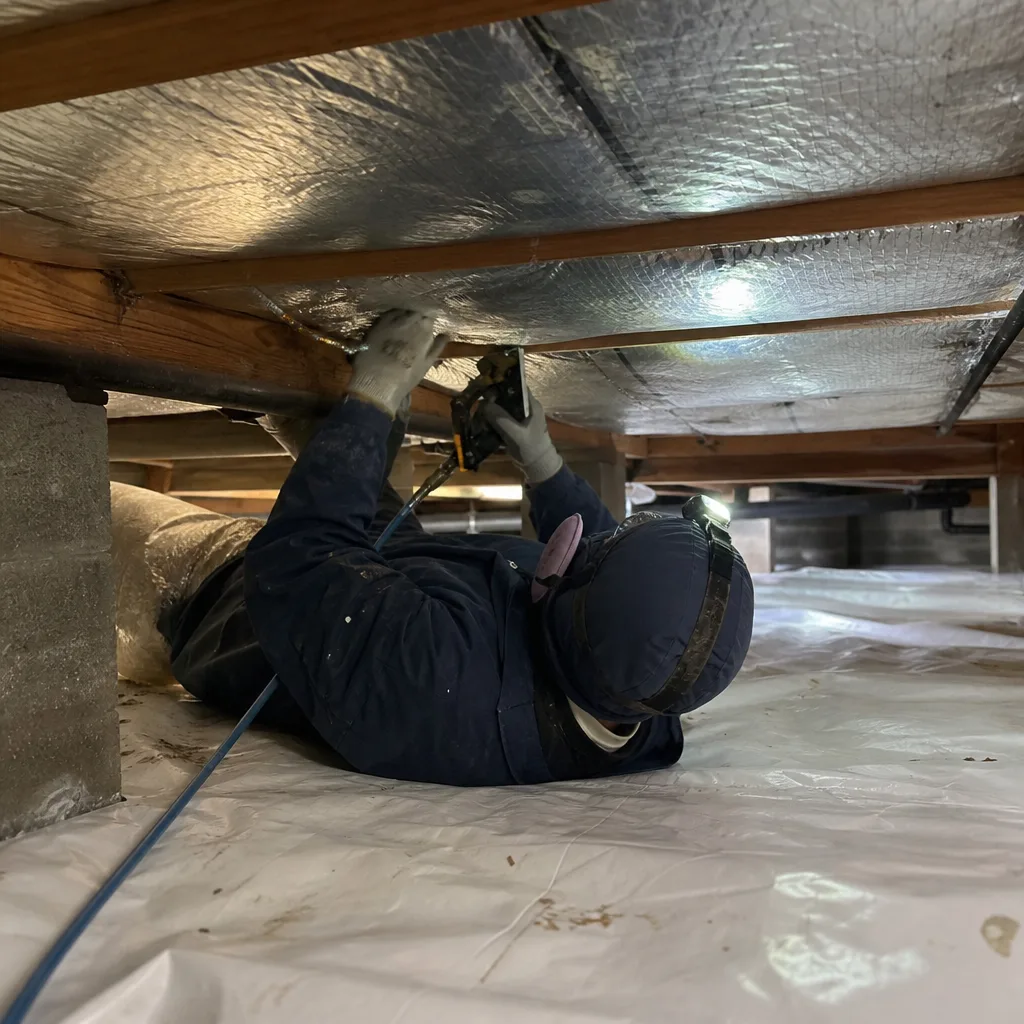
The rim joist is where your floor framing meets the foundation, and in Mountain View’s older homes, especially the 1950s-1970s stock in neighborhoods like Rex Manor and The Crossings, this junction is often wide open to outside air. Fiberglass stuffed in these cavities does almost nothing; it filters the air but doesn’t stop it. We remove any existing material, seal the seam between sill plate and foundation with acoustic sealant, then apply closed-cell spray foam to create a continuous air barrier. The blower-door test almost always shows this single detail as one of the highest-impact fixes in the whole house. We’ve seen 300-500 CFM50 reductions from rim joist work alone in 1,200-square-foot homes.
Garage Ceiling Spray Foam
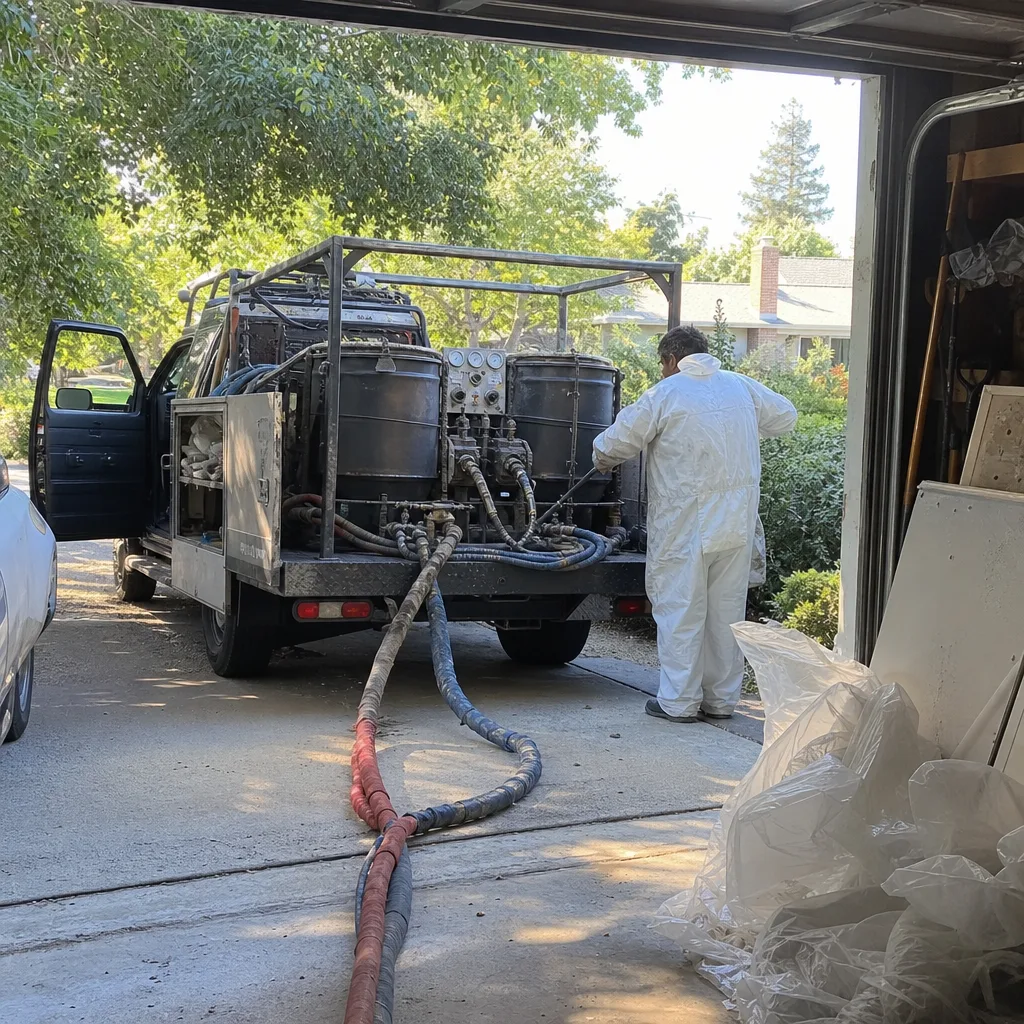
When a garage sits beneath conditioned space, the ceiling is a thermal bridge and often a fire-separation requirement under California Building Code. Spray foam in this application solves both problems: it insulates the floor above and, when specified with the correct ignition barrier, satisfies fire ratings without the bulk of a dropped drywall ceiling. In Mountain View, we see this most in homes with bonus rooms over garages, particularly in the newer construction near North Bayshore and along Charleston Road - and we also install Spray Foam Insulation - Sunnyvale homeowners trust for similar applications. We coordinate with the city’s building department on permit requirements, and our Documented Photo Record includes ignition barrier installation detail for your records.
Spray Foam Roof Deck
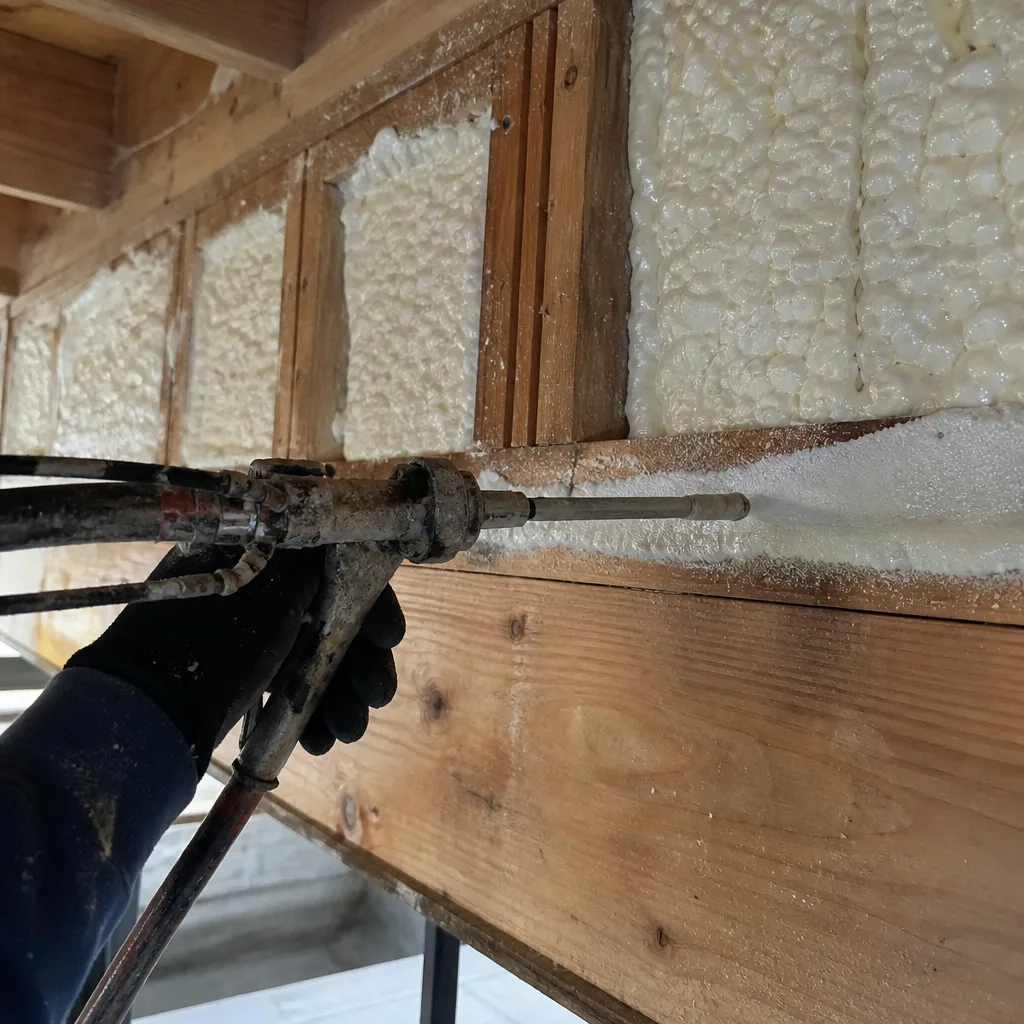
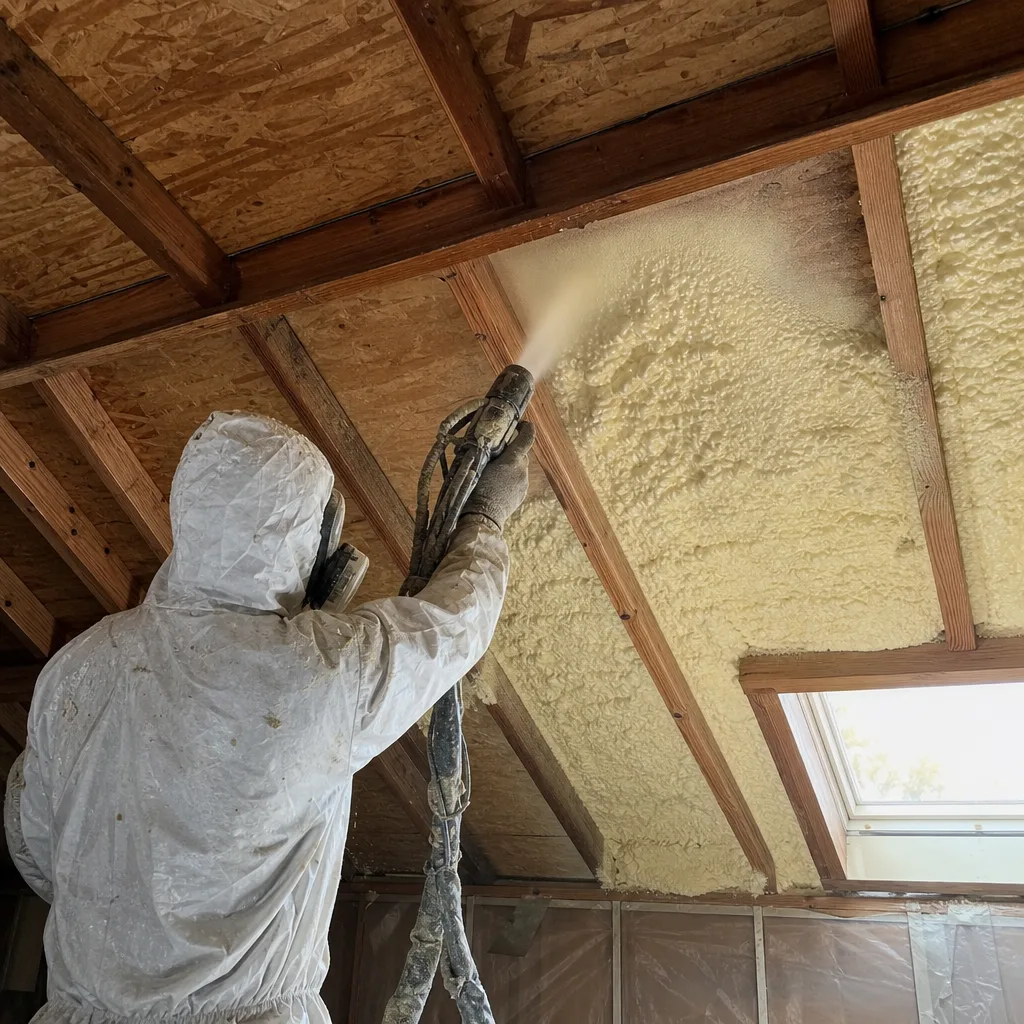
Spraying foam directly to the underside of roof sheathing converts a vented attic into conditioned space, moving the thermal boundary to the roof line and eliminating the need for soffit and ridge ventilation. This matters in Mountain View for homeowners who want to use attic space for storage, HVAC equipment, or living area, and it’s often the only practical solution for low-slope roofs where traditional ventilation doesn’t work. The assembly demands careful calculation: we size the foam thickness to meet Title 24 requirements, specify vapor-smart detailing for our Mediterranean climate, and always pair roof deck foam with mechanical ventilation strategy so humidity doesn’t accumulate. We’ve completed this work in Eichlers with flat or nearly-flat roofs where no other insulation approach was viable.
What happens when you call
- 1
A real person answersNo phone trees - you reach a local pro.
- 2
You get an upfront price rangeHonest numbers before anyone is dispatched.
- 3
A background-checked tech heads outLicensed & insured, dispatched right away.
- 4
You approve before work beginsNothing starts until you say go.
Brands We Service for Spray Foam Insulation
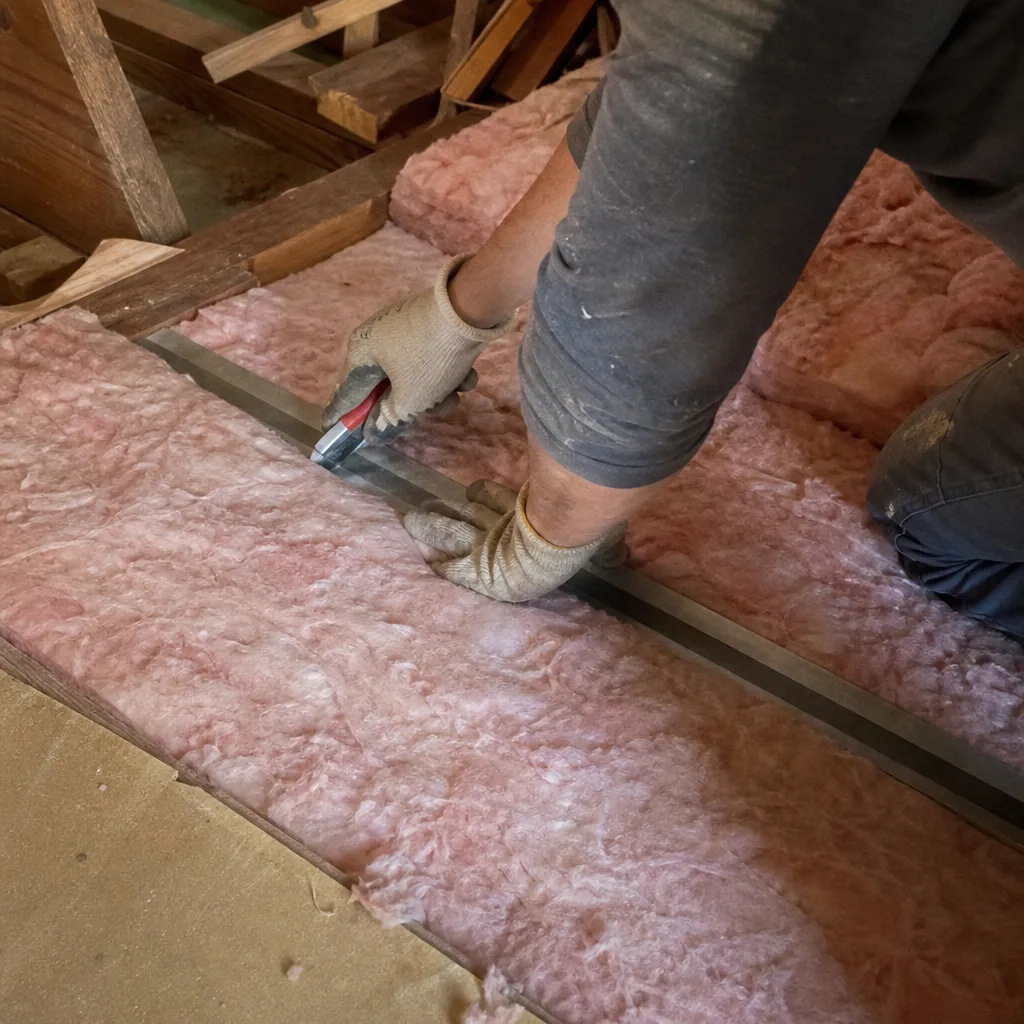
We source materials from Owens Corning, Johns Manville, Knauf, and other leading manufacturers, selecting by application rather than locking into a single supplier. Owens Corning’s Foamular and spray foam systems have performed consistently in our Mountain View roof deck applications, with stable long-term R-values and good adhesion to plywood and OSB sheathing. Johns Manville’s Corbond line gives us flexibility in closed-cell formulations for rim joist and garage ceiling work where we need specific yield and density characteristics. We’ve also used Knauf products in retrofit applications where low-pressure application equipment is necessary due to access constraints in older Mountain View attics.
Whether your project specifies one of these brands or another manufacturer entirely, we can source and install it. We don’t carry proprietary products or exclusive lines, and we’ll show you the material data sheets before application so you know exactly what’s going into your home. If you have a preferred brand from another contractor’s quote, bring it to us; under The Haven Standard, we offer a Free Second Opinion on any written estimate and will read it with you line by line.
Signs You Need Spray Foam Insulation Right Now
- Your upstairs rooms run 10-15 degrees hotter than downstairs in summer. This temperature stratification is almost always air leakage and inadequate insulation at the attic floor or roof deck. In Mountain View, we’ve measured 140°F attic air temperatures in July; without a proper thermal boundary, that heat radiates through the ceiling all afternoon. Spray foam creates the continuous seal that fiberglass batts cannot.
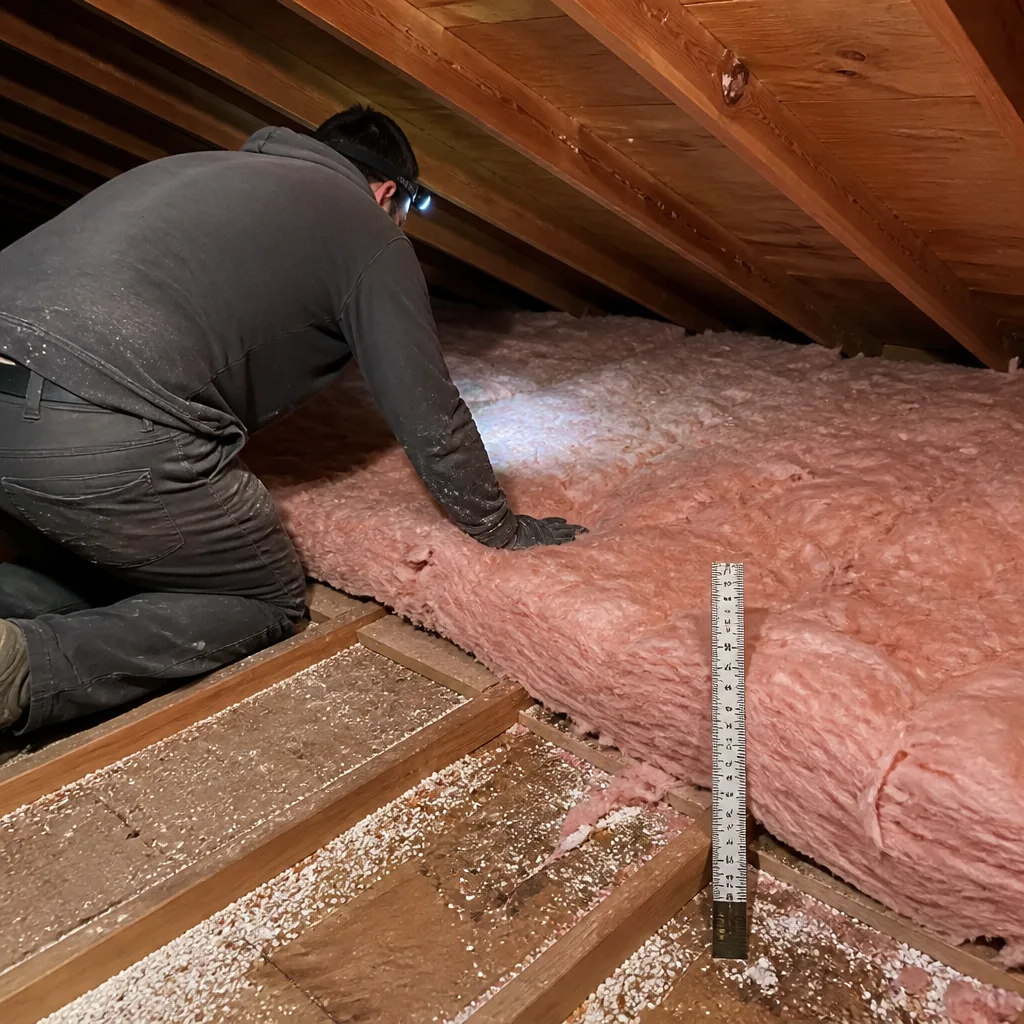
- You can see floor joists through existing insulation. Insulation that’s settled, been disturbed by rodents, or was never installed to full depth leaves thermal bypasses that waste conditioned air. We document this with photos during our assessment, and the fix is rarely “add more of the same” - it’s remove, seal, then install properly.
- Your energy bills spike every summer despite moderate thermostat settings. Pacific Gas & Electric rates in the Bay Area have climbed steadily, and homes with unsealed envelopes pay a premium for every degree of cooling. If your usage pattern doesn’t match your neighbors’ in similar Mountain View homes, the building envelope is the likely culprit.
- You feel drafts near outlets, baseboards, or in rooms over the garage. These are telltale signs of pressure boundary failures - places where the conditioned space connects to unconditioned cavities. Rim joists and garage ceilings are common sources, and spray foam is often the only practical way to seal them completely.
- Your HVAC runs constantly and never quite reaches setpoint. When a system is sized correctly but can’t keep up, the house is usually losing conditioned air faster than the equipment can replace it. We’ve seen blower-door numbers above 5,000 CFM50 in Mountain View homes that should test below 3,000; air sealing and spray foam together typically cut that by 40-60 percent.
Our Spray Foam Insulation Process - Step by Step
- 1
Assessment and blower-door test. We start with a walkthrough and a blower-door test - a pressurization reading that shows, in one number, how much air your building envelope is losing. This establishes your baseline and guides where we focus sealing effort. In Mountain View, we typically find the biggest leaks at attic hatches, recessed can lights, and rim joists.
- 2
Written scope and price. Before any work starts, you get a written scope with flat pricing, material specifications, and warranty terms. This is Haven Standard Clause 1: no work begins without a written price. We also note any permit requirements for Mountain View and handle submittals if the project triggers Title 24 or building code compliance.
- 3
Air sealing preparation. Every penetration, top plate, and chase gets sealed with appropriate materials - acoustic sealant, fire-rated foam, or rigid blocking - before spray foam equipment enters the space. Skipping this step is common in our industry; we consider it malpractice. The blower-door test after sealing but before insulation gives us a mid-project number that proves the effort.
- 4
Spray foam application. Our crews apply foam to specified thickness, monitoring substrate temperature, ambient humidity, and pass thickness for proper cure. We use real-time thickness gauges and mark pass lines so you can verify coverage in our Documented Photo Record. Overspray protection is installed for every job; we treat your home like we’d treat our own.
- 5
Final test, documentation, and walkthrough. On applicable jobs, we run a final blower-door test and publish the before-and-after numbers. You receive a Documented Photo Record showing preparation, application, and finished detail, plus your written warranty under the 365-Day Done Right Promise. We walk the space with you and answer questions before we consider the job closed.
How Much Does Spray Foam Insulation Cost in Mountain View?
A typical open-cell attic floor application in a 1,500-square-foot Mountain View home runs $3,200-$5,800, so you can see how much Spray Foam Insulation costs for this scope. Closed-cell rim joist work for the same footprint usually falls between $2,800-$4,500. Roof deck applications, which require more material and careful vapor management, range from $5,500-$7,500 for comparable area. Garage ceiling projects with fire-rated ignition barriers typically land at $3,500-$6,000 depending on access and whether the space requires mechanical ventilation coordination.
Several factors move these numbers. Roof pitch and attic access determine how much labor goes into setup and application; a 12:12 pitch with a scuttle hole takes longer than a 4:12 pitch with a framed stair. Existing insulation removal adds $1.00-$2.50 per square foot depending on material type and contamination. Material thickness requirements for Title 24 compliance can push closed-cell applications toward the higher end of the range. And any active rodent damage or moisture remediation must be resolved before foam goes in; we document these conditions during assessment and price them separately so you’re not surprised.
The best way to avoid overpaying is to get competing quotes in writing and compare scope, not just bottom-line price. A lower bid that skips air sealing or uses thinner foam than specified will cost more over time in energy bills and potential rework. Under The Haven Standard, we provide a Free Second Opinion on any written estimate; bring us another contractor’s quote and we’ll read it with you, line by line, to show what’s actually included. Our estimates are free, detailed, and delivered with no obligation.
Spray Foam Insulation Near Mountain View - Our Service Area
We serve Mountain View and surrounding communities with typical response times under two hours for assessments. Our regular service area includes Los Altos, Sunnyvale, Palo Alto, Los Altos Hills, East Palo Alto, Cupertino, Santa Clara, Menlo Park, Newark, Atherton, and Portola Valley. Homes in the hills west of 280 or near the bay in North Bayshore present different envelope challenges, and we’ve worked in both. Whether you’re in a 1950s tract near El Camino or new construction along Shoreline, we apply the same assessment protocol and deliver the same documentation.
Serving Mountain View, CA - Our Local Coverage Area
We’re based in the Mountain View area and know this community well. Use the map below to see our service coverage - if you’re nearby, we can almost certainly help.
Frequently Asked Questions - Spray Foam Insulation in Mountain View
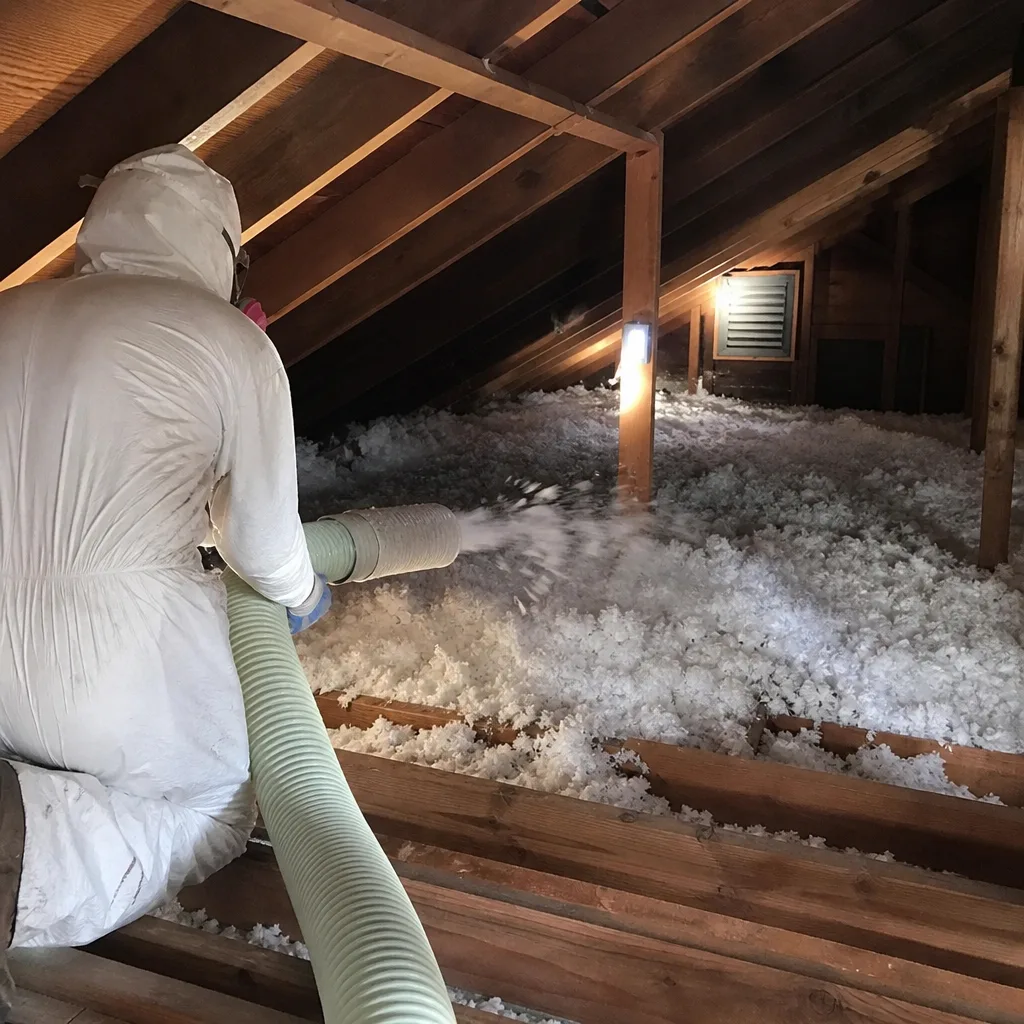
Spray foam insulation is a two-component chemical mixture that expands on application to fill cavities and create both an air barrier and thermal insulation in one step. Unlike fiberglass batts, which leave gaps at edges and compress over time, or blown-in cellulose, which can settle and doesn’t seal air leaks, spray foam adheres to substrates and cures in place. The result is a continuous barrier with higher effective R-value because there’s no convective air movement through or around the material.
Most residential spray foam projects in Mountain View are completed in one to two days, with attic floor applications typically finishing in a single day and roof deck or garage ceiling work sometimes extending to a second day for curing and ignition barrier installation. We schedule a morning arrival with a named technician, send a text when they’re en route, and don’t leave until the space is clean and documented. Call (669) 259-0406 to check current scheduling - estimates are free.
Spray foam insulation in Mountain View typically ranges from $2,800 for focused rim joist work to $7,500 for full roof deck applications, with most attic floor projects falling between $3,200-$5,800. The specific price depends on foam type (open-cell vs. closed-cell), application area, existing insulation removal needs, and Title 24 compliance requirements. We provide a written, flat price before any work starts, and our estimates are free with no obligation - call (669) 259-0406 to schedule yours.
Yes, we source spray foam materials from Owens Corning, Johns Manville, Knauf, and other leading manufacturers, selecting by application rather than exclusive arrangement. We’ll specify the right product for your assembly and show you material data sheets before application. If your project or another contractor’s quote specifies a particular brand, we can source and install it - no proprietary lock-ins.
We answer calls live 24/7, and for situations where insulation failure has created urgent comfort or safety issues - such as exposed roof decks after storm damage or failed garage ceiling assemblies - we can often dispatch within hours. True emergencies in insulation are rare; most issues develop gradually. If you’re unsure whether your situation is urgent, call (669) 259-0406 and we’ll help you assess.
All completed spray foam work is covered by our 365-Day Done Right Promise - if it’s not done right, we make it right. You also receive a written warranty document before any work starts, specifying coverage for material and installation. The Haven Standard requires this in writing; we don’t ask you to trust a verbal promise.
Clear attic access paths and remove stored items from work areas; our crew will cover and protect anything that remains. For occupied homes, plan to vacate during application and for 24 hours after while the foam cures and off-gasses - we schedule this to minimize disruption. We’ll provide specific preparation instructions with your written scope, including any HVAC shutdown requirements for unvented attic assemblies. Call (669) 259-0406 with questions about your specific situation.
Schedule Your Spray Foam Insulation Service in Mountain View Today
Call (669) 259-0406 to speak with a live person, any time. We’ll schedule a free assessment, run a blower-door test to establish your home’s baseline, and deliver a written price before any work starts. Every job closes with a Documented Photo Record and, on applicable work, before-and-after blower-door numbers you can verify. Under The Haven Standard since 2016, we’re the insulation contractor that treats air sealing as a prerequisite and proves the result.
Written by Wes Okafor, Owner at Topside Attic Insulation Mountain View, serving Mountain View and surrounding communities since 2016.