
Blown-In Attic Insulation in Mountain View, CA
Blown-in attic insulation is loose-fill material – cellulose or fiberglass – pneumatically installed to fill gaps, cover joists, and bring an attic floor up to the R-38 or R-60 depth that Mountain View’s climate zone (CEC Climate Zone 3) actually calls for. Most homes in Mountain View that were built before 1995 are sitting at R-11 to R-19, sometimes less. A single-day blown-in job with our Attic Insulation services brings that number up to code and does it without tearing out existing material in most cases.
One thing we don’t do: blow insulation over an unsealed attic floor. Before any material goes in, we seal the top plates, recessed light housings, and every penetration we can find. That sequencing – air sealing first, insulation second – is part of Envelope Insulation Co.’s core operating standard and the reason our before-and-after blower-door numbers consistently reflect a real performance change, not just added depth. Wes Okafor has led every job under that standard since 2016, and it hasn’t changed. If you want to talk through what your attic specifically needs, call (669) 259-0406 – a live person answers, no voicemail loop.
For a broader look at everything attic-related – removal, air sealing, radiant barriers – see our full Attic Insulation in Mountain View service page. This page focuses specifically on blown-in loose-fill: the process, the cost ranges, and the questions we hear most often from Mountain View homeowners.
When You Need Blown-In Attic Insulation
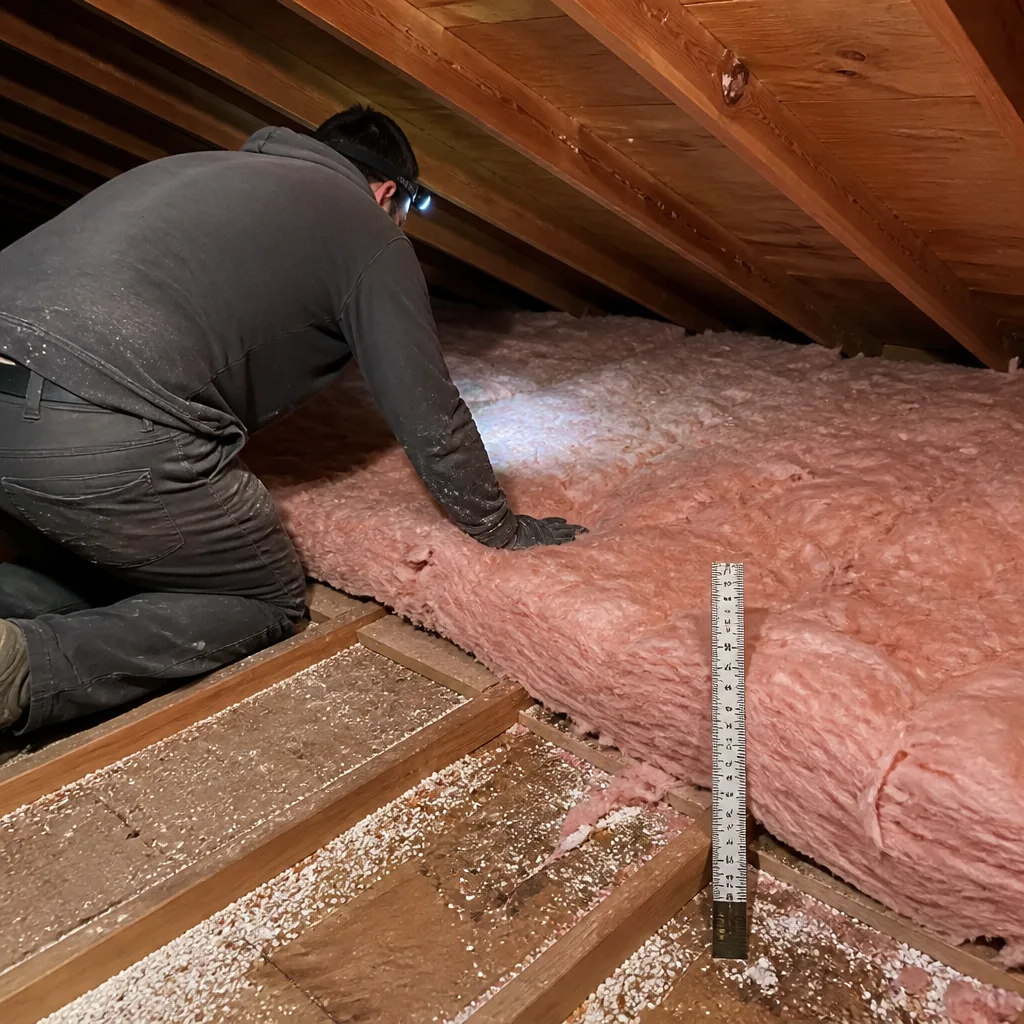
- Your attic insulation depth is at or below 6 inches. Stick a ruler in at three spots. If you’re reading 5 or 6 inches of fiberglass batts or settled cellulose, you’re likely at R-19 or lower – well under California’s current Title 24 requirement for existing homes in Climate Zone 3. In neighborhoods like Waverly Park and Rex Manor, we see this regularly in tract homes built between 1958 and 1975.
- Rooms on the top floor stay stubbornly hot from June through September. Mountain View sits at the south end of the Bay where summer afternoons regularly push into the mid-80s and attic temperatures can hit 140°F. Thin insulation lets that radiant load pass straight through the ceiling plane into living space. Blown-in at proper depth cuts that transfer significantly.
- Your energy bills spiked after replacing HVAC but nothing else changed. A new system with a leaky, under-insulated attic envelope is still fighting a losing battle. We’ve run blower-door tests – a pressurization measurement that shows in one number how much conditioned air a building is losing – on Mountain View homes where a brand-new system was working 30% harder than it should because the attic floor was essentially open to conditioned space.
- You’re seeing wide temperature swings between floors. If the downstairs stays comfortable while upstairs bedrooms feel like a different house, the attic floor is usually the first thing to look at. Blown-in insulation fills the irregular geometry around joists, blocking, and ceiling penetrations better than any batt product.
- You have old blown-in insulation that has settled or been contaminated. Cellulose loses roughly 20% of its stated depth through settling in the first 5 to 10 years. If there’s also evidence of rodent activity – a real problem in the Crestview and Monta Loma neighborhoods where older attic vents fail – that material needs to come out before anything new goes in. We handle removal and replacement as a single scope when that’s what the attic requires.
- You’re approaching a home sale or refinance and need documentation. A written scope, documented photo record, and post-job blower-door reading give you something concrete to put in a disclosure packet. Buyers’ agents in Mountain View ask about insulation depth and energy performance more than they did five years ago.
Our Blown-In Attic Insulation Process
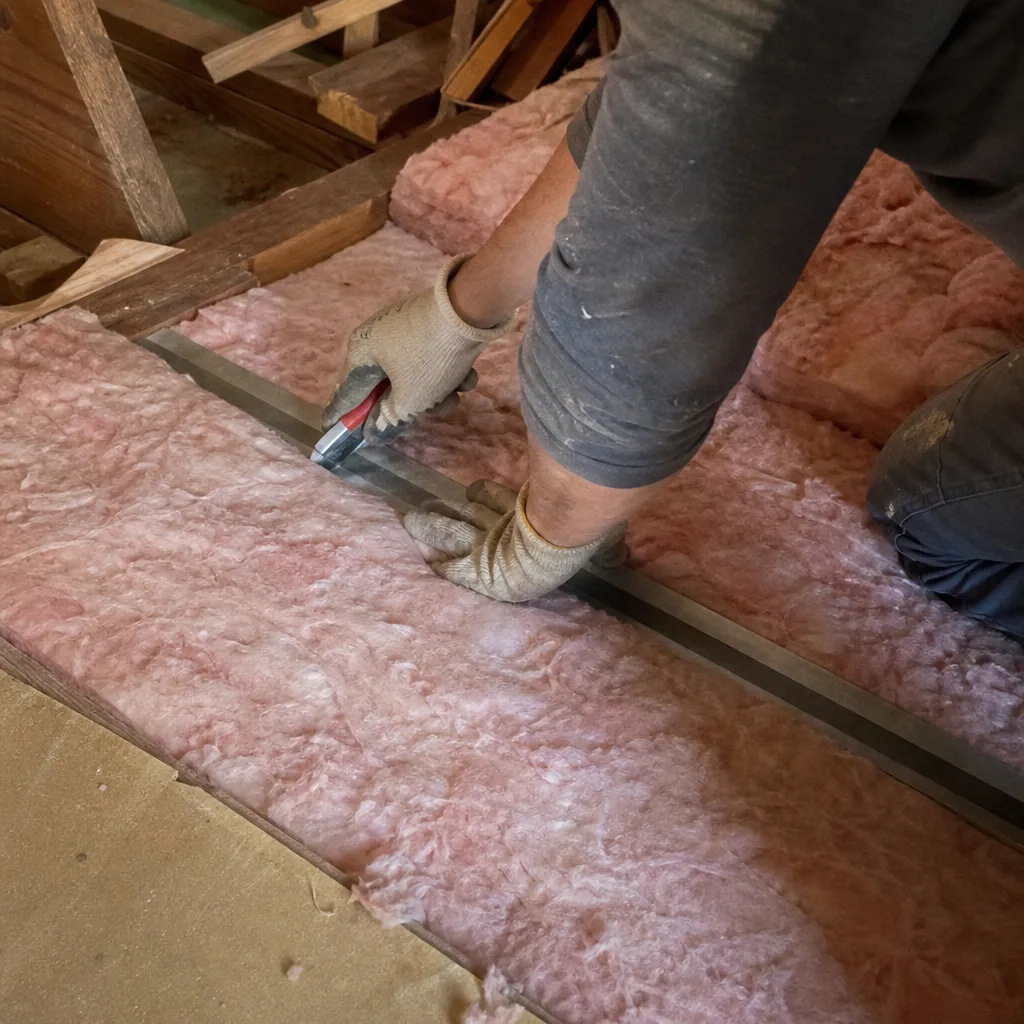
- Written price before any work starts. We measure the attic square footage, assess current depth and condition, and note every penetration and air leak we can identify from an initial walkthrough. You get a flat written price and a written scope before anyone lifts a tool. Under Haven Standard Clause 1, no work begins without that document in your hands. There’s no “we’ll figure it out once we’re up there.”
- Blower-door baseline. On applicable jobs – and most Mountain View jobs qualify – we take a pre-work blower-door reading. The number tells us exactly how much conditioned air the building envelope is losing before we touch anything. That baseline is what makes the post-job number meaningful. Without it, “improved efficiency” is just a claim.
- Air sealing the attic floor – every penetration, every plate. We seal top plates, recessed light cans (where accessible), plumbing and electrical penetrations, and any bypasses we find before insulation is installed. This step is not optional and it’s not an add-on. Blown-in insulation does not stop air movement – only a sealed envelope does. Skipping this step and adding R-value on top of an unsealed floor is one of the most common mistakes we see corrected on homes where a previous contractor did the job the fast way.
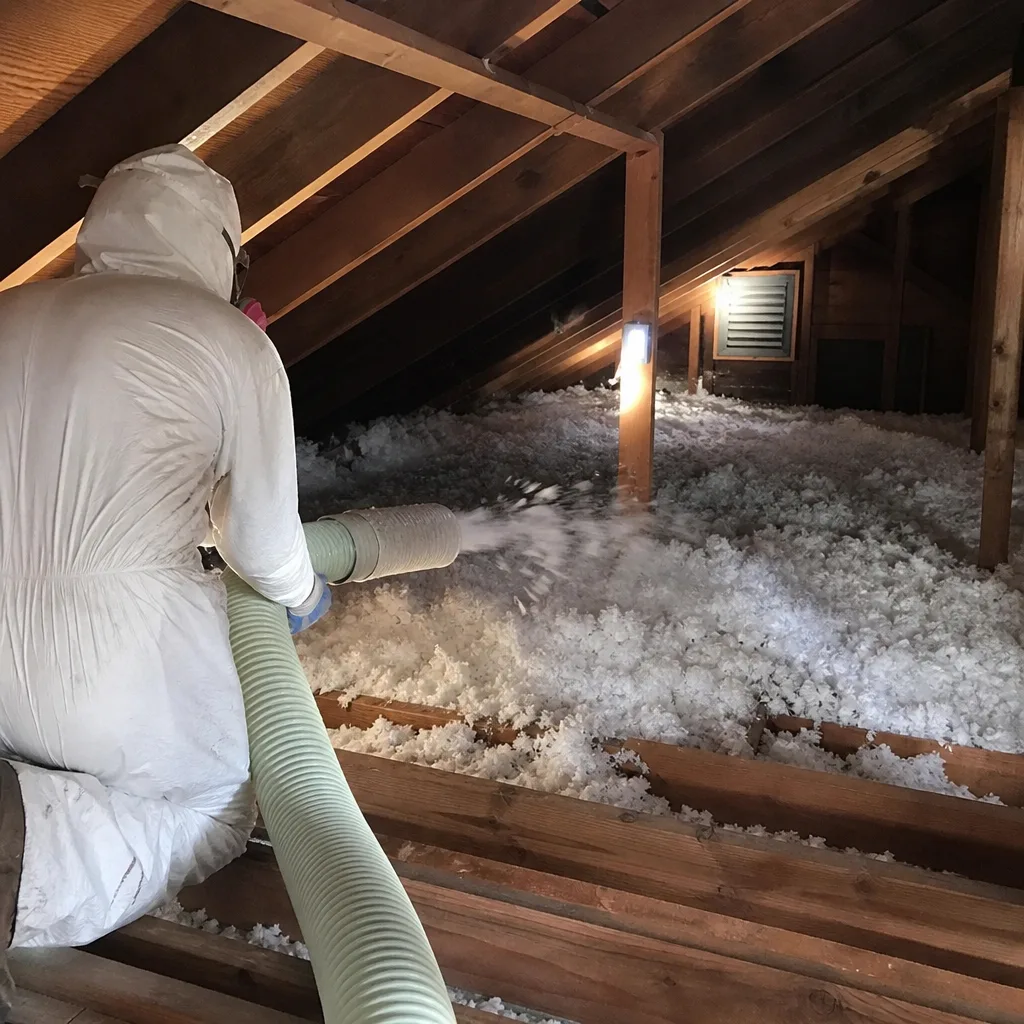
- Blown-in installation to target depth. We use Owens Corning or Knauf blown-in fiberglass, or GreenFiber cellulose depending on what the attic conditions call for – access, moisture history, and existing material all factor in. Depth rulers are placed at multiple points before the crew starts so we can verify final depth against the coverage chart for the R-value specified in your written scope. In Mountain View attics with complex framing – which is common in the 1960s ranch-style homes near Rengstorff Park – this step takes longer than it looks from below, and we don’t rush it.
- Post-installation blower-door reading. Once the attic floor is sealed and insulated, we run the blower-door again. You get both numbers – before and after – in the documented record we leave with you. If the post-job number doesn’t reflect the sealing work we did, we find out why before we pack up.
- Documented photo record and written warranty delivered before we leave. Every visit includes a documented photo record – not available on request, included by default. The 365-Day Done Right Promise backs the completed work in writing: if it’s not right, we make it right. Wes Okafor signs off on the job documentation before the crew leaves the site.
Blown-In Attic Insulation Pricing in Mountain View
Wondering How Much Does Attic Insulation Cost? (2026 Price Guide) - Mountain View, CA? Blown-in attic insulation typically runs between $1.50 and $3.20 per square foot installed, depending on depth, material, and attic conditions. For a 1,200-square-foot attic – common in the ranch-style and split-level homes in Crestview and Shoreline West – that works out to roughly $1,800 to $3,800 for the full job including air sealing. Attics with significant access restrictions, contaminated existing material, or extensive penetration sealing requirements sit at the higher end.
| Job Scope | Typical Price Range (Mountain View) |
|---|---|
| Air sealing + blown-in to R-38 (existing insulation in fair condition) | $1,800 – $2,600 |
| Air sealing + blown-in to R-60 (full upgrade, starting from low baseline) | $2,400 – $3,800 |
| Contaminated material removal + air sealing + blown-in replacement | $3,200 – $5,500+ |
| Partial top-off (attic already at R-19, bringing to R-38) | $900 – $1,600 |
A few things that move the price in Mountain View’s specific housing stock:
- Attic access size and clearance. Older homes near Castro Street and the Monta Loma neighborhood often have 18-inch access hatches and less than 24 inches of clearance. More labor time to move equipment and stage the work safely.
- Existing insulation condition. If existing material is wet, compressed below half its original depth, or contaminated, it comes out first. That’s a separate line item, always written into the scope before work starts – not discovered midway.
- Depth required to reach target R-value. R-60 requires approximately 18 inches of blown-in fiberglass. R-38 requires roughly 12. Both are realistic targets depending on your goals and whether California’s energy efficiency rebate programs apply to your situation.
- Number and type of penetrations requiring air sealing. A home with 22 recessed lights in the ceiling below the attic takes meaningfully longer to seal than one with 6.
Under Haven Standard Clause 1, you get a written price before any work starts – a flat number for the full scope, not an estimate that expands once we’re on the roof. If you have a competing written estimate, bring it: we offer a free second opinion on any written quote and will read it with you line by line.
To get a number specific to your home, call (669) 259-0406. The estimate is free, and you won’t be quoted a price verbally and then handed a higher number on the day of the job.
FAQs – Blown-In Attic Insulation in Mountain View
What’s the difference between blown-in fiberglass and blown-in cellulose, and which is better for Mountain View?
Blown-in fiberglass (brands like Owens Corning or Knauf) and blown-in cellulose (such as GreenFiber) both perform well in Mountain View’s Climate Zone 3, but they have different characteristics that matter depending on your attic. Fiberglass settles less over time and performs better if your attic has any moisture history – and with Bay Area marine influence, older homes in Mountain View can see condensation on cold mornings that accelerates cellulose breakdown. Cellulose has a higher recycled content and often a slightly better coverage-per-bag rating at the same R-value. We specify the material after looking at the actual attic, not before. The written scope you receive names the material, the R-value target, and the coverage chart we’re working from – so you can verify depth after the job is done.
How much does blown-in attic insulation cost in Mountain View?
Most Attic Baffles & Ventilation Prep and blown-in attic insulation jobs in Mountain View run between $1,800 and $3,800 for a 1,000-1,400 square foot attic, with air sealing included. Partial top-off jobs on attics already at R-19 run lower – typically $900 to $1,600. Jobs that include contaminated material removal start higher. The number that matters is the one written in your price agreement before we start. Call (669) 259-0406 for a free estimate specific to your home’s square footage and current conditions – you’ll have a flat written price before any commitment is made.
Do you have to remove old insulation before blowing in new material?
Not always, but sometimes yes – and the distinction matters. If existing Attic Batt Insulation or other material is dry, undamaged, and above roughly 3 inches of depth, we can blow additional material on top to reach the target R-value. If it’s wet, compressed, contaminated with rodent activity, or contains vermiculite (a concern in some Mountain View homes built before 1980), it needs to come out first. We make that determination during the initial assessment and write it into the scope before work starts. We don’t discover mid-job that removal is required and then present a larger number.
Why does air sealing have to happen before blown-in insulation is installed?
Blown-in insulation is a thermal barrier – it slows heat transfer through conduction. It does not stop air movement. If the top plates, recessed light cans, and penetrations in your attic floor are not sealed before insulation is installed, conditioned air will continue to bypass the insulation through those gaps regardless of how much material is on top of them. The blower-door test – a pressurization measurement that quantifies in one number how much air a building is losing – will reflect this: attics insulated without prior air sealing show almost no improvement in blower-door readings compared to pre-job baseline. That’s the test we run on every applicable job, and it’s the reason our process treats air sealing as a prerequisite, not an optional add-on. Wes Okafor set that standard when Topside Attic Insulation Mountain View started work in 2016, and no job has left that sequence since.
Can I get a second opinion if I already have a competing estimate?
Yes – and we mean that literally. Bring us any written estimate from another contractor and we’ll read it with you: line by line, material by material, scope item by scope item. We don’t charge for that conversation. If the other estimate is solid and correctly scoped for your attic, we’ll tell you. If it’s missing air sealing, specifying a lower R-value than your attic needs, or written in a way that leaves room for cost additions once work starts, you’ll see that too. Call (669) 259-0406 to schedule a second opinion – no obligation beyond that.
Key Takeaways
- Blown-in attic insulation in Mountain View typically costs $1,800-$3,800 for a full job including air sealing, depending on attic size and current insulation conditions.
- Air sealing must happen before blown-in installation – blowing insulation over an unsealed attic floor adds depth without stopping air loss, and the blower-door numbers will show the difference.
- Most Mountain View homes built before 1995 are significantly under-insulated relative to current California Title 24 requirements for Climate Zone 3.
- Under Haven Standard Clause 1, you receive a written price and written scope before any work begins – no verbal estimates, no surprises on job day.
- Before-and-after blower-door readings are provided on applicable jobs so you can verify the actual performance change, not just take our word for the improvement.
- The 365-Day Done Right Promise backs all completed work in writing: if it’s not right, we make it right.
Get a Written Price for Your Mountain View Attic
If your Mountain View home is under-insulated, running warm upstairs in summer, or you’ve never had an attic inspection and a blower-door baseline taken, the right next step is a free estimate – not a verbal ballpark, but a written price with a full scope. Call Topside Attic Insulation Mountain View at (669) 259-0406 to schedule. A live person answers, there’s no callback window, and you’ll leave the conversation with a date, a named technician, and a text confirmation when they’re on the way. The estimate costs nothing. The written price is yours to keep whether or not you book the job.
Written by Wes Okafor, Owner at Topside Attic Insulation Mountain View, serving Mountain View since 2016.