
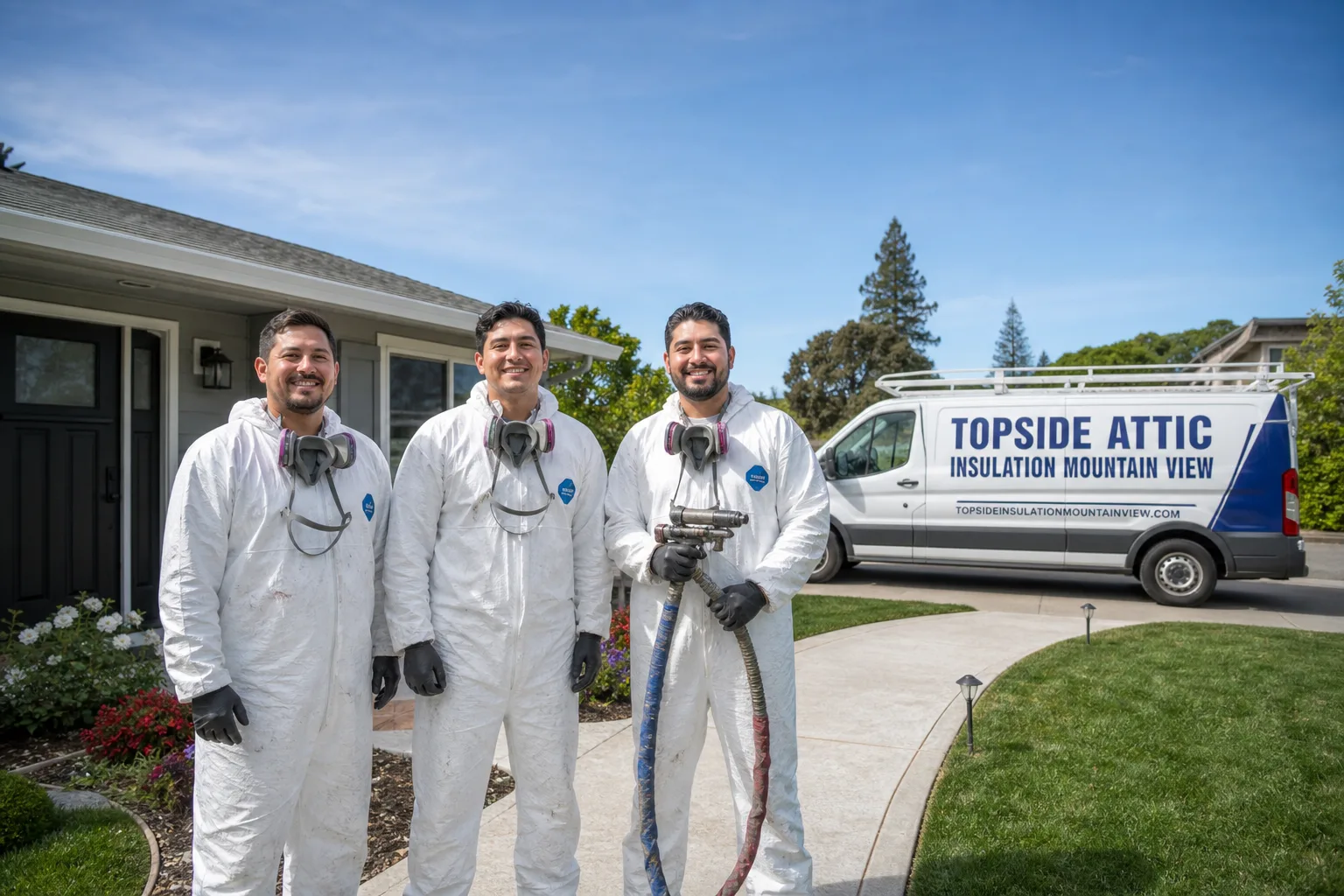
How Much Does Blown-In Insulation Cost in Mountain View?
Blown-In Insulation services in Mountain View, CA typically cost between $1,800 and $4,200 for a standard attic, with most single-story homes in the 1,400-to-2,000-square-foot range landing around $2,200 to $3,100 when attic air sealing is done first. The final number depends on your current R-value, the material chosen (cellulose vs. fiberglass vs. mineral wool), and whether accessible penetrations – recessed lights, top plates, plumbing chases – are sealed before insulation goes in, which is the right order and the one that actually holds the performance gain.
If you’ve already received a written estimate from another contractor, Envelope Insulation Co. will read it with you at no charge – that’s a standing offer, not a sales pitch. Call (669) 259-0406 and a live person will pick up.
Blown-In Insulation Cost Breakdown (2026)
The table below reflects what Envelope Insulation Co. sees quoted and invoiced on real jobs in Mountain View and the surrounding Santa Clara County market through early 2026. Prices assume a standard accessible attic with no mold, rodent damage, or existing insulation removal required. Jobs that need removal first are broken out separately.
| Scope of Work | Typical Mountain View Price Range | Notes |
|---|---|---|
| Blown-in cellulose only (attic, per sq ft) | $0.90 – $1.40 / sq ft installed | To R-38; existing attic floor prep required |
| Blown-in fiberglass only (attic, per sq ft) | $1.00 – $1.55 / sq ft installed | Slightly higher settled depth needed vs. cellulose |
| Attic air sealing + cellulose (combined) | $2,200 – $3,100 (1,400-2,000 sq ft home) | Our standard scope; air sealing must precede insulation |
| Attic air sealing + cellulose (2,000-3,000 sq ft home) | $3,100 – $4,200 | Larger attic footprint; more penetrations to seal |
| Blown-in wall insulation (dense-pack cellulose, per sq ft of wall) | $2.20 – $3.80 / sq ft | Older Mountain View ranch homes often need this |
| Insulation removal before re-insulation | $0.80 – $1.30 / sq ft removed | Necessary if prior insulation is wet, compacted, or rodent-contaminated |
| Blower-door test (standalone, if not bundled) | $250 – $450 | Bundled at no added charge on full Envelope jobs |
| Radiant barrier addition (during blown-in job) | $600 – $1,100 added to base job | Worth considering in Mountain View’s warmer microclimate zones |
What Pushes the Price Up
Mountain View has an unusual housing stock for a Bay Area city: a large share of the residential neighborhoods south of El Camino Real feature post-WWII ranch homes with shallow, hard-to-navigate attics and original construction that left top plates wide open to conditioned space below. Those attics need more sealing labor before a single bag of material goes in. If we find the attic floor is contaminated – rodent droppings, soaked insulation from a past roof leak, or corroded bath-fan ducts dumping humidity into the attic – that adds removal and cleaning cost before re-insulation can happen.
Material also moves the price. Cellulose (recycled paper fiber, treated with borates) is the most cost-effective option per R-value and has excellent settled performance. Fiberglass blown-in costs slightly more per bag and requires greater installed depth to hit the same R-value. For walls, dense-pack cellulose – packed under pressure so it can’t settle – is almost always the right call in Mountain View’s older housing stock, but the labor rate is higher because the installer is drilling and plugging, not just blowing into an open attic.
What Pulls the Price Down
If your attic already has partial insulation in reasonable condition – no moisture damage, no pests – and we’re simply topping up from R-19 to R-49, the job is faster and the price reflects that. Newer construction in the Whisman Station area or the condo developments near downtown Mountain View often has better air sealing from the factory but undershoots on R-value; a top-up job on a clean, modern attic can land closer to $1,200-$1,800.
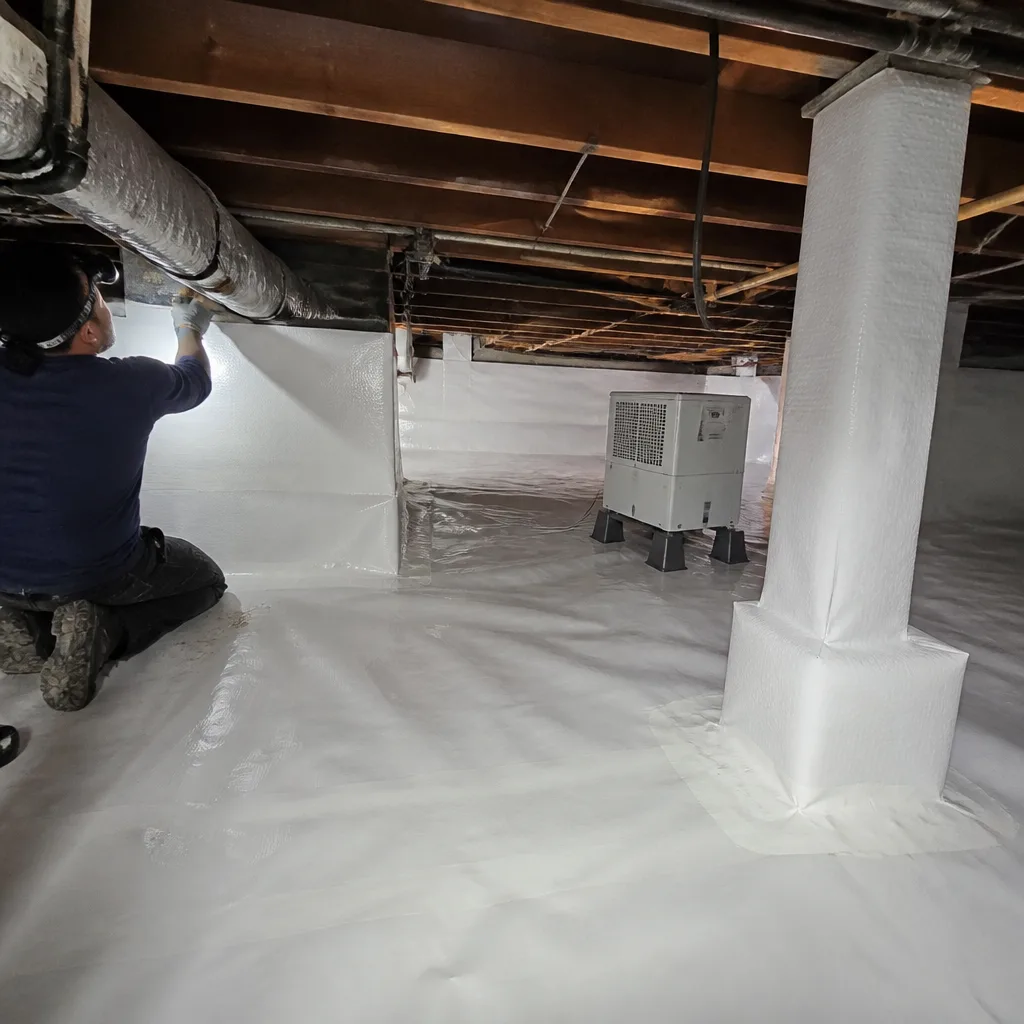
Pairing insulation with another envelope service – crawl space vapor barrier, for instance, or radiant barrier – on the same day also reduces mobilization costs. We price combination jobs to reflect that both crews are on site together.
What Affects Blown-In Insulation Pricing in Mountain View
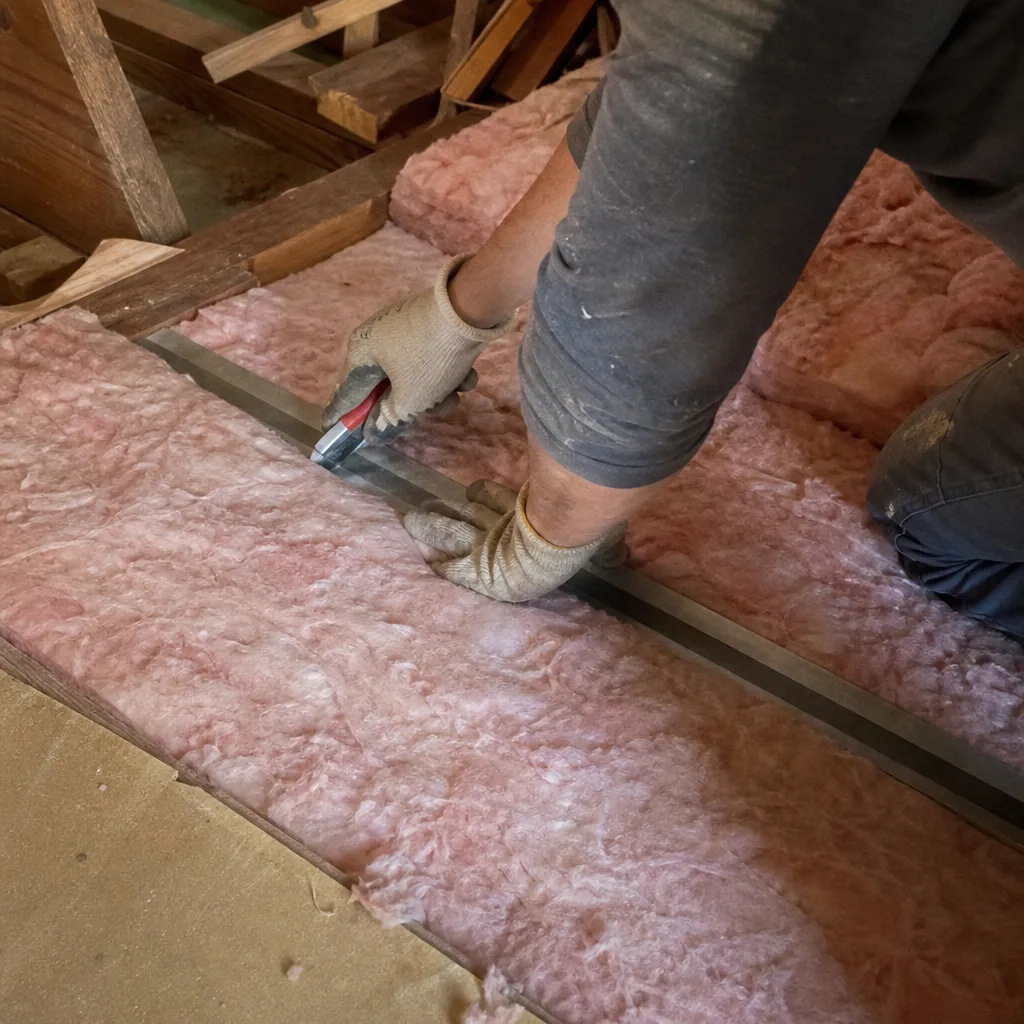
- Current R-value and insulation depth: California’s Title 24 energy code targets R-49 for attics in Climate Zone 4, which covers most of Mountain View. If your home is sitting at R-11 or R-19 – common in homes built before 1990 in the Cuesta Park and Rex Manor neighborhoods – you’re adding a lot of material, which means more bags, more time, and a higher total. The jump from bare joists to R-49 costs more than a top-up from R-30 to R-49.
- Attic access and geometry: A full-height attic with a 30-inch hatch is straightforward. A flat-roofed condo in downtown Mountain View or a shallow hip-roof on a 1950s ranch in Shoreline West is a different job entirely. Low clearance means the blower-hose operator is crawling, not standing, and that slows the installation enough to affect labor cost.
- Air sealing complexity: This is the line item most contractors skip or undercharge because it takes real time and materials. A home in Old Mountain View with original recessed can lights (the kind that leak directly into the attic), a furnace flue penetration, and multiple plumbing chases can take two to four hours of sealing before we touch the blower hose. Under our approach, air sealing is a hard prerequisite – we will not blow insulation over an unsealed attic floor – so a house with more penetrations is simply a higher-cost air sealing line, not a corner we cut.
- Material choice: Cellulose, fiberglass, and mineral wool (Rockwool) all reach the same R-value targets, but at different cost and density points. Cellulose from GreenFiber is typically the lowest cost-per-R option and is what we specify on most Mountain View attic jobs. Mineral wool costs more but is dimensionally stable, non-combustible, and handles moisture better – relevant for homes near Stevens Creek where humidity can spike seasonally.
- Existing insulation condition: If what’s already up there is contaminated, compressed below useful R-value, or wet from a prior roof leak, it has to come out. Removal adds cost, but installing new blown-in over bad existing material is a documented way to underperform the R-value you paid for. We photograph the before state and the after state so you can see exactly what was removed and what replaced it.
- Concurrent services and scope bundling: Mountain View’s climate is mild enough that many homeowners in the 94040 and 94041 zip codes don’t think about crawl space vapor barriers until a home energy audit surfaces the moisture problem. Adding a crawl space encapsulation on the same mobilization as blown-in attic insulation reduces the total cost compared to two separate visits. Same logic applies to attic cleaning and rodent proofing if the existing insulation is already coming out.
Mountain View-Specific Factors Worth Knowing
Mountain View sits at the boundary of two distinct microclimate zones. The neighborhoods north of Highway 101 – closer to the Bay – experience more marine moisture and cooling fog that can work its way into attic spaces through soffit vents if the attic floor isn’t properly sealed. We regularly see older insulation in Shoreline West and Whisman area homes that has absorbed enough ambient moisture to lose meaningful R-value even without a visible roof leak. That condition doesn’t always trigger a full removal, but it does mean we test settled R-value before recommending a simple top-up.
South of El Camino Real, in Cuesta Park and Old Mountain View, the housing stock trends older and the attic penetration count is higher – original can lights, knob-and-tube remnants in some pre-1960 homes, and plumbing stacks that were never fire-stopped when the house was built. Those jobs take longer to air-seal correctly, which is reflected in the price. A job in that neighborhood quoted under $1,500 for a full attic is almost certainly skipping the sealing step – and the performance gap shows up on your energy bill year after year.
Mountain View does not require a separate city permit for blown-in insulation added to an existing residential attic in most cases, but work touching the building’s thermal envelope should be documented. Every job we complete includes a Documented Photo Record – photos of the attic before sealing, during sealing, and after insulation – so you have a permanent record if a permit question ever comes up on resale. That documentation is included on every visit, not available on request.
If your home was built before 1978, there’s a reasonable chance the existing insulation contains vermiculite or that the attic framing is encapsulated with older spray-applied materials. We identify these during the assessment and, if asbestos-containing materials are suspected, we recommend licensed abatement before any blown-in work begins. This is not a upsell – it’s a legal and safety requirement, and we won’t skip it.
How to Save on Blown-In Insulation in Mountain View
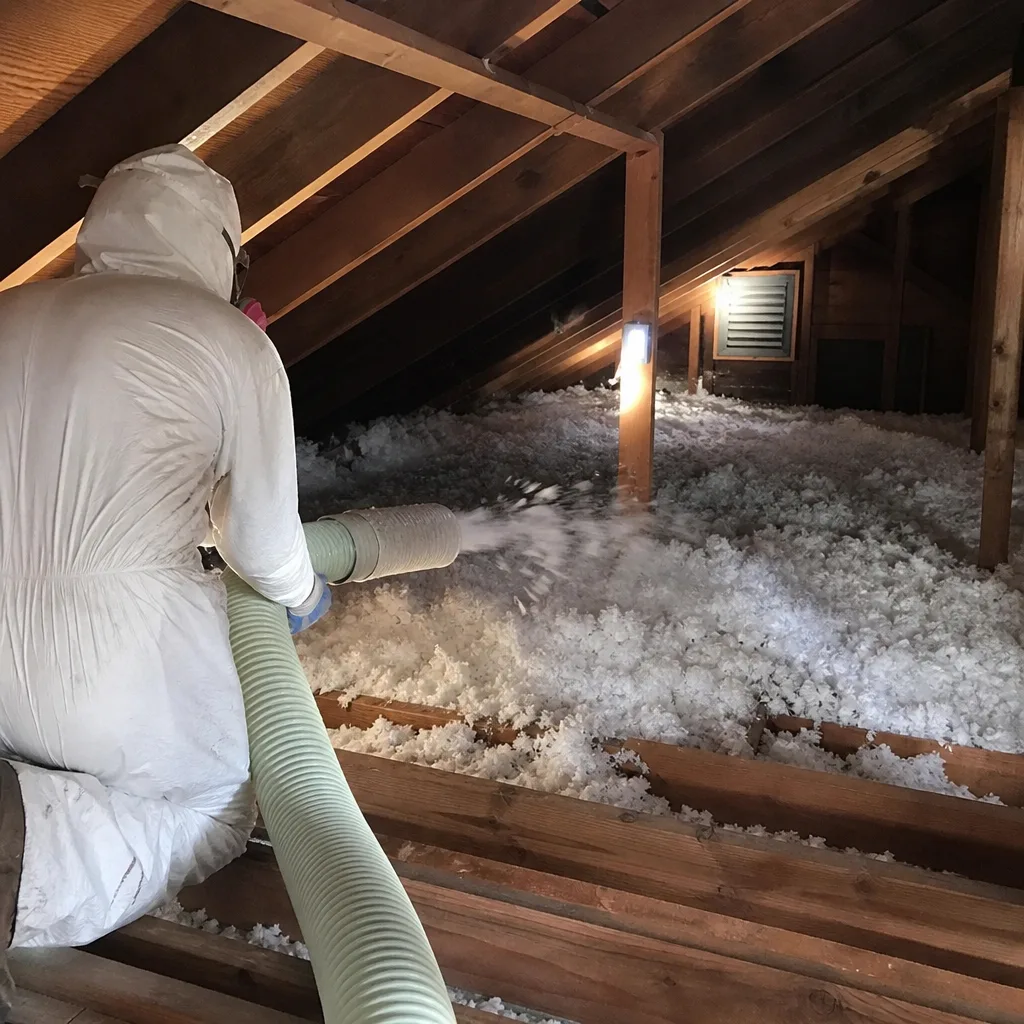
The single most effective way to reduce your total cost is to have an accurate assessment before the job, not after. Jobs that are scoped correctly the first time don’t generate change orders. That’s why Envelope Insulation Co. starts every engagement with a written price – a flat number, a written scope, and a written warranty – before anyone lifts a tool. Under Haven Standard Clause 1, no work starts without it. You know what you’re paying and what you’re getting before the crew arrives.
Combine Services on One Mobilization
If your home needs blown-in attic insulation and you’ve been considering a radiant barrier – particularly relevant in Mountain View’s warmer late-summer months when attic temperatures can spike past 140 degrees – doing both in a single visit reduces the per-job overhead. The same applies to attic cleaning and rodent proofing if the existing insulation is being removed anyway. Ask about combination pricing when you call for your estimate.
Use Available Utility Incentives
PG&E serves Mountain View and offers rebates on attic insulation upgrades through its energy efficiency programs. The rebate structure changes year to year, but as of 2026, attic insulation upgrades that bring homes to R-49 or above have been eligible for per-square-foot incentives. The exact rebate depends on your current R-value baseline and the program year. We walk through the available documentation with you during the estimate so you know what to submit and when.
Get the Air Sealing Done Correctly the First Time
This sounds counterintuitive as cost savings advice, but insulation installed over an unsealed attic floor performs significantly below its labeled R-value because air bypasses the insulation entirely through gaps. A home that skips air sealing pays twice: once for insulation that underperforms, and again when it has to be pulled out and the sealing is done belatedly. The blower-door test – a pressurization measurement that shows, in one number, how much conditioned air your home is losing – documents the before and after so you can see the actual change in airtightness you got for your money.
Bring a Competing Estimate
Envelope Insulation Co. offers a free second opinion on any written estimate. If another contractor has quoted your Mountain View home, we will read the scope with you line by line, explain what’s included and what might be missing, and give you our written price for the same scope or a corrected one. There’s no charge for that conversation. Call (669) 259-0406 to set it up – a live person answers around the clock, no callback window measured in business days.
Don’t Pay for Removal You Don’t Need
Some Mountain View homeowners get quoted for full insulation removal when a targeted removal and spot-treatment would accomplish the same result. If your existing insulation is in reasonable condition – no active moisture, no rodent activity, no visible degradation – we may be able to air-seal over the existing layer and top up with blown-in rather than doing a full tear-out. We’ll tell you honestly which case you’re in, because we document the attic condition photographically before we recommend anything.
FAQs: Blown-In Insulation Cost in Mountain View
How much does blown-in insulation cost for a typical Mountain View home?
A typical Mountain View home in the 1,400-to-2,000-square-foot range – a ranch-style in Cuesta Park or a smaller two-story in Old Mountain View – runs $2,200 to $3,100 for a full attic air seal and blown-in cellulose job to R-49. Larger homes, from 2,000 to 3,000 square feet, land between $3,100 and $4,200 depending on attic geometry and penetration count. Your written price will be specific to your home’s actual square footage and current conditions – we won’t give you a ballpark and adjust it after the crew is already on your roof. Call (669) 259-0406 for a free estimate with a written number before any work starts.
Is cellulose or fiberglass blown-in insulation cheaper in Mountain View?
Cellulose is typically 10 to 20 percent less expensive per installed R-value than blown-in fiberglass in the current Mountain View market, which is why it’s our default specification for most attic jobs. Cellulose also has a higher settled density, which makes it more resistant to air movement through the insulation layer itself. Fiberglass costs slightly more per bag and requires greater installed depth to hit the same R-value – usually around 20 inches of fiberglass to reach R-49 versus roughly 13 to 14 inches of cellulose. Either way, the material cost difference is real but not the dominant cost driver; air sealing labor is typically the larger variable on Mountain View jobs.
Can I skip the air sealing and just add blown-in insulation to save money?
Technically yes, but the savings are mostly offset by the performance loss. Research from the Lawrence Berkeley National Laboratory – which is, not coincidentally, about 20 miles from Mountain View – documents that air leakage accounts for a large share of a home’s heating and cooling loss, and that insulation installed over unsealed gaps underperforms its rated R-value because air bypasses the insulation entirely. Envelope Insulation Co. won’t blow insulation over an unsealed attic floor. That’s a firm policy, not a sales position. If you want insulation only and have documentation that your attic floor is already sealed to an acceptable standard – a blower-door reading that supports that claim – we’ll discuss it. But we won’t skip sealing on the assumption that it probably doesn’t matter.
Does Mountain View require a permit for blown-in attic insulation?
In most cases, adding blown-in insulation to an existing residential attic in Mountain View does not require a separate City of Mountain View building permit, as long as the work doesn’t involve structural changes or alterations to the building’s mechanical systems. That said, code compliance with California Title 24 (R-49 for Climate Zone 4) should be documented, and any work touching electrical or gas systems does require permits. We document every job with a Documented Photo Record regardless of permit status, so you have a paper trail for resale or future inspection. If your job has any unusual characteristics – knob-and-tube wiring in the attic, for example – we’ll tell you what the permit situation looks like before work starts.
How long does blown-in attic insulation last in Mountain View’s climate?
Cellulose blown-in insulation, installed correctly over a sealed attic floor, typically maintains useful R-value for 20 to 30 years under normal conditions. Mountain View’s relatively mild, low-freeze climate is not particularly harsh on insulation material. The main threats are moisture intrusion (from roof leaks or improper attic ventilation) and rodent activity, both of which can degrade insulation faster than age alone. We photograph the attic condition at installation so you have a documented baseline – if you’re ever wondering whether your insulation has degraded, that record gives you something to compare against.
What does the blower-door test actually tell me about my Mountain View home?
A blower-door test – a pressurization reading that shows, in a single figure called CFM50 (cubic feet per minute at 50 pascals of pressure), how much air your building envelope is losing – is the only way to verify that air sealing actually worked. On a typical pre-2000 Mountain View ranch home, we see initial readings in the range of 3,000 to 5,500 CFM50 before sealing. After a complete attic air seal, a realistic target is 30 to 50 percent reduction, depending on where most of the leaks were. We publish before-and-after numbers on every applicable job – not as a marketing claim, but as documentation you can read and compare. A written scope and a blower-door number is a far more useful record than a certificate of completion with no performance data attached.
Is it cheaper to repair or replace existing blown-in insulation?
If your existing blown-in insulation is dry, rodent-free, and still at or above R-30, a top-up to R-49 with additional blown-in material is almost always less expensive than a full removal and reinstall – typically 40 to 60 percent less. Full removal makes sense when the existing material is wet, compacted below half its original R-value, or contaminated with rodent waste (which is a health and odor issue, not just a performance issue). We assess the existing insulation condition before recommending removal and document whatever we find with photos so you can see the basis for the recommendation, not just the recommendation itself.
Why the Sequence Matters: Seal First, Then Insulate
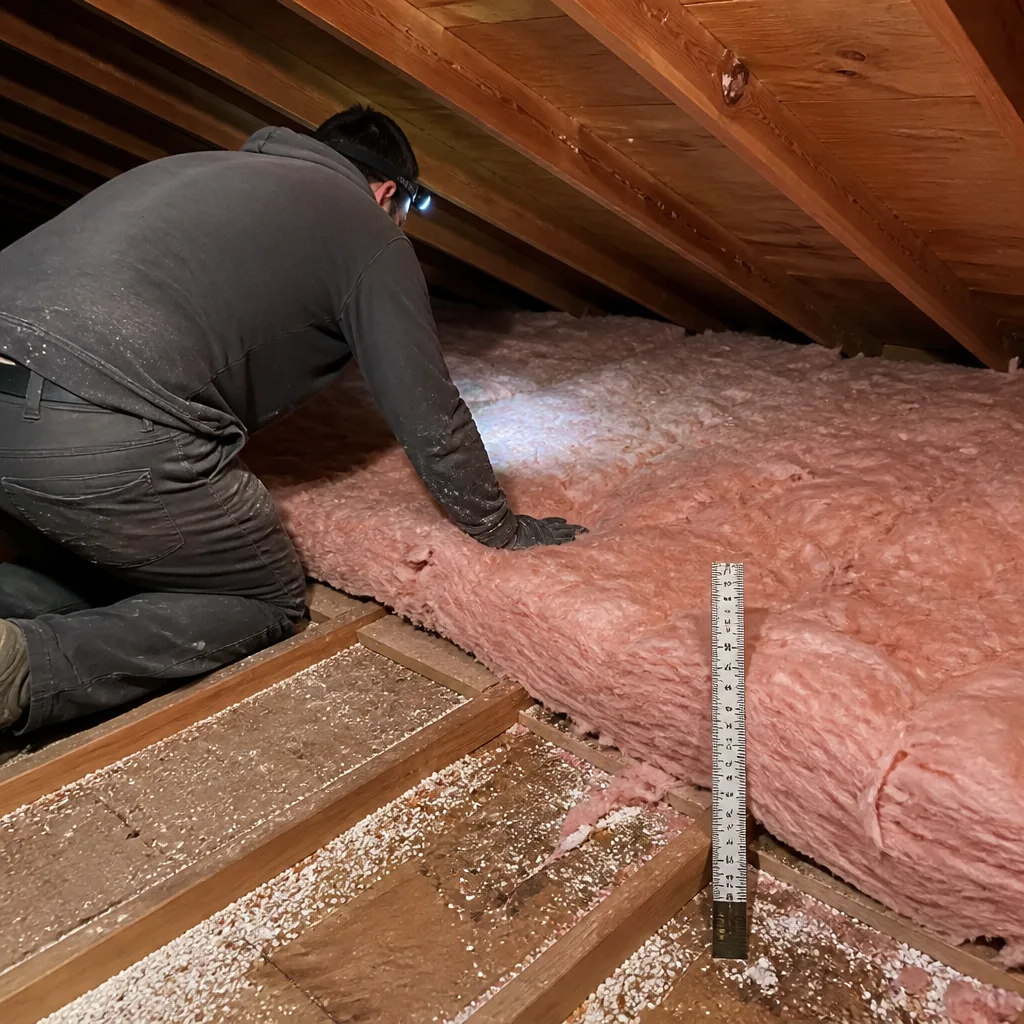
Most insulation contractors in the South Bay treat air sealing as optional or bill it as an add-on. Envelope Insulation Co. treats it as a prerequisite – meaning we will not blow insulation into an attic until the top plates, recessed can lights, plumbing penetrations, and any other bypasses are sealed with fire-rated caulk or spray foam. This isn’t ideological. It’s based on what the blower-door numbers show on every job we’ve run since 2016.
In practice, here’s what that looks like on a Mountain View home: our crew arrives, accesses the attic, and seals every identifiable air bypass before the blower hose is connected. When sealing is complete, we run a blower-door test – the pressurization reading that shows the before-and-after air change rate – and record the result. Then the insulation goes in. When the job is done, you receive a written scope, a written warranty, a Documented Photo Record of the attic condition before and after, and the blower-door readings from both tests. That’s what leaving looks like on every Envelope Insulation Co. job.
If you’d like to understand what that sequence would cost for your specific Mountain View home, or if you want to understand Blown-In Insulation in Mountain View in more detail before calling, that page walks through the full service scope. You can also visit our home page for an overview of every service line we offer across the building envelope.
Key Takeaways
- Most blown-in insulation jobs in Mountain View run $2,200 to $3,100 for a 1,400-to-2,000-square-foot attic with air sealing included.
- Cellulose is the most cost-effective material per R-value in the current Mountain View market; fiberglass costs 10-20% more for the same R-49 result.
- Air sealing must come before insulation – skipping it means the insulation underperforms from day one.
- Before-and-after blower-door readings are included on every applicable job so you can verify the result in a single number.
- A written price, written scope, and written warranty are delivered before any work starts – that’s Haven Standard Clause 1, and it’s non-negotiable.
- PG&E rebates are available for qualifying attic insulation upgrades in Mountain View through 2026 – ask about the documentation process when you call.
- Insulation removal adds $0.80-$1.30 per square foot to the base job and is recommended only when the existing material is wet, contaminated, or too compacted to be worth building on.
Get a Written Price for Your Mountain View Home
Envelope Insulation Co. has been assessing and insulating homes across Mountain View, Sunnyvale, Los Altos, and Santa Clara County under The Haven Standard since 2016. Every estimate results in a written price before any work starts – no vague ranges, no “we’ll know more once we’re in the attic.” If you have a written estimate from another contractor, bring it and we’ll read through it with you at no charge.
To schedule your free estimate or ask about the blower-door process for your specific home, call (669) 259-0406. A live person answers around the clock – no voicemail, no callback window.
Written by Wes Okafor, Owner at Envelope Insulation Co., serving Mountain View since 2016.
Pricing reflects the Mountain View market as of 2026. Topside Attic Insulation Mountain View offers free estimates – call (669) 259-0406.
What Our Customers Say
"The winter gas bill dropped by about a third. They had estimated a quarter, so they under-promised."
- Genevieve R."Crawl space encapsulation done properly. Photographs of the vapour barrier at every seam, and the damp smell in the hallway is gone."
- Ainsley P."Fixed price, clean work, and they hauled the old material away as agreed."
- Todd M.