
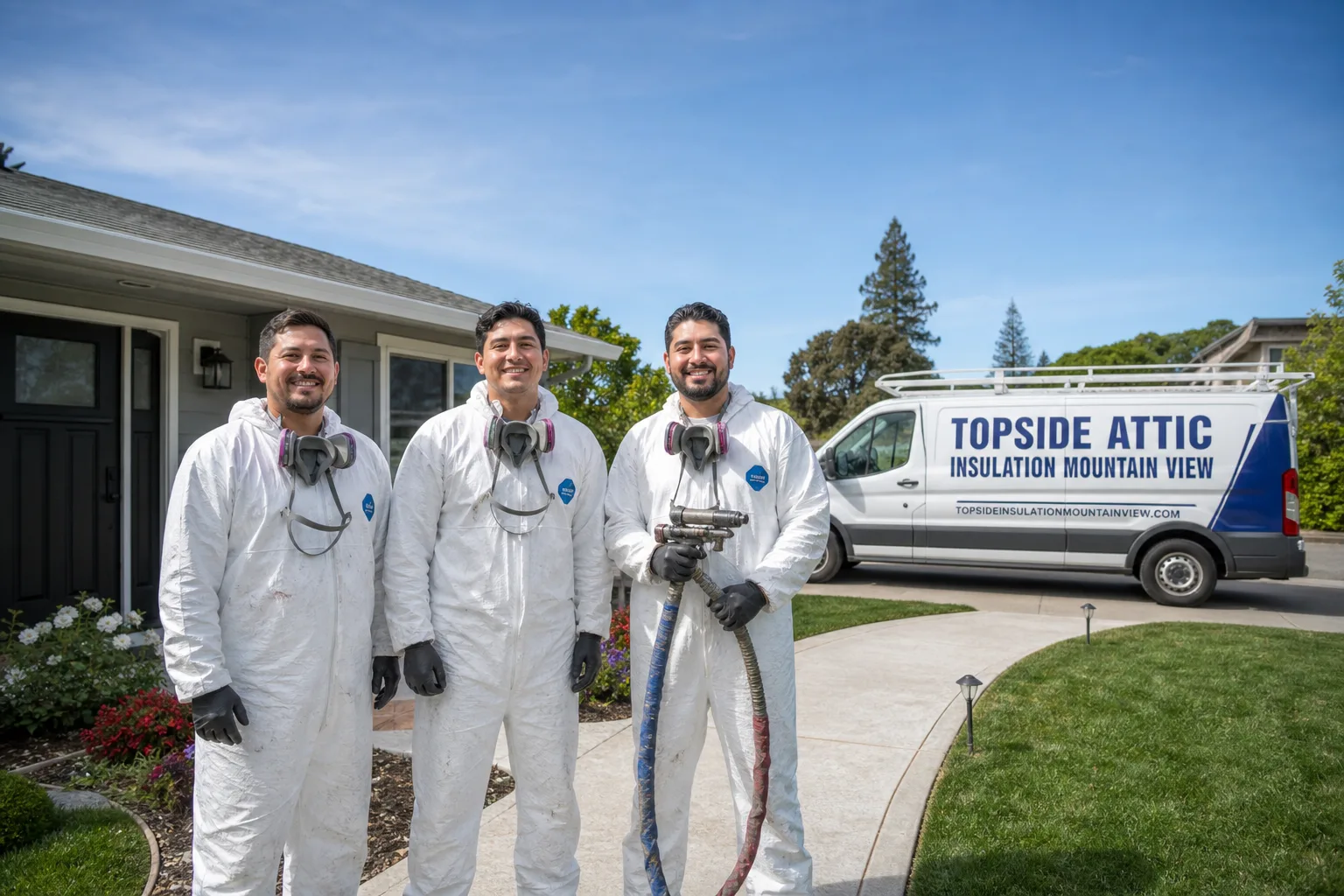
Fast, Reliable Blown-In Insulation Across Saratoga
Blown-in insulation in Saratoga typically costs $2.80 to $4.50 per square foot for attic work, with most complete attic jobs running $3,200 to $6,800 depending on accessibility and the condition of existing material. We’re usually on-site in Saratoga within 24 to 48 hours of your call, and same-day assessments are common for homes near downtown or along Saratoga-Sunnyvale Road. Our crews know the difference between a flatland ranch off Cox Avenue and a hillside split-level toward the Santa Cruz Mountains, and that local knowledge changes how we approach every job. Call (669) 259-0406 for a written price before any work starts.
We’ve been sealing and insulating homes under The Haven Standard since 2016, and Saratoga’s mix of 1950s custom ranches, hillside split-levels, and mid-century modern homes presents challenges you won’t find in the tract developments of neighboring cities. The foothill fog, the complex rooflines, the multi-level crawl spaces - these aren’t abstract concepts to our technicians. They’re the specific conditions we plan for when we load the truck.
Why Topside Attic Insulation Mountain View Is Saratoga’s Preferred Blown-In Insulation Company
Our reputation in Saratoga has been built one written scope at a time. We’ve completed blown-in insulation work from the flat neighborhoods near West Valley College up to the hillside streets off Pierce Road and Blackwell Road, and our Saratoga customers consistently note the same thing in their reviews: we show up with a price already written, we explain what we’re finding in real terms, and we leave documentation behind. No vague promises, no “trust us” energy savings claims - just before-and-after blower-door numbers where air sealing is part of the scope, and a photo record of every cavity we filled.
Response time matters here. Saratoga isn’t a bedroom community you pass through on the way to somewhere else; it’s a destination with specific access patterns. Our dispatch from the San Francisco Bay Area office routes crews directly to Saratoga without the scheduling delays that plague contractors who treat the South Bay as one undifferentiated mass. Most Saratoga appointments are scheduled within a day, and emergency assessments for moisture-compromised insulation happen same-day when the condition warrants it.
What separates us from competitors who also list Saratoga in their service area is simple: we understand that a home on a hillside street toward the Santa Cruz Mountains has fundamentally different envelope problems than a valley-floor ranch in Cupertino. The fog intrusion, the diurnal temperature swing, the settled original batts - these aren’t afterthoughts in our assessment. They’re the starting point.
Our Blown-In Insulation Services in Saratoga
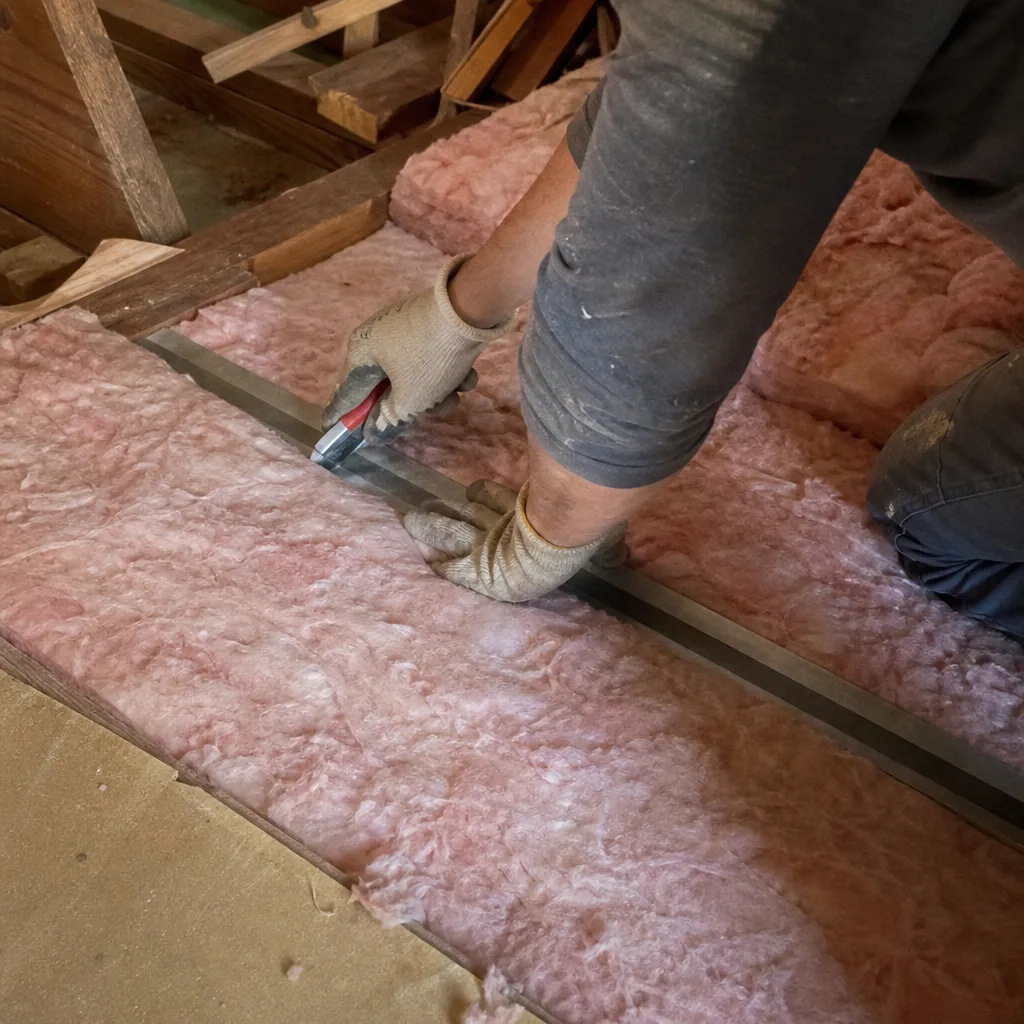
Blown-In Cellulose
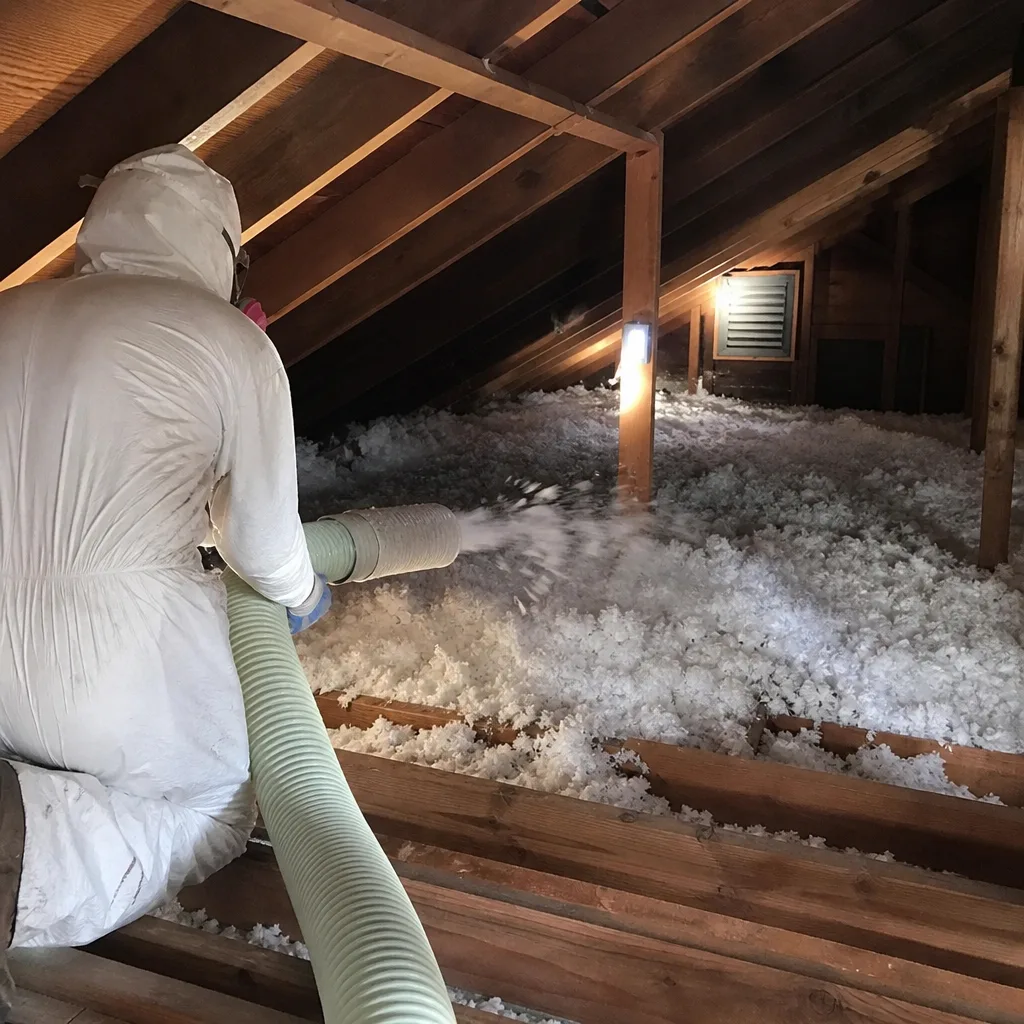
Cellulose - treated ground paper with borate fire retardant - performs exceptionally well in Saratoga’s older homes because it packs tightly around the irregular framing and penetrations common in pre-Title 24 construction. We source from GreenFiber and other manufacturers, and we specify cellulose for hillside homes where air sealing is the priority because the material itself slows air movement better than loose fiberglass. For a typical Saratoga ranch attic, blowing cellulose to R-38 runs $3,200 to $5,400, including the prerequisite air sealing of top plates, can lights, and penetrations that we complete first.
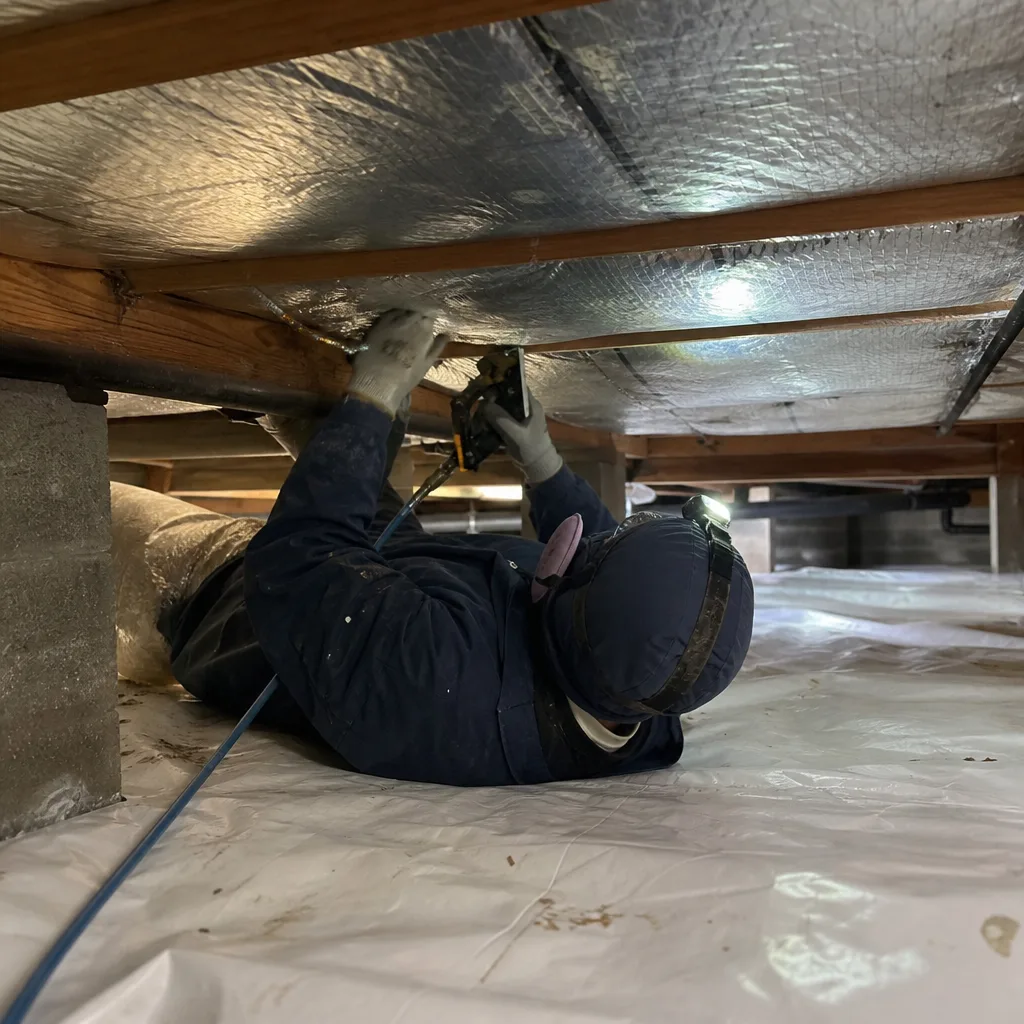
Blown-In Fiberglass
We use Owens Corning and Johns Manville fiberglass for Saratoga homes where moisture management is already addressed and the attic is vented properly. Fiberglass doesn’t absorb water the way cellulose can if a roof leak goes undetected, so it’s our recommendation for homes with newer roofing but original insulation that needs a top-up. A blown-in fiberglass top-up to R-49 in a standard Saratoga attic bay runs $2,400 to $4,200. We never blow new material over old without first assessing what’s underneath; wet or compressed batts get removed, not buried.
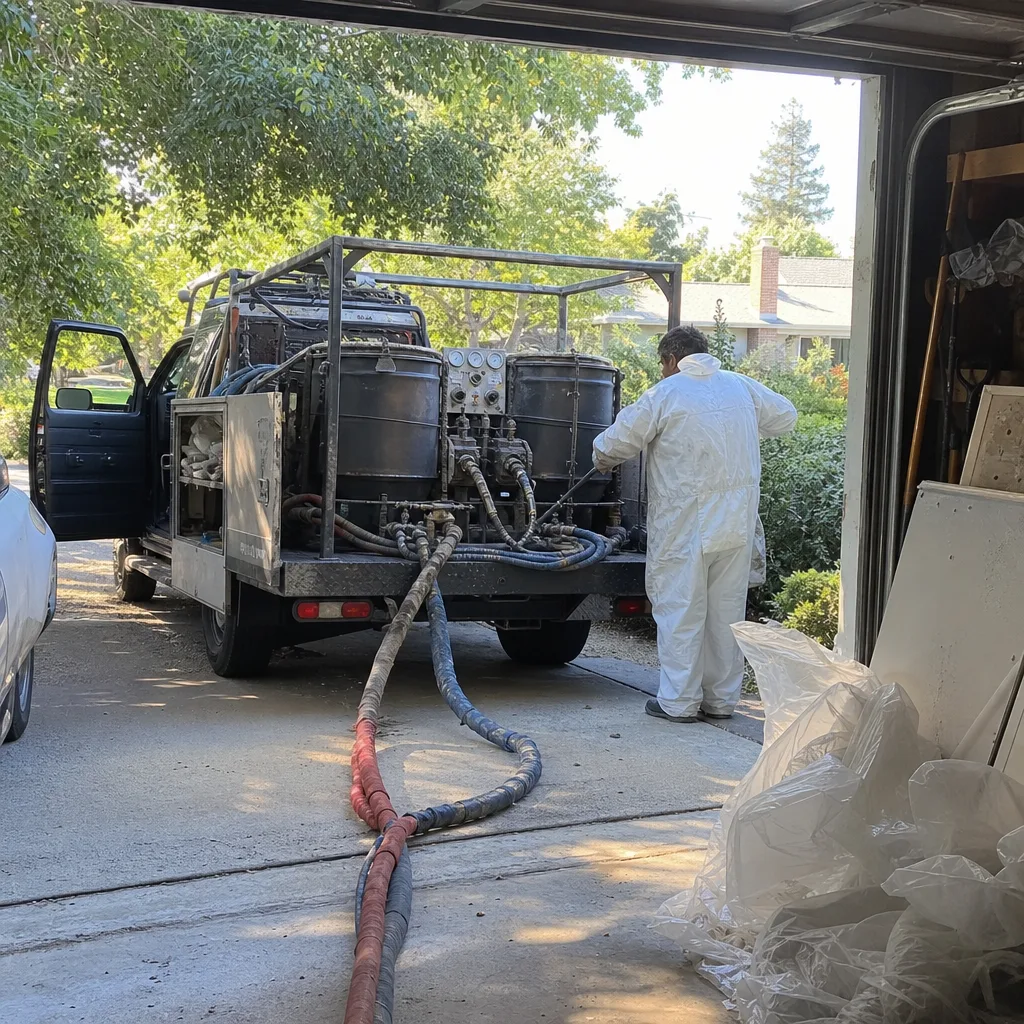
Dense-Pack Wall Insulation
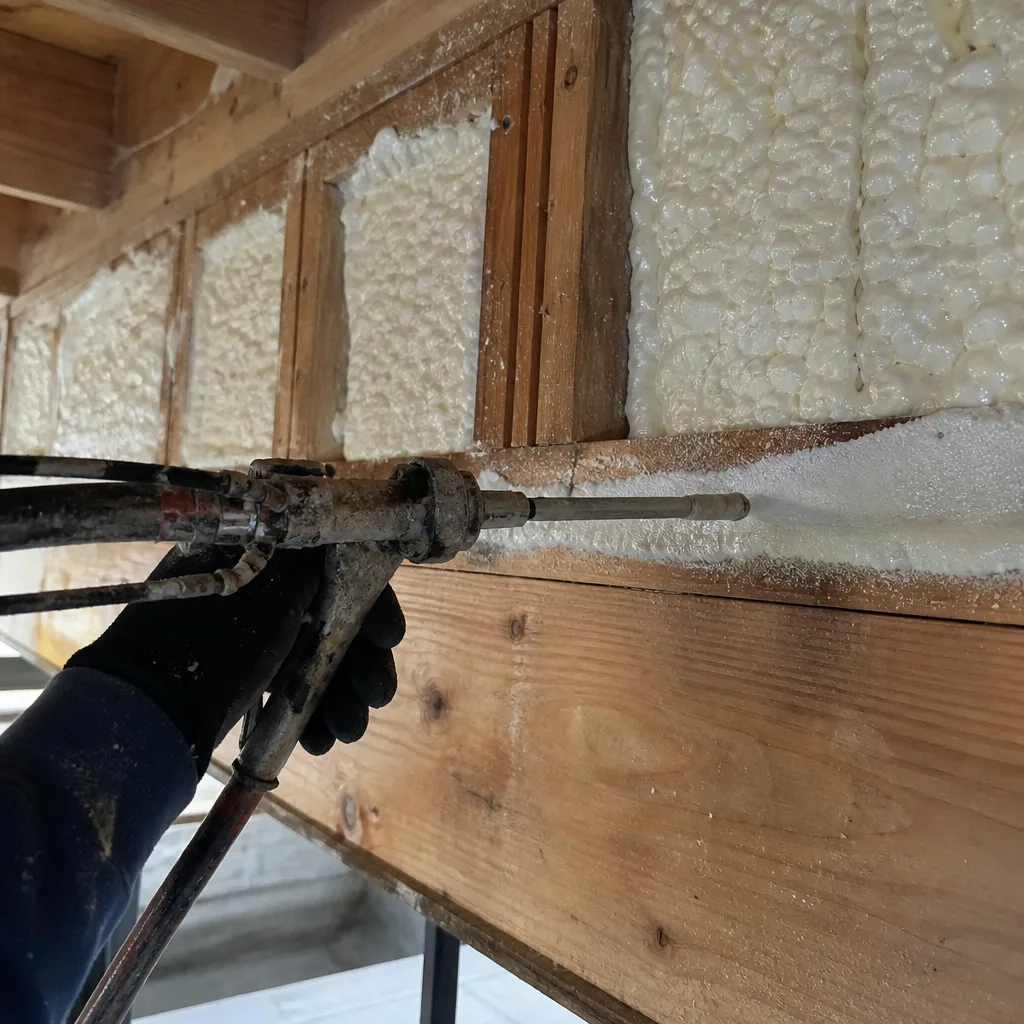
Saratoga’s 1960s and 1970s split-levels and ranch homes often have empty wall cavities or original batts that never filled the full depth of the stud bay. Dense-packing - blowing cellulose at high pressure into enclosed walls - solves this without tearing out drywall. It’s particularly effective for the lower levels of hillside homes where the temperature differential between floors is most pronounced. We dense-pack with GreenFiber cellulose at 3.5 pounds per cubic foot, which settles less than loose-fill and creates an air barrier as well as a thermal one. Wall dense-packing in Saratoga typically runs $2.80 to $4.20 per square foot of wall area, with most split-level jobs between $4,800 and $8,200.
Blown-In Top-Up
Not every Saratoga home needs a full insulation replacement. For homes with intact original material that’s simply settled below current Title 24 standards, a blown-in top-up can bring attic R-values from R-19 or R-22 up to R-38 or R-49 efficiently. The critical caveat for Saratoga: we inspect first. Top-ups over unsealed attic floors or moisture-damaged crawl space batts are temporary fixes that waste material and money. Our top-up assessments include a written condition report with photos, and we won’t proceed with new material until we’ve addressed what’s failing underneath. Top-ups in Saratoga run $1,800 to $3,600 for typical ranch attics.
What happens when you call
- 1
A real person answersNo phone trees - you reach a local pro.
- 2
You get an upfront price rangeHonest numbers before anyone is dispatched.
- 3
A background-checked tech heads outLicensed & insured, dispatched right away.
- 4
You approve before work beginsNothing starts until you say go.
Trusted Brands We Service in Saratoga
We stock and install materials from Owens Corning, Johns Manville, Knauf, and GreenFiber, with no proprietary lock-in that limits your options. For Saratoga homes, we keep Johns Manville blown fiberglass and Knauf Jet Stream Ultra cellulose on hand for quick-turnaround jobs, and we source GreenFiber dense-pack material for wall cavities with lead times under a week. Our technicians aren’t trained on one manufacturer’s system; they’re trained on building science. The brand we recommend depends on your home’s specific conditions: roof ventilation, existing moisture loads, framing type, and whether air sealing is part of the scope. Every recommendation comes with a written justification, not a sales pitch.
Common Blown-In Insulation Problems We See in Saratoga Homes
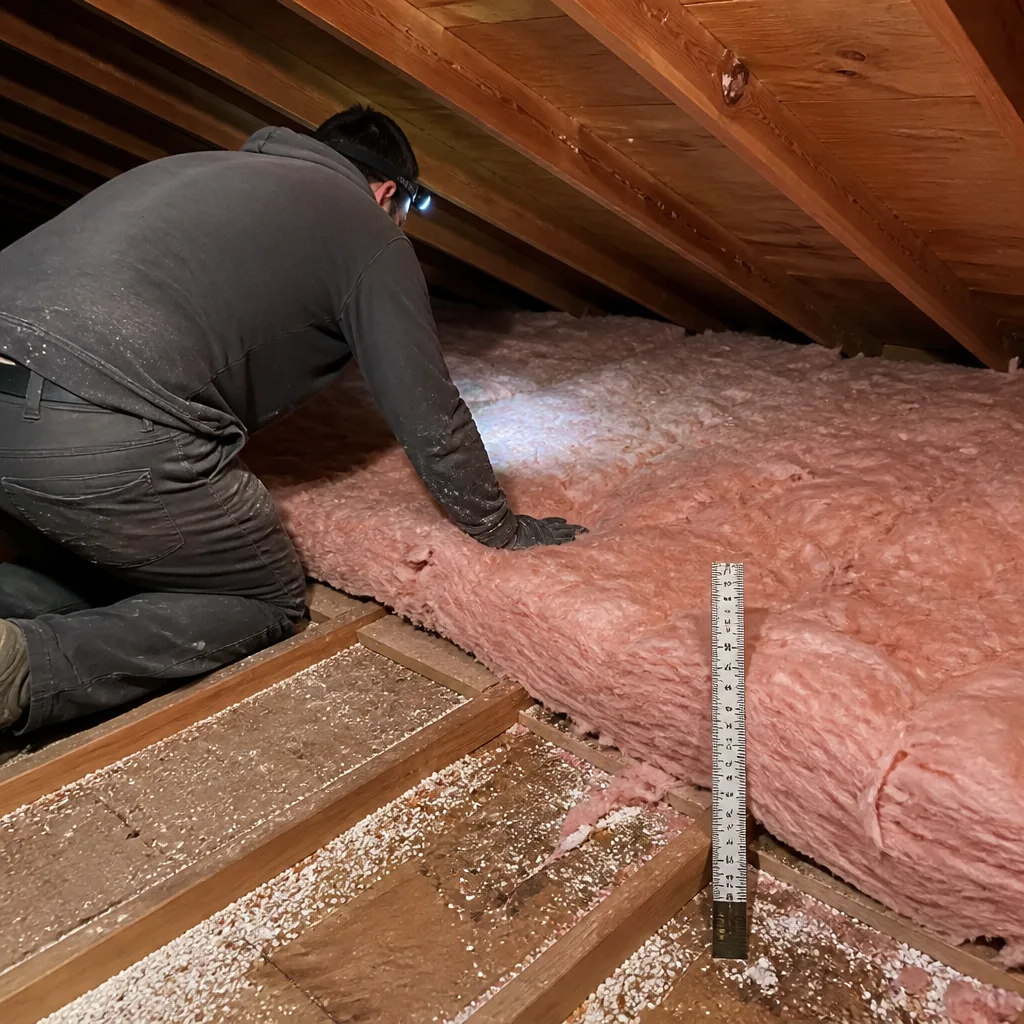
- Moisture-saturated crawl space batts on hillside streets. Original fiberglass batts in multi-level crawl spaces toward the Santa Cruz Mountains absorb cool-season fog moisture, compress against the vapor barrier (if one exists), and lose effective R-value while promoting mold growth. We find this failure mode regularly on streets off Pierce Road and Blackwell Road, and almost never in the drier flatlands of Sunnyvale or Santa Clara.
- Uneven settlement in complex attic rooflines. Saratoga’s custom ranch homes with vaulted ceilings and irregular bay sizes create conditions where blown-in insulation settles toward the center, leaving thermal bridges along the roof edges and can light penetrations. The result: cold spots in rooms that should be the most comfortable in the house.
- Pre-Title 24 attics never sized for foothill temperature swings. Many Saratoga homes were built before California’s current energy standards, with attic insulation designed for milder climates. The wide diurnal swing here - cool nights, warm afternoons - means under-insulated attics lose heat rapidly after sunset, and residents feel it immediately in bedrooms under the roofline.
- Insulation installed without air sealing. We’ve pulled back blown-in material in Saratoga attics and found can lights, top plates, and duct penetrations still leaking conditioned air directly into the vented attic space. Insulation slows heat transfer; it doesn’t stop air movement. Without sealing first, you’re paying to heat and cool your attic.
Pricing for Blown-In Insulation in Saratoga, CA
Here’s what blown-in insulation costs in Saratoga’s current market, based on jobs we’ve completed in the last 18 months:
| Service | Typical Range | What Affects Price |
|---|---|---|
| Attic blown-in cellulose to R-38 (air sealing included) | $3,200 - $5,400 | Attic accessibility, existing removal needed, bay irregularity |
| Attic blown-in fiberglass to R-49 | $2,400 - $4,200 | Condition of existing material, ventilation corrections |
| Dense-pack wall insulation (cellulose) | $2.80 - $4.20/sq ft | Wall area, cavity depth, interior or exterior access |
| Blown-in top-up over intact existing | $1,800 - $3,600 | Current R-value, target R-value, any spot repairs |
| Crawl space insulation replacement | $2,600 - $5,200 | Moisture damage extent, vapor barrier condition, access difficulty |
These are actual ranges, not teaser prices. Every job gets a written price before work starts - Haven Standard Clause 1 - and we provide free second opinions on any competing written estimate you bring us. Homes on hillside lots with multi-level crawl spaces or complex rooflines typically fall in the upper half of these ranges due to labor intensity, not material markup. Call (669) 259-0406 for your specific written price.
We Also Serve Cities Near Saratoga
Our Blown-In Insulation crews work throughout the South Bay, with regular jobs in Cupertino, Santa Clara, Sunnyvale, and Mountain View. Each city gets the same written-price protocol and documentation standards, though the specific failure patterns differ: Cupertino’s tract homes have different envelope problems than Saratoga’s custom ranches, and we adjust our assessments accordingly.
Serving Saratoga, CA - Our Local Coverage Area
We’re based in the Saratoga area and know this community well. Use the map below to see our service coverage - if you’re nearby, we can almost certainly help.
FAQs - Blown-In Insulation in Saratoga
Your home is several degrees cooler at night due to Saratoga’s foothill position, which channels cooler marine air down from the Santa Cruz Mountains, and your pre-Title 24 insulation was likely never sized for that temperature swing. The combination of greater heat loss through under-insulated attics and crawl spaces plus lower outdoor starting temperatures means your heating system works harder and longer to recover. Air sealing and upgrading to current R-values specifically addresses this gap. Call (669) 259-0406 for a written assessment of your envelope.
Look for batts that have compressed to less than half their original thickness, dark staining or discoloration, a musty odor when you access the crawl space, or visible mold on the paper backing or framing nearby. We document this with moisture meter readings and photos as part of our standard assessment. If you’re seeing any of these signs, the insulation is performing well below its rated R-value and may be contributing to indoor air quality problems. We remove compromised material, seal the envelope, and reinstall with proper vapor barrier placement.
Yes, when the right material is applied to the right locations. The temperature split in split-levels typically comes from unsealed rim joists and empty or degraded wall cavities in the lower level, plus attic heat loss upstairs. We address both: dense-packing the lower walls with cellulose to cut air infiltration, and blowing attic insulation to proper R-value with air sealing at the top. The field vignette we reference regularly - a 1968 split-level off Pierce Road where saturated crawl space batts were removed and replaced with air-sealed, dense-packed walls and blown attic insulation - resulted in the lower bedrooms finally holding heat through the night. Call for a written scope specific to your floor plan.
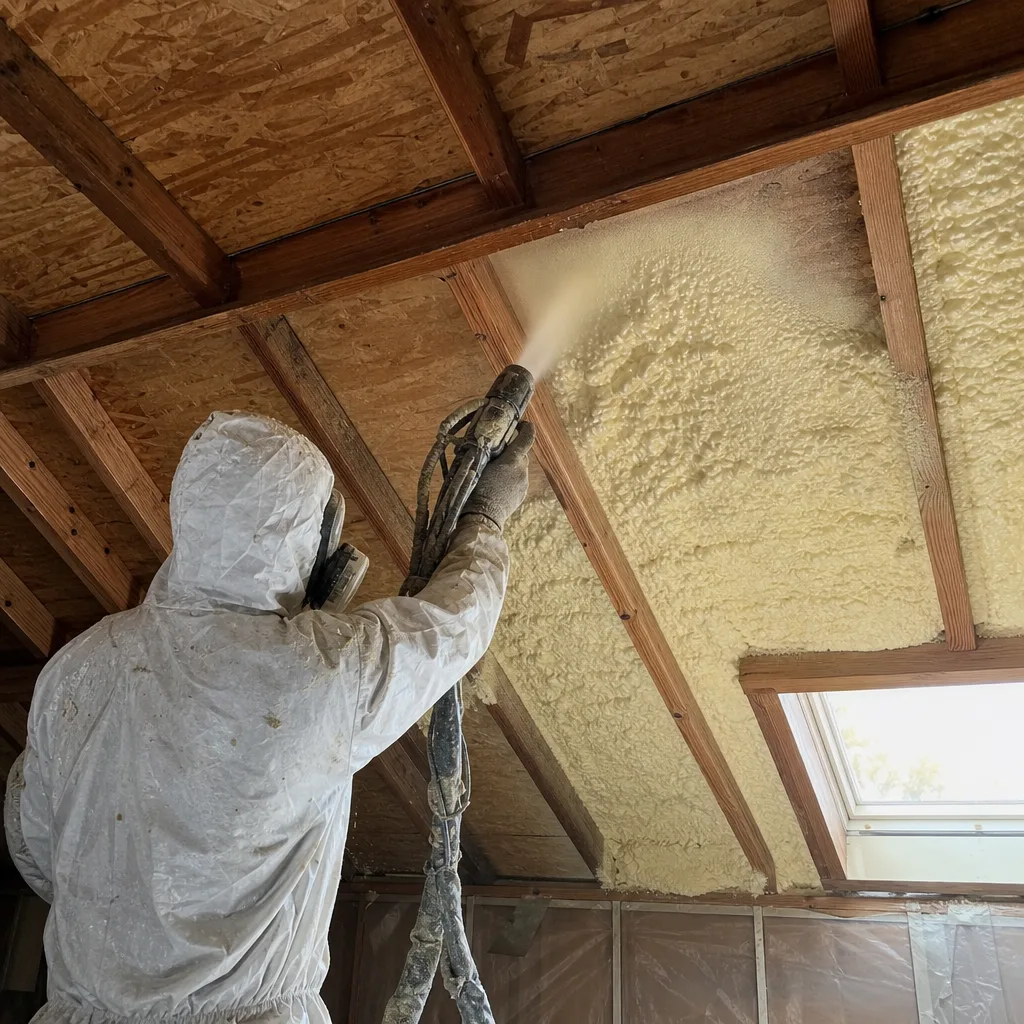
It changes the access strategy and the material density required. Vaulted ceilings in Saratoga’s custom ranches often have limited attic space above the ceiling plane, requiring dense-pack techniques rather than loose-blown material to achieve target R-values in confined bays. Complex rooflines create dead spaces and thermal bridges where insulation settles unevenly; we address these with baffles, proper venting, and sometimes targeted spray foam at critical junctions before blowing the main field. These jobs run higher on our pricing scale due to labor intensity, but the comfort improvement is immediate and measurable.
For crawl spaces with any history of moisture exposure - which describes many hillside Saratoga homes - we typically recommend fiberglass if the moisture source has been permanently addressed, or a full encapsulation with rigid foam if it hasn’t. Cellulose performs well in attics and walls where we control the air sealing; in crawl spaces with ongoing fog intrusion risk, we prefer materials that don’t absorb and hold water. Our assessment includes moisture readings and a written recommendation based on what we find, not a default product preference. The right choice depends on your specific conditions.
Written by Wes Okafor, Owner at Envelope Insulation Co., serving Saratoga and the Bay Area since 2016.