
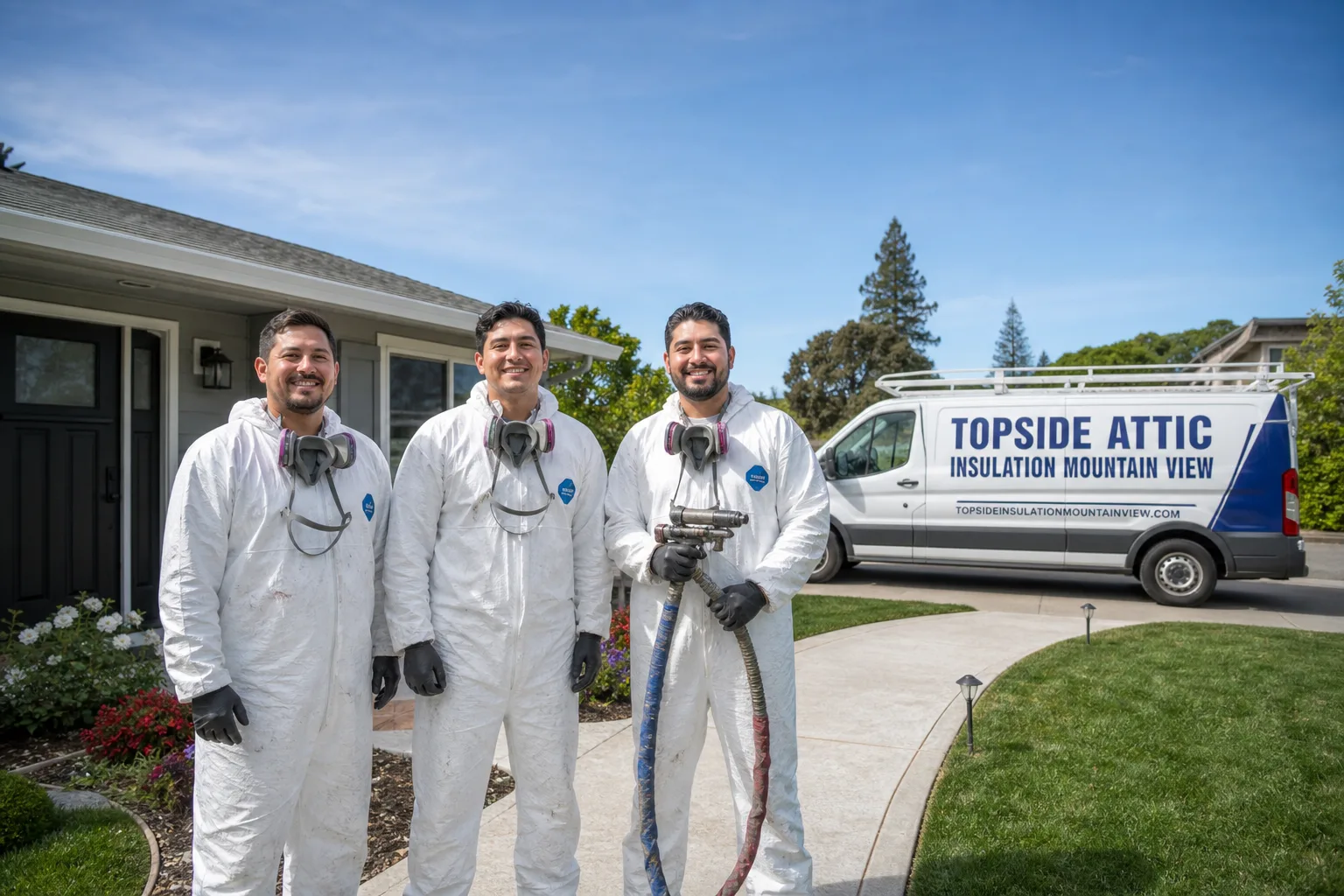
How Much Does Crawl Space Encapsulation & Vapor Barrier Cost in Mountain View?
Crawl space encapsulation in Mountain View, CA typically runs between $3,200 and $8,500 for a standard single-family home, with most jobs landing around $4,500 to $6,000. A basic Crawl Space Vapor Barrier installation alone – without full encapsulation – costs less, generally $1,200 to $2,800 depending on crawl space size and existing moisture conditions. At Envelope Insulation Co., every job starts with a written price before any work begins, so you’ll know the exact number before a single tool comes off the truck.
If you’d like to understand what’s driving your specific number – and what Mountain View’s coastal-influenced climate means for your crawl space – keep reading. This guide covers the full cost range, the factors that move the needle, and the questions we hear most often from homeowners in this market.
Crawl Space Encapsulation & Vapor Barrier Cost Breakdown (2026)
Crawl space encapsulation in Mountain View, CA is priced by the job, not by the hour, and the final number depends on what your space actually needs. Below are the line items we see most often on Mountain View jobs, with realistic 2026 market ranges for each.
| Service Component | Typical Mountain View Cost Range (2026) | Notes |
|---|---|---|
| Vapor barrier only (6-mil poly, basic) | $1,200 – $2,400 | Covers ground surface; no wall coverage |
| Vapor barrier (20-mil reinforced) | $2,000 – $3,800 | Code-grade, tear-resistant, longer lifespan |
| Full crawl space encapsulation (walls + floor) | $4,500 – $8,500 | Walls, floor, rim joists; conditioned-space approach |
| Crawl space vent sealing | $300 – $700 | Often added to full encapsulation |
| Rim joist air sealing + spray foam | $400 – $900 | Critical for homes in older Mountain View neighborhoods |
| Drainage matting (dimple board) | $500 – $1,200 | Added when standing water is present or likely |
| Sump pump installation | $900 – $2,200 | Needed on some lower-elevation parcels near Shoreline |
| Dehumidifier (crawl-space rated) | $1,200 – $2,800 | Recommended when relative humidity consistently exceeds 60% |
| Old insulation removal (fiberglass batts) | $800 – $2,000 | Required if existing batts are wet, rodent-compromised, or falling |
| Crawl space cleaning + sanitation | $400 – $1,000 | Often necessary in Mountain View homes with rodent history |
What a Typical Mountain View Job Looks Like in Practice
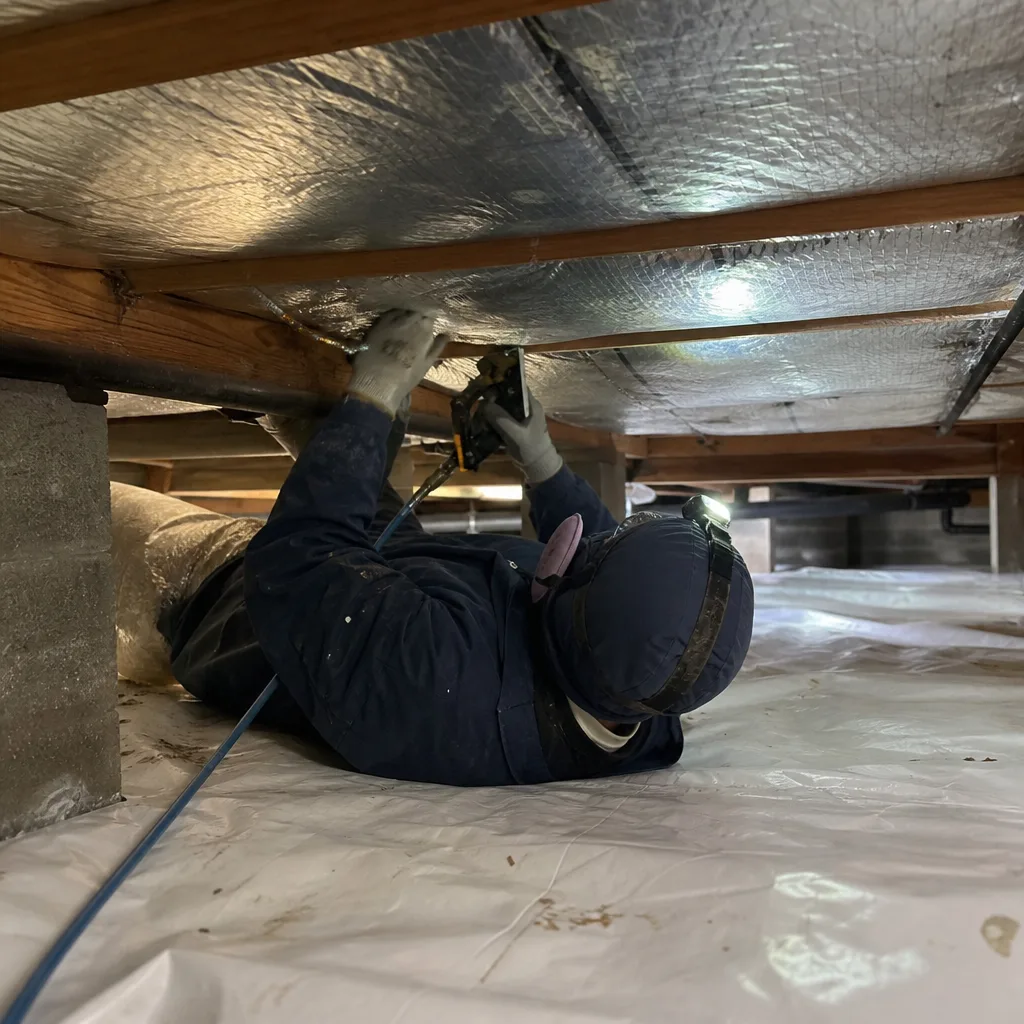
A 1,400-square-foot single-story ranch home in the Rex Manor or Crestview neighborhood – built in the 1960s, vented crawl space, original fiberglass batts sagging off the floor joists – will usually run between $5,200 and $6,800 for full encapsulation. That price includes removing the old insulation, sealing the rim joists with two-pound closed-cell spray foam, and completing a full Crawl Space Encapsulation & Vapor Barrier services installation across the floor and up the walls, sealing the foundation vents, and leaving the space in a condition that’s genuinely maintainable. The Documented Photo Record comes with every job, so you have a before-and-after record of exactly what was done and where.
Where prices climb toward $8,500 or above: larger footprints (over 2,000 square feet of crawl space), severe moisture intrusion requiring a drainage system, or homes near the lower-elevation sections of Mountain View – parcels closer to the Bay where seasonal groundwater can sit higher than expected. Where prices fall toward the lower end: newer construction with a clean, accessible crawl space, no existing insulation to remove, and a simple rectangular layout the crew can work through efficiently.
What Affects Crawl Space Encapsulation & Vapor Barrier Pricing in Mountain View
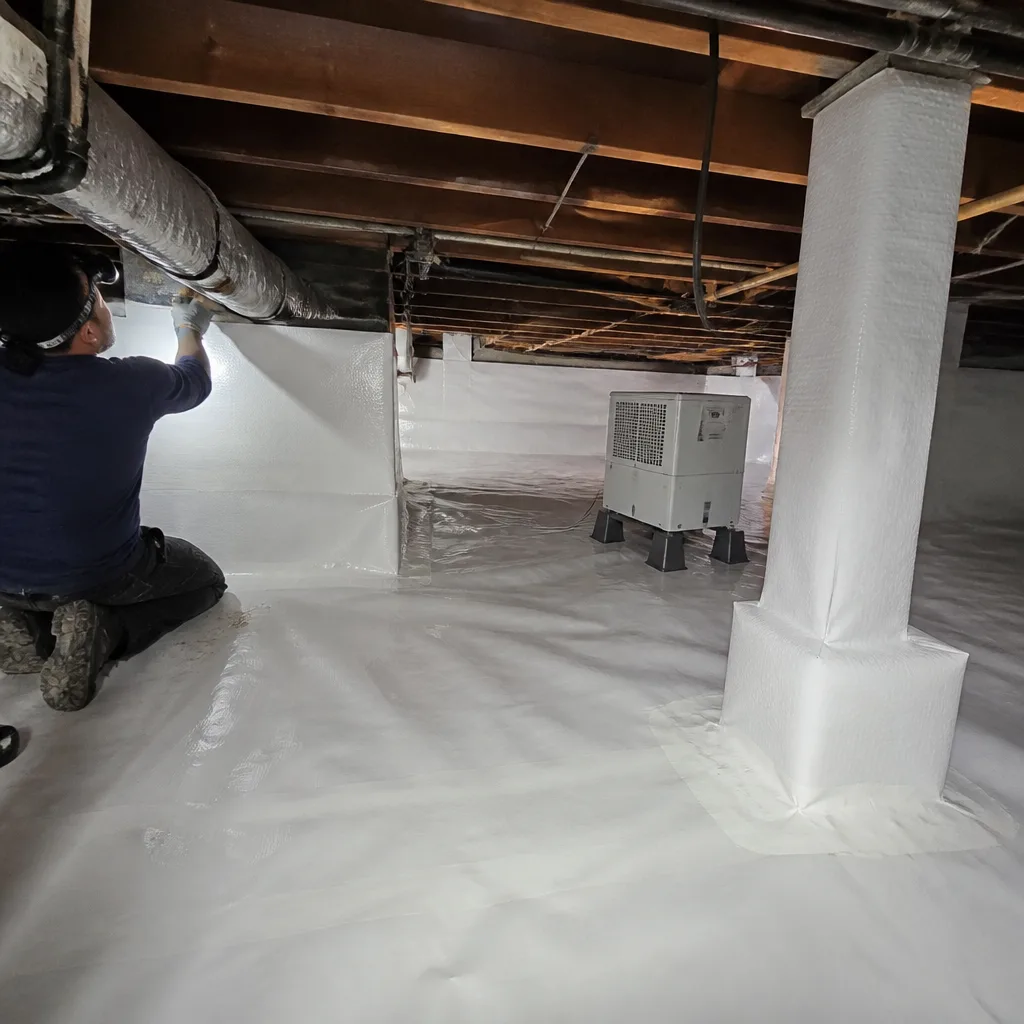
Mountain View has some specific conditions that push crawl space costs in directions homeowners don’t always anticipate. These are the six factors we consistently see move the final price.
- Crawl space square footage and height: The floor area (measured in square feet) drives material cost directly. Height matters for labor – a 24-inch clearance forces technicians to work on their sides, which adds time. Older Mountain View homes in Monta Loma and Waverly Park sometimes have crawl spaces under 18 inches that require additional labor allowance.
- Barrier thickness and material spec: A 6-mil poly sheet is the minimum, but it’s not what most Mountain View contractors will install in 2026 and call a proper encapsulation. A 20-mil reinforced barrier – the kind that holds up under foot traffic and doesn’t puncture when a plumber comes through – costs more upfront and costs less over a 15-year horizon. The difference on a mid-size job is typically $800 to $1,400.
- Existing moisture damage and debris: Mountain View’s proximity to the Bay means some lower-elevation parcels see seasonal moisture intrusion. When we find wet or mold-compromised insulation, standing water, or deteriorated wood in a crawl space, those conditions have to be addressed before any barrier goes down. Skipping that step produces a sealed moisture problem, which is worse than an open one.
- Vent sealing vs. ventilated strategy: Building science has moved firmly toward unvented, conditioned crawl spaces – and California’s Title 24 energy code accommodates this approach. Sealing the foundation vents and treating the crawl space as part of the building envelope is more effective than ventilating it, but it does add cost for vent plugs and wall coverage. On most Mountain View jobs, the long-term performance difference justifies the additional $500 to $800.
- Access difficulty and lot conditions: Homes on sloped lots in the foothills areas above Mountain View sometimes have crawl space access points that add significant labor time. Very tight access hatches, multiple access points needed to cover the full space, or limited staging area outside the home all affect the total price.
- Add-ons that address root causes: A vapor barrier without a functioning drainage path is only a partial solution when moisture is actively entering the space. On some Mountain View lots – particularly in areas that were orchards or farmland before development – the soil holds water in ways that require a drainage mat, a sump pit, or a crawl-space dehumidifier to maintain the dry conditions the barrier creates. These aren’t upsells; they’re the difference between an encapsulation that holds and one that doesn’t.
Why Mountain View’s Climate Makes This Service More Than a Comfort Upgrade
Mountain View sits at roughly 100 feet above sea level at its eastern edge and drops lower near the Shoreline area. That topography, combined with the Bay Area’s marine layer and the pattern of cool, damp winters the region sees from November through March, creates crawl space conditions that are genuinely hostile to exposed wood and untreated soil. Relative humidity in crawl spaces here can sit above 70% for weeks at a time during wet winters.
We’ve inspected crawl spaces in the Stierlin Estates area where the original 1960s vapor barrier – a single layer of 4-mil poly – had deteriorated so thoroughly that it was contributing to the moisture problem rather than managing it. We’ve found similar conditions in Rex Manor and the older sections of Crestview: sagging fiberglass batts that have absorbed moisture, lost their R-value, and become a habitat for rodents. In those cases, a proper encapsulation isn’t an upgrade – it’s correcting a failure.
California’s Title 24 building standards, which govern energy performance for conditioned living space, also intersect with crawl space work when the space is being converted to a conditioned configuration. Mountain View falls under the Bay Area climate zone (CEC Climate Zone 4), which has specific requirements for vapor retarders and air barriers in below-floor assemblies. Any contractor working in Mountain View should be working with those standards in mind, not around them. We build every encapsulation scope to meet or exceed Title 24 requirements, and the written scope you receive before work starts documents exactly which provisions the installation addresses.
For a full picture of what proper crawl space encapsulation involves in this market, our Crawl Space Encapsulation & Vapor Barrier in Mountain View service page covers the process, materials, and typical timelines in detail.
How to Save on Crawl Space Encapsulation & Vapor Barrier in Mountain View
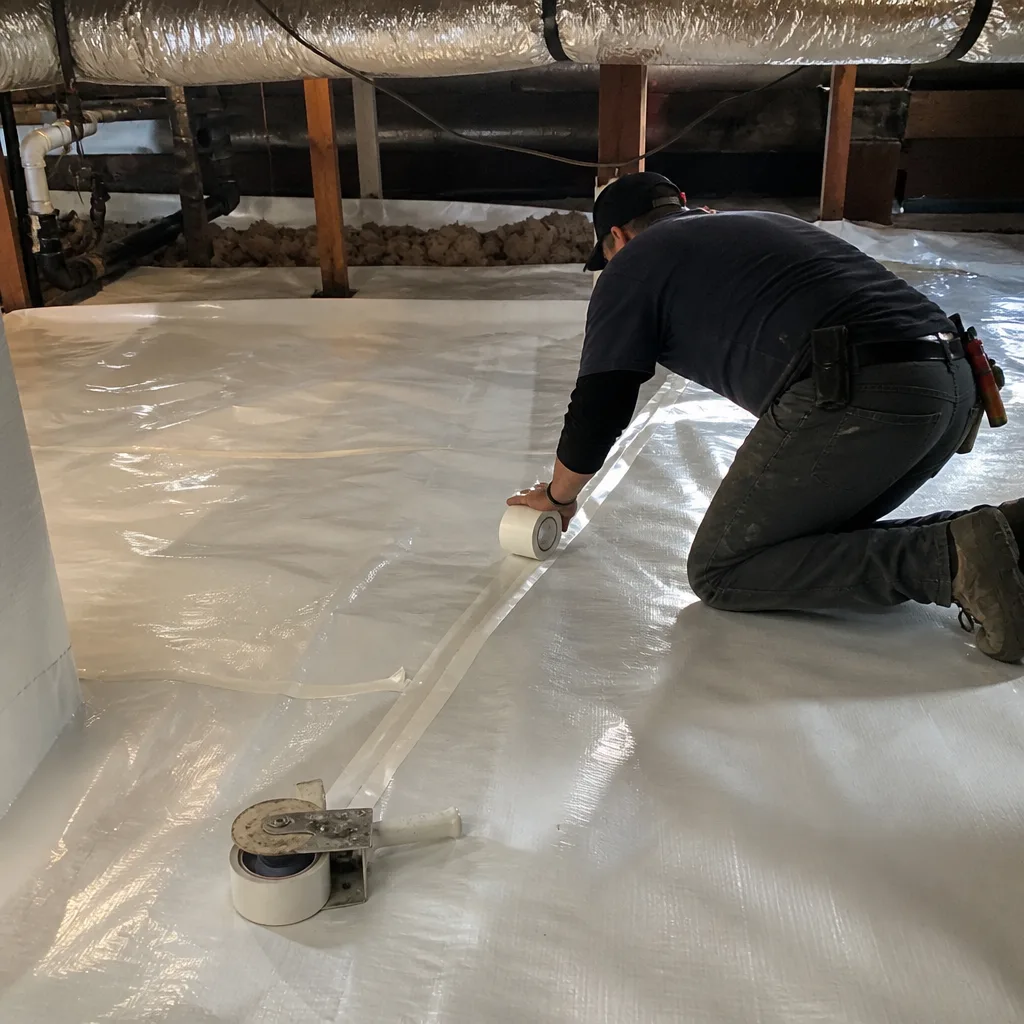
There’s a version of saving money on this project that actually saves money, and a version that shifts the cost to a future repair bill. Here’s the honest breakdown.
Ways That Actually Work
- Get a second opinion on any written estimate. At Envelope Insulation Co., we read competing quotes with you – no charge. A written estimate from another contractor tells us what they’re proposing, and we can tell you what’s in there, what’s missing, and whether the spec matches the scope. Under Haven Standard, the Free Second Opinion on Any Written Estimate is always available.
- Address only what needs addressing now, in the right order. If your crawl space is dry and accessible and you simply need a vapor barrier upgrade, you don’t need to buy a full encapsulation in the same visit. A written scope makes the sequence clear so you’re not paying for phase two before phase one is confirmed.
- Check for state and utility rebates before the job starts. PG&E occasionally offers rebates for energy-efficiency upgrades that include floor assembly improvements. The Bay Area Regional Energy Network (BayREN) has run rebate programs for insulation and air sealing work. Eligibility changes, so confirm current offerings at the time you’re scheduling – but a qualifying job in Mountain View can see $300 to $800 back depending on the program active at the time.
- Bundle with related work when it makes sense. If you’re already having crawl space work done, adding rim joist sealing or floor insulation in the same visit eliminates a second mobilization cost. On a mid-size Mountain View job, bundling can save $400 to $600 compared to scheduling separately.
- Don’t defer visible moisture problems. The cost of treating a crawl space with active moisture intrusion and mold is higher than treating one that’s dry but unprotected. Deferring by one winter in Mountain View can move a $4,500 job to a $6,500 one. The moisture doesn’t wait.
Ways That Create More Expensive Problems Later
Choosing a thinner barrier to save $600 upfront is the version of this we see create callbacks. A 6-mil poly sheet in a Mountain View crawl space with foot traffic from plumbers or HVAC technicians is a punctured barrier within three years. A 20-mil reinforced barrier from a reputable manufacturer – we work with materials from Owens Corning, Johns Manville, and similar suppliers – is the spec that holds for a decade or more.
Skipping vent sealing on a full encapsulation is the other common one. An encapsulated crawl space that still has open foundation vents is neither a properly conditioned space nor a properly ventilated one. It’s an expensive middle ground that doesn’t perform as either. Seal the vents or don’t encapsulate – that’s the actual choice.
To start with a written price specific to your home’s crawl space, call us at (669) 259-0406. The estimate is free, the price is flat and in writing, and no work starts before you have both.
What’s Included in an Envelope Insulation Co. Crawl Space Encapsulation Job
Before we put a price in writing, we look at the crawl space. That means measuring the square footage, checking the access points, identifying any existing moisture damage, noting the current vent configuration, and documenting what’s there with photos. What you receive before work starts: a flat written price, a written scope describing exactly what will be installed and where, and the written warranty under the 365-Day Done Right Promise.
What you receive when the crew leaves: a Documented Photo Record showing the finished installation – barrier laps, wall termination heights, vent plug locations, any areas of concern that were addressed. Not available on request. Included on every job.
Wes Okafor leads our technical team and has reviewed the crawl space assessments on hundreds of Bay Area homes since Envelope Insulation Co. began operating under The Haven Standard in 2016. The crawl spaces in Mountain View’s older stock – particularly the post-war homes in Monta Loma and the early tract development in Crestview – have patterns we recognize: deteriorated poly, pest activity along the rim joists, and moisture readings that don’t match what the surface inspection suggests. Wes’s approach is to document what’s actually there, price what it actually takes to fix it, and put that in writing before anyone touches anything.
You can read more about our full service offering on our home page, which covers the complete building-envelope service line.
FAQs – Crawl Space Encapsulation & Vapor Barrier Cost in Mountain View
How much does crawl space encapsulation cost in Mountain View, CA?
Most full crawl space encapsulation jobs in Mountain View run between $4,500 and $8,500, with the midpoint for a standard single-family home around $5,500 to $6,500. The main variables are crawl space square footage, existing moisture conditions, whether old insulation needs to come out, and which components the space actually needs (barrier only, wall coverage, vent sealing, drainage). A basic vapor barrier installation without full encapsulation runs $1,200 to $2,800. Call (669) 259-0406 for a written estimate specific to your home – there’s no charge for the estimate and the price is flat before any work starts.
Is crawl space encapsulation worth it in Mountain View’s climate?
Yes, and the Marine Layer-influenced winters here make it more defensible than in drier inland climates. Mountain View sees relative humidity levels in unprotected crawl spaces that regularly exceed 70% from November through March. That sustained moisture degrades floor insulation, accelerates wood decay at the sill plates and rim joists, and creates conditions where mold and rodents establish themselves more easily. An encapsulated crawl space – properly sealed, with a 20-mil barrier and closed foundation vents – typically shows measurable reductions in floor-level cold spots and heating loads. On homes where we’ve also sealed the rim joists with spray foam, the blower-door test readings (a pressurization measurement that shows, in a single figure, how much air the envelope is losing) drop noticeably. Whether the energy savings alone justify the cost depends on the home, but the moisture management case is strong in this market regardless of the energy math.
What’s the difference between a vapor barrier and full crawl space encapsulation?
A vapor barrier is ground cover – typically a poly sheet that slows moisture vapor from migrating up through the soil. A full encapsulation with proper Crawl Space Insulation does that and more: it covers the foundation walls, seals the rim joists, plugs the foundation vents, and converts the crawl space from a vented exterior environment to a conditioned (or semi-conditioned) interior one. The barrier addresses ground moisture; the encapsulation addresses the air and moisture entering from every surface. For most Mountain View homes built before 1990 with existing vented crawl spaces, a full encapsulation outperforms a barrier-only approach over any time horizon longer than five years. The cost difference is $2,000 to $5,000, and so is the performance difference.
How long does crawl space encapsulation last in Mountain View?
A properly installed 20-mil reinforced vapor barrier in a maintained crawl space should last 20 years or more. The limiting factors are punctures from pest or maintenance activity, failure to seal the vents (which allows humid outside air back in), and drainage conditions that were never resolved before the barrier went down. The 365-Day Done Right Promise covers the installation quality – if the work isn’t right within the first year, we make it right. Beyond that, the longevity depends on the spec that went in and whether the moisture sources were actually addressed. A thinner barrier in a space with active water intrusion won’t perform for 20 years. A correctly spec’d installation in a properly dried-out space will.
Do Mountain View homes need a permit for crawl space encapsulation?
In most cases, a crawl space vapor barrier or encapsulation installation in Mountain View does not require a building permit when the work is limited to the barrier, vent sealing, and insulation. However, if the project includes electrical work (for a dehumidifier), plumbing (for a sump pump), or structural modifications, those elements typically require permits from the City of Mountain View’s Building and Safety Division. Any work that alters the foundation ventilation strategy on a home subject to Title 24 compliance should be documented to show the installation meets the applicable vapor retarder and air barrier requirements for CEC Climate Zone 4. We include that documentation in the written scope and the Documented Photo Record on every applicable job. If your project is at the boundary of what requires a permit, we’ll tell you before work starts – not after.
Can the crawl space work be done at the same time as attic insulation or air sealing?
Yes, and there are real efficiency reasons to sequence it that way. On a whole-envelope job – attic air sealing, attic insulation, and crawl space encapsulation in the same project – we can often complete all three in one or two visits rather than three, which reduces the mobilization cost and keeps the disruption to your schedule contained. On applicable jobs where attic air sealing is part of the scope, we document before-and-after blower-door readings so you can see the measured air-sealing result, not just take our word for it. If you’re planning multiple improvements, mention that when you call (669) 259-0406 – the written estimate will cover all components so you can see the total scope and price before committing to any of it.
Key Takeaways
- Crawl space encapsulation in Mountain View, CA runs $4,500 to $8,500 for a full installation; vapor barrier only runs $1,200 to $2,800.
- Mountain View’s Bay Area climate – sustained winter humidity, marine layer, low-elevation parcels near Shoreline – makes proper encapsulation more necessary than in drier California markets.
- The right spec for most Mountain View homes is a 20-mil reinforced barrier with wall coverage, sealed foundation vents, and rim joist air sealing – not a basic 6-mil ground sheet.
- California Title 24 / CEC Climate Zone 4 requirements apply to below-floor assemblies. Every Envelope Insulation Co. scope is built to meet those standards, and the written scope documents which provisions the installation addresses.
- Under Haven Standard, you receive a flat written price before any work starts, a Documented Photo Record when the crew leaves, and the 365-Day Done Right Promise on every job.
- Bundling crawl space work with rim joist sealing or floor insulation in the same visit typically saves $400 to $600 compared to scheduling separately.
- Wes Okafor leads the technical team at Envelope Insulation Co., which has operated under The Haven Standard since 2016 and has assessed and sealed crawl spaces in 9,000+ Bay Area homes.
Get a Written Price for Your Mountain View Crawl Space
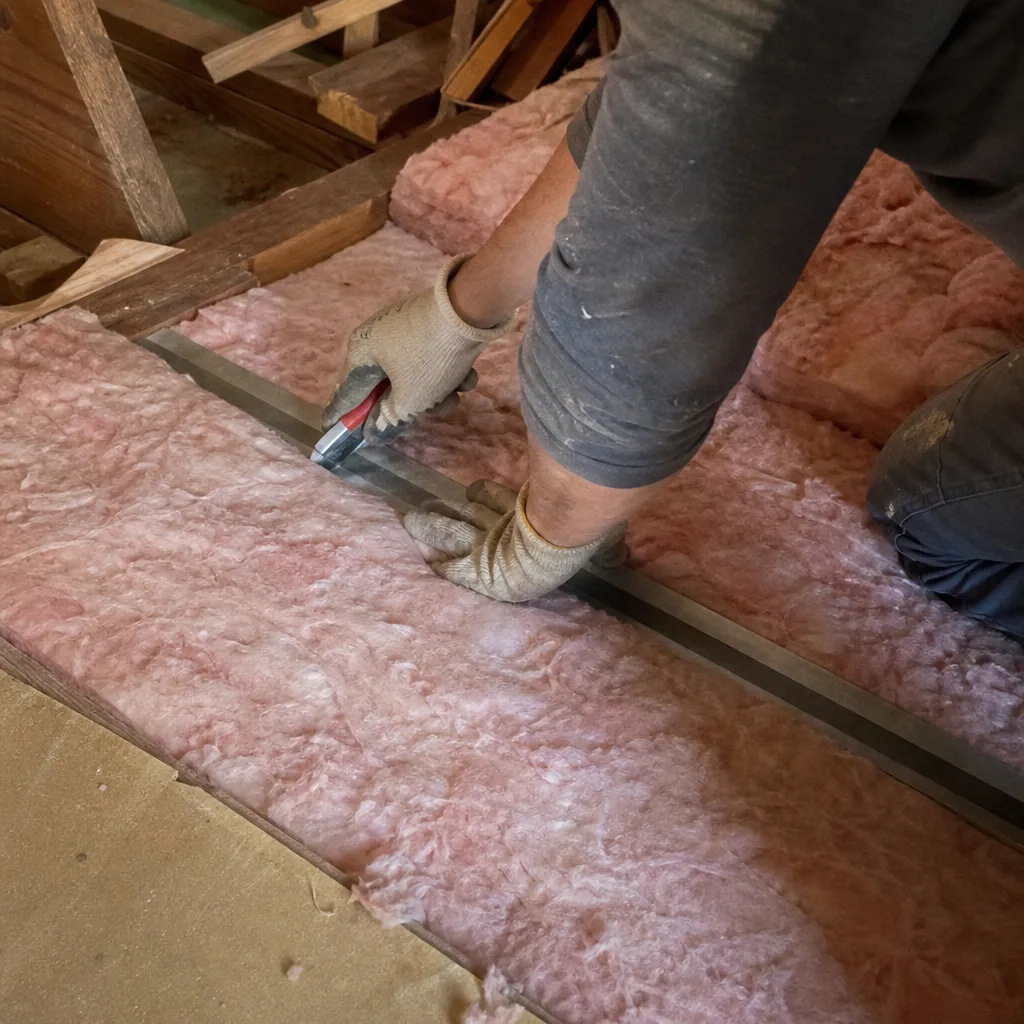
If you have a number from another contractor – or just want to know what your specific crawl space actually needs and what it will cost – call Envelope Insulation Co. at (669) 259-0406. The estimate is free. Under Haven Standard Clause 1, you’ll have a flat written price and a written scope before anyone does any work. If you already have a written estimate from someone else, bring it – we’ll read it with you as part of the Free Second Opinion, at no cost.
We serve Mountain View and the surrounding Peninsula communities. Live call answering, no voicemail loops, no callback windows. Call (669) 259-0406 and talk to someone who can schedule your crawl space assessment.
Written by Wes Okafor, Owner at Envelope Insulation Co. (operating as Topside Attic Insulation Mountain View), serving Mountain View, CA since 2016. Pricing reflects the Mountain View market as of 2026. Envelope Insulation Co. offers free estimates – call (669) 259-0406.
What Our Customers Say
"Crawl space encapsulation done properly. Photographs of the vapour barrier at every seam, and the damp smell in the hallway is gone."
- Ainsley P."Fixed price, clean work, and they hauled the old material away as agreed."
- Todd M."Two other companies quoted to blow more insulation on top of what was there. These were the only ones who said the existing material had to come out first, and explained why."
- Clifford E.