
Crawl Space Insulation in Mountain View, CA
Crawl space insulation in Mountain View typically runs between $1,800 and $4,200 for a standard single-family home, and most jobs are completed in one day. The work involves installing rigid foam board or fiberglass batts against the crawl space walls (or between the floor joists above, depending on the encapsulation strategy), after air-sealing any penetrations so the insulation actually performs at its rated R-value rather than bleeding conditioned air through gaps.
If your floors feel cold in winter, your energy bills have crept up without explanation, or you’ve already had a moisture problem under the house, crawl space insulation is probably part of the answer – but only if it’s installed in the right location and in the right sequence. At Topside Attic Insulation Mountain View, we don’t put insulation in before the air sealing is done. That’s not a policy we added later; it’s how every job has worked since Wes Okafor started the company in 2016.
This page is part of our broader Crawl Space Encapsulation & Vapor Barrier in Mountain View service. If you’d like a written price before anything gets scheduled, call us at (669) 259-0406 – a live person answers, no voicemail loop.
When You Need Crawl Space Insulation
Not every crawl space in Mountain View needs insulation added right now. But several specific conditions make it the right next step, and if you’re seeing more than one of these, the thermal and moisture performance of your building envelope is likely compromised.
- Cold or uneven floors in winter. Mountain View’s overnight lows drop into the mid-30s from December through February. If the first floor feels noticeably colder than the rest of the house during those months, uninsulated floor joists are a common cause – conditioned air above is losing heat directly through an unprotected subfloor.
- Heating and cooling bills that have risen without a clear reason. A blower-door test – a pressurization measurement that shows, in one number, how much air your building envelope is losing – will often reveal that the crawl space is the primary leak point. In Mountain View homes built before 1990, we regularly find that the floor system accounts for 20 to 35 percent of total air leakage.
- A crawl space that was encapsulated but never fully insulated. Vapor barriers and encapsulation liners address moisture; they don’t add R-value to the floor assembly or walls. Both jobs serve different functions, and one doesn’t substitute for the other.
- Visible deterioration of existing insulation. Fiberglass batts installed in the floor joists can sag, compress, or fall out entirely after years of minor moisture exposure. Sagged insulation loses R-value proportionally – a batt that has dropped two inches from the subfloor is performing well below its nominal rating.
- A new encapsulation liner was just installed. If you’ve recently had a liner put in under the Crawl Space Encapsulation & Vapor Barrier in Mountain View service, adding wall or rim joist insulation immediately after is the logical next step – the space is clean, accessible, and already conditioned for the work.
- You’re preparing for a sale or refinance inspection. Mountain View’s real estate market moves fast, and buyer inspectors frequently flag uninsulated or deteriorated crawl space insulation as a deficiency. Having documented, photo-recorded work with a written scope and warranty carries more weight with buyers than an oral assurance.
Our Crawl Space Insulation Process
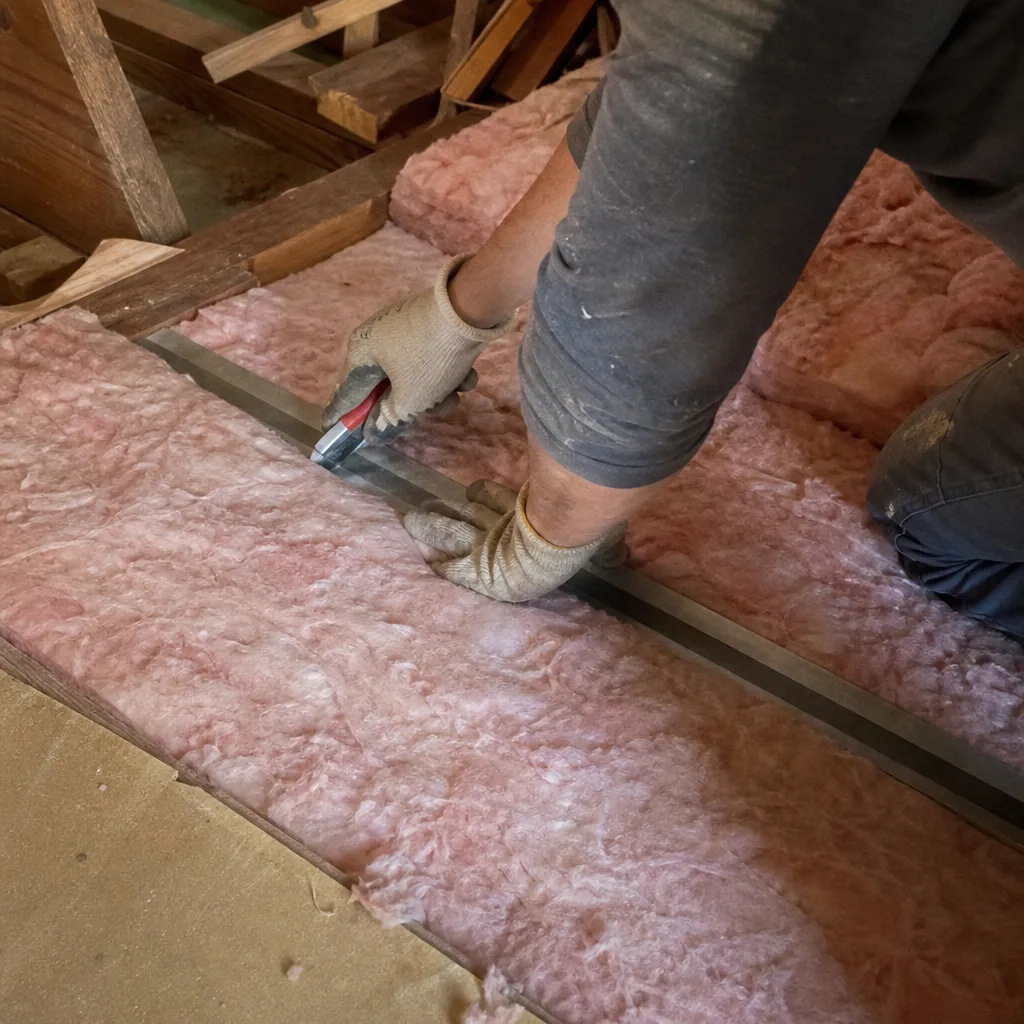
The sequence matters. Installing insulation before air sealing is done is one of the most common mistakes we see when we’re brought in for a second opinion on a competing estimate. Here is how we do it, step by step.
-
Written price and scope delivered before any work is scheduled.
Under Haven Standard Clause 1, you get a flat written price and a written scope before anyone sets foot in your crawl space. No verbal approximations, no “we’ll know more once we’re in there” pricing. If the job changes materially after we open the space, we stop, explain what we found, and get written authorization before continuing. -
Inspection and documentation – photos taken before we touch anything.
Wes Okafor or a background-checked, uniformed technician from our team photographs the existing conditions: joist bays, vapor barrier status, any visible moisture damage, penetrations, and existing insulation if present. This photo record is yours at the end of the job – it documents what we found, not what we said we found. -
Air sealing of penetrations, rim joists, and any top-plate gaps.
Before insulation goes in, every pipe penetration, wiring chase, HVAC boot, and rim joist cavity gets sealed with two-component spray foam or an appropriate caulk. In Mountain View homes built during the 1960s and 1970s – a common era in the Whisman Station, Shoreline West, and Cuesta Park neighborhoods – we typically find 15 to 25 individual penetrations that need sealing before insulation performs as intended. Skipping this step means insulating over air gaps, which is the single most common reason crawl space insulation underperforms its rated R-value. -
Insulation installation in the correct location for your crawl space type.
Mountain View crawl spaces fall into two categories: vented and conditioned (unvented). In a vented crawl space, insulation belongs between the floor joists – we typically use Johns Manville or Owens Corning fiberglass batts at R-19 or R-25 depending on joist depth, secured with wire supports or netting so they maintain full contact with the subfloor. In a conditioned crawl space (one that’s been encapsulated and sealed from outside air), insulation goes on the walls and rim joists instead – here we use rigid foam board or Rockwool semi-rigid panels, which hold up better in the slightly elevated humidity typical of a sealed California crawl space. We’ll tell you which approach applies to your home and why, in writing, before we start. -
Blower-door test reading recorded before and after (on applicable jobs).
When the job includes both air sealing and insulation, we run a blower-door test before and after. The before reading establishes your baseline – typically expressed in CFM50, cubic feet per minute of air loss at 50 pascals of pressure. The after reading shows what changed. We’ve seen Mountain View homes drop from 3,800 CFM50 to under 2,000 after a thorough crawl space air seal and insulation job. That number is yours in writing; it’s not a marketing claim, it’s a measurement. -
Final photo record and written warranty delivered before we leave.
Every completed job closes with a Documented Photo Record showing the finished installation, plus your written warranty under the 365-Day Done Right Promise. If anything isn’t right within that period, we make it right – no negotiation, no service fees, no debate about what the scope covered.
Crawl Space Insulation Pricing in Mountain View
Crawl space insulation in Mountain View falls into a fairly predictable range once you know the variables. Here are the factors that drive cost, along with honest price ranges based on what we see in this market.
| Scope | Typical Range (Mountain View) |
|---|---|
| Floor joist insulation only (vented crawl space, 800-1,200 sq ft) | $1,800 – $2,800 |
| Wall and rim joist insulation (conditioned crawl space, 800-1,200 sq ft) | $2,200 – $3,400 |
| Air sealing + floor joist insulation combined | $2,600 – $3,800 |
| Full encapsulation + insulation package | $3,800 – $6,500+ |
| Removal of deteriorated existing insulation (add-on) | $400 – $900 |
These ranges reflect Mountain View’s local labor market and material costs as of 2025-2026. The variables that move a job toward the top of the range: crawl space height under 24 inches (which slows the work considerably), existing moisture damage that needs remediation before insulation goes in, a high penetration count requiring more air-sealing material, and access points that require equipment staging on the exterior. Homes in the St. Francis Acres or Waverly Park areas, which often have original 1950s foundation designs, can trend higher due to tighter access and older framing with more irregular joist cavities.
We don’t ask you to call for a price estimate that we then deliver verbally. Under Haven Standard Clause 1, you get a written price before any work starts – flat, not a range, not an approximation. That’s the standard, and it applies to every job.
If you have a written estimate from another contractor, bring it to us. We offer a free second opinion on any written estimate – we’ll read it with you, identify what’s included and what’s missing, and give you our own written number to compare.
What R-Value Do You Need in Mountain View?
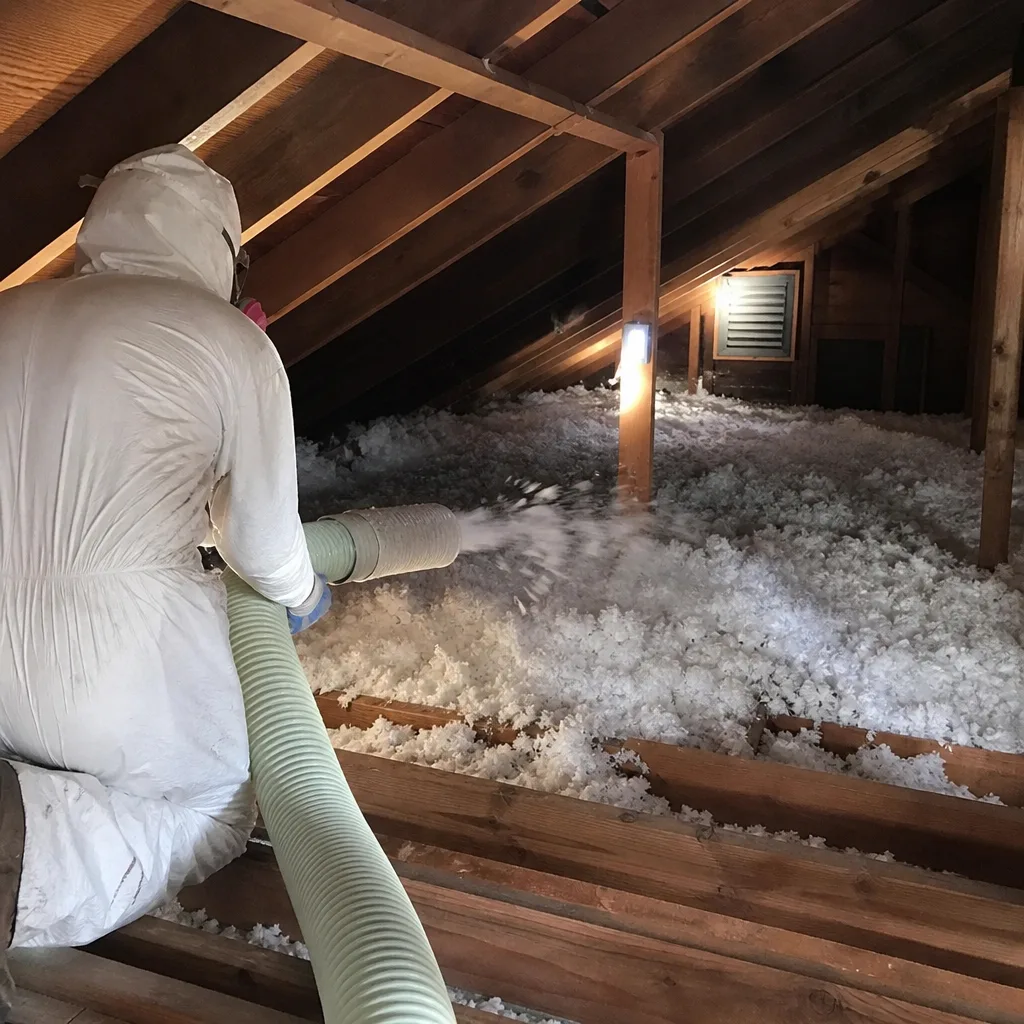
California’s Title 24 energy code sets minimum R-values for crawl space floor insulation, and Mountain View sits in Climate Zone 4. For floor joist applications, Title 24 requires R-19 as the minimum for conditioned-to-unconditioned assemblies. We typically recommend R-25 when joist depth allows, because the marginal cost of the additional insulation is small relative to the performance gain – and Mountain View’s combination of cool, damp winters and warm summers means the floor assembly is working in both directions seasonally.
For conditioned crawl spaces (encapsulated, sealed from outside air), the wall insulation strategy is governed by a different section of the code. We document compliance in the written scope so you have a record of the installation meeting or exceeding current California code at the time of the job.
Why Sequence Matters: Air Sealing Before Insulation
This is the part most contractors skip or don’t explain clearly. Fiberglass batts and rigid foam boards have a rated R-value – R-19, R-25, R-30 – that assumes still air. When air is moving through a gap in the building envelope, it carries heat with it regardless of how much insulation surrounds it. A batt installed over an open pipe penetration or an unsealed rim joist performs far below its label rating because the air is bypassing the insulation entirely.
We have been running blower-door tests on Mountain View homes since 2016. The pattern is consistent: homes that received insulation without prior air sealing read nearly as high on the blower-door as they did before the insulation was added. The insulation improved thermal resistance but did almost nothing for air leakage. On homes where we seal first and then insulate, the blower-door number drops substantially – typically 35 to 55 percent from the pre-work baseline in crawl-space-dominant leakage scenarios.
This is why Envelope Insulation Co. treats air sealing as a prerequisite, not an upsell. The sequence isn’t a preference; it’s what makes the insulation actually work.
Materials We Use
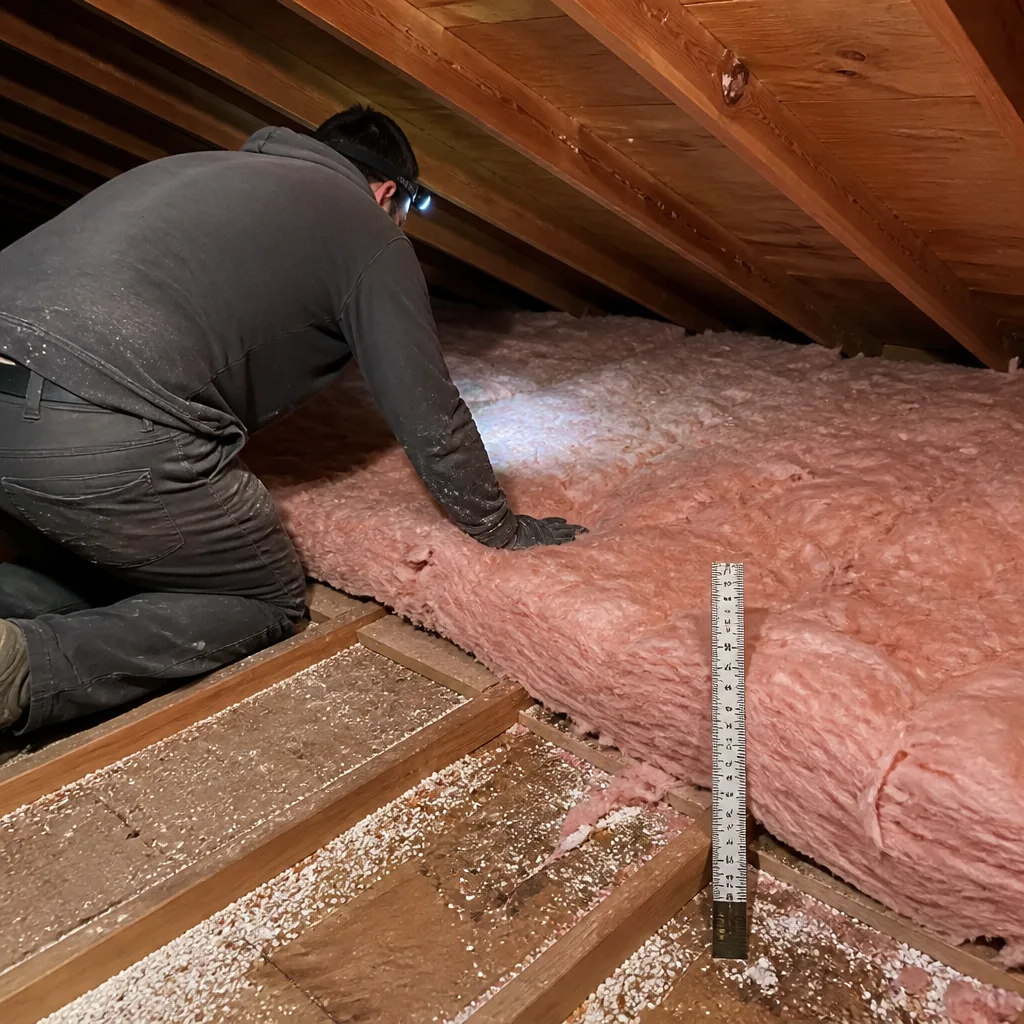
We source from manufacturers whose products have documented performance ratings and established warranty programs. For fiberglass batt applications in floor joists, we use Johns Manville and Owens Corning products – both carry consistent R-value ratings and hold their dimensions under normal crawl space conditions. For conditioned crawl space wall applications where moisture resistance matters more, we use Rockwool semi-rigid panels, which don’t absorb water and maintain their R-value even in higher-humidity encapsulated spaces.
We don’t use proprietary products that lock you into a specific manufacturer for future repairs or additions. Whatever we install, you can get documented specs from the material manufacturer directly.
Key Takeaways
- Crawl space insulation in Mountain View runs $1,800 to $4,200 for most single-family homes, depending on scope and access conditions.
- Air sealing comes before insulation – not after. This order determines whether the insulation performs at its rated R-value.
- Mountain View’s Climate Zone 4 designation sets a minimum of R-19 for floor joist insulation; R-25 is the more practical target when joist depth allows.
- Before-and-after blower-door readings are documented on applicable jobs so you can see the actual air-sealing result, not a description of it.
- Every job closes with a Documented Photo Record and a written warranty under the 365-Day Done Right Promise.
- Written price before any work starts – always. That’s Haven Standard Clause 1, and it applies to this job too.
FAQs – Crawl Space Insulation in Mountain View
How much does crawl space insulation cost in Mountain View?
Most crawl space insulation jobs in Mountain View run between $1,800 and $3,800 for the insulation and air-sealing work combined, with full encapsulation packages reaching $6,500 or more depending on square footage and existing conditions-see how much does crawl space encapsulation & vapor barrier cost for a detailed 2026 price guide. The biggest cost drivers are crawl space height (tighter spaces take longer), the number of penetrations requiring air sealing, and whether deteriorated existing insulation needs to be removed first. We give you a flat written price before anyone starts – not a range you find out at the end. Call (669) 259-0406 to schedule a written estimate at no charge.
Should insulation go between the floor joists or on the crawl space walls?
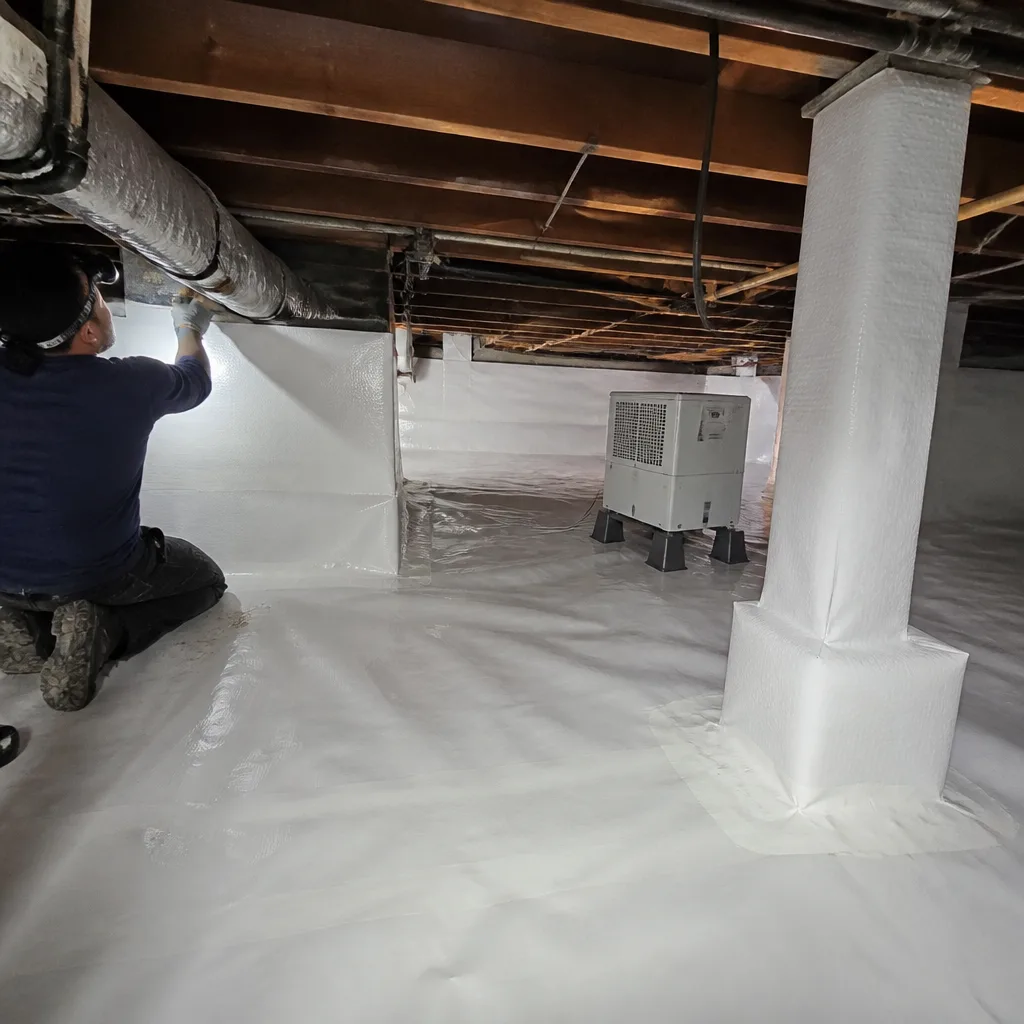
It depends on whether your crawl space is vented or conditioned (encapsulated). In a vented crawl space, insulation belongs between the floor joists to separate the conditioned living space above from the unconditioned space below – R-19 to R-25 is the standard range for Mountain View’s Climate Zone 4. In a conditioned crawl space that has been sealed and encapsulated with crawl space encapsulation & vapor barrier, the correct location is the walls and rim joists, because the crawl space itself is now inside the thermal envelope. Installing floor-joist batts in a conditioned crawl space is a common and wasteful mistake; we document which approach applies to your home in the written scope before work starts.
Can I just add insulation to my crawl space without doing the air sealing?
You can, but the performance result will be significantly lower than the insulation’s rated R-value suggests. Fiberglass batts lose most of their effective R-value when air moves freely through gaps around them – penetrations, unsealed rim joists, and open joist bays act as bypass routes that the insulation can’t address. We measure this with a blower-door test. In Mountain View homes where insulation was added without prior air sealing, we frequently read post-installation blower-door numbers that are nearly identical to the pre-installation baseline. Air sealing costs less than the insulation in most cases and is the difference between a job that works and one that looks correct but doesn’t perform. We complete air sealing first on every job, without exception.
How long does crawl space insulation last, and is there a warranty?
Properly installed fiberglass batt insulation in a dry, sealed crawl space typically lasts 20 to 30 years before needing inspection or replacement. The main degradation factors are moisture intrusion (which causes sagging and compression) and pest activity. In a well-encapsulated crawl space with a quality crawl space vapor barrier, those risks are substantially reduced. On our end, every job is covered by the 365-Day Done Right Promise – if anything we installed isn’t performing as documented in the written scope within a year of the job, we come back and make it right at no additional cost. That promise is in writing before we start, not offered after the fact.
Schedule a Written Estimate for Crawl Space Insulation in Mountain View
If you’re ready to get a flat written price – not a ballpark, not a callback with a verbal number – call Wes Okafor and the team at Topside Attic Insulation Mountain View at (669) 259-0406. A live person answers. We’ll schedule an inspection of your Mountain View crawl space, document what we find with photos before touching anything, and hand you a written scope and written price before any work is authorized. If you have a competing estimate already, bring it – we’ll review it with you at no charge under our free second opinion offer.
You can also learn more about the full scope of moisture and thermal work under the house on our Crawl Space Encapsulation & Vapor Barrier in Mountain View page, or visit our home page for the complete list of building-envelope services we provide across the Mountain View area.
Written by Wes Okafor, Owner at Topside Attic Insulation Mountain View, serving Mountain View since 2016.